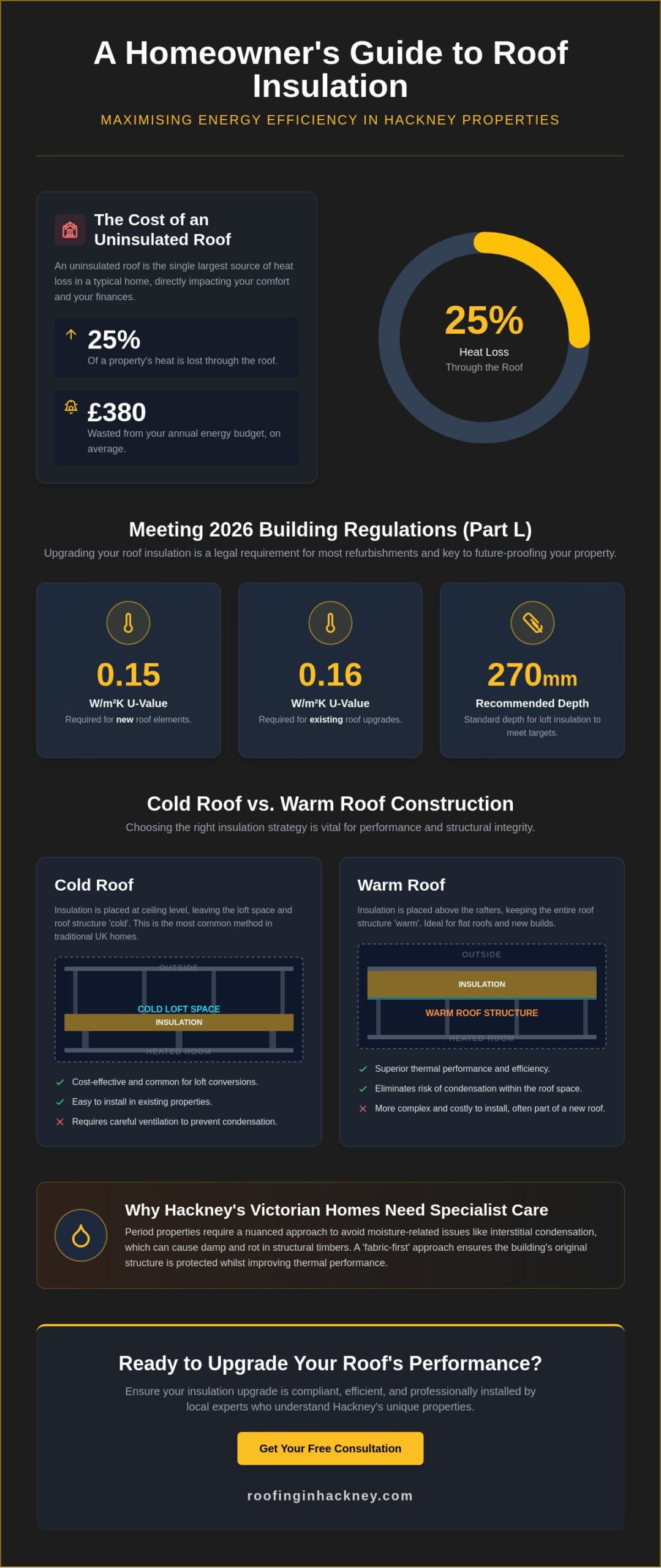
25% of a property’s heat can be lost through an uninsulated roof, effectively sending up to £380 of your annual energy budget straight into the Hackney night air. It’s a common frustration for local homeowners who find themselves turning up the thermostat only to battle persistent ceiling-level drafts or worrying damp issues in the loft. You want a home that stays warm without the stress of skyrocketing bills or the confusion of ever-changing Part L Building Regulations.
This guide simplifies the process, showing you how to achieve significant savings and lasting comfort through expert-led thermal roof insulation upgrades tailored specifically for Hackney’s diverse architectural landscape. We’ll explore the current 2026 standards, including why a 270mm insulation depth is now recommended to meet the 0.15 W/m²K U-value requirement for new elements in existing dwellings. From understanding the end of the Great British Insulation Scheme in March 2026 to choosing between warm and cold roof configurations, we provide the technical clarity you need to make a confident investment in your property’s future.
Did you know that 25% of a home’s heat escapes through an uninsulated roof, making it the most significant source of energy loss in Hackney properties? Most homeowners agree that rising heating costs are a major concern, yet deciphering the technical requirements of Part L Building Regulations often feels complex and daunting. This guide promises to simplify the process, showing you how expert-led thermal roof insulation upgrades can drastically reduce your bills and enhance indoor comfort through a bespoke, fabric-first approach tailored to your home.
In the following sections, we break down the 2026 standards, including the 0.15 W/m²K U-value requirement and the 270mm insulation depth recommendation. You’ll learn the structural differences between warm and cold roofs, the best materials for Victorian lofts versus flat roofs, and a step-by-step guide to the installation process. We also highlight why local specialist expertise is vital to prevent condensation and ensure your investment is protected by high-quality craftsmanship that meets the latest safety and efficiency standards.
Understanding Thermal Roof Insulation Upgrades and 2026 Standards
Thermal roof insulation upgrades represent a fundamental structural improvement to a building’s thermal envelope. Rather than a simple cosmetic fix, these upgrades involve creating a high-performance barrier that prevents heat from escaping through the highest point of your property. By Understanding Thermal Insulation principles, property owners can see how modern materials effectively trap air to maintain a consistent internal temperature. In the 2026 energy landscape, where efficiency is paramount, upgrading your roof is widely considered the most cost-effective home improvement for long-term financial gain.
The effectiveness of these upgrades is measured via U-values. A U-value indicates the rate of heat transfer through a structure; the lower the number, the better the material is at retaining warmth. Under the UK government’s current Warm Homes Plan, there’s a significant push to decarbonise the housing stock. This initiative prioritises a “fabric-first” approach, meaning that before installing expensive heat pumps or solar panels, the building’s primary structure must be made as airtight and thermally efficient as possible to prevent wasted energy. For homeowners with European interests, such as those looking to zonnepanelen kopen brabant in the Netherlands, the same principle of optimising the roof’s thermal performance before investing in generation holds true.
Why Hackney Properties Require Specific Thermal Attention
Hackney’s architectural heritage presents unique challenges for energy efficiency. Many local homes feature original Victorian slate roofs and solid brick construction which, whilst aesthetically pleasing, offer almost no natural thermal resistance. Because these buildings lack cavity walls, the roof becomes the primary site for heat loss. Additionally, East London’s dense urban heat island effect means that uninsulated roofs absorb excessive heat in the summer and shed it rapidly in the winter.
A common local issue is interstitial condensation. This occurs when warm, moist indoor air travels through the ceiling and hits the cold underside of an uninsulated roof. This moisture can lead to rot in structural timbers and damp patches on bedroom ceilings. Professional thermal roof insulation upgrades address this by managing breathability and temperature differentials, protecting the building’s structural integrity. Our team at Roofing in Hackney understands these period-specific nuances intimately.
Current Building Regulations (Part L) for Roof Refurbishments
As of 2026, compliance with Part L of the Building Regulations is mandatory for most roof works. If you’re replacing more than 50% of your roof’s surface, you’re legally required to upgrade the insulation to meet modern standards. The current targets are precise:
- New roof elements: Must achieve a U-value of 0.15 W/m²K.
- Existing roof elements: Must achieve a U-value of at least 0.16 W/m²K.
- Recommended depth: For traditional loft insulation, a depth of 270mm is now the standard to meet these efficiency goals.
Failing to meet these standards can cause issues during a property survey when you decide to sell. A professional installation ensures that your upgrade is fully compliant, providing the necessary certification to prove your home meets the 2026 energy requirements.
Cold Roof vs. Warm Roof Construction: Which is Right for You?
Deciding on the correct construction method for your property depends entirely on where the “thermal line” is drawn. This line represents the boundary between the heated living space and the unheated external environment. In Hackney’s varied housing stock, from terraced Victorian houses to modern flat-roof extensions, choosing the right placement for your insulation is vital for structural longevity. The two primary methods, cold roof and warm roof construction, offer distinct approaches to managing heat retention and moisture control.
A cold roof is the traditional British standard. Here, insulation is placed between or over the ceiling joists, leaving the rafters and the roof deck itself cold. Conversely, a warm roof system places the insulation above the structural deck or rafters. This keeps the entire roof structure at a temperature similar to the building’s interior, significantly reducing the risk of thermal shock and moisture-related decay. When considering thermal roof insulation upgrades, understanding these structural differences ensures you select a system that protects your home for 40 years or more.
The Pros and Cons of Cold Roof Systems
Cold roof systems are often the most cost-effective solution for standard Hackney loft spaces. Because the insulation is laid at the ceiling level, it is easily accessible and requires less structural modification. However, this method demands meticulous attention to ventilation. Without a clear 50mm airflow gap between the insulation and the roof deck, water vapour can trap against cold timbers, leading to rot.
- Cost: Generally lower initial material and labour costs.
- Ventilation: Requires ridge and soffit vents to maintain cross-flow air.
- Thermal Bridging: Rafters can act as “thermal bridges,” allowing heat to bypass the insulation.
The Advantages of Warm Roof Upgrades
Warm roof systems are increasingly the preferred choice for flat roofs and high-performance pitched roof refurbishments. By creating a continuous layer of insulation above the rafters, you eliminate thermal bridging and keep the building’s “bones” warm and dry. This method is particularly effective for Hackney homeowners planning loft conversions, as it maximises internal head height by removing the need for thick insulation layers between the joists.
Following UK Government Best Practices, a warm roof setup effectively moves the dew point to the outside of the structural deck. This eliminates the risk of interstitial condensation within the timbers. While the initial investment may be higher, the superior thermal efficiency and protection against timber decay offer a far greater return on investment over the decades. If you are unsure which configuration suits your specific roof pitch, you can speak with our technical team for a detailed assessment. Professional thermal roof insulation upgrades using a warm roof approach often provide the most robust defence against heat loss in exposed urban environments.
Selecting the Right Insulation Materials for Maximum ROI
Choosing the correct material is as critical as the installation method itself. In Hackney, where property values remain high and internal space is often at a premium, the return on investment for thermal roof insulation upgrades is measured in both reduced energy bills and the preservation of usable square footage. Selecting the wrong material for a period property can lead to structural issues; selecting the right one can transform the building’s performance for decades. For a detailed breakdown of the factors affecting roof insulation cost Hackney homeowners should consider in 2026, including the differences between loft floor and rafter-level insulation, our dedicated guide provides a comprehensive overview.
The primary materials used in modern London roofing projects include:
- PIR (Polyisocyanurate) Rigid Boards: These offer the highest thermal performance per millimetre of thickness. They’re the preferred choice for flat roofs and warm roof conversions.
- Mineral Wool Rolls: This traditional material is highly breathable and provides excellent acoustic insulation, which is ideal for dampening urban noise in pitched Victorian lofts.
- Multifoil Insulation: Comprising multiple layers of reflective film and foam, multifoil is a space-saving solution for shallow rafter depths found in many East London terraces.
- Natural Fibres: Sheep’s wool and wood fibre are increasingly popular for heritage projects. These materials manage moisture naturally, which helps protect original 19th-century timbers.
Comparing PIR Boards and Mineral Wool
The main differentiator between these materials is their thermal conductivity, or K-value. PIR boards typically have a K-value of around 0.022 W/mK, whereas mineral wool is closer to 0.044 W/mK. This means you need roughly double the thickness of mineral wool to achieve the same thermal result as a PIR board. For a Hackney homeowner, this often determines whether a loft remains a functional storage space or becomes entirely filled with insulation. Whilst PIR is more expensive initially, its ability to achieve strict U-values with a thinner profile often makes it the most practical choice for urban refurbishments.
Vapour Barriers and Breathability
Modern thermal roof insulation upgrades must balance heat retention with moisture management. According to UK Government Building Regulations, preventing the build-up of condensation within the roof structure is a legal and structural necessity. This is achieved through a Vapour Control Layer (VCL), which is installed on the “warm” side of the insulation to stop moist air from reaching cold structural elements.
In older Hackney properties with original slate or tile, breathable membranes are equally vital. These allow any moisture that does enter the roof to escape, preventing the “sealed box” effect that leads to mould and timber rot. If you’re unsure which material suits your specific roof type, you can request a technical assessment from our specialist team to ensure your upgrade is both efficient and safe.
A Homeowner’s Guide to Upgrading Victorian and Flat Roofs
Implementing thermal roof insulation upgrades requires a methodical approach to ensure the structural integrity of your Hackney property remains intact. A rushed installation can lead to trapped moisture and timber decay, particularly in older buildings. Following a structured workflow ensures your investment delivers the promised energy savings whilst meeting current British Standards for moisture control. Each phase of the project is designed to eliminate heat loss whilst protecting the “breathability” of the structure.
The process typically follows five essential phases:
- Step 1: Structural Assessment. We begin by inspecting existing rafters and joists for signs of woodworm, rot, or active damp. It is vital to resolve these issues before sealing the space with new insulation materials.
- Step 2: Determining Insulation Placement. You must choose between insulating at the ceiling level (cold roof) or the rafter level (warm roof). This decision depends on whether you intend to use the loft for storage or future living space.
- Step 3: Managing Ventilation. To comply with BS 5250, we ensure adequate airflow is maintained. This prevents interstitial condensation from forming on the cold side of the insulation boards or wool.
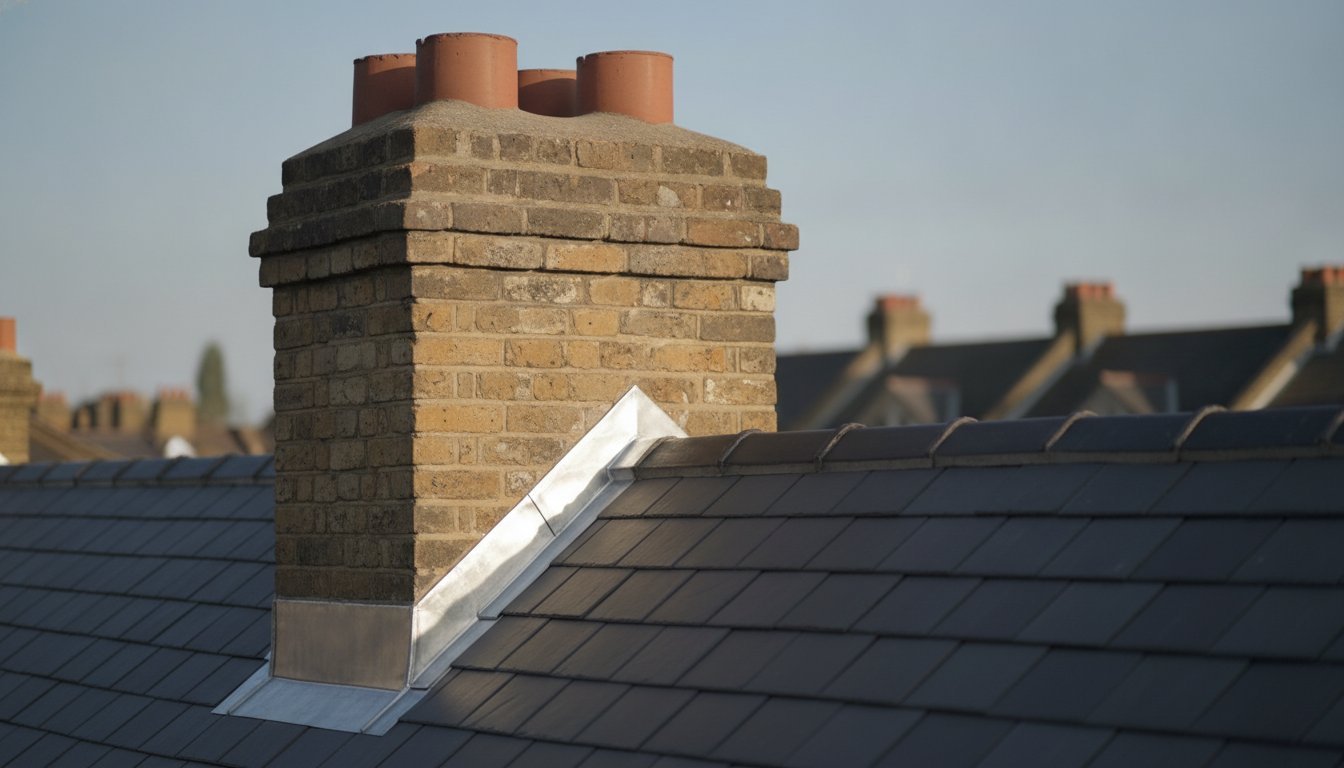
- Step 4: Sealing Thermal Bypasses. We identify and seal gaps around chimneys and party walls. These are areas where heat often escapes into neighbouring cavities, even if the main roof area is well-insulated.
- Step 5: Final Certification. Once complete, the upgrade should be documented to update your Energy Performance Certificate (EPC). Consulting with AG Property Services for a professional assessment can ensure your documentation is accurate, which can positively impact your property’s market value during a survey.
Specific Solutions for Hackney Victorian Terraces
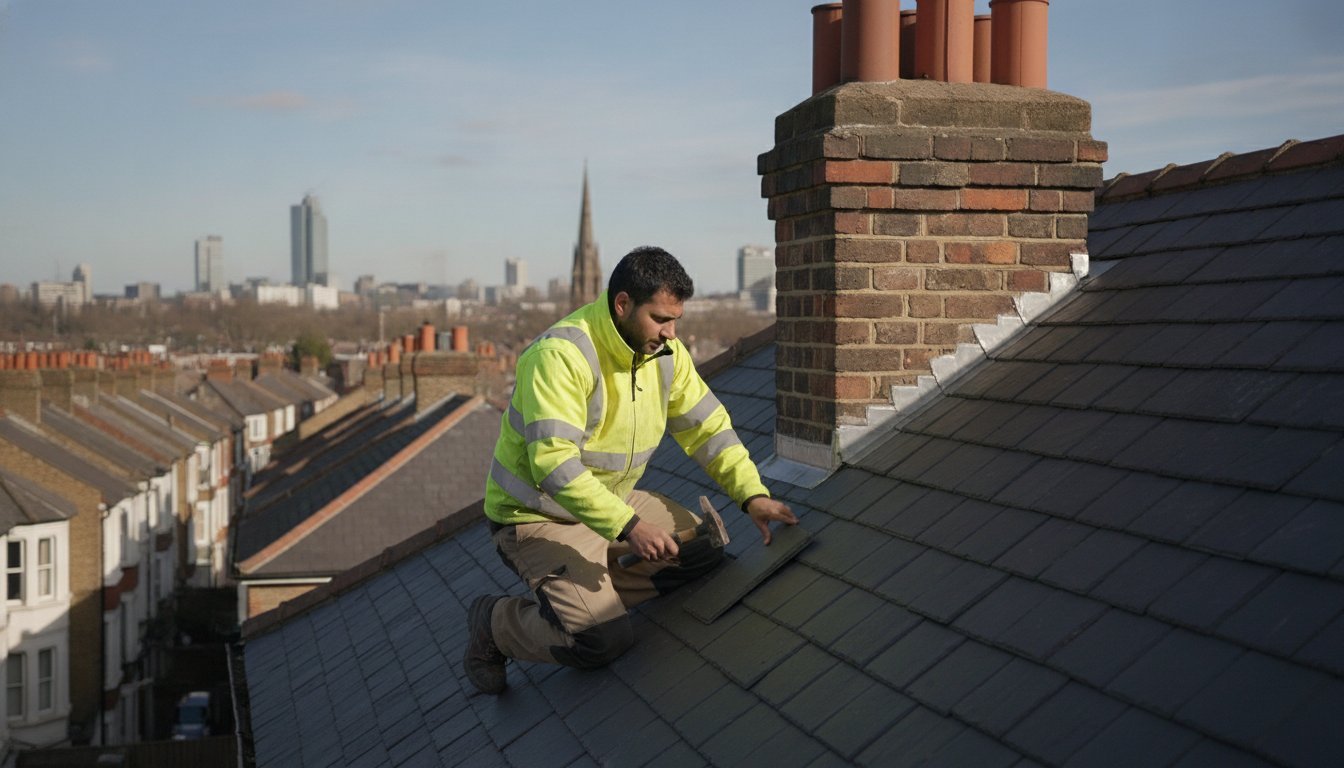
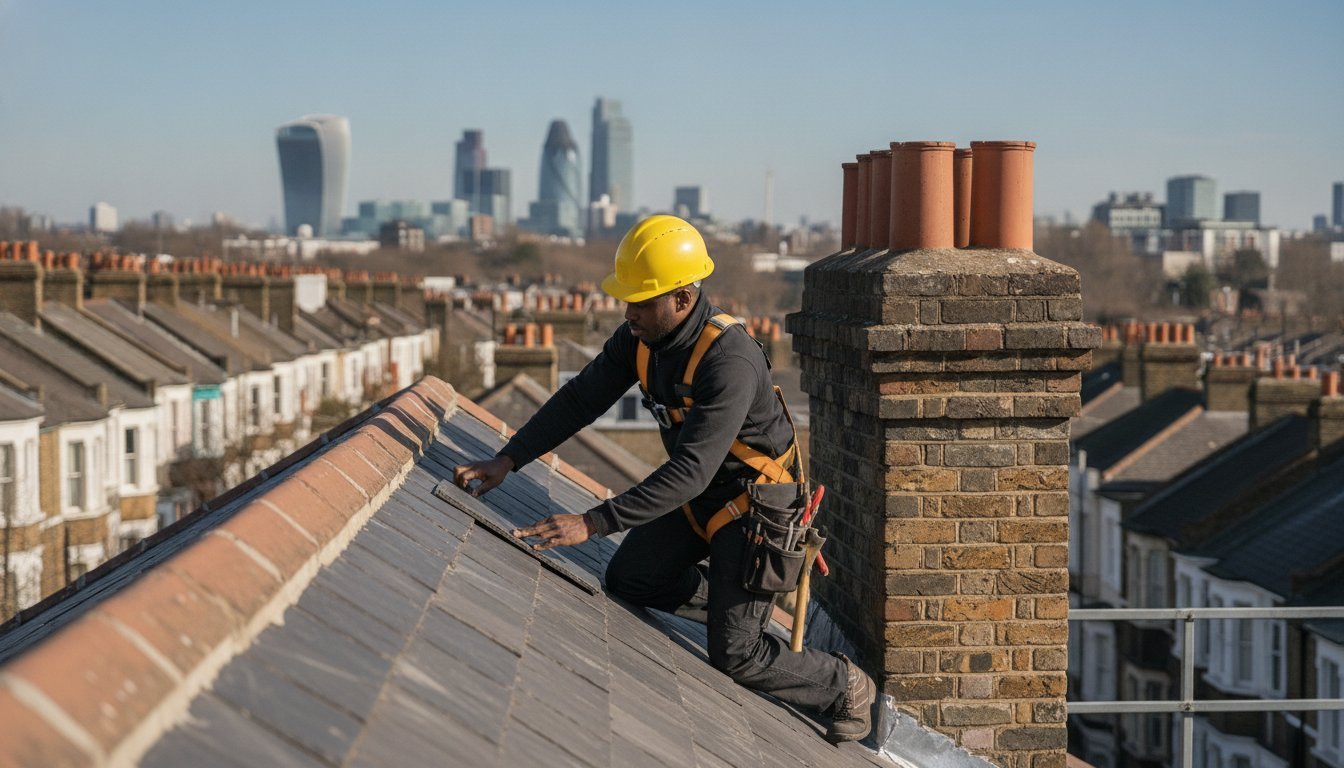
Hackney’s iconic terraces require a sympathetic touch. When working with original slate, the goal is to improve thermal performance without altering the external aesthetic of the period building. A common challenge in these properties is the “party wall” thermal bypass; heat often leaks into the uninsulated gaps between neighbouring houses. By sealing these junctions during thermal roof insulation upgrades, we significantly improve heat retention. For homeowners navigating the complexities of heritage materials, our guide on slate roofing Hackney properties covers the critical differences between Welsh and Spanish slate grades and how to meet conservation area requirements. For more complex projects involving structural timber repairs, you can read our guide on re-roofing Victorian houses in Hackney.
Thermal Performance Upgrades for Modern Flat Roofs
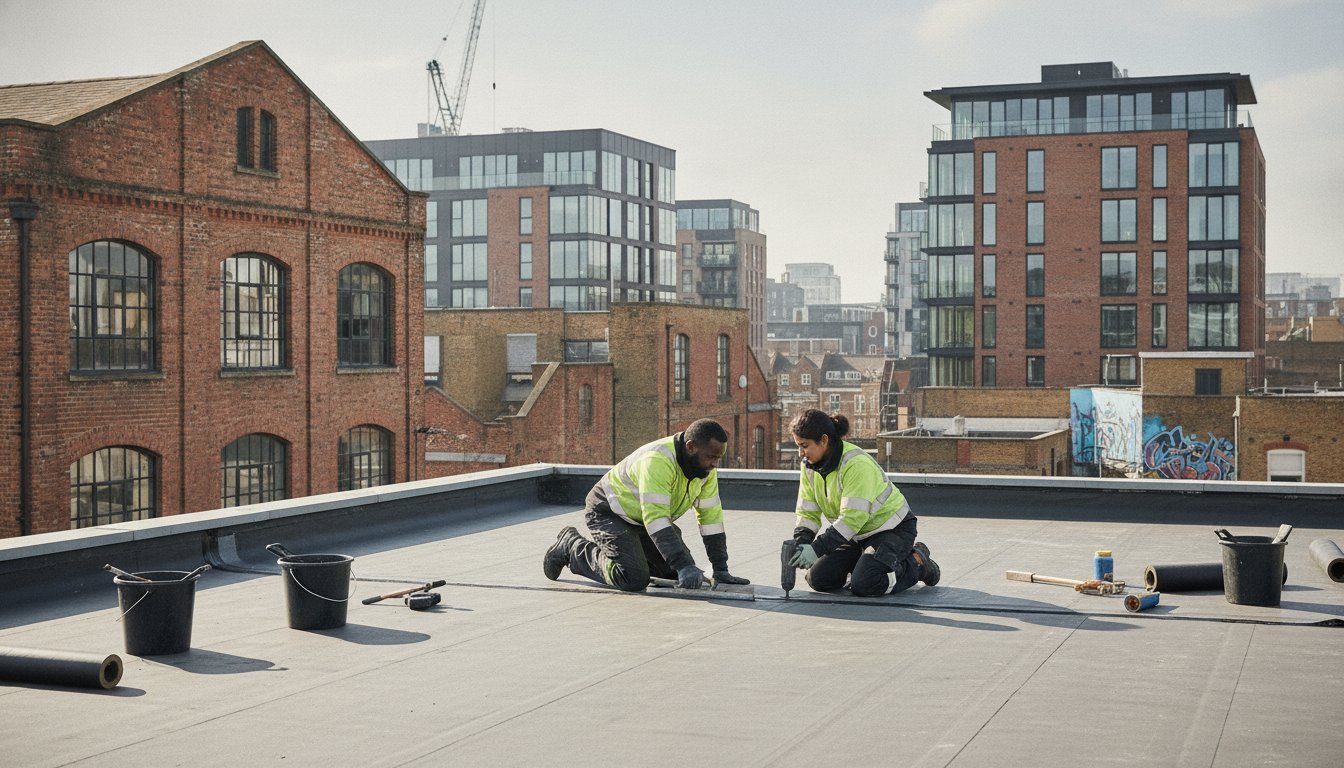
Flat roofs on extensions or converted apartments offer excellent opportunities for quick thermal gains. If the existing structure is sound, we can often apply a high-density PIR board overlay. This “warm roof” method provides a continuous thermal barrier without the need for disruptive internal work. For failing felt or asphalt roofs, a full strip-and-replace allows us to integrate modern GRP or EPDM waterproofing systems with high-performance insulation. If you are planning a renovation, our comprehensive guide to flat roof installation Hackney homeowners rely on covers modern systems and materials in detail. You can also book a site survey to determine the most efficient upgrade path for your specific roof type.
Professional Installation: Why Local Expertise Matters
Whilst the materials for thermal roof insulation upgrades are readily available at local merchants, the technical execution requires a specialist’s touch to avoid structural damage. DIY attempts often lead to expensive remedial works. For example, failing to maintain a 50mm airflow gap at the eaves can cause rapid timber rot, whilst covering recessed light fittings with mineral wool creates a significant fire hazard. A roofing specialist understands the complex relationship between insulation, ventilation, and the external weather-tightness of the building.
General builders often view insulation as a secondary task. In contrast, a dedicated roofing professional treats it as a core component of the building’s thermal envelope. In Hackney, where many properties are interconnected Victorian terraces, understanding how heat moves through party walls and chimney stacks is essential. We ensure that every project adheres to the 2026 Building Regulations, providing the certifications required for future property surveys and EPC updates. A professionally executed upgrade isn’t just about comfort; it’s a strategic investment that can increase a property’s value by approximately 10%. For commercial property owners who want to extend this strategic approach to their entire infrastructure, you can discover A1 Precision Solutions for expert turnkey industrial and office facility services.
Our Process at Roofing in Hackney
Our workflow is designed for transparency and precision. It begins with a comprehensive thermal survey to identify existing heat loss points and structural vulnerabilities. We then coordinate the installation with minimal disruption to your daily routine, whether we are working on a slate roofing Hackney project or a modern flat roof. We manage every detail, from the initial vapour control layer to the final piece of leadwork or slate. You can learn more about our team and our commitment to Hackney craftsmanship. We take pride in delivering results that stand up to the rigorous demands of London’s climate and the high expectations of local homeowners.
Commercial Insulation Upgrades for Hackney Businesses
For local businesses, thermal efficiency is a matter of reducing operational overheads. Large-scale retail units and warehouses in Hackney often suffer from extreme temperature fluctuations that drive up heating and cooling costs. Our commercial services provide tailored solutions for industrial flat roofs, utilising high-performance PIR boards and GRP systems to stabilise internal temperatures. Read our detailed guide on commercial roof insulation London to see how we help businesses reduce their carbon footprint. A well-insulated commercial roof ensures that low-carbon heating systems, such as heat pumps, can operate at peak efficiency, providing a sustainable future for East London’s industrial landscape and leading to annual energy bill savings of up to £380 for typical units.
Secure Your Home’s Thermal Future in Hackney
Upgrading your roof is a significant step toward achieving long-term energy efficiency and protecting the structural integrity of your property. By selecting the correct system, whether it’s a high-performance warm roof for a flat extension or breathable mineral wool for a Victorian loft, you ensure your home meets the rigorous 2026 Part L Building Regulations. These thermal roof insulation upgrades do more than just lower your bills; they safeguard your timbers against the common local issue of interstitial condensation whilst enhancing the overall market value of your home. To complement these structural improvements, ensuring your internal heating and gas systems are professionally maintained by Plumbing & Boilers London can lead to even greater energy savings and comfort.
Our team of expert installers is deeply familiar with Hackney’s specific Victorian architecture and modern building standards. We ensure full compliance with the latest regulations and provide comprehensive guarantees on all insulation and waterproofing work, offering you the security that comes with professional craftsmanship. Taking a methodical approach to your roof’s thermal performance today prevents costly structural repairs in the future. For property investors and business owners looking to manage their fiscal responsibilities with the same level of care, CTC Tax & Accounting provides expert financial advisory and tax compliance services to safeguard your commercial interests.
Request a Professional Thermal Roof Survey in Hackney to receive a tailored assessment of your property’s needs. Investing in a professionally insulated roof is the most reliable way to ensure a warm, comfortable, and efficient living environment for years to come.
Frequently Asked Questions
How much can I save on heating bills with a roof insulation upgrade in 2026?
Effective roof insulation can lead to annual energy bill savings of up to £380 for a typical detached home. Because up to 25% of a property’s heat escapes through an uninsulated roof, these upgrades represent one of the most efficient ways to reduce household overheads in Hackney. The exact saving depends on your current insulation levels and the specific material chosen for the upgrade.
Do I need planning permission for thermal roof insulation upgrades in Hackney?
Most thermal roof insulation upgrades fall under Permitted Development and don’t require formal planning permission. However, exceptions apply if your property is a listed building or located within one of Hackney’s many conservation areas. It’s always advisable to check with Hackney Council’s building control department if you intend to alter the external appearance or height of your roof line.
Can I insulate my roof from the inside without removing the tiles?
Yes, you can carry out thermal roof insulation upgrades from the inside by fixing insulation between or under the rafters. This “cold roof” method is common for Victorian terraces; however, it’s vital to maintain a 50mm ventilation gap between the insulation and the roof felt. This gap ensures air can circulate freely, which prevents moisture from becoming trapped against the structural timbers.
What is the difference between loft insulation and roof insulation?
Loft insulation is laid flat on the “floor” of the attic across the ceiling joists, which keeps the heat in the living spaces below but leaves the loft cold. Roof insulation is fixed directly to the sloping rafters or the roof deck. This method keeps the loft space itself at a comfortable temperature, making it suitable for storage or a future room conversion. For a full comparison of both approaches and their impact on your EPC rating, see our guide to loft insulation vs roof insulation costs and efficiency in Hackney.
Will upgrading my insulation cause damp or mould in my loft space?
Upgrading your insulation won’t cause damp as long as the project includes a proper ventilation strategy. We follow BS 5250 standards to ensure that eaves and ridge vents remain unobstructed. This allows water vapour to escape rather than condensing on cold surfaces, which is the primary cause of mould and timber decay in older London properties.
How long does it take to install a warm roof insulation system?
A professional installation typically takes between one and three days for a standard residential property. The duration varies depending on the size of the roof and whether we’re performing a simple overlay or a full strip-and-replace service. We aim to complete all works with minimal disruption to your daily routine, ensuring the building remains weather-tight throughout the process.
Is there any government funding available for insulation in Hackney?
The Great British Insulation Scheme is currently scheduled to end in March 2026. This scheme has provided support for many households to improve their energy efficiency. Homeowners should check the official government website or contact Hackney Council to see if they’re eligible for any local grants or remaining national funding before the scheme’s final deadline.
How do I know if my current roof insulation needs replacing?
You should consider a replacement if your energy bills remain high despite the heating being on or if you notice persistent drafts at the ceiling level. Physical signs include mineral wool that has become compressed to less than 270mm, or insulation that feels damp to the touch. If your current material was installed more than 20 years ago, it likely fails to meet the 2026 Part L Building Regulations. For a broader perspective on how your roof choices affect your overall energy performance, our guide on how to improve home energy efficiency through your roof provides a comprehensive overview of the steps Hackney homeowners can take to stop heat loss and reduce monthly outgoings.