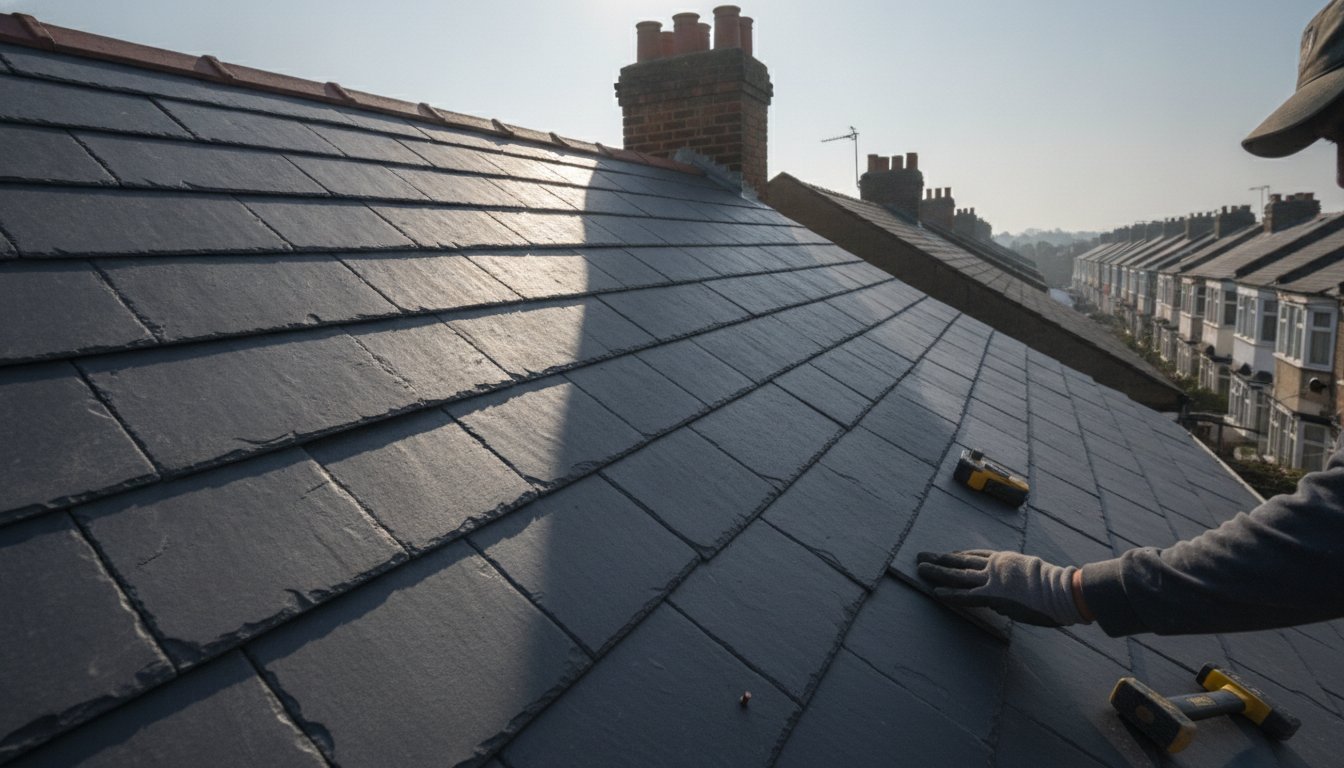
Could a single decision about your roof’s material determine if your home remains a heritage masterpiece or becomes a mounting maintenance liability? For many, the architectural charm of East London is a point of pride. However, the reality of ageing structures often brings the stress of “nail-sick” slates and unexpected leaks. When investing in slate roofing Hackney properties require a specialised approach that respects historical character whilst meeting 2026 building standards.
It’s understandable to feel overwhelmed by the choice between premium Welsh stone and imported Spanish alternatives, especially when navigating the strict conservation area rules set by Hackney Council. This guide provides the technical insights you need to preserve your property’s value and ensure a finish that perfectly matches your street’s original aesthetic. You’ll discover the longevity of different slate grades, the importance of BS 5534 compliance, and how master-led heritage techniques can provide a maintenance-free solution for several decades. We’ll break down the selection process and local regulations to ensure your investment is both secure and historically accurate.
Key Takeaways
- Understand why natural slate remains the gold standard for preserving the architectural integrity and market value of Hackney’s Victorian terraces.
- Identify the technical components of a high-quality installation, from breathable underlays to the use of copper nails for preventing future “nail-fretting”.
- Evaluate the performance and aesthetic differences between Welsh and Spanish varieties to select the most suitable materials for slate roofing Hackney restorations.
- Navigate local planning complexities by learning which Hackney conservation areas and Article 4 directions require specific heritage materials by law.
- Discover how to modernise your property’s thermal efficiency with insulation upgrades that maintain the traditional roofline of period buildings.
The Significance of Slate Roofing for Hackney’s Period Properties
The architectural landscape of East London is defined by its uniformity and historical integrity. For the Victorian and Edwardian terraces that line the streets of Dalston, Stoke Newington, and Victoria Park, slate is the undisputed gold standard. This material became the dominant roofing choice during the 19th century as the expansion of the railways allowed high-quality Welsh stone to reach the capital. Understanding what is slate helps explain its dominance; it’s a metamorphic rock that splits into thin, durable sheets, providing a slim profile that perfectly complements the iconic “London Stock” yellow brickwork. Modern concrete tiles often appear bulky and historically inaccurate, which can detract from the character and market value of a heritage home.
When considering slate roofing Hackney homeowners often find that natural materials are the only way to satisfy local conservation requirements. The aesthetic harmony between a dark, thin-edged slate roof and a traditional brick facade is a key component of the borough’s visual identity. For those who value this level of historical detail, Timescape Tours offers a way to explore more of Britain’s architectural heritage through luxury private excursions. Beyond mere appearance, slate offers a level of material empathy that modern synthetics struggle to replicate, behaving predictably under London’s specific weather cycles to ensure the structural timber beneath remains protected for generations.
Why Hackney Homeowners Prioritise Natural Slate
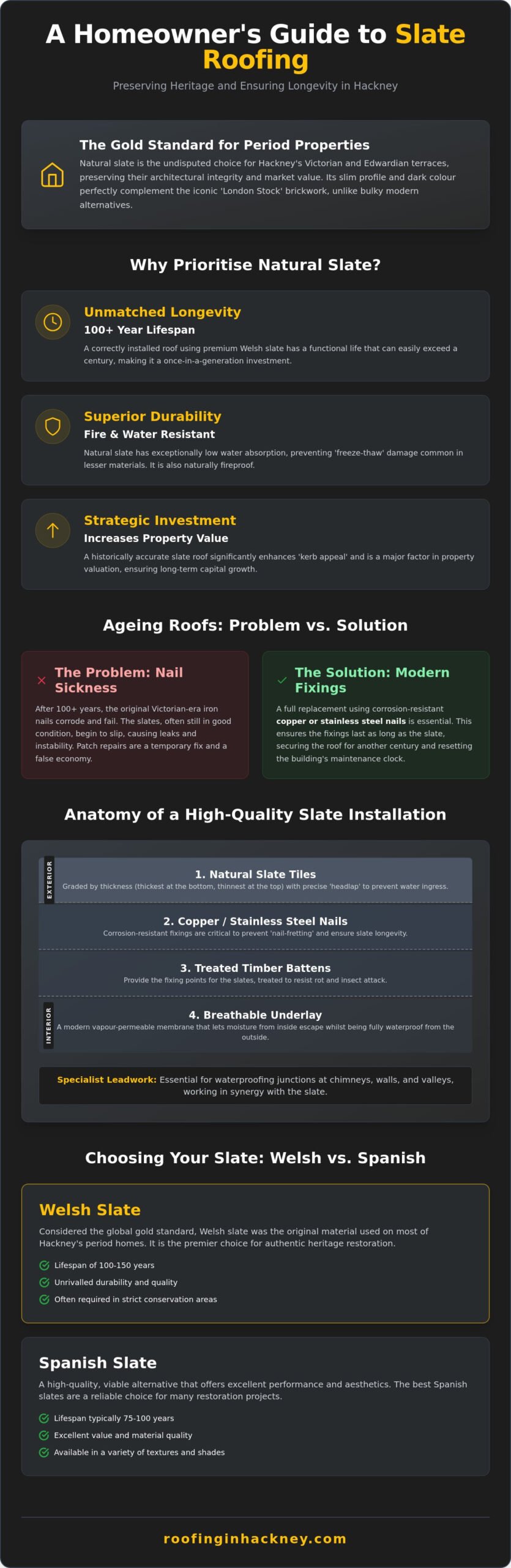
Longevity is the primary driver for choosing natural slate. A well-installed roof using premium Welsh slate can easily exceed a lifespan of 100 years. This durability is coupled with natural fire resistance and incredibly low water absorption rates, which prevent the “freeze-thaw” damage common in porous materials. In the 2026 property market, “kerb appeal” remains a significant factor in valuations. A roof that matches the original streetscape isn’t just a maintenance choice; it’s a strategic investment in the property’s long-term capital growth, a philosophy of quality also shared by those who visit Radiant Skin House for advanced aesthetic care in North London.
Common Challenges with Aging Slate Roofs in East London
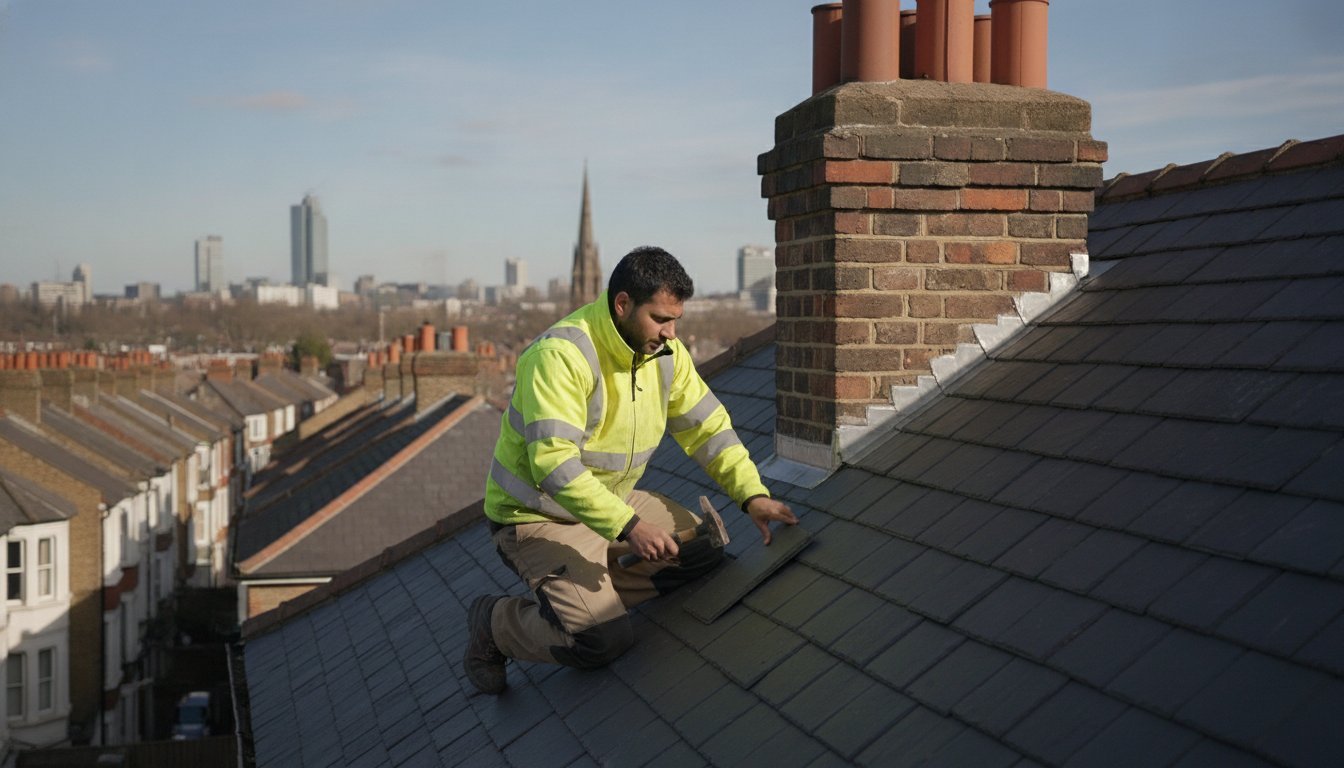
Many residents in the borough eventually encounter the issue of a “nail-sick” roof. This happens when the original iron nails used during the Victorian era finally succumb to corrosion after a century of exposure to London’s damp climate and historical soot. The slates themselves are often still in excellent condition, but they begin to slip because the fixings have perished. Whilst it’s tempting to opt for a quick fix, patch repairs often become a false economy. A full replacement using modern, corrosion-resistant copper or stainless steel nails ensures the roof remains secure for another century, effectively resetting the building’s maintenance clock. To stay ahead of these issues, following a structured slate roof maintenance Hackney checklist can help you identify early warning signs before they escalate into costly structural failures.
Technical Anatomy of a High-Quality Slate Installation
Achieving a roof that lasts a century requires more than just high-quality stone. It demands a methodical, layered approach. A modern slate roofing Hackney installation centres on a “breathable” system. This starts with a high-performance vapour-permeable underlay, followed by treated timber battens, and finally the slates themselves. This structure allows moisture to escape from the building’s interior whilst remaining entirely watertight from the outside.
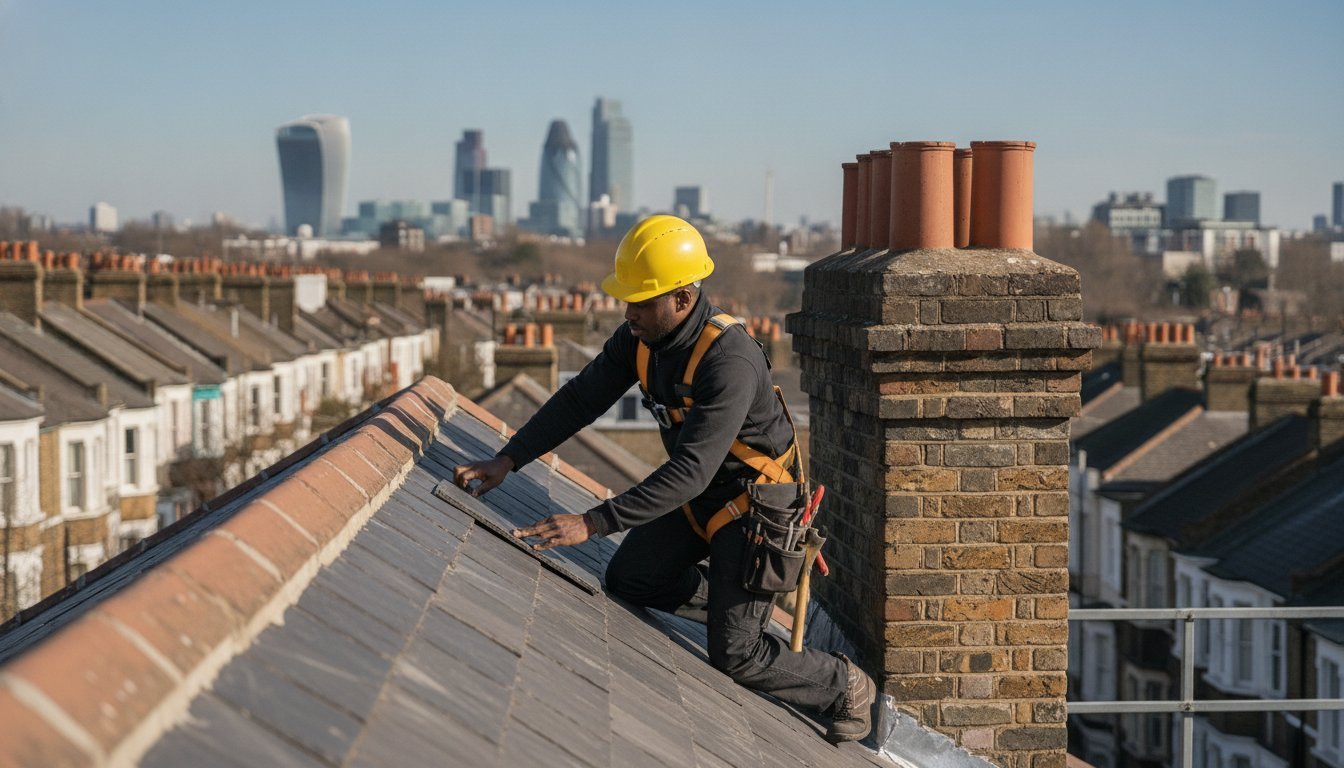
The choice of fixings is equally critical. We exclusively use copper or stainless steel nails to prevent the common issue of nail-fretting. Unlike the iron nails found in Victorian originals, these materials do not corrode. This simple specification change ensures that the slates remain securely in place for the duration of their lifespan. Before any slate is fixed, we perform a process called “grading”. This involves manually sorting every slate by its thickness. By placing the heaviest slates at the eaves and the thinnest at the ridge, we create a perfectly flat, uniform finish that prevents wind-driven rain from entering the structure. Headlap refers to the distance the top of a slate is covered by the slate two courses above it, which is the primary defence against capillary action.
The Critical Role of Specialist Leadwork
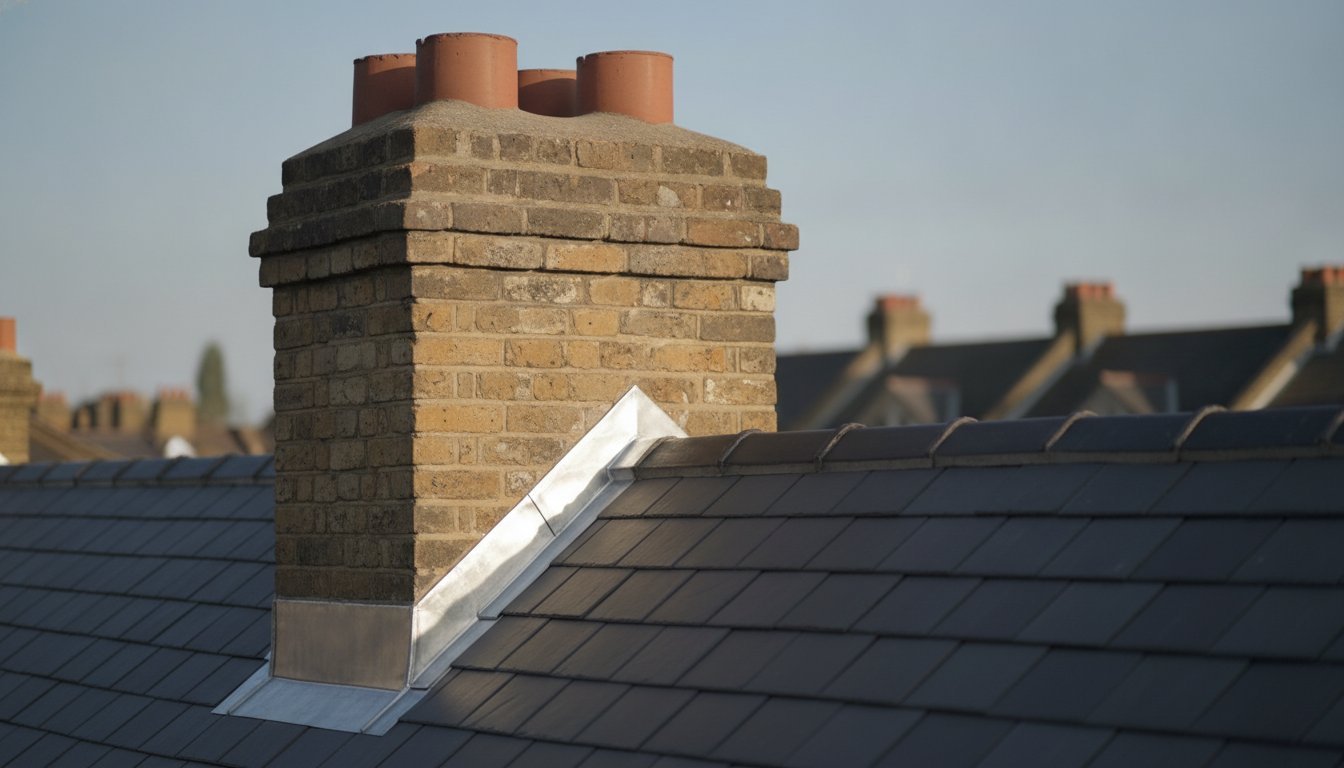
In the dense terrace rows of East London, leadwork is the essential partner to slate. Precision lead flashings are vital at chimney stacks and where roofs meet parapet walls. For the complex rooflines found in Hackney, lead valleys and secret gutters are used to ensure efficient water egress. These components must be installed with technical precision to accommodate the natural expansion and contraction of the metal. There is also an undeniable aesthetic synergy between the deep grey of natural slate and the professional finish of high-grade leadwork.
Ventilation and Insulation in Heritage Roofs
Modern standards require significantly higher thermal performance than when these houses were first built. However, old buildings must breathe to prevent timber rot. We balance these needs by integrating thermal roof insulation upgrades that don’t compromise airflow. To maintain the heritage profile, we often use discreet tile vents or hidden ridge ventilation rather than bulky modern plastic alternatives. If you’re planning a restoration, you can speak with our technical team for advice on the best ventilation strategy for your specific roof type.
Comparing Slate Varieties: Welsh, Spanish, and Synthetic
When selecting materials for slate roofing Hackney homeowners must weigh initial expenditure against the total cost of ownership. The material you choose defines not only the appearance of your home but also how many decades will pass before you need to consider a replacement. Whilst the borough’s streets are traditionally clad in Welsh stone, the 2026 market offers several alternatives that cater to different budgets and structural requirements.
Welsh slate, specifically from the Penrhyn or Cwt-y-Bugail quarries, remains the premium heritage choice. It is widely regarded as the finest roofing material in the world due to its incredible density and 100-plus year lifespan. For those seeking a balance between durability and cost, Spanish slate from reputable producers like CUPA is a common modern standard. High-grade Spanish slate can last between 60 and 100 years, making it a viable option for many East London restorations. Reclaimed slates are often the best choice for authentic patch repairs, allowing us to match the weathered texture of an existing roof perfectly. Conversely, synthetic or composite slates are increasingly popular for modern Hackney builds where weight or budget is a primary concern, though they typically offer a shorter lifespan of 20 to 30 years. Many Hackney properties also feature flat roof extensions or outbuildings where a different approach is required entirely; our guide to flat roof installation Hackney covers the modern GRP, EPDM, and single-ply systems best suited to these structures.
Welsh vs. Spanish Slate: The Longevity Gap
The performance of natural slate is governed by the BS EN 12326 standard. To ensure your roof survives the London climate, you should only accept slates with an A1, S1, and T1 rating. A1 denotes the lowest water absorption, S1 indicates high resistance to atmospheric pollutants, and T1 ensures the stone won’t suffer from thermal cycling damage. Low-grade slates often contain inclusions of iron pyrites. Over time, these minerals oxidise, causing the slates to turn a rusty brown colour or even develop holes. Premium Welsh and Spanish varieties remain colour-fast, maintaining their elegant blue-grey hue for their entire functional life.
Sourcing the Right Materials for Hackney
Verifying the origin of your slate batch is a vital step in the procurement process. Every pallet of high-quality slate should arrive with a certificate of conformity that matches its technical claims. We pay close attention to the consistency of thickness and texture during the sorting phase. Cheap, uncertified imported slates are often prone to delamination within 15 years, where the layers of stone literally peel apart. Investing in a certified, traceable product prevents these premature failures and ensures your roof remains a permanent asset to your property.
Navigating Hackney Council and Conservation Area Rules
Hackney is home to some of London’s most rigorously protected architectural pockets. Areas such as De Beauvoir, Dalston, and Victoria Park are subject to strict conservation controls designed to preserve the borough’s Victorian and Edwardian character. For anyone considering slate roofing Hackney planning requirements are often the first hurdle to clear. Many of these neighbourhoods fall under Article 4 directions. This legal tool removes certain permitted development rights, meaning homeowners are often required by law to use natural slate rather than cheaper synthetic alternatives to maintain the visual continuity of the street.
The Hackney Planning Department pays close attention to street-facing slopes. Even if you believe you are replacing a roof like-for-like, it is wise to confirm your choice of material with a Heritage Officer. Documenting this process is essential for your property’s long-term history. When you eventually come to sell, having a clear record of material approval and professional guarantees within your Home Information Pack can significantly smooth the transaction process and reassure potential buyers about the building’s structural integrity.
Planning Permission for Slate Roofs in Hackney
Whilst minor repairs often fall under permitted development, a full replacement in a conservation area usually requires formal consultation. Heritage Officers frequently request physical samples of the proposed slate to ensure the colour and texture match the surrounding terrace. Using non-compliant materials can lead to enforcement action. This might involve the costly requirement to remove the newly installed roof and start again with approved materials, making early consultation a financial necessity. Understanding the full scope of slate roof repairs Hackney heritage properties require can help you determine whether your situation calls for targeted intervention or a more comprehensive restoration approach.
Choosing a Local Contractor with Heritage Expertise
London’s terrace architecture presents unique challenges, such as shared party walls and intricate chimney stacks that require expert leadwork. A contractor with deep local Hackney roots understands these nuances and the specific building behaviours of East London’s housing stock. You should always ask potential contractors about their experience with Article 4 requirements and their specific approach to leadwork on the borough’s distinctive rooflines. If you are unsure whether your project requires planning permission, you can enquire with our technical team for a professional assessment of your property’s conservation status.
The Roofing in Hackney Approach to Slate Excellence
Our methodology for slate roofing Hackney is defined by a commitment to technical precision and a respect for the borough’s architectural history. We don’t believe in shortcuts. Every project begins with a rigorous assessment of the existing structure to ensure the new roof provides a permanent solution rather than a temporary fix. It’s a process that values order, transparency, and high-quality results, reflecting our identity as master craftsmen and trusted local advisors.
We source only high-grade, certified slate that meets the A1, S1, T1 criteria. Our installers are specialists in heritage leadwork, ensuring that chimney stacks and parapet walls are as durable as the slates themselves. In the dense streets of East London, logistics are often a challenge. We organise scaffolding and waste removal with precision to minimise the impact on your neighbours and the local traffic flow. By balancing modern thermal performance with traditional aesthetics, we ensure your home remains warm and energy-efficient without compromising its Victorian or Edwardian roofline.
Our Process: From Survey to Slate
Precision is at the heart of our workflow. We utilise detailed drone surveys to identify specific slate failures and structural weaknesses before any work begins. This data allows us to provide a highly accurate assessment of the project’s scope. Our quoting is entirely transparent; we separate material costs from specialist labour so you understand exactly where your investment is going. Whilst some contractors provide vague estimates, we offer a clear, structured breakdown of the required phases. If you are ready to begin your restoration, you can book a bespoke heritage survey with our technical team.
Case Study: Victorian Terrace Restoration in E8
A recent project in the E8 area highlights our approach to heritage work. The property required a full replacement of a failing, nail-sick roof. We utilised premium Welsh slate to match the original character of the terrace and performed comprehensive chimney repointing and lead flashing replacement. The integration of modern breathable underlay and insulation was achieved without raising the roof height, preserving the symmetry of the street. The result is a roof that will protect the property until the next century. For more information on how we manage these complex projects, read our Professional Roof Replacement Hackney guide.
Securing Your Property’s Heritage for the Next Century
Preserving the architectural integrity of an East London home requires a blend of historical empathy and modern technical standards. You’ve seen how the right choice of material, from premium Welsh stone to high-grade Spanish alternatives, can define your property’s value for decades. Successful slate roofing Hackney projects depend on more than just the slates themselves. They rely on precision leadwork, correct ventilation, and a deep understanding of local conservation area restrictions. By prioritising these technical details now, you avoid the future stress of “nail-sick” failures and potential planning disputes.
As specialists in Victorian and Edwardian heritage roofing, we ensure every installation meets the highest craftsmanship standards. Our team provides expert leadwork and chimney restoration whilst navigating the specific requirements of the Hackney Council planning department. We’re here to help you reset your building’s maintenance clock and protect its character for generations to come. To take the next step in your restoration journey, you can Request a Specialist Slate Roof Survey for Your Hackney Home. We look forward to helping you safeguard your home’s legacy with a roof built to last.
Frequently Asked Questions
Is natural slate better than concrete tiles for my Hackney home?
Natural slate is superior for Hackney’s period homes because it matches the original architectural intent and offers triple the lifespan of concrete. Whilst concrete tiles are cheaper initially, they lack the slim profile required for Victorian terraces and often look bulky against traditional brickwork. Choosing natural slate ensures your property retains its historical character and long-term market value, whereas concrete can sometimes be seen as a detrimental alteration in conservation areas.
How much does a new slate roof cost in Hackney for a mid-terrace house?
The total investment for a new roof depends on the choice between Welsh and Spanish stone, the complexity of the leadwork, and the scaffolding requirements for your specific street. Every terrace in Hackney has unique challenges, such as shared parapets or intricate chimney stacks. We provide a structured, transparent quote after a survey to ensure all technical requirements are met, rather than offering a generic estimate that might overlook critical structural repairs.
Can I use Spanish slate in a Hackney conservation area?
Spanish slate is frequently permitted in Hackney conservation areas provided the specific batch matches the colour and texture of the original Welsh stone. High-grade Spanish varieties are often indistinguishable from heritage materials once installed. However, you should always verify this with a Hackney Council Heritage Officer before work begins. Using a certified material ensures your slate roofing Hackney project complies with local Article 4 directions and preserves street-side uniformity.
What is “nail sickness” and can it be repaired without a full re-roof?
Nail sickness occurs when the original iron fixings corrode, causing slates to slip even if the stone is still in good condition. Whilst individual slipped slates can be fixed with temporary straps, this is usually a false economy. If multiple slates are sliding, it indicates a systemic failure of the fixings. A full re-roof using copper or stainless steel nails is the only way to ensure the structure remains watertight for the next century. Our comprehensive slate roof maintenance Hackney checklist outlines the seasonal inspections that can help you detect nail sickness in its earliest stages before widespread slate slippage occurs.
How long does it take to install a new slate roof on a Victorian property?
A full roof replacement on a standard Victorian terrace typically takes between two and three weeks to complete. This timeline includes the erection of scaffolding, the removal of the old materials, and the precision installation of the new breathable system and leadwork. Factors like the complexity of your chimney stacks and the prevailing weather conditions can influence the final duration. We focus on a methodical pace to ensure every layer is installed to master-craftsman standards.
Do I need to notify my neighbours in Hackney before starting roof work?
You should notify your neighbours if the work involves shared party walls or if scaffolding needs to be erected near their boundary. The Party Wall Act often applies to terrace properties when stripping back to the shared structural timbers. It is always best to maintain clear communication with those on either side to manage expectations regarding noise and access, ensuring the project proceeds smoothly without any local friction.
Does a new slate roof come with a guarantee?
Professional slate roofing Hackney installations are backed by both material and workmanship guarantees. Natural slates often carry a manufacturer’s warranty ranging from 50 to 100 years, whilst the installation work itself is covered by a specialist workmanship guarantee. These documents provide peace of mind that your investment is protected. We provide all necessary certification upon completion, which is vital for maintaining your property’s history and assisting with any future sale.
Can I install solar panels on a natural slate roof?
It is entirely possible to install solar panels on a natural slate roof using specialist heritage mounting systems. These systems utilise bespoke hooks that sit beneath the slates to maintain the roof’s watertight integrity. We recommend integrating solar installations during a full re-roofing project. This allows the mounts to be fixed directly to the rafters and properly flashed with lead, preventing the leaks often associated with retrofitting panels onto older, fragile slates. If you notice any damage to existing slates during a solar installation assessment, our guide to expert slate roof repairs Hackney specialists recommend can help you address isolated failures before they develop into more serious structural issues.