What if your new flat roof was already technically obsolete the moment the last roll of felt was laid? Many Hackney homeowners still associate flat roofing with the recurring dread of a midnight leak during a typical East London downpour. It’s a valid concern, especially as older bitumen systems struggle to cope with variable weather and evolving thermal standards. When arranging a professional flat roof installation Hackney property owners often find themselves asking which modern material is truly best for their specific structure and budget.
We understand that a roof is a significant structural investment that should offer peace of mind, not persistent anxiety. This guide will help you master the technicalities of modern systems, from GRP fibreglass to EPDM rubber and single-ply membranes, to ensure your property remains watertight and energy-efficient for 25 years or more. We’ll explore how to achieve the mandatory 0.25 W/m²K U-value for renovations and ensure your project complies with the Hackney Residential Extensions SPD. You’ll learn how to select the right materials and installation standards to secure a leak-free future for your property.
Key Takeaways
- Evaluate the performance benefits of EPDM rubber and GRP fibreglass to choose a material that offers both durability and aesthetic harmony for your specific property type.
- Understand the technical superiority of “warm roof” systems in preventing internal condensation whilst significantly lowering your long-term energy costs.
- Master the logistical requirements of a flat roof installation Hackney project, from securing local scaffolding permits to complying with the latest Council building regulations.
- Learn how to distinguish between simple contractor promises and comprehensive insurance-backed guarantees to secure your structural investment for over 25 years.
- Gain insights into the structural nuances required for Hackney’s diverse architecture, ensuring your installation is tailored for either a Victorian extension or a contemporary development.
Understanding Flat Roof Installation in Hackney’s Urban Landscape
Hackney’s architectural identity is defined by its diversity, ranging from the intricate brickwork of Victorian terraces in Victoria Park to the sleek, glass-fronted developments lining the Regents Canal. This variety means that a flat roof installation Hackney project is never a one-size-fits-all endeavour. Traditionally, flat roofs relied on multiple layers of bitumen felt, a material prone to drying out and cracking under the sun’s glare. Modern flat roofing systems have moved far beyond these limitations, utilising high-performance polymers and synthetic rubbers that offer superior elasticity and thermal resistance.
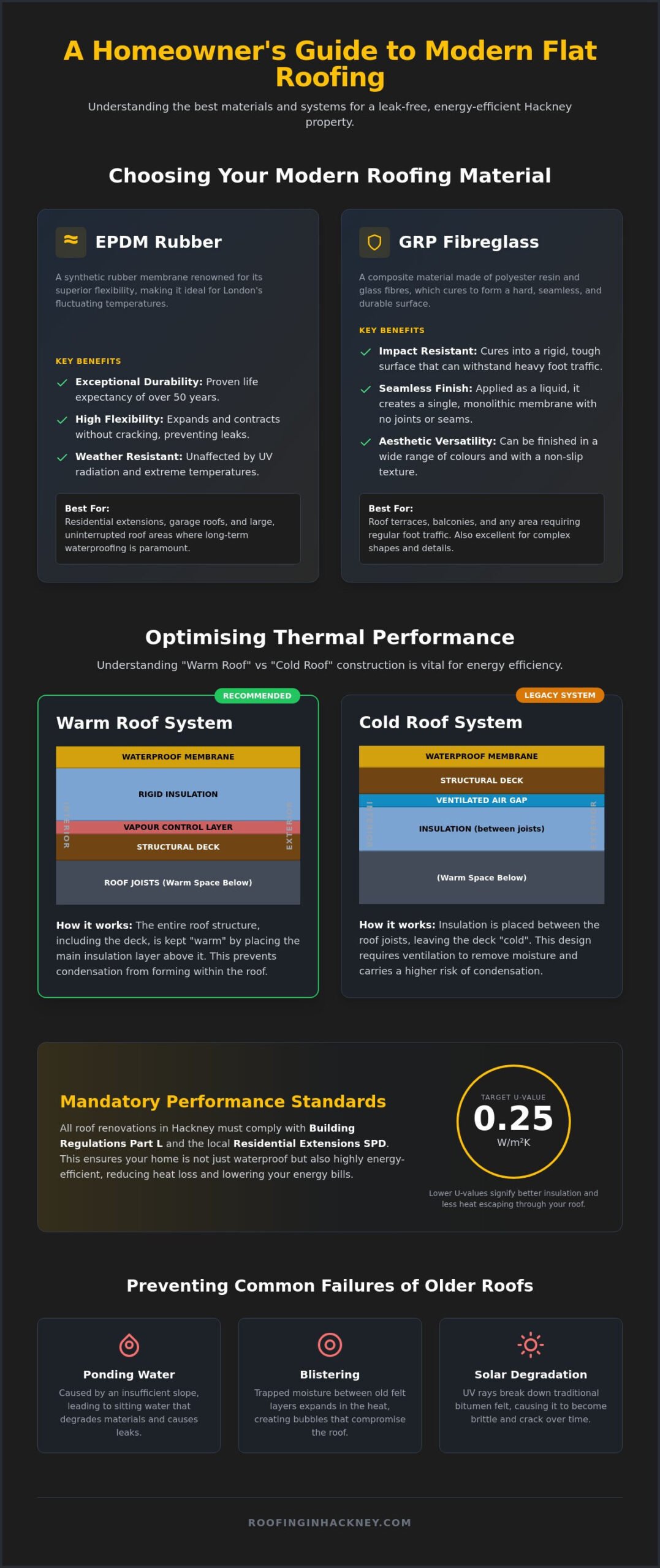
Older East London roofs often succumb to three primary failure points: ponding, blistering, and solar degradation. Ponding occurs when the roof’s “fall” or slope is insufficient, allowing water to sit and eventually seep through the deck. Blistering is caused by moisture trapped between old felt layers, whilst solar degradation refers to the UV-driven breakdown of bitumen. Transitioning to modern materials isn’t just about stopping a leak; it’s about protecting the structural integrity and market value of your property. A certified installation ensures the roof acts as a precision-engineered thermal shield rather than just a temporary waterproof cover.
The Challenges of Flat Roofing in East London
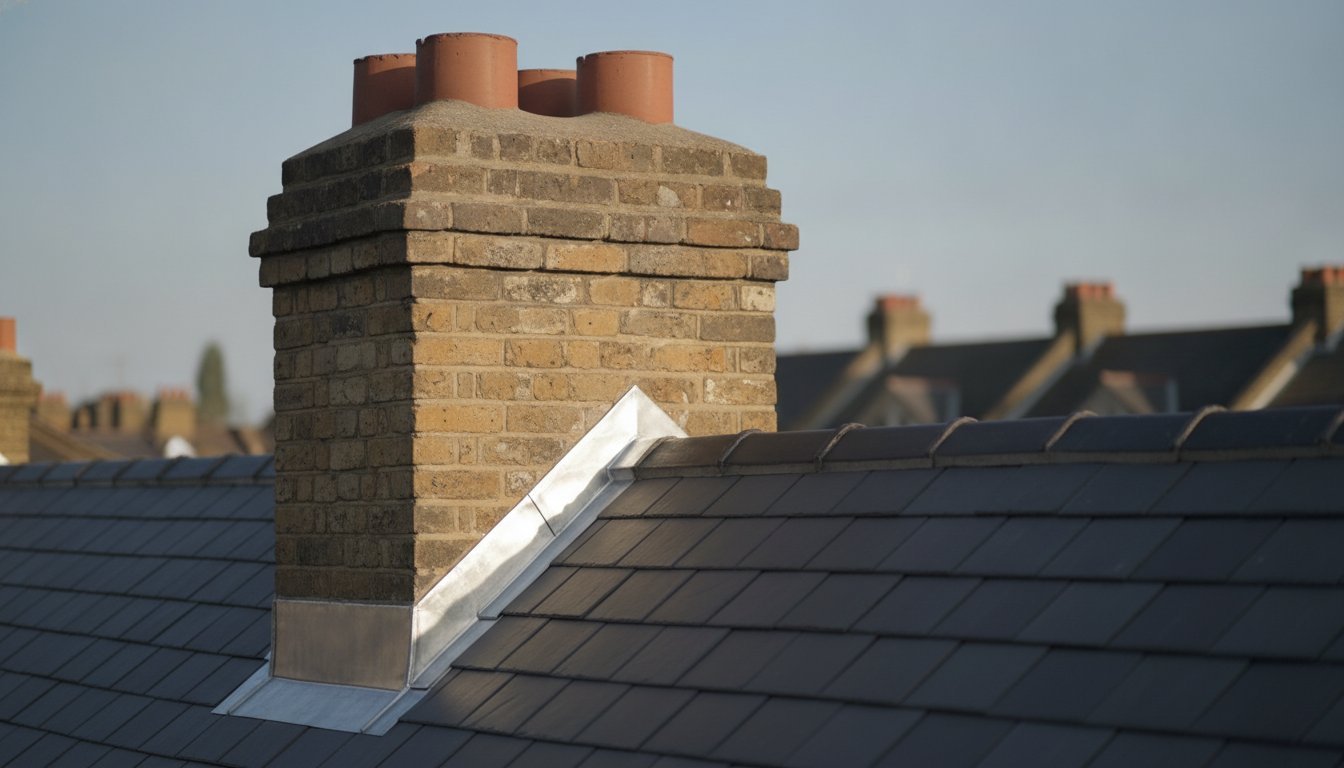
Installing a roof in Hackney presents unique logistical hurdles. The borough’s narrow streets and tight terrace configurations mean that managing scaffolding permits and material deliveries requires meticulous planning. Many historic Hackney extensions feature parapet walls, which, whilst aesthetically pleasing, can trap water if the drainage outlets aren’t perfectly aligned with the new roof’s pitch. Furthermore, our local microclimate can be damp and unpredictable. This makes the choice of material critical, as certain systems like GRP fibreglass require specific dry windows for the resin to cure correctly, whereas EPDM rubber can often be installed more flexibly.
Why 2026 is the Year for a Flat Roof Upgrade
The regulatory environment has shifted significantly this year. As of 2026, all roof modifications in the borough must align with the Hackney Residential Extensions and Alterations SPD. Compliance with Building Regulations Part L is also mandatory, requiring a target U-value of 0.25 W/m²K for thermal element upgrades. This means that a simple “patch-up” repair is no longer a viable or legal long-term solution. By upgrading now, you’re not just securing your home against the weather; you’re contributing to “Green Hackney” sustainability goals by drastically reducing heat loss. If you’re concerned about how these new standards affect your property, you can contact us for a detailed technical assessment. Moving toward a modern, insulated system transforms your roof from a maintenance burden into a high-performing asset.
Comparing Modern Flat Roofing Materials for London Homes
Selecting the right material is the most critical decision in any flat roof installation Hackney project. Modern technology has replaced the fragile, paper-thin felts of the past with materials engineered to withstand the specific rigours of the London climate. For residential extensions, EPDM rubber remains a frontrunner. This synthetic membrane is renowned for its incredible flexibility, allowing it to expand and contract without cracking as temperatures fluctuate. Many industry professionals recognise EPDM for its 50-year life expectancy, making it a “fit and forget” solution for many homeowners who value long-term structural security.
For those looking to utilise their roof space as a terrace or balcony, GRP (Glass Reinforced Polyester) fibreglass is often the superior choice. Unlike rubber, GRP cures into a rigid, impact-resistant surface that can easily handle foot traffic and patio furniture. When choosing between these systems, you must ensure the work complies with UK building regulations for roofing, particularly when replacing more than 25% of the existing surface. This legal requirement ensures your new installation meets modern safety and thermal standards.
EPDM vs. GRP: Which is Right for Your Extension?
The installation process differs significantly between these two popular systems. EPDM is a cold-applied system, usually laid in a single large sheet which eliminates the risk of joint failure. It offers a clean, matte black finish that sits discreetly behind parapet walls. GRP involves applying liquid resin over a glass-fibre mat, creating a completely seamless shell. Whilst GRP is more labour-intensive to install, it allows for custom-coloured topcoats to match your property’s aesthetic. Repairs on EPDM are relatively straightforward with adhesive patches, whereas GRP may require professional sanding and re-coating to maintain its structural integrity. If you’re weighing up whether your existing system warrants repair or a full upgrade, our detailed guide on flat roof replacement London costs and repair vs. replacement options can help you make an informed decision.
Reinforced Bitumen and Liquid-Applied Systems
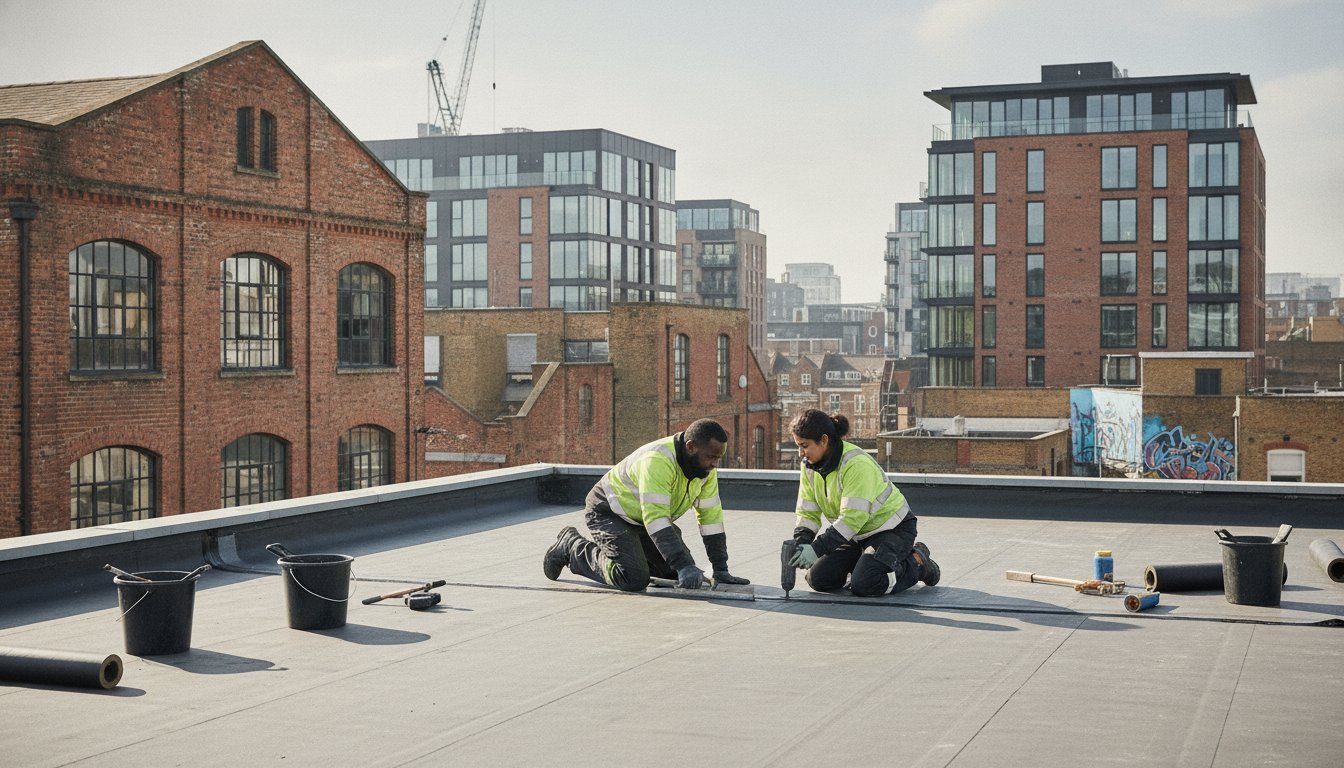
High-performance reinforced bitumen membranes (RBM) shouldn’t be confused with old-fashioned pour-and-roll felt. Modern three-layer systems are torch-applied and reinforced with polyester, providing a robust and cost-effective barrier that is far more durable than its predecessors. For complex roof shapes or areas crowded with plant equipment, liquid-applied waterproofing is gaining traction. These systems are painted on to form a monolithic, UV-resistant layer that reaches into every awkward corner. If you’re unsure which material suits your building’s structural load, you can request a professional material consultation to explore your options. For larger commercial developments in Hackney, single-ply membranes like TPO are often favoured for their speed of installation and lightweight profile, providing a high-performance finish for extensive roof spans.
Warm Roof vs. Cold Roof: Optimising Thermal Performance
When planning a flat roof installation Hackney property owners must decide on the thermal configuration of the build. This decision isn’t merely about the thickness of the material; it’s about where the insulation sits in relation to the structural roof deck. A “warm roof” is the modern industry standard. In this configuration, the insulation is placed entirely above the roof deck, beneath the waterproof membrane. This creates a thermal envelope that keeps the entire structure at a temperature similar to the interior of the home. In contrast, a “cold roof” places insulation between the ceiling joists, leaving the deck and the void above the insulation exposed to the elements.
Cold roofs are increasingly viewed as a legacy approach for London’s older housing stock. Because the roof deck remains cold, warm air from the living space can rise and condense on the underside of the timber, leading to persistent damp issues. To comply with the 2026 Building Regulations, which mandate a target U-value of 0.25 W/m²K for most renovations, the warm roof approach is almost always the most efficient technical path. It simplifies the construction process whilst providing a superior barrier against heat loss, directly impacting the long-term energy performance of the property.
Eliminating Condensation and Damp
The primary advantage of the warm roof system is that it shifts the “dew point”—the temperature at which air moisture turns to liquid—to the outside of the structural timber. By keeping the joists and deck warm, you effectively eliminate internal moisture build-up. If a cold roof is required due to the height restrictions often found in Hackney terrace extensions, ventilation becomes a non-negotiable requirement. A 50mm clear air gap must be maintained above the insulation to allow moisture to escape. Without this, timber rot is a significant risk. We also focus on reducing thermal bridging, which occurs when heat escapes through the junctions where an extension meets the original Victorian brickwork.
Insulation Materials and Energy Efficiency
The choice of insulation material is vital for reducing Hackney heating bills. High-performance PIR (Polyisocyanurate) boards are typically favoured for their excellent thermal resistance. For projects where height is severely limited by local planning constraints, Vacuum Insulated Panels (VIPs) offer exceptional performance in a remarkably thin profile. These thermal roof insulation upgrades are now a standard component of high-quality flat roofing. Investing in superior thermal performance today offers a clear return on investment. It doesn’t just lower monthly energy costs; it protects the structural fabric of your home from damp-related deterioration, ensuring your extension remains a comfortable, dry asset for decades to come.
The Professional Installation Process: From Survey to Completion
A successful flat roof installation Hackney project begins long before the first roll of material arrives on site. It starts with a comprehensive structural survey that acts as a technical audit of your property’s current condition. We don’t just look at the surface; we assess the load-bearing capacity of the existing joists and the integrity of the underlying deck. This is particularly vital in Hackney’s Victorian terraces, where decades of minor leaks may have caused silent structural decay that a simple visual inspection would miss. Understanding the true source of water ingress is a complex process, and our detailed resource on flat roof leak detection Hackney homeowners can use to systematically identify problems explains why water often travels several metres from its entry point before becoming visible indoors.
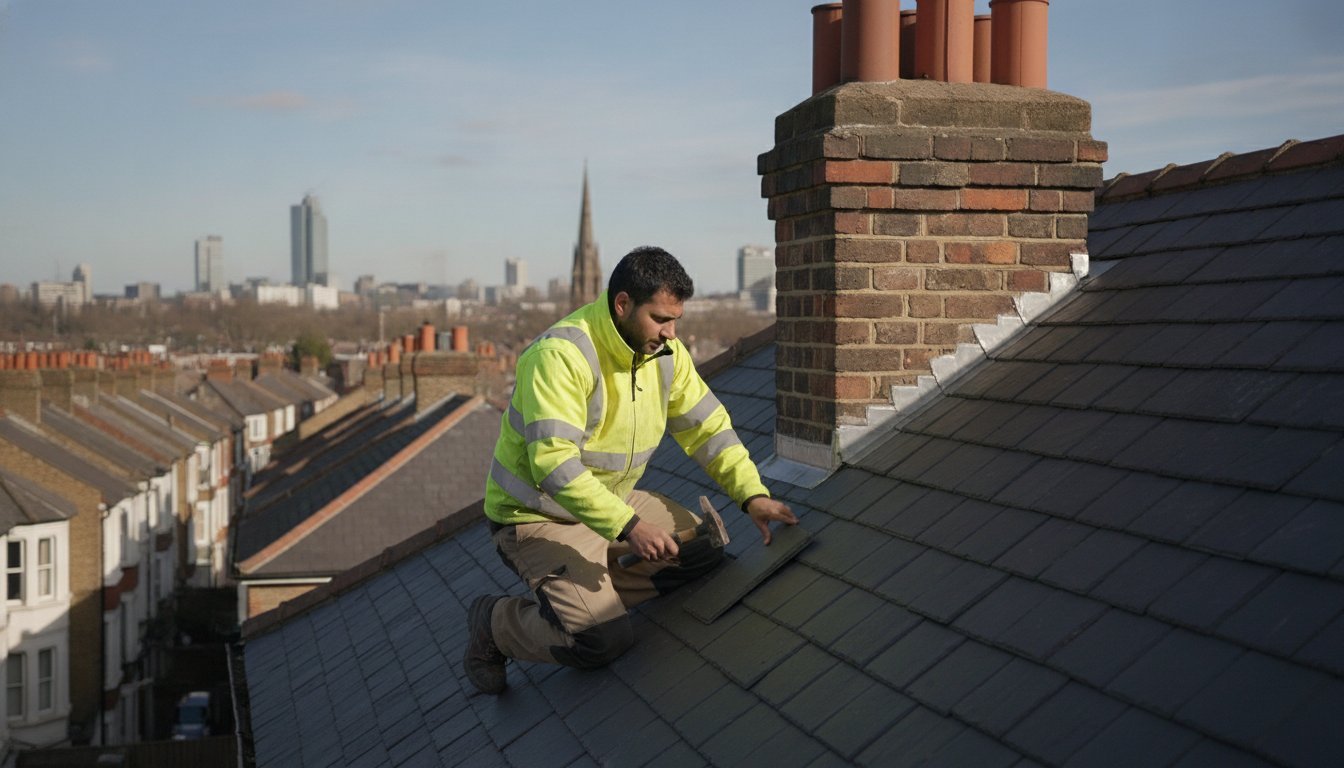
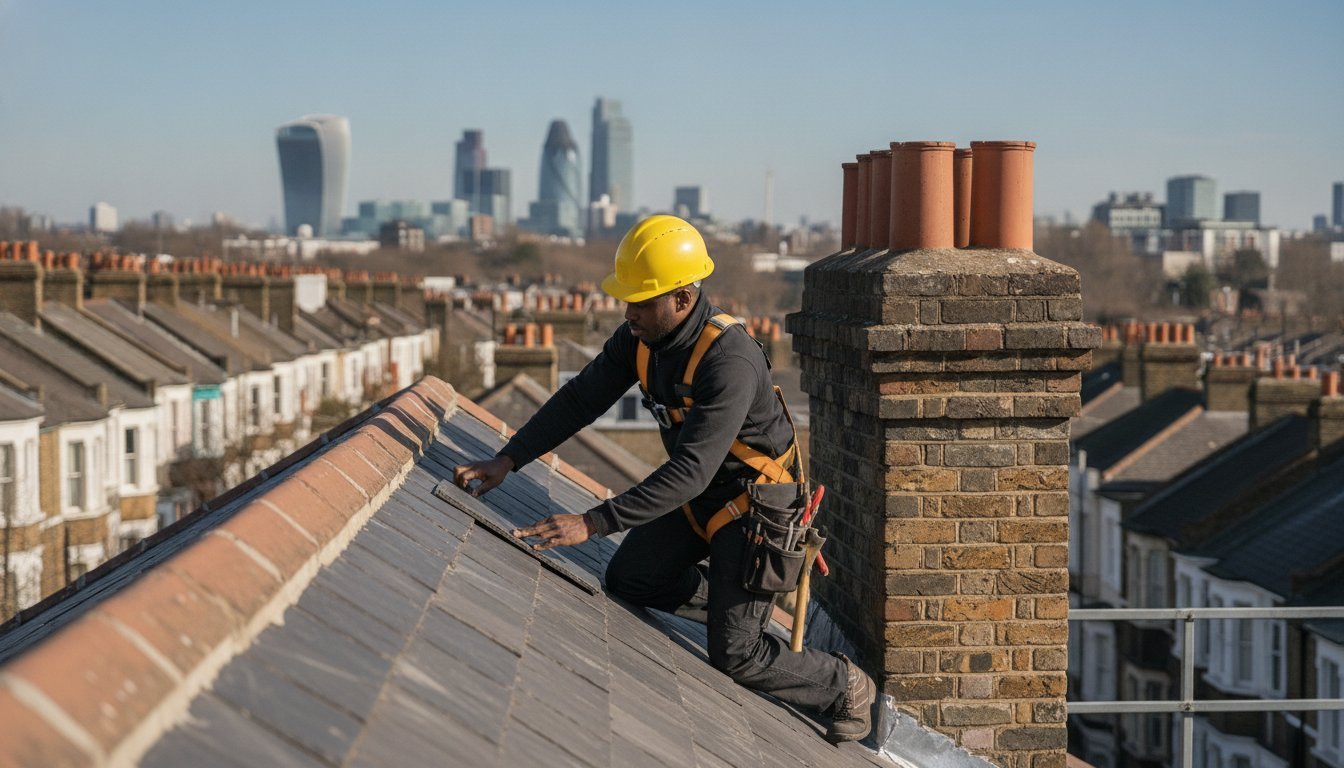
Managing the logistics of a flat roof installation Hackney project involves more than just technical skill; it requires local operational knowledge. In a borough where terrace houses are often separated by mere centimetres, organising scaffolding licences and skip placements on narrow residential streets is a critical phase of the work. We coordinate directly with Hackney Council to ensure all permits are in place, preventing unnecessary delays or fines. Once the site is secure, we strip the old system back to the deck. This allows us to identify and replace any rotten timbers, ensuring the new waterproof layer sits on a perfectly stable foundation.
Step-by-Step Installation Workflow
We follow a disciplined workflow to ensure every installation meets our high standards of craftsmanship:
- Deck Preparation: We ensure the correct “fall” or slope is achieved, often using tapered insulation to guide water toward drainage outlets and prevent ponding.
- Vapour Control: A high-performance vapour control layer is applied to protect the insulation from internal moisture.
- Insulation and Membrane: Insulation boards are mechanically fixed or bonded before the final waterproofing membrane is precision-laid.
- Detailing and Testing: We focus on the “critical junctions”—pipes, skylights, and edges—where most failures occur. Every project concludes with rigorous flood testing to verify a completely watertight finish.
Safety and Quality Assurance in Hackney
Safety is our absolute priority. We adhere strictly to NFRC standards and local health and safety protocols, which is essential when working in dense East London residential areas. In these environments, using fire-rated materials isn’t just best practice; it’s a fundamental requirement for property insurance and building safety. This level of flat roof waterproofing requires specialist technical oversight to ensure the materials perform exactly as designed. If you’re ready to secure your property with a professionally managed project, you can book a structural survey with our team to begin the process.
Choosing the Right Flat Roofing Specialist in East London
Selecting the right contractor for your flat roof installation Hackney project is the final, most crucial step in securing your property’s future. Whilst many general builders offer roofing as part of a broader suite of services, modern flat roofing is a highly technical discipline. In the same way that brands look to Exclusive Business Marketing for expert digital solutions, Hackney homeowners should seek out specialists who understand the complex detailing required for Victorian parapet walls and ensure every component is installed to the manufacturer’s exact specifications.
Evaluating warranties is another area where professional oversight is vital. It’s easy to be swayed by a long-term “contractor promise”, but these are only as reliable as the business itself. We recommend looking for insurance-backed guarantees. These provide a layer of security that remains valid even if the original company ceases trading, offering true peace of mind for your structural investment. When reviewing roofing quotes, ensure they are comprehensive and transparent. A professional estimate should explicitly include the cost of scaffolding licences, waste disposal, and the replacement of any structural timbers identified during the survey. This prevents the “hidden extras” that often arise mid-project with less experienced contractors.
Just as a successful roofing project relies on technical expertise and clear communication, growing a business in the modern economy requires a strong digital foundation; for those looking to improve their brand’s reach, you can check out AHS Digital for professional creative services.
The Roofing in Hackney Advantage
Our team possesses a deep familiarity with the borough’s specific building stock, from the conservation areas of Dalston to the industrial conversions of Hackney Wick. We understand the aesthetic and regulatory requirements of working on heritage properties, often combining modern membrane technology with precision leadwork for a finish that respects the original architecture. We don’t just lay materials; we provide technical solutions that enhance property value and thermal efficiency. You can learn more about our team and our local track record of craftsmanship across East London.
Next Steps for Your Hackney Project
Moving from an old, inefficient roof to a high-performance thermal system starts with a professional site survey. This technical consultation allows us to assess your property’s structural health and recommend the most suitable material for your specific budget and usage needs. Preparing your property for installation is a straightforward, stress-free process when managed by experts who handle the logistics of scaffolding and Hackney Council permits on your behalf. You can contact us today to arrange a detailed, no-obligation flat roofing estimate and begin the journey toward a dry, energy-efficient home.
Securing Your Property’s Future with Modern Flat Roofing
Investing in a high-performance flat roof installation Hackney project is about more than simple waterproofing; it’s a strategic upgrade to your property’s structural health and energy profile. By transitioning from traditional bitumen to advanced EPDM or GRP systems, you’re choosing materials engineered for long-term durability. These modern systems, combined with a “warm roof” configuration, ensure your home remains thermally efficient whilst meeting the 2026 building standards. We understand how precision detailing around Hackney’s unique parapet walls can transform a vulnerable roof into a maintenance-free asset.
As specialists in East London architectural styles, we provide a level of technical mastery that general builders simply cannot match. Every new installation is supported by insurance-backed guarantees, ensuring your structural investment is protected for decades. Whether you require a full replacement or a thermal upgrade, our expertise in modern EPDM and GRP systems guarantees a precision finish. You can Request a Professional Flat Roof Survey in Hackney today to begin your project with a comprehensive technical consultation. We look forward to securing your property’s future.
Frequently Asked Questions
How long does a flat roof installation typically take in Hackney?
A standard residential flat roof installation Hackney project usually takes between two and five days to complete. This timeline includes the removal of the existing system, any necessary timber deck repairs, and the precision application of the new waterproof membrane. Larger commercial projects or those requiring complex structural modifications may take longer. We always factor in the time required for scaffolding setup and Hackney Council permit approvals to ensure the work proceeds without interruption.
What is the best material for a flat roof extension in East London?
The ideal material depends on your property’s usage, but EPDM rubber is a popular choice for its 50-year life expectancy and exceptional flexibility. For extensions intended to serve as balconies or terraces, GRP fibreglass is often superior due to its rigid, impact-resistant surface. We evaluate each extension individually to recommend a system that balances long-term durability with the specific architectural constraints of Hackney’s Victorian and modern building stock.
Do I need planning permission for a new flat roof in Hackney?
Planning permission isn’t usually required for a straight replacement using similar materials, but it is essential to check if your property sits within one of Hackney’s 35 conservation areas. If you’re changing the roof’s height, adding a skylight, or converting the space into a balcony, formal approval is typically necessary. We recommend obtaining a Lawful Development Certificate to confirm your project complies with local planning policies and the Residential Extensions SPD.
How much does a flat roof replacement cost in London?
Costs for a flat roof installation Hackney project vary depending on the total surface area, the chosen material, and the condition of the underlying structure. Factors such as the requirement for tapered insulation to improve drainage and the complexity of scaffolding access on narrow streets also influence the final investment. For a comprehensive breakdown of what drives these costs and how to evaluate repair against full replacement, see our guide on flat roof replacement London solutions and pricing. We provide transparent, itemised quotes following a structural survey to ensure every technical requirement is accounted for without hidden surprises.
Can I walk on my flat roof or use it as a balcony?
You should only walk on a flat roof if it has been specifically engineered and reinforced for foot traffic. Standard membranes are not designed to withstand the pressure of furniture or regular movement, which can lead to punctures and leaks. If you intend to use the space as a balcony, we install specialised GRP systems or reinforced membranes with a dedicated walkway layer to ensure the structure remains watertight and safe.
How do I know if my flat roof needs a full replacement or just a repair?
A full replacement is typically required if the roof is over 20 years old, shows signs of widespread “ponding,” or if more than 25% of the area is damaged. If the underlying timber deck feels soft or shows signs of rot, a simple patch repair won’t be sufficient to secure the structure. Our technical survey identifies whether the insulation is damp and if a total system upgrade is necessary to ensure long-term protection. Before committing to either option, it’s worth consulting our flat roof leak detection Hackney checklist to accurately diagnose whether you’re dealing with a localised failure or a systemic issue requiring full replacement.
What is a warm roof, and is it mandatory for new installations?
A warm roof places the insulation above the structural deck, creating a thermal envelope that prevents internal condensation. Whilst it isn’t mandatory for every minor repair, it is the most effective way to meet the 2026 Building Regulations for thermal upgrades during a full replacement. This configuration is the modern standard for any new installation because it significantly reduces heat loss and protects the roof’s timber joists from moisture damage.
How long should a modern flat roof system last?
A professionally installed modern flat roof should last between 25 and 50 years depending on the material and maintenance schedule. EPDM rubber is particularly durable, often lasting five decades, whilst GRP and high-performance bitumen systems typically offer a reliable service life of 25 years or more. Choosing a specialist installer who provides insurance-backed guarantees is the best way to ensure your system achieves its maximum potential lifespan.