You wake at 2:00 AM to the sound of water dripping onto your desk in a Shoreditch warehouse conversion, knowing that your electronics and ceiling are at immediate risk. In the dense urban environment of E2 and EC2A, securing a professional emergency flat roof repair Shoreditch isn’t just about stopping a leak; it’s about protecting a significant structural investment from further decay.
It’s natural to feel a sense of urgency and even dread whilst searching for a tradesman who is both available and honest during a storm. You shouldn’t have to worry about being overcharged or receiving a temporary patch that fails within weeks. We understand that you need a reliable partner who values technical proficiency and transparent communication during a crisis.
This article provides a clear roadmap for handling a roofing emergency effectively. You’ll learn how to stop the ingress of water immediately, what to expect from a professional damage assessment, and how modern waterproofing standards ensure your repair is built to last. We’ll help you move from the stress of a leak to the security of a dry, expertly maintained property at a fair price.
Key Takeaways
- Learn how to mitigate internal damage to furniture and electronics whilst waiting for professional assistance at your Shoreditch property.
- Understand the specific technical requirements for an emergency flat roof repair Shoreditch, particularly for the area’s unique warehouse conversions and period buildings.
- Discover how to distinguish between a temporary emergency patch and the need for a permanent structural repair to ensure long-term property protection.
- Gain a clear understanding of the professional repair process, including safety assessments and surface preparation techniques used to achieve a reliable seal.
- Identify opportunities to improve your building’s energy efficiency by integrating modern insulation upgrades during the repair phase.
Immediate Steps: What to Do When Your Shoreditch Flat Roof Leaks
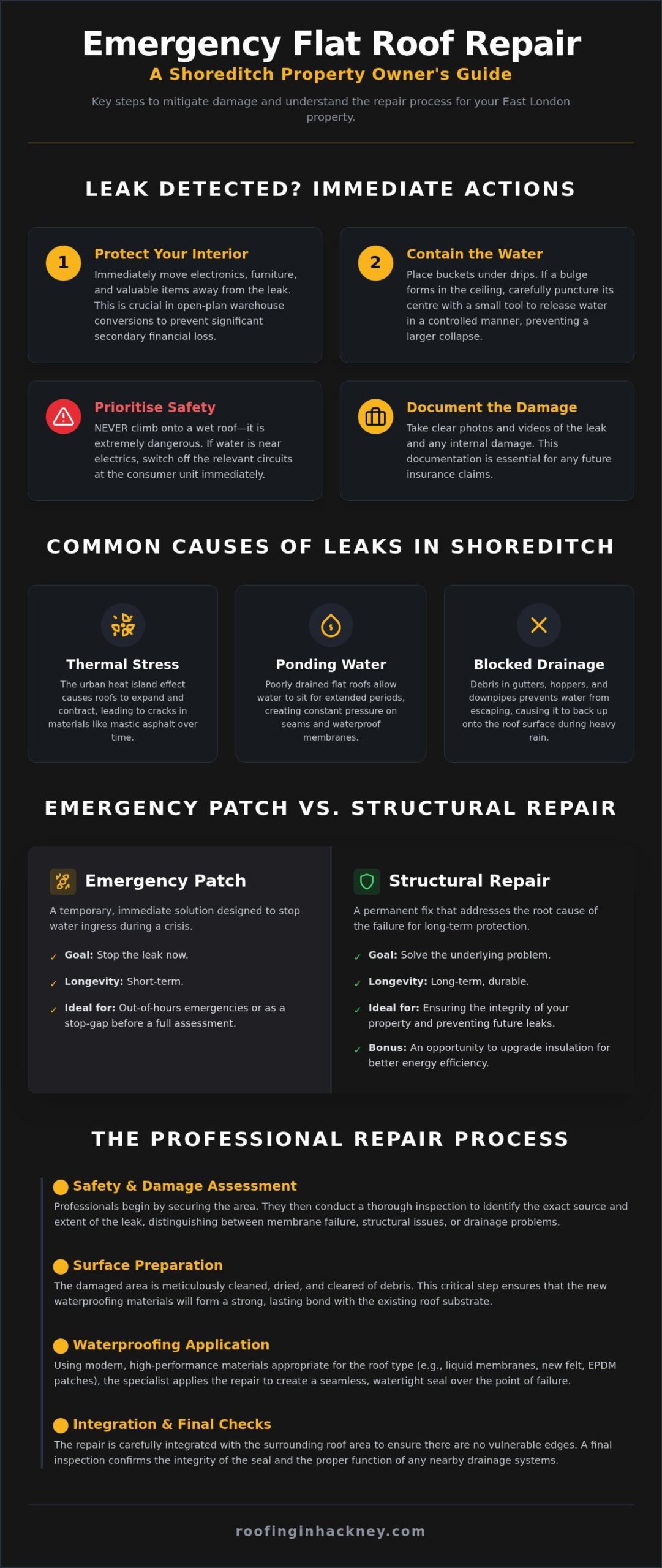
Discovering a leak is a high-stress event, but the first hour is critical for mitigating long-term structural issues. Before you search for an emergency flat roof repair Shoreditch, your priority must be the preservation of your interior. Move all electronics, furniture, and textiles away from the drip zone. In Shoreditch warehouse conversions, where open-plan layouts often mean expensive hardware is exposed, this step is vital for preventing secondary financial loss.
Place buckets beneath the primary drip and use heavy-duty towels to manage floor saturation. Whilst it’s tempting to investigate the source, never climb onto a wet flat roof. These surfaces become incredibly slick, and if the substrate is saturated, there’s a risk of structural collapse. Instead, document the damage from inside using high-quality photos and videos. This evidence is essential for future insurance claims. Understanding Common Flat Roof Failures, such as membrane splitting or ponding, can help you describe the issue clearly when you contact a specialist.
Internal Damage Limitation
If you notice a bulge in your ceiling, water is pooling behind the plasterboard. To prevent a sudden, messy collapse, carefully “pin-prick” the centre of the bulge with a small screwdriver or awl to release the pressure into a bucket. This controlled release protects the surrounding ceiling area from further saturation. If water is tracking near light fittings or sockets, isolate the electrical circuits at the consumer unit immediately. Check if the leak coincides with rainfall; if the drip is constant regardless of the weather, you might be dealing with a plumbing failure rather than a roofing crisis.
Securing the Perimeter
Step outside and inspect your property from ground level. Look for visible blockages in hoppers or downpipes, as trapped water often backs up onto the roof membrane during heavy London downpours. In multi-occupancy Shoreditch buildings, inform your neighbours or the building manager immediately. A leak in one unit often signals a wider issue that could affect several floors. Whilst a general handyman might offer a quick fix, an emergency flat roof repair Shoreditch requires a specialist who understands modern waterproofing membranes and the specific stresses of urban East London architecture.
Identifying the Cause: Common Flat Roof Failures in Shoreditch
Identifying the root cause of a leak is the first step toward a successful emergency flat roof repair Shoreditch. The area’s specific microclimate, known as the urban heat island effect, places immense stress on older mastic asphalt roofs. These surfaces absorb solar radiation throughout the day and struggle to cool at night, leading to thermal movement that creates fine cracks. Over time, these cracks widen, allowing water to bypass the membrane during sudden downpours. This cycle of expansion and contraction is particularly aggressive in dense urban environments like East London.
Warehouse conversions in E2 and EC2A often feature expansive flat roofs where even a slight deviation in the fall can cause “ponding” water. When water sits for more than 48 hours, it exerts constant hydrostatic pressure on the seals. This issue is frequently exacerbated by blocked gutters or internal hoppers that cannot cope with the volume of water typical of London storms. If you suspect your roof’s drainage is compromised, it’s worth seeking a professional assessment to prevent catastrophic internal damage.
Material-Specific Vulnerabilities
Traditional felt roofs are particularly susceptible to seam failure. As the bitumen ages, it becomes brittle, and the joints where the sheets overlap can lift during thermal shifts. For asphalt roofs, look for “alligatoring,” a pattern of cracks resembling reptile skin, which indicates the oils have evaporated from the material, leaving it prone to water ingress. Modern GRP (fibreglass) systems may develop pinholes or structural cracks if the original installation didn’t account for building movement. Conversely, EPDM rubber is highly durable but remains vulnerable to mechanical punctures from sharp debris or unauthorised foot traffic.
Structural and Environmental Factors
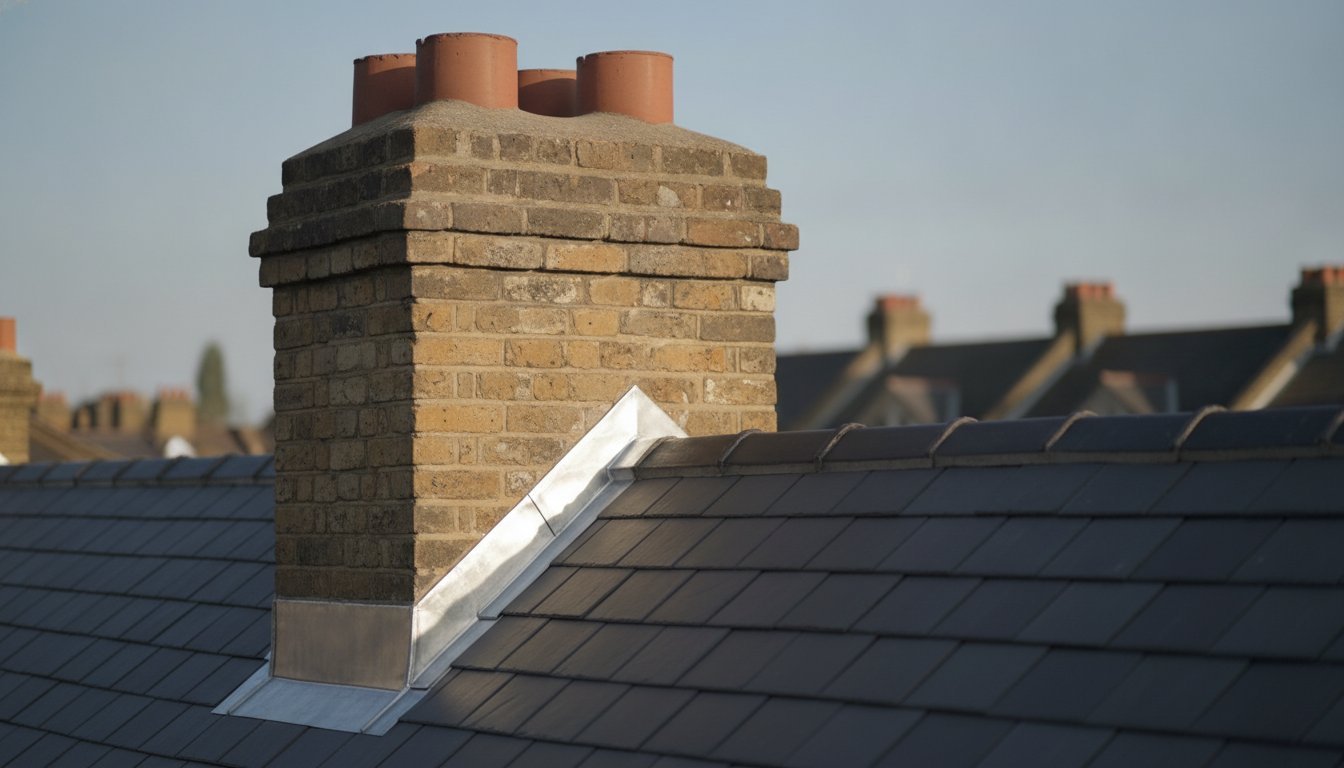
The constant vibration from heavy traffic along Shoreditch High Street and the Great Eastern Street corridor can physically loosen older roof joints and lead flashings over several years. Victorian masonry chimneys, common in Shoreditch’s residential pockets, are another frequent culprit. When the mortar in these chimneys perishes, water tracks down the brickwork and bypasses the lead flashing. Understanding the difference between Emergency Patching vs. Structural Repair is vital here, as simple leadwork failure requires a different technical approach than a full membrane replacement. Parapet walls also present a risk; if the coping stones are cracked or the pointing has failed, water can enter the wall cavity and emerge inside your property, mimicking a roof leak.
Emergency Patching vs. Structural Repair: Choosing the Right Fix
When you discover a leak, the primary objective is to halt the ingress of water to protect your property’s interior. However, a critical decision follows: is a temporary patch sufficient, or does the situation demand a structural repair? An emergency flat roof repair Shoreditch often begins with a short-term intervention to stabilise the building whilst a long-term plan is formulated. The choice depends on the age of the existing membrane, the extent of the saturation, and the condition of the underlying structure.
A key factor in this decision is the state of the timber deck. During an emergency fix, a specialist will check for signs of rot or “soft spots” beneath the waterproofing layer. If the timber has begun to decay due to prolonged exposure, a simple surface patch will fail to provide lasting security. Balancing immediate budget constraints with long-term protection is essential; whilst a patch is cost-effective today, ignoring underlying structural failure leads to significantly higher expenses in the future.
The “Quick Fix” Protocol
In many urgent scenarios, a liquid-applied emergency membrane is the most effective short-term solution. These fibre-reinforced coatings can be applied even in damp conditions to seal cracks and punctures instantly. This protocol typically involves:
- Solar-reflective coatings: These seal small fissures whilst protecting the repair from UV degradation.
- Temporary bitumen tapes: Highly effective for stopping water ingress at failed seams in traditional felt roofs.
- Emergency sealants: Applied directly into standing water to provide an immediate barrier during active rain.
It is vital that any emergency patch is inspected by a professional within 48 hours. These fixes are designed to buy time, not to serve as a multi-year solution.
Permanent Repair Solutions
Once the building is dry, a permanent repair can be organised. For localised damage on a relatively new roof, sectional replacement of felt or rubber membranes is often possible. This involves cutting out the degraded area and heat-bonding or adhesive-fixing a new matching section. In Shoreditch, where many properties feature Victorian masonry, upgrading the lead flashing around chimneys is a common permanent fix. This ensures that the intersection between the flat roof and the heritage brickwork remains watertight for decades. A professional emergency flat roof repair Shoreditch should always aim to integrate modern waterproofing standards with the building’s original materials to maintain both aesthetic harmony and structural integrity.
The Professional Emergency Repair Process: What to Expect
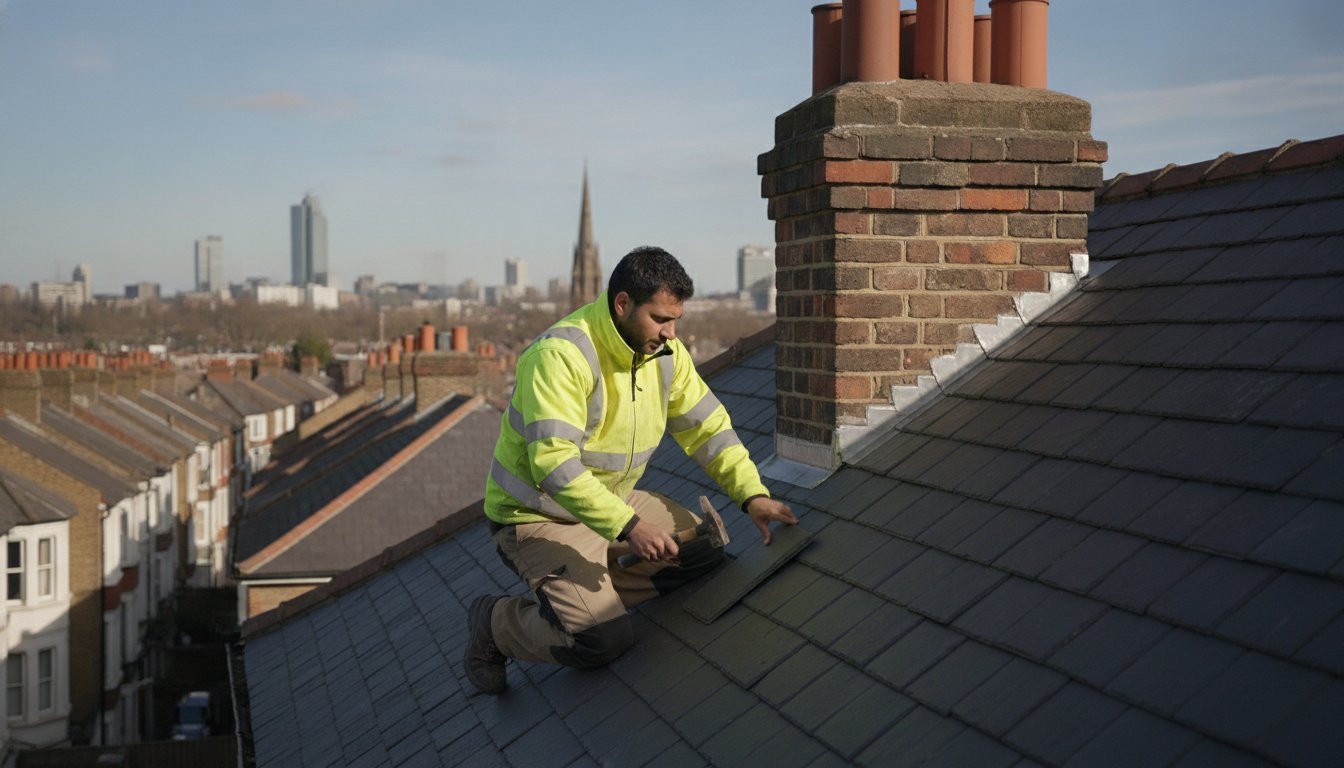
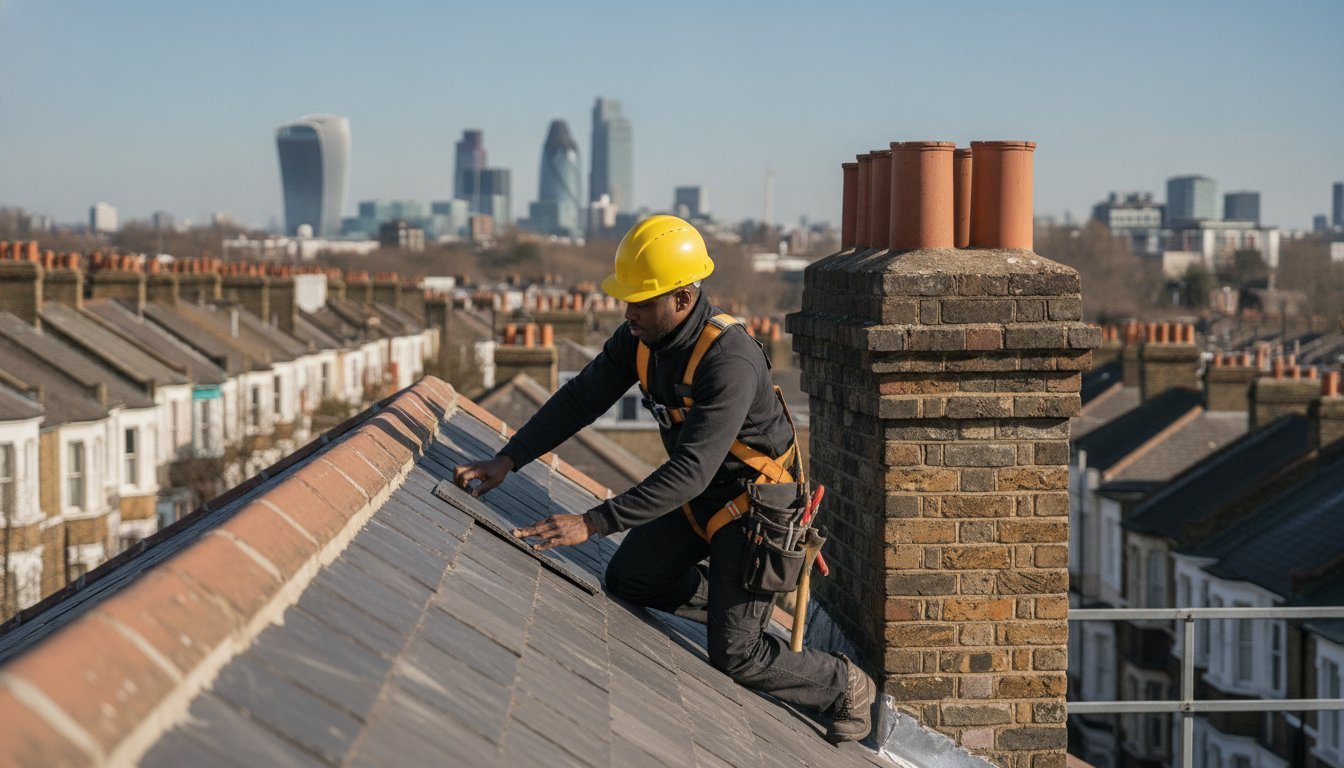
A professional response to an emergency flat roof repair Shoreditch is characterised by methodical precision rather than hasty guesswork. When a specialist arrives at your property, the process begins with a rigorous safety assessment to ensure the structural integrity of the roof deck hasn’t been compromised by prolonged saturation. We don’t just look at the visible leak; we investigate the surrounding area to identify the primary entry point, which is often several metres away from where the water eventually drips through the ceiling.
Once the area is deemed safe, the technician meticulously clears debris, moss, and standing water from the affected zone. Surface preparation is the most critical phase of any emergency seal. Industrial-grade temporary waterproofing requires a clean, stable substrate to bond effectively. This methodical approach ensures that the temporary fix provides genuine protection whilst a permanent solution is organised, preventing the need for repeat call-outs during the same storm cycle.
On-Site Assessment and Safety
We utilise electronic moisture probes to detect hidden dampness within the roof structure that isn’t yet visible to the naked eye. This data-driven approach allows us to map the full extent of the water ingress. In the narrow streets and busy thoroughfares of E2 and EC2A, we implement strict safety protocols to protect pedestrians on Shoreditch pavements whilst work is underway. Transparency is central to our service; you’ll receive a clear explanation of the damage and a fixed quote for the emergency works before any materials are applied. For immediate assistance and a clear technical assessment, you can contact our specialist team.
Executing the Repair
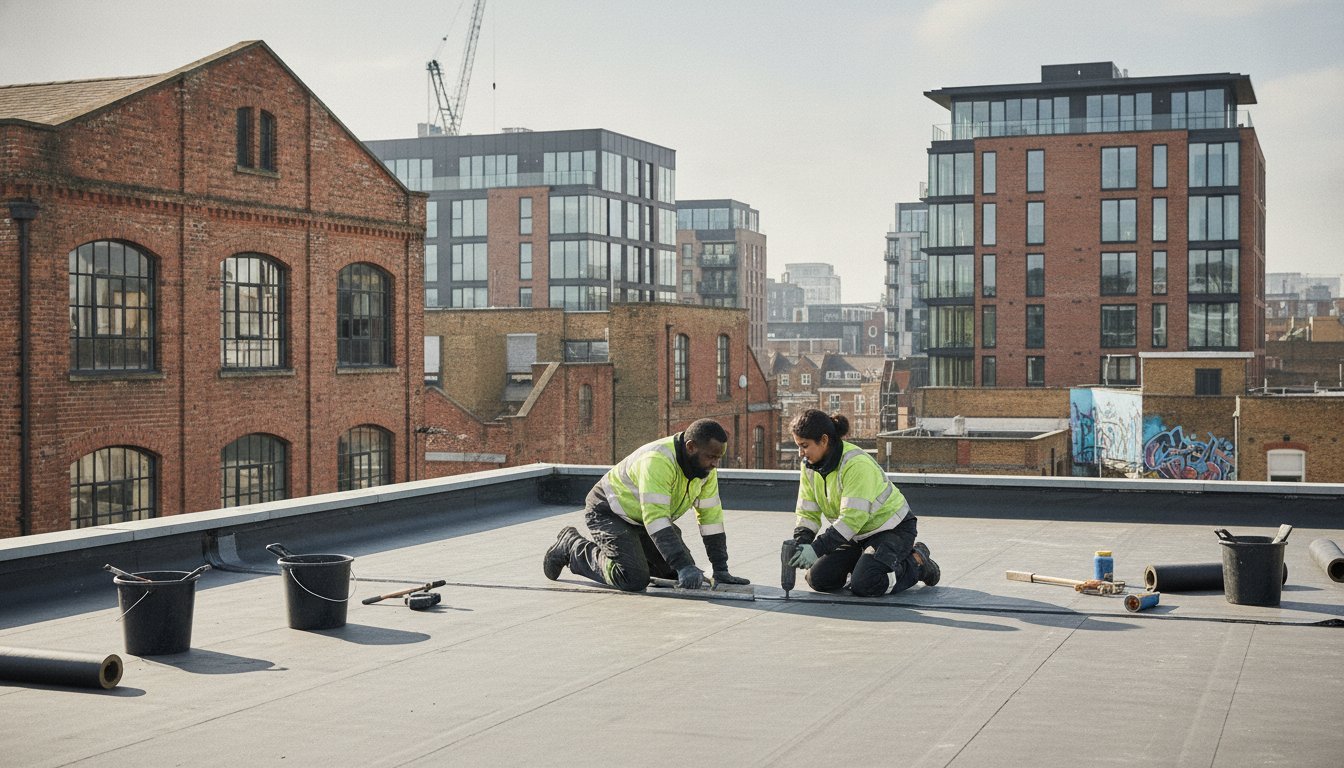
The repair itself involves applying high-performance, fibre-reinforced liquid membranes or bitumen-based sealants that are compatible with your existing roof material. We pay particular attention to upstands, skylight kerbs, and drainage outlets, as these joints are the most frequent points of failure in high-traffic urban areas. After the application, a final inspection confirms that the leak has been successfully diverted away from the building’s interior. You will then be provided with a detailed report outlining the roof’s current condition and a structured recommendation for any necessary follow-up work to ensure long-term durability.
From Emergency Fix to Long-Term Protection: The Roofing in Hackney Approach
An urgent call for an emergency flat roof repair Shoreditch is often the catalyst for a broader discussion regarding property performance. Whilst the immediate priority is to stop water ingress, the failure of a membrane often reveals systemic issues like poor insulation or inadequate drainage. At Roofing in Hackney, we believe that a roofing crisis presents a unique opportunity to transition from reactive patches to a proactive strategy that enhances the building’s value and comfort.
By addressing the underlying cause during the repair phase, you avoid the cycle of repeated call-outs. This approach is particularly relevant for Shoreditch warehouse conversions, where large flat expanses are prone to significant thermal loss. Upgrading your roof during a repair ensures that your property meets modern standards of durability whilst preserving the industrial heritage that defines the E2 and EC2A postcodes. It’s about moving beyond the stress of the leak toward a state of calm dependability.
Thermal Performance and Energy Efficiency
Integrating high-performance insulation is one of the most effective ways to lower heating bills and improve a building’s carbon footprint. Current building regulations, specifically the 2026 Future Homes Standard, require renovated existing flat roofs to achieve a U-value of 0.16 W/m²K. To meet these stringent targets, we typically install 140-150mm of PIR insulation in a “warm roof” configuration. This method places the insulation above the structural deck, which virtually eliminates the risk of condensation and protects the timber from temperature fluctuations. For residents in converted industrial spaces, this upgrade results in a more stable internal climate throughout the year.
Your Local Shoreditch Roofing Partner
Our commitment to the Hackney community is built on a deep understanding of local architectural preservation. We pride ourselves on ensuring that modern waterproofing technologies never compromise the aesthetic integrity of Shoreditch’s period brickwork or warehouse facades. Once your emergency flat roof repair Shoreditch is complete and the building is watertight, we recommend a comprehensive follow-up survey to assess the remaining lifespan of your roof system. This transparent process allows you to plan for future maintenance without the stress of unexpected leaks. Contact our team for a professional consultation to discuss how we can secure your property for the long term.
Securing Long-Term Protection for Your Shoreditch Roof
A leaking roof requires immediate attention to prevent secondary damage to your property’s interior and structural integrity. By following the correct protocols, from initial damage limitation to securing a professional emergency flat roof repair Shoreditch, you ensure that your building remains protected against the elements. We have explored how identifying specific material failures and understanding the difference between temporary patches and permanent structural repairs can save you significant time and expense.
As specialists in Shoreditch heritage and commercial properties, we combine traditional expertise in leadwork and chimney repair with a dedication to modern, energy-efficient insulation upgrades. Our approach focuses on technical mastery and transparent communication, helping you move from a reactive crisis to a proactive maintenance plan. If you’re currently facing a roofing emergency or wish to discuss a permanent waterproofing solution, Contact Roofing in Hackney for Emergency Repairs. Our team is ready to provide the expert guidance and high-quality craftsmanship your property deserves.
Frequently Asked Questions
How much does an emergency flat roof repair cost in Shoreditch?
The cost of an emergency flat roof repair Shoreditch depends on several technical factors, including the type of membrane, the extent of the water ingress, and the accessibility of the site. Whilst every project is unique, a final price is typically determined after a professional on-site assessment. We prioritise transparency, providing a clear breakdown of costs for both the immediate stabilisation and any subsequent permanent works required to secure your property.
How quickly can a roofer get to Shoreditch E2 in an emergency?
Our local presence in the Hackney area ensures that a specialist can attend to properties in Shoreditch E2 and EC2A promptly. Response times are influenced by the severity of the weather and current demand, but being based nearby allows us to bypass the logistical delays faced by national contractors. We aim to stabilise your building as quickly as possible to prevent secondary damage to your interiors and electronic equipment.
Is an emergency flat roof patch a permanent solution?
An emergency patch is not a permanent solution; it is a vital stabilisation measure designed to halt water ingress immediately. These temporary fixes buy time to assess the underlying structure and plan a durable repair. Whilst industrial-grade sealants are highly effective, they don’t address long-term issues like substrate rot or membrane degradation. A professional follow-up is always necessary to ensure your roof remains watertight for years to come.
Can you repair a flat roof whilst it is still raining?
Yes, modern industrial-grade liquid membranes and emergency bitumen sealants can be applied whilst it is still raining. These materials are specifically engineered to displace water and bond to damp substrates, creating an instant barrier. This allows us to perform an emergency flat roof repair Shoreditch during active storms, providing immediate relief from leaks whilst waiting for the weather to clear for a more permanent structural intervention.
What are the most common signs that my Shoreditch flat roof is about to fail?
Common signs of impending failure include “ponding” water that doesn’t drain within 48 hours, visible cracks or blisters in the membrane, and sagging in the roof deck. For Shoreditch properties, look for “alligatoring” on older asphalt or lifting seams on felt roofs. If you notice damp patches on your ceiling or a musty smell in the upper floors, the waterproofing layer has likely already been breached and requires professional attention.
Does home insurance cover emergency flat roof repairs?
Most home insurance policies cover emergency repairs if the damage is caused by a sudden, identifiable event such as a storm or a fallen tree. However, insurance companies often reject claims caused by lack of maintenance or general wear and tear. It’s essential to document the damage with photos and maintain service records. We provide detailed reports that can assist you when discussing the situation with your insurance provider.
Should I replace my entire flat roof if it has a single leak?
You don’t necessarily need a full replacement for a single leak if the rest of the membrane is in good condition and the timber deck is sound. However, UK building regulations often require a full replacement and thermal upgrade if you are repairing more than 25% of the total roof area. A specialist survey will determine whether a localised patch or a full structural replacement is the most cost-effective long-term solution for your building.
What is the difference between a warm roof and a cold roof for my Shoreditch home?
The primary difference lies in the position of the insulation. In a warm roof, insulation is placed above the structural deck, keeping the entire roof structure at a consistent temperature and eliminating condensation risks. A cold roof has insulation placed between the joists, leaving the deck exposed to external temperature shifts. Warm roofs are the modern standard for energy-efficient Shoreditch warehouse conversions, offering superior thermal performance and longevity for your property.