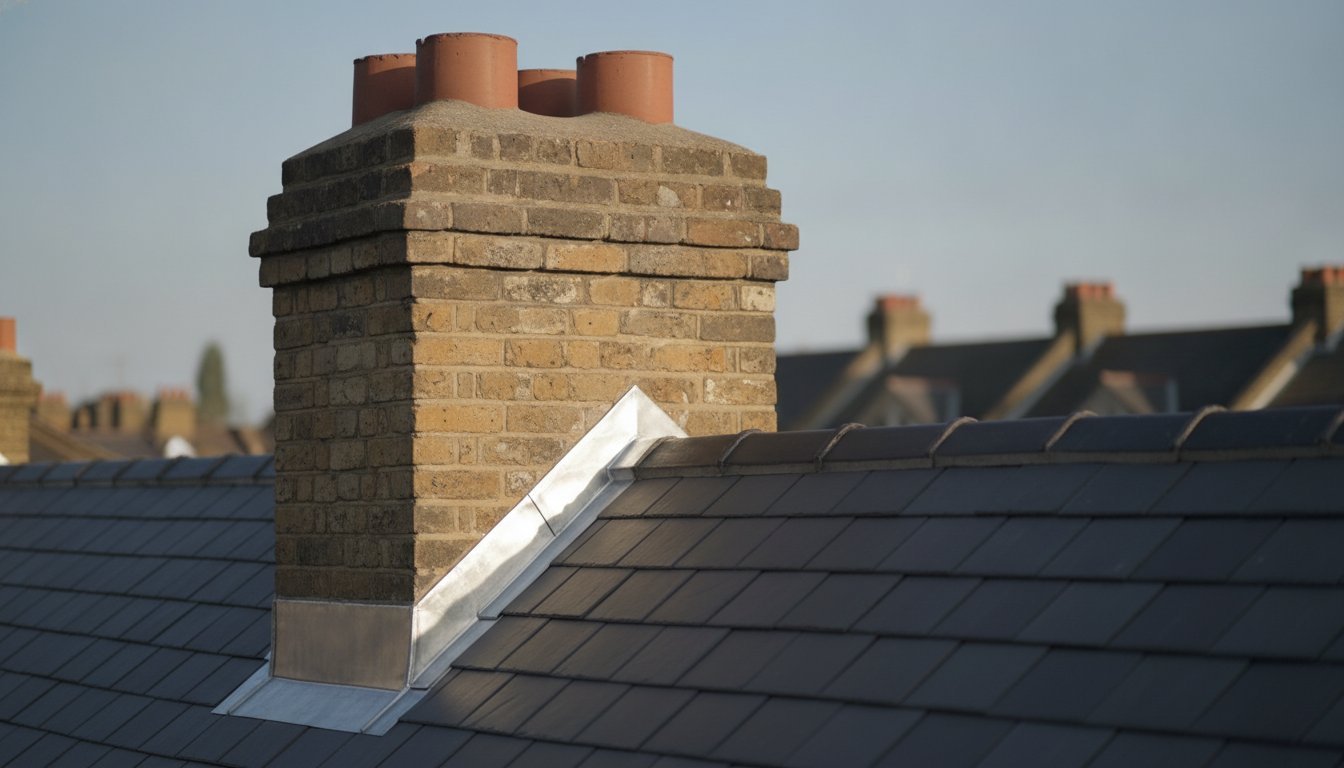
Could that small, persistent damp patch on your chimney breast be a symptom of a deeper structural failure rather than just a minor roofing glitch? For many homeowners in Hackney, the sudden appearance of water stains often leads to a frantic search for answers and a growing anxiety over the costs of heritage building repairs. Identifying the common causes of chimney leaks is rarely straightforward, as the entry point is often hidden within the complex junction of period masonry and specialist leadwork.
We understand that protecting your Victorian or Edwardian investment is a priority, yet the unpredictable nature of damp can feel overwhelming. This guide is designed to provide clarity, helping you discover the primary reasons why your chimney is leaking and how to protect your Hackney property from structural damp. We will examine the technical vulnerabilities of shared chimney stacks, the importance of professional repointing, and the methodical steps needed to ensure your home remains dry and secure for the long term.
Key Takeaways
- Identify early warning signs such as tea-coloured stains on your chimney breast to prevent long-term structural damp.
- Explore the common causes of chimney leaks, including the failure of traditional lead flashing and the impact of thermal expansion on period masonry.
- Learn how missing chimney caps and cracked flaunching allow rainwater to bypass your roof’s defences and enter the heart of the stack.
- Understand why shared chimney stacks and complex parapet walls in Hackney terraces require a collaborative and specialist approach to maintenance.
- Discover the value of professional roof surveys and why traditional craftsmanship is superior to temporary DIY bitumen patches.
Recognising the Signs of a Leaking Chimney in Your Property
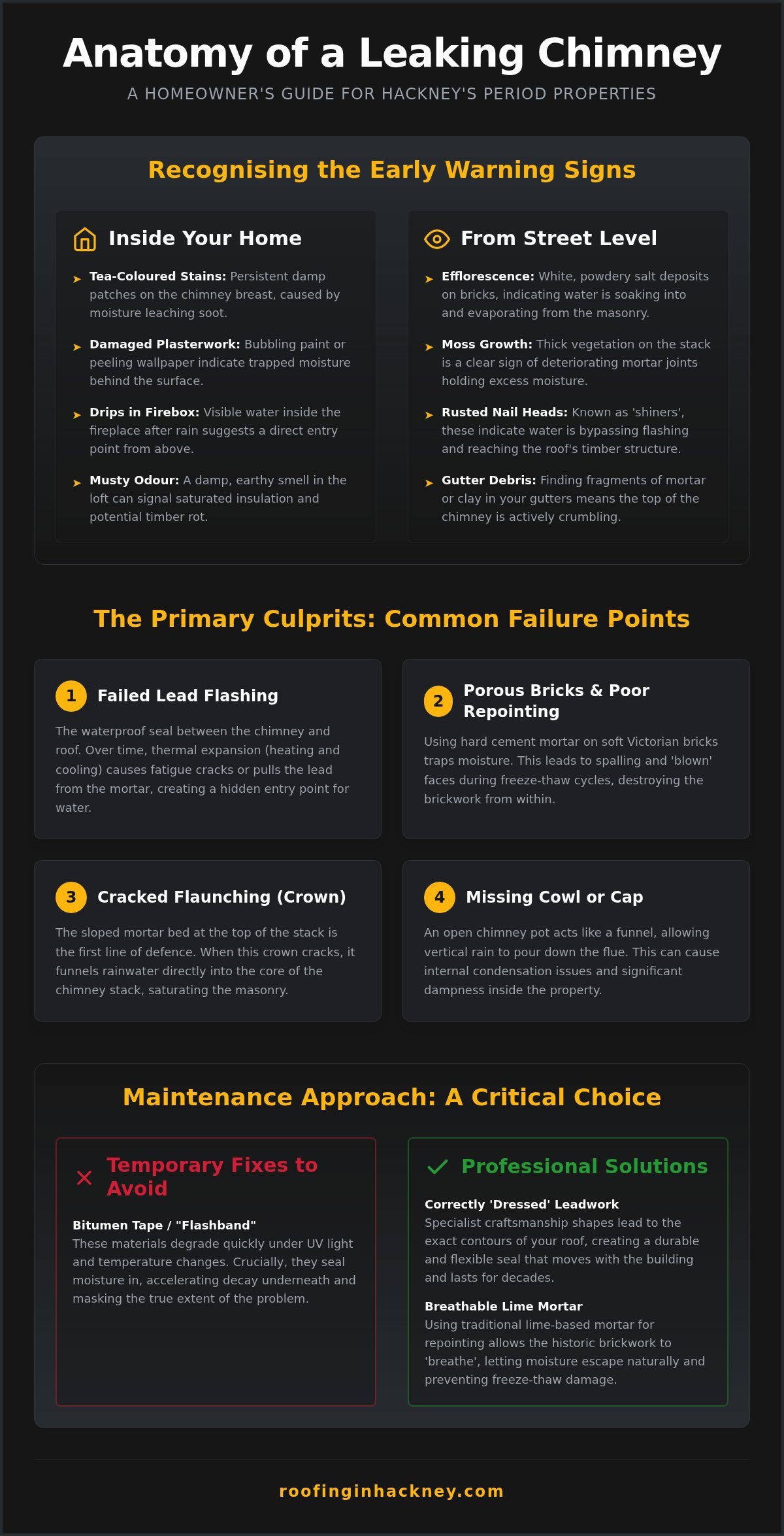
Identifying the common causes of chimney leaks starts with a methodical inspection of your home’s interior. In Hackney’s period properties, water ingress doesn’t always present as a dramatic drip. Instead, it often manifests as subtle, tea-coloured staining on the chimney breast or ceiling. These marks are caused by moisture leaching tannins from the soot and masonry as it travels through the stack. Because East London sits in the path of wind-driven rain from the Thames estuary, you might notice these patches only when the weather hits from a specific easterly direction. This localised weather pattern pushes rain into small gaps that would otherwise remain dry during a standard vertical downpour.
Internal Symptoms and Ceiling Warnings
Look closely at the plasterwork surrounding your fireplace. Bubbling paint or peeling wallpaper are classic indicators that moisture is trapped behind the surface. If you see actual drips inside the firebox after a heavy downpour, it suggests a vertical entry point, such as a missing cowl or cracked flaunching. It’s common for damp to appear much lower down a wall than the actual leak source. This happens because water tracks along internal timbers or the brickwork’s core before finding a point to exit. In the loft, a musty odour often signals that moisture has saturated the insulation. This is a hidden issue that can lead to timber rot if you don’t address it early.
External Inspections from Street Level
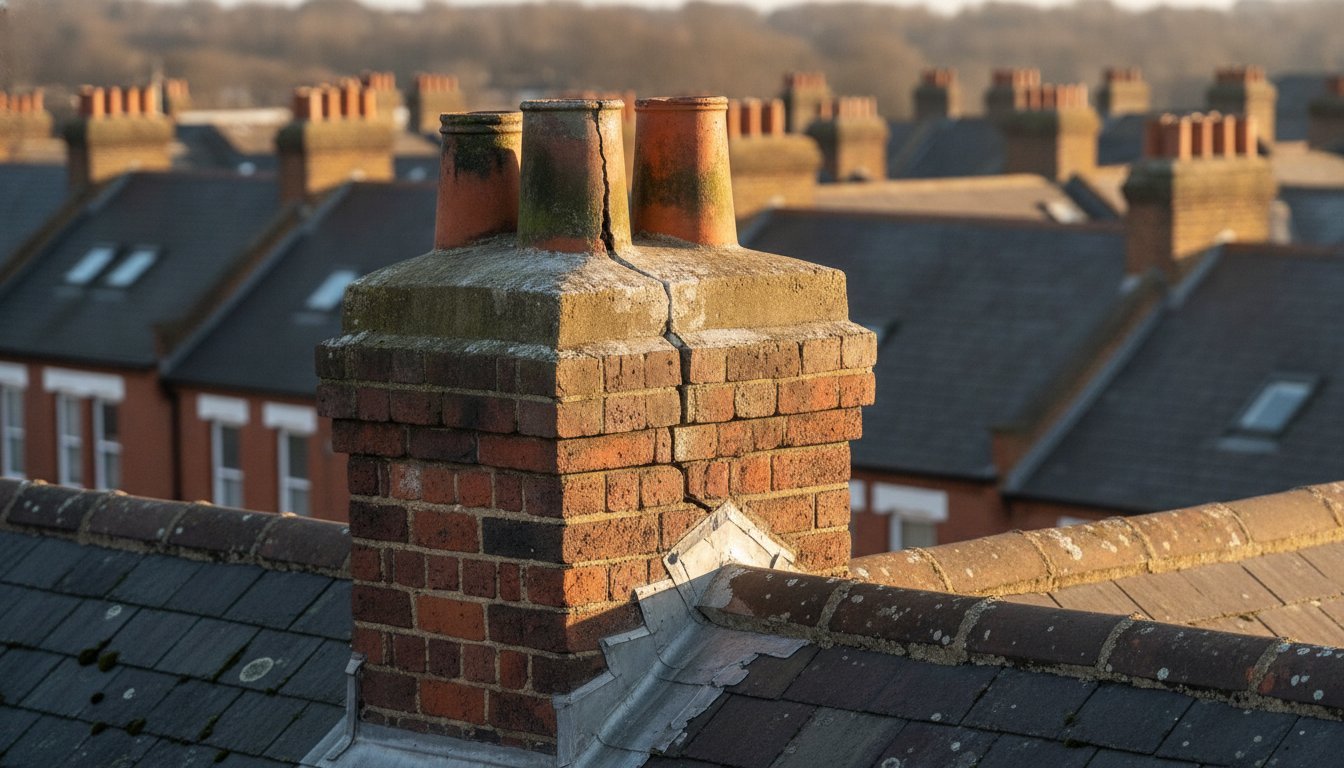
You don’t need a ladder to spot potential trouble. A simple pair of binoculars allows you to inspect the stack safely from the pavement. Look for white, powdery deposits on the bricks known as efflorescence. This salt residue indicates that water is soaking into the masonry and then evaporating, leaving minerals behind. Thick moss growth on the stack is another warning sign, as it thrives in the damp environment of deteriorating mortar joints.
When examining the junction where the stack meets the roof, keep an eye out for ‘shiners’. These are rusted nail heads that suggest water is bypassing the Flashing (weatherproofing) and reaching the roof’s structural battening. If you find shards of clay or mortar debris in your gutters, it’s a clear sign the upper reaches of your chimney are failing. These external failures are among the most common causes of chimney leaks in Hackney’s Victorian terraces, where shared stacks are often exposed to the elements on all sides. If you’re concerned about the condition of your masonry, contact us to arrange a professional survey.
Lead Flashing and Masonry: The Primary Culprits
Lead flashing serves as the critical waterproof seal between your chimney’s masonry and the roof tiles. Its primary role is to deflect water away from the vulnerable junction where the stack penetrates the roofline. However, one of the most common causes of chimney leaks is the ‘trickle path’ effect. A hairline split in the lead can allow water to enter the stack, where it then travels metres along internal timbers before manifesting as a damp patch in a completely different room. This deceptive behaviour often makes the entry point difficult to locate without a professional eye.
Why Lead Flashing Fails in Hackney
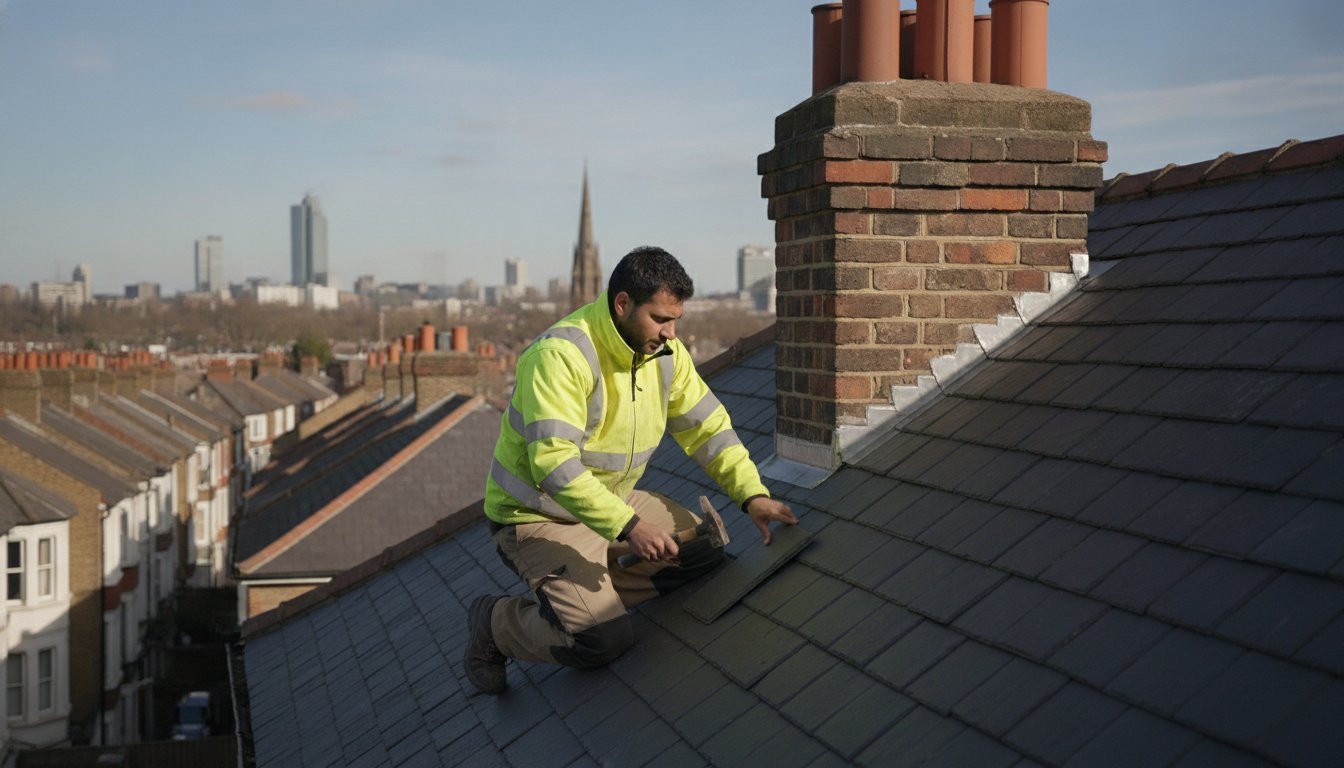
Hackney’s heritage buildings often feature complex leadwork, including step flashing which follows the roof’s pitch and apron flashing at the base. Over several decades, urban pollution and the constant cycle of thermal expansion cause lead to lose its flexibility. As the metal heats and cools, it can pull away from the mortar joint or develop fatigue cracks. Professional restoration involves ‘dressing’ the lead, a process where the metal is carefully shaped to the contours of the tiles to ensure a snug, watertight fit. Without this precision, even new lead will fail to provide a lasting seal.
Chimney Stack Repointing and Brick Porosity
The mortar used in Victorian-era construction was typically lime-based, which allowed the building to breathe. A frequent mistake in modern maintenance is using hard cement mortar for repointing. This traps moisture within the softer bricks, leading to ‘blown’ faces where the brick surface shatters during winter freeze-thaw cycles. The flaunching, which is the sloped mortar base at the very top of the stack, is equally vital. If this mortar crown cracks, gravity draws water directly into the heart of the masonry. Identifying these common causes of chimney leaks early can prevent the need for a full stack rebuild.
It is often tempting to apply bitumen tape or ‘flashband’ as a quick fix, but these materials fail quickly under UV exposure and seasonal temperature swings. They often mask deeper structural issues without solving them. For a permanent resolution, investing in specialist leadwork repairs Hackney homeowners can trust ensures the integrity of the heritage fabric. Adhering to high maintenance principles, similar to those outlined in the NFPA 211 standard, provides a framework for long-term protection and fire safety. If you suspect your flashing has reached the end of its lifespan, you can request a technical assessment from our team to identify the exact point of failure.
Chimney Pots, Crowns, and Internal Condensation
Whilst leadwork and masonry failures are frequent culprits, the very summit of the stack is often overlooked during a standard visual inspection. Missing chimney caps are amongst the most common causes of chimney leaks in East London, particularly following the high winds of a typical winter storm. Without a protective cover, rainwater falls directly into the flue, leading to the “rain-in-the-grate” scenario where water pools at the base of the fireplace. Additionally, nesting birds and falling debris can block internal drainage, trapping moisture inside the stack and forcing it to seep through the internal chimney breast.
Chimney flaunching is the sloped mortar bed at the stack’s summit that secures the pots in place and sheds water away from the flue opening.
The Importance of Chimney Caps and Cowls
Selecting the correct cowl is essential for maintaining the structural health of your chimney. For active fireplaces, a specialist cowl is required to prevent downdraughts whilst ensuring that smoke and combustion gases can escape safely. Redundant or boarded-over flues require a different approach; they need ‘breather’ caps that prevent rain entry but allow for constant ventilation. A properly fitted cap acts as the first line of defence against the elements, ensuring that gravity doesn’t draw water into the heart of the masonry. Maintaining historic masonry at this height is a specialist task, as cracked pots and deteriorating mortar crowns are frequently identified as common causes of chimney leaks during our high-reach inspections.
Condensation vs. Active Leaks
Distinguishing between an active leak and internal condensation is a vital part of the diagnostic process. In many modern-heated Hackney homes, warm, moisture-laden air from the kitchen or bathroom rises into a cold, unused flue. When this air hits the cold brickwork near the roofline, it condenses into water droplets that mimic the appearance of a leak. This issue is particularly common in flues that have been boarded over without adequate ventilation. If you have recently invested in thermal roof insulation upgrades, the temperature difference between your living space and the unheated chimney stack may become more pronounced. This contrast can highlight existing flue temperature issues, making it appear as though a new leak has developed when, in fact, the internal environment has simply changed. Ensuring your chimney can ‘breathe’ is just as important as keeping the rain out.
Unique Challenges for Hackney’s Terraced Properties
Hackney’s terraced streets present a specific set of architectural hurdles that aren’t typically found in modern, detached developments. These Victorian and Edwardian buildings are physically linked, meaning your roof’s health is often tied to the maintenance habits of your neighbours. One of the most overlooked common causes of chimney leaks in East London is the failure of a shared stack. When two properties share a single masonry structure, a defect on one side can easily migrate to the other, making it difficult to pinpoint the exact entry point without a comprehensive survey of both rooflines.
Shared Stacks and Party Wall Considerations
Identifying whether a leak originates on your side or your neighbour’s requires a methodical approach. Water is highly opportunistic; it can enter through a cracked pot on a neighbouring property and track across the internal brickwork before manifesting as a damp patch in your living room. This creates a complex situation where local repairs might only mask the symptom rather than fix the cause. Collaborative repairs are essential to ensure a continuous waterproof seal across the entire stack. When navigating these heritage complexities, understanding the nuances of slate roofing Hackney homeowners rely on is vital for maintaining both the aesthetic and functional integrity of the shared structure.
Parapet Walls and Drainage Junctions
The parapet walls and box valleys common in East London terraces act as hidden drainage traps. These areas are designed to funnel large volumes of water away from the chimney, but they often become blocked with debris or suffer from lead fatigue. Over time, the structural movement inherent in older buildings can cause the lead linings in these gulleys to develop hairline cracks. Wind-driven rain from the Thames estuary can then force moisture upwards and under the flashing, bypassing traditional gravity-based defences.
These drainage junctions are often the primary common causes of chimney leaks in properties with complex roof geometries. By adapting robust techniques from commercial roofing Hackney property managers use for large-scale water management, we can implement reinforced drainage channels and high-grade lead welding that provide superior protection against the local climate. If you suspect your shared chimney stack is compromised, it’s prudent to arrange a professional inspection to identify the source of the ingress before structural damp sets in.
Engaging a Specialist for Professional Chimney Restoration
Whilst identifying the common causes of chimney leaks is the essential first step, the resolution requires more than a temporary patch. General builders often rely on modern sealants or bitumen tape, but these materials are fundamentally incompatible with Hackney’s heritage masonry. These “bodge” repairs fail to account for the natural movement of period buildings. They often trap moisture against the brickwork, which accelerates internal decay and leads to more expensive structural issues later. A specialist approach ensures that the repair works in harmony with the building’s original fabric.
A professional restoration begins with a technical survey. We utilise moisture meters to map the spread of damp behind plasterwork and high-reach inspections to examine the stack’s summit. This methodical process allows us to see exactly how water is tracking through the structure. Whether the solution involves precision repointing with lime mortar or a partial stack reconstruction, our goal is to provide a resolution that lasts for decades rather than months. By addressing the root common causes of chimney leaks, we eliminate the cycle of anxiety that accompanies every heavy London downpour.
The Master Craftsman Approach to Lead and Slate
In Hackney’s conservation areas, matching original materials is both a regulatory requirement and a functional necessity. Using heavy-gauge lead, typically Code 4 or Code 5, provides the necessary weight and durability to withstand East London’s wind-driven rain. Unlike thin, modern alternatives, heavy-gauge lead can be dressed into the complex shapes of a period chimney stack without splitting. Our team combines traditional skills with modern standards to ensure every repair respects the building’s history whilst providing a robust waterproof seal. You can learn more about our commitment to heritage standards on our About Us page.
Securing a Permanent Fix
There comes a point where constant patching becomes a false economy. If the masonry is saturated or the stack is structurally unstable, a roof replacement in Hackney that includes a full chimney rebuild may be the most cost-effective long-term path. This approach allows for the installation of new lead trays and modern dpc (damp proof course) layers that were absent in Victorian construction. Every specialist repair we undertake is backed by a written guarantee, providing the calm dependability homeowners need when investing in their property’s future.
Don’t wait for the next storm to test your roof’s integrity. Contact Roofing in Hackney for a specialist chimney leak inspection and secure your property against the elements today.
Protecting Your Heritage Investment for the Future
Securing a dry, stable home requires a shift from reactive patching to a methodical programme of maintenance. Identifying the common causes of chimney leaks, such as failing lead flashing or porous Victorian masonry, allows you to address structural vulnerabilities before they escalate into costly interior damage. Whether you’re dealing with a shared stack in a terraced street or internal condensation in a redundant flue, the key is to prioritise traditional craftsmanship over temporary fixes.
As a trusted local Hackney independent contractor, we combine deep expertise in traditional slate and masonry restoration with the precision required for high-standard heritage repairs. We don’t just hide the symptoms; we restore the integrity of your roofline using time-honoured techniques. If you’ve noticed damp patches or deteriorating brickwork, taking action now will safeguard your property against the unpredictable East London weather. We invite you to book a professional chimney leak inspection with Hackney’s leading specialists. Our team of specialists in Victorian and heritage leadwork is ready to provide the calm, expert guidance your property deserves. You can rest assured that your home is in the hands of seasoned craftsmen dedicated to long-term value.
Frequently Asked Questions
How do I find a chimney leak that only happens when it rains hard?
Finding a leak that only appears during heavy storms requires a methodical, high-reach inspection of the stack’s upper reaches. Intense rainfall creates enough pressure to force water through small defects in the flaunching that light rain simply runs over. Identifying these entry points is vital, as they are amongst the most common causes of chimney leaks in East London. We use moisture meters to track the internal path of the water accurately.
Can a leaking chimney cause damp patches on my bedroom ceiling?
Damp patches on bedroom ceilings are a frequent sign that water is tracking down from the chimney stack. Once moisture penetrates the roofline, it often follows the internal chimney breast or travels along horizontal ceiling joists before soaking through the plasterwork. These tea-coloured stains suggest that the waterproof seal at the roof junction has failed, necessitating a professional inspection of the lead flashing and masonry to prevent further structural damage.
Does home insurance typically cover chimney leak repairs in the UK?
Most UK home insurance policies cover damage caused by sudden events, such as a storm blowing off a chimney pot, but they rarely cover gradual wear and tear. If the leak is due to old mortar or degraded lead flashing, it’s typically considered a maintenance issue. You should check if your policy includes “trace and access” cover, which might pay for the professional cost of locating the leak source in your roof.
How much does it cost to repoint a chimney stack in London?
Repointing costs depend on the chimney’s size, the property’s height, and whether scaffolding is required to reach the stack safely. Every project is unique, as the condition of the masonry and the type of mortar needed for heritage bricks will influence the final investment. Because chimney work is performed at height, the cost of safe access is often a significant factor. We recommend a professional survey to receive an accurate, project-specific estimate.
Is a leaking chimney an emergency that requires immediate attention?
You should treat any sign of water ingress as an urgent priority to prevent long-term structural damage. Whilst a small leak might not seem like an immediate emergency, moisture can quickly lead to timber rot in the roof or cause damp to spread behind internal plasterwork. Addressing the issue early is the best way to avoid the higher costs associated with full stack rebuilds or extensive ceiling restoration in your home.
Can I fix a chimney leak myself with bitumen or sealant?
DIY repairs using bitumen tape or silicone sealants are rarely effective and often cause more harm than good. These materials aren’t breathable and can trap moisture within the brickwork, leading to further decay. For Hackney’s period properties, a permanent fix requires traditional leadwork and specialist repointing that allows the building to move and breathe. It’s always more cost-effective to invest in a professional, long-term solution from the start.
How can I tell the difference between a leak and condensation in my flue?
Condensation often manifests as a persistent, musty dampness in flues that have been boarded over without adequate ventilation. Unlike active leaks, which appear shortly after rainfall, condensation is caused by warm air hitting the cold internal surface of the chimney masonry. If your damp patches don’t seem to correlate with the weather, it’s likely a ventilation issue. Installing a “breather” cap can help manage this internal moisture effectively.
Why is my chimney leaking only when the wind blows from a certain direction?
Wind-driven rain is a significant factor in East London due to its proximity to the Thames estuary. When the wind blows from a specific direction, it can push rainwater into hairline masonry cracks or under poorly dressed leadwork that stays dry during a vertical downpour. This phenomenon is one of the most common causes of chimney leaks in Hackney’s terraced homes, where shared stacks are often highly exposed to the elements.