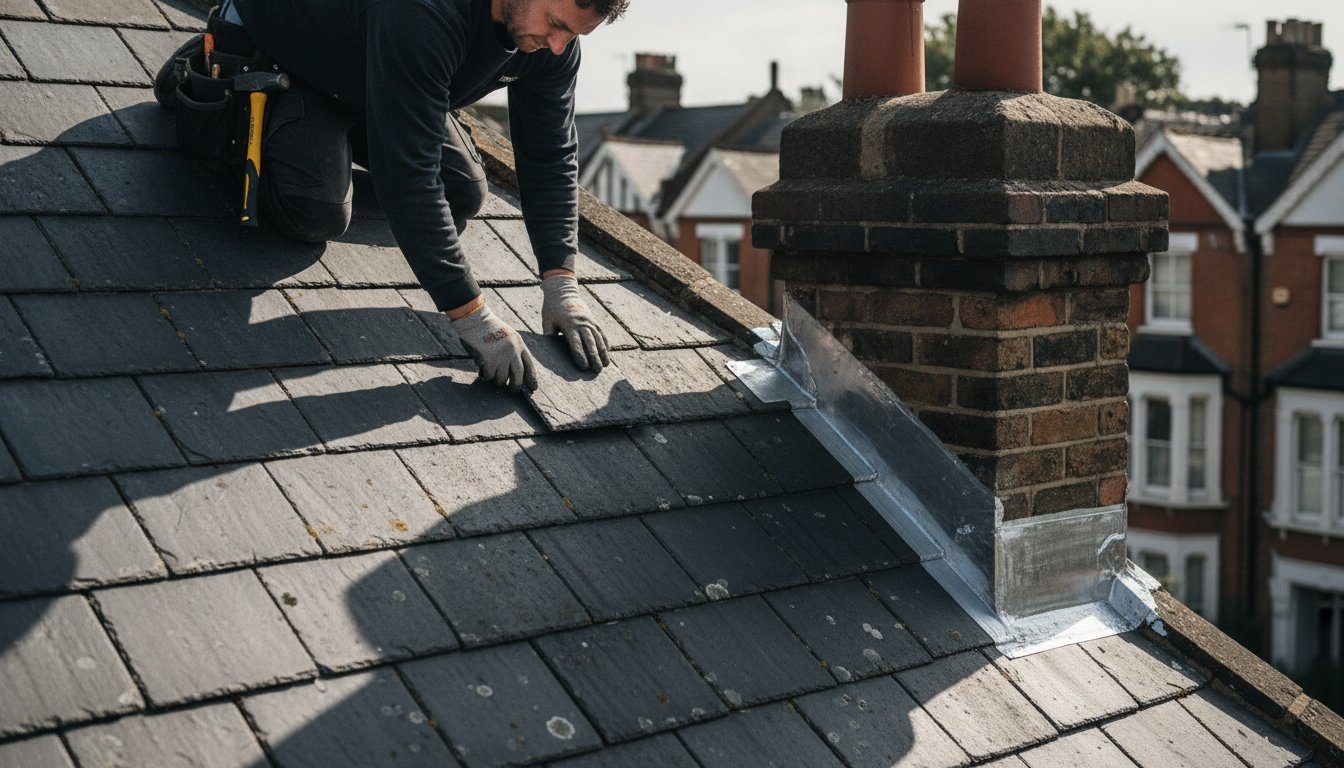
A single slipped slate on your Victorian terrace is rarely just a cosmetic inconvenience; it is often the silent opening act for internal damp and structural decay. For many homeowners, the sight of a gap in the roofline triggers a familiar anxiety about rogue traders and spiralling costs. You likely want to preserve the historic character of your property, yet you may feel unsure if you are facing a simple fix or the dreaded “nail sickness” that necessitates a more extensive intervention.
Understanding the nuances of slate roof repairs Hackney properties require is the first step in safeguarding your investment. This guide will help you identify the root causes of slate failure and teach you how to spot the difference between isolated storm damage and systemic age-related issues. By the end of this article, you will have the clarity needed to assess your roof’s condition and find a specialist who respects the unique architectural fabric of East London’s heritage buildings. We will walk through the technical assessment process, from identifying moisture ingress to understanding when a master craftsman’s touch is essential for long-term durability.
Key Takeaways
- Understand why traditional slate is the superior choice for Hackney’s Victorian terraces and how to maintain its natural longevity and structural integrity.
- Identify the specific warning signs of slate failure, such as delamination, to determine when to commission professional slate roof repairs Hackney specialists.
- Learn the “rule of thumb” for evaluating whether a targeted repair or a full replacement is the most cost-effective solution for your heritage property.
- Discover the importance of sourcing reclaimed materials and matching leadwork to preserve the aesthetic harmony and market value of your period home.
- Recognise why local architectural expertise is vital when navigating Hackney’s specific conservation area guidelines and traditional building requirements.
Understanding Slate on Roof Systems in Hackney Properties
Slate is far more than just a building material; it’s a natural metamorphic rock formed over millions of years, prized by builders for its exceptional longevity and sharp aesthetic. Master craftsmen have long favoured this stone because it can be split into thin, consistent sheets without losing its inherent strength. This unique combination of durability and workable texture is why it remains the dominant roofing choice across Hackney’s iconic Victorian and Edwardian terraces. These buildings were designed to stand for centuries, and the properties of roofing slate provided the perfect shield against the unpredictable British weather.
A well-installed Welsh slate roof typically boasts a lifecycle of 80 to 100 years. Despite this impressive lifespan, the fixings and timber supports underneath often succumb to age or moisture before the stone itself fails. In East London, maintaining the original appearance of these roofs is vital, particularly within the borough’s many conservation areas where strict heritage guidelines apply. Proper slate roof repairs Hackney residents invest in don’t just stop leaks; they help maintain the historic streetscape and preserve the market value of the property. Ignoring a slipped slate can quickly lead to internal damp that damages the very period features that make these homes so desirable. For a broader understanding of the specialist requirements involved, our roofing for period homes Hackney resource guide covers the full range of conservation area considerations and heritage compliance standards.
The Anatomy of a Traditional Slate Roof
The performance of a slate roof depends on a hidden network of timber battens and, in modern or refurbished systems, a layer of breathable sarking felt. These components provide the structural framework that carries the significant weight of the stone. The entire system works through a precise “lap” arrangement, where every slate overlaps the one below it to ensure gravity pulls water down the roof’s pitch and into the guttering. Head-lap refers to the specific overlap of the slate’s top edge by the two layers above it, which acts as the primary mechanism for preventing capillary action from pulling moisture into the roof space.
Why Material Choice Matters for Repairs
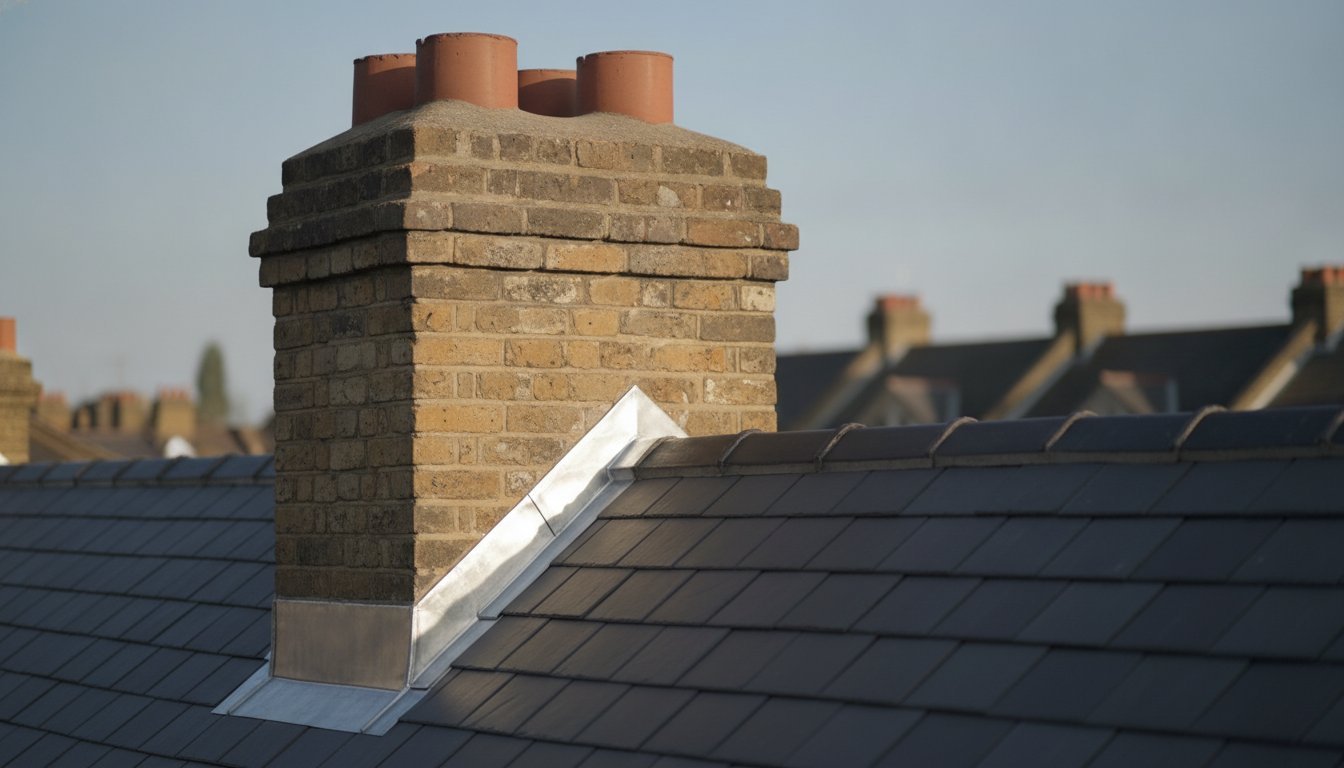
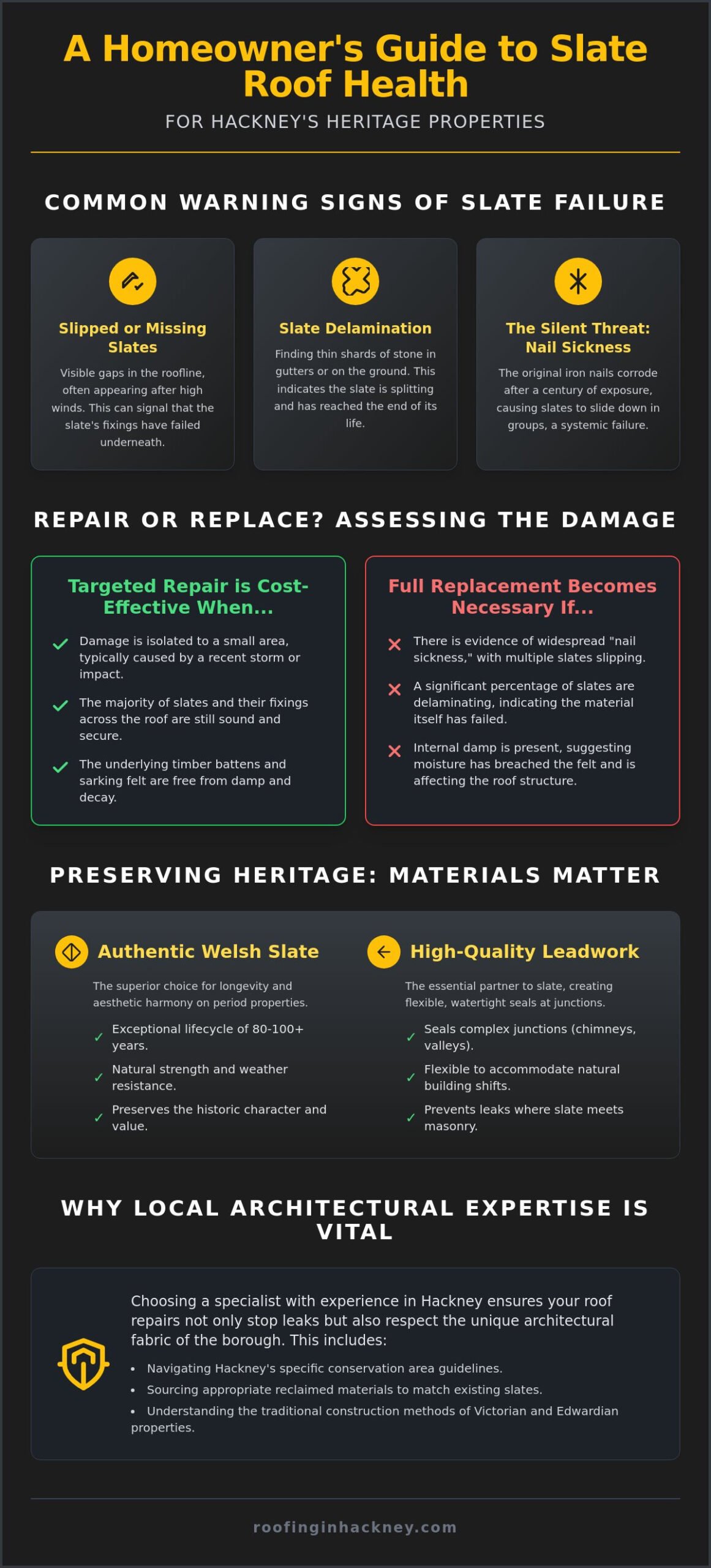
Selecting the right materials is the difference between a lasting repair and a temporary patch. Natural Welsh slate is far superior to synthetic alternatives, which often lack the weight and weather-resistance of genuine stone. When we carry out repairs, matching the colour, thickness, and texture of the existing tiles is a priority to ensure the work is invisible from the street level. Leadwork is another essential partner in this system. It’s used at chimney intersections and valleys to create a flexible, watertight seal that moves with the building’s natural shifts. Without high-quality leadwork, even the finest slate cannot prevent leaks at complex junctions where the roof meets the masonry.
Common Signs You Need Slate Roof Repairs in Hackney
Detecting issues early is the most effective way to manage the costs and complexity of the slate roof repairs Hackney property owners often face. The most visible indicator of trouble is a slipped or missing slate. These gaps often appear after high winds, but they can also indicate that the fixings underneath are failing. If you notice small, thin shards of stone in your gutters or on the pavement below, your slates are likely delaminating. This process, where the stone splits into layers, suggests the material has reached the end of its functional life and can no longer shed water effectively.
The Silent Threat: Nail Sickness
In many of Hackney’s Victorian terraces, the original slates were secured with iron nails. Over a century of exposure to moisture causes these nails to corrode, a condition known in the trade as “nail sickness.” You can identify this by looking for slates that have slid down the roof in groups, often leaving a jagged, uneven line across the courses. Whilst a single slipped tile might be storm damage, multiple displaced slates usually point to a systemic failure. Addressing this requires a specialised approach that follows a recognised code of practice for slate roofing to ensure the entire system is stabilised rather than just patched. Identifying these symptoms early ensures that the slate roof repairs Hackney residents require remain targeted and cost-effective. When nail sickness is widespread across multiple roof pitches, it is often the primary driver behind the need for an old slate roof replacement rather than a series of increasingly costly patch repairs.
Homeowners can use this checklist to spot systemic nail failure:
- Slates sliding out of position despite no recent high winds or storms.
- Multiple “tingles” (small lead or copper strips) already visible on the roof surface.
- Visible rust staining on the underside of slates when viewed from the loft.
Internal Indicators of Roof Failure
Your loft space provides the most honest assessment of your roof’s health. On a bright day, turn off the lights and look up. If you see pinpricks of daylight peeking through the tiles, water is almost certainly finding its way in too. You should also check for damp patches on chimney breasts or ceiling joists. A persistent musty smell in the attic often indicates a slow, long-term leak that hasn’t yet caused a visible ceiling stain but is quietly rotting the timber battens. These subtle signs are late-stage warnings that the structural integrity of the roof is at risk.
Catching these issues before they compromise your home’s interior is vital for heritage preservation. If you’ve spotted any of these warning signs, you can speak with our team for a methodical site inspection to determine the most durable course of action.
The Repair vs. Replacement Dilemma for Period Properties
Determining whether to patch a leak or invest in a new roof is a significant decision for any Hackney homeowner. A common rule of thumb used by specialists is the 20 to 25 per cent failure threshold. If a quarter of your roof tiles are showing signs of delamination or have previously slipped, the cumulative cost of individual slate roof repairs Hackney will likely soon surpass the price of a total overhaul. Beyond the financial aspect, there is the aesthetic impact to consider. Multiple lead “tingles”, those small metal strips used to hold slates in place, create a cluttered appearance that can detract from your home’s historic charm and even lower its market valuation.
Many homeowners ask if a repair is merely a temporary fix. It doesn’t have to be. When executed by a master craftsman using matching materials, a repair can be a permanent solution for specific, isolated problems. Following a clear expert slate roof maintenance Hackney plan can significantly extend the life of your existing roof, provided the underlying structure remains sound. This approach allows you to address minor issues before they escalate into systemic failures. Where the underlying structure has deteriorated beyond the point of targeted intervention, our detailed guide to old slate roof replacement for heritage properties explains how to manage a full restoration whilst preserving the authentic character of your Victorian home.
When a Repair is the Right Choice
A targeted repair is usually the most logical path when the damage is isolated and accidental. This includes scenarios like broken slates from falling branches or tiles dislodged during a particularly severe storm. Localised failures in lead flashing around chimneys or valley intersections also fall into this category. By commissioning precise slate roof repairs Hackney specialists can execute, you prevent water from reaching the timber rafters, effectively halting decay before it becomes a structural crisis. These small, strategic interventions are essential for preserving the building’s fabric without the need for a full-scale construction project.
When to Consider a Full Roof Replacement
If you find yourself calling a roofer every winter to fix new leaks, you are likely dealing with systemic failure. As mentioned, once failure reaches the 25 per cent mark, individual repairs lose their efficacy. Opting for a professional roof replacement Hackney allows you to upgrade the entire system to modern standards. Unlike Victorian builders, we now use high-performance breathable membranes that allow moisture to escape the loft whilst providing a secondary waterproof layer. This modern addition, combined with new timber battens and high-quality slate, ensures your home remains dry and energy-efficient for the next century.
The Professional Process of Restoring Heritage Slate
Restoring a period roof requires a methodical, step-by-step approach that prioritises the building’s historical integrity. The process begins with a comprehensive site inspection to identify the root cause of moisture ingress. We don’t simply look for the leak; we investigate the surrounding leadwork, timber condition, and masonry to ensure the repair addresses the source of the problem. For slate roof repairs Hackney conservation officers often demand a perfect material match, which makes the sourcing phase critical. We prioritise reclaimed Welsh slates for Victorian properties, as these tiles possess the correct patina and thickness to blend seamlessly with the original roofscape.
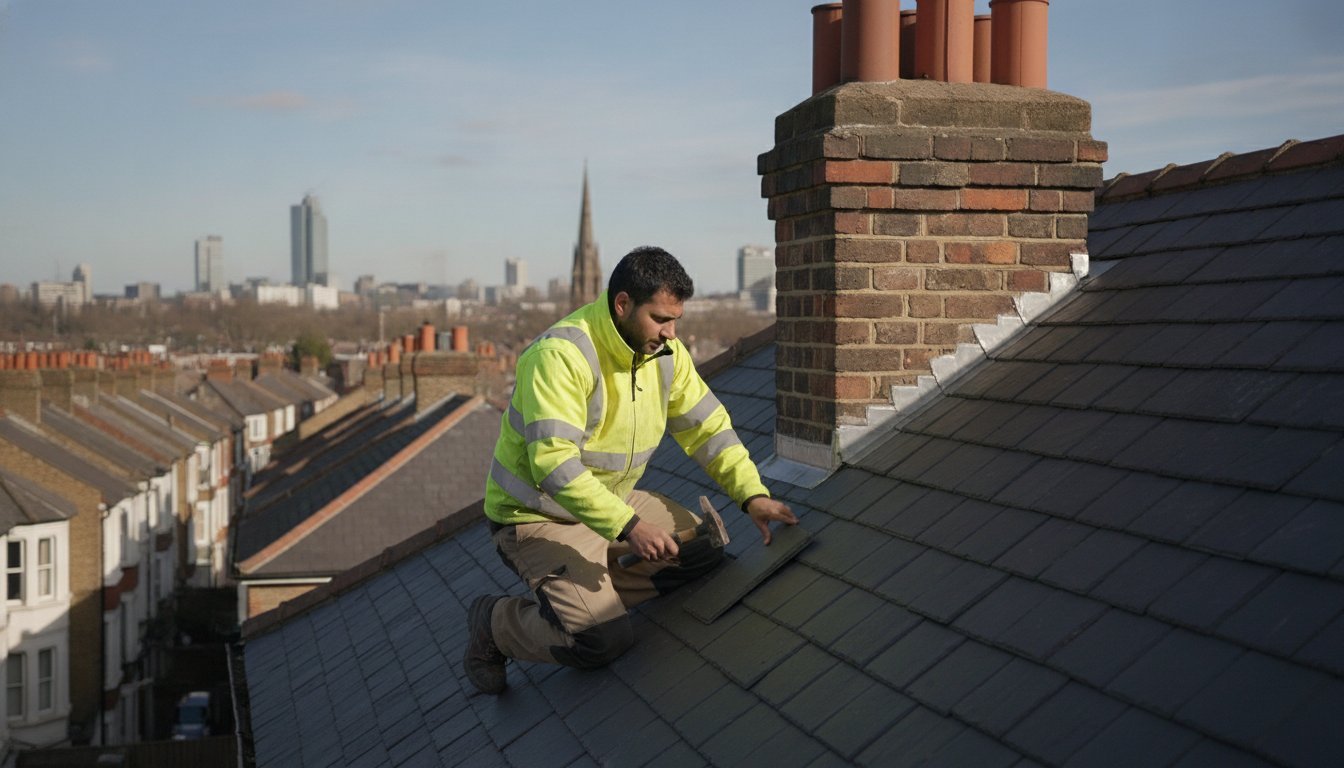
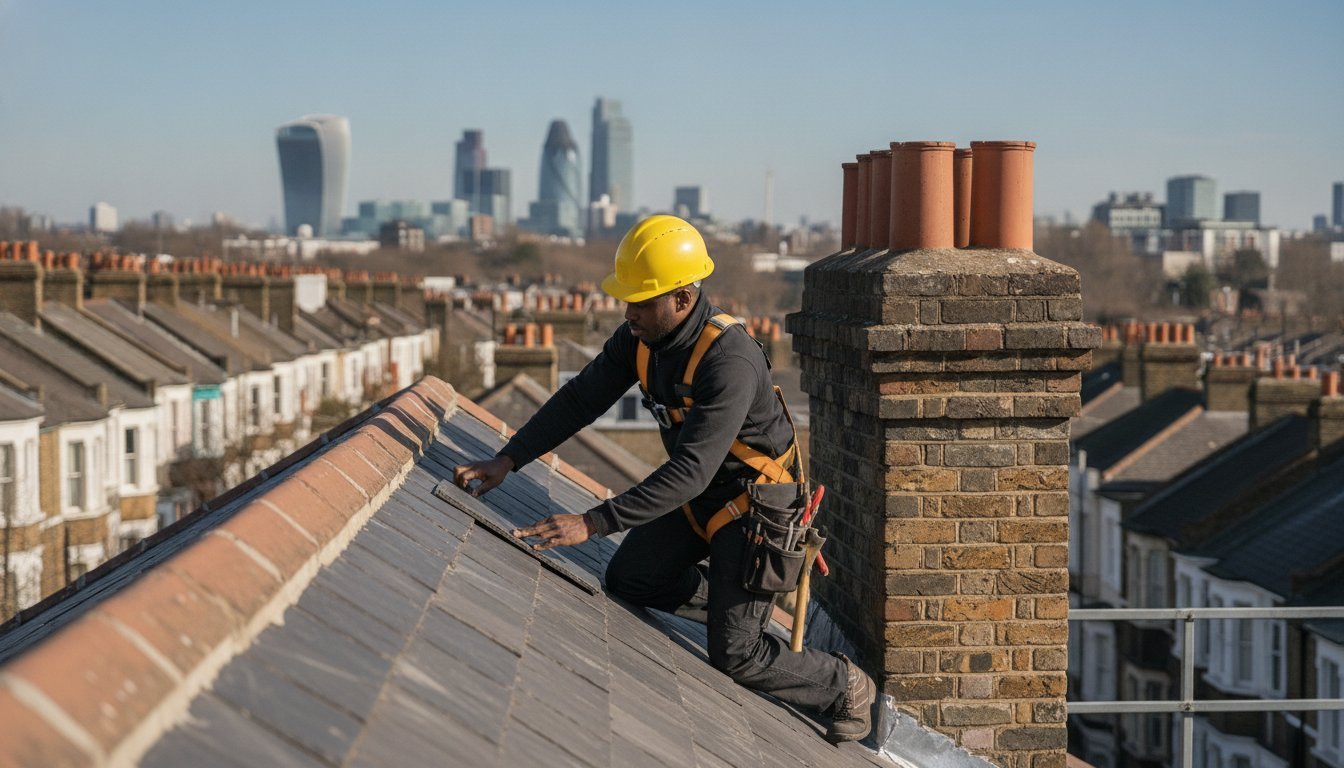
Once materials are sourced, the physical restoration involves the careful removal of damaged tiles. A master craftsman uses specialised tools to slide out broken slates without disturbing the fragile surrounding structure. The original iron nails, which are often the primary cause of systemic failure, are replaced with durable copper or stainless steel alternatives. These materials do not corrode, ensuring the new fixings will last as long as the stone itself. This precision-led workflow ensures that each intervention strengthens the roof rather than creating new weak points.
Specialist Leadwork and Chimney Integration
Lead flashing serves as the most critical junction in any slate system. It’s the flexible barrier that protects the vulnerable gaps where the roof meets chimney stacks or joins a neighbouring property. During the repair process, we often find that masonry issues contribute to leaks. Repointing chimney stacks whilst the scaffolding is in place is a practical step that prevents future water ingress. Precision leadwork at the valleys and ridges is essential for directing heavy rainfall away from the timber rafters and into the guttering system, maintaining a watertight seal across the entire structure.
Ensuring Long-Term Thermal Performance
Modern repairs offer a unique opportunity to improve your home’s energy efficiency. When replacing more than 25 per cent of a roof, current Building Regulations typically require an upgrade to meet a U-value of 0.16 W/m²K. Integrating thermal roof insulation upgrades during the repair phase can significantly reduce heat loss in older terraces. Proper ventilation is also vital to prevent interstitial condensation, which can lead to timber rot. Whether your home uses a “warm roof” setup with insulation above the rafters or a traditional “cold roof” configuration, ensuring adequate airflow is a prerequisite for slate longevity.
The complexity of heritage restoration requires a partner who understands the specific demands of East London architecture. If you’re concerned about the condition of your property, you can book a professional roof consultation to receive a detailed assessment of your repair requirements.
Choosing Specialist Slate Contractors in East London
Selecting the right partner for your roofing project is as critical as the quality of the stone itself. Whilst many general builders may offer to patch a leak, they often lack the technical depth required for the complex slate roof repairs Hackney properties demand. A heritage specialist understands that working with natural stone is a matter of precision rather than force. They recognise the difference between a simple slipped tile and the systemic failures discussed in previous sections, such as nail sickness or delamination. Before commissioning any work, always verify that your contractor has a dedicated portfolio of slate restoration and carries comprehensive insurance specifically tailored for high-level roofing activities.
Local knowledge is another prerequisite for quality results. Hackney’s architectural landscape is dominated by specific Victorian and Edwardian styles that require a nuanced touch. A specialist who understands these buildings will know exactly which slate sizes were used in your specific street and where the most vulnerable lead junctions are likely to be. This expertise ensures that any intervention respects the original design whilst providing a modern, watertight seal that will last for decades. Our comprehensive guide to roofing for period homes in Hackney provides further detail on how to navigate planning requirements and select materials that satisfy both conservation officers and modern performance standards.
The Value of Local Craftsmanship
Roofing in Hackney maintains a steadfast commitment to traditional methods, ensuring that every repair is performed with the respect a heritage home deserves. Using a local contractor provides more than just peace of mind; it reduces logistical delays significantly. We are already familiar with the narrow access routes of East London and the specific scaffolding permits required by the local council. By choosing a master craftsman, you aren’t just fixing a leak; you are adding tangible value to your property through a high-quality finish that preserves its historic character and market appeal.
Next Steps for Your Hackney Home
If you discover a leak during a storm, your immediate priority should be containing the water internally to protect your period features. Once the weather has cleared, avoid the temptation to inspect the damage yourself, as aged slate is notoriously brittle and dangerous to walk on. Instead, request a professional quote that is transparent and highly structured. A reliable specialist will provide a clear breakdown of the project, including:
- Material Sourcing: The cost of matching reclaimed or new natural slates.
- Specialist Labour: Skilled time for slate fitting and leadwork integration.
- Access and Safety: Detailed costs for scaffolding or secure towers.
- Waste Management: Responsible disposal of old materials and debris.
Ensuring your heritage home remains protected for the next century requires a methodical approach and a partner who values craftsmanship over quick fixes. If you have concerns about the integrity of your roof, we invite you to contact Roofing in Hackney for an expert consultation. Our team will provide a detailed assessment to help you maintain the structural integrity and timeless beauty of your property.
Securing the Future of Your Heritage Home
Preserving a Victorian or Edwardian property requires more than just reactive maintenance; it demands an understanding of traditional materials and structural logic. You now know how to distinguish between isolated storm damage and systemic issues like nail sickness, and why the 25 per cent rule is a vital benchmark for your investment. By prioritising matching reclaimed materials and specialist leadwork, you ensure that your roof remains a functional asset rather than a recurring liability. Each small step you take today helps maintain the historic character that defines East London’s architectural identity.
When you commission slate roof repairs Hackney property experts provide, you are investing in the long-term durability and aesthetic harmony of your home. As local contractors with deep East London expertise, we specialise in heritage roofing, expert leadwork, and chimney repointing. If you’ve noticed slipped tiles or internal damp, taking action now prevents more costly structural decay later. We’re here to help you navigate the complexities of heritage care with transparency and technical mastery.
Request an Expert Slate Roof Inspection from Roofing in Hackney
Your property has stood for over a century; with the right professional care, it’ll continue to protect your family and preserve its value for many decades to come.
Frequently Asked Questions
How much does it cost to repair a slate roof in Hackney?
The cost of slate roof repairs in Hackney depends on the extent of the damage, the height of your property, and the specific materials required for the fix. Minor interventions involving a few slipped tiles are relatively straightforward, whilst more complex issues involving leadwork or chimney repointing will require a larger investment. A professional site inspection is essential to provide an accurate quote that accounts for the unique structural requirements of your heritage home.
What is nail sickness and can it be fixed without a new roof?
Nail sickness occurs when the original iron nails used in the 19th century corrode, causing slates to slide out of position in groups. Whilst individual tiles can be temporarily secured with lead tingles, this does not address the systemic failure of the fixings. If the corrosion is widespread across the roof pitch, a full re-roofing using durable copper or stainless steel nails is usually the only permanent solution to ensure long-term structural integrity.
Do I need planning permission for slate roof repairs in a Hackney conservation area?
Planning permission is generally not required for like-for-like repairs where the materials and appearance match the original roof. However, many parts of Hackney are subject to Article 4 directions which remove certain Permitted Development rights, and listed buildings always require specific consent. It’s vital to verify the current Hackney Council conservation guidelines before commencing any work that might alter the character of a period property.
Can I replace individual slates myself?
Replacing individual slates is a task best left to professionals due to the extreme fragility of aged stone and the safety risks of working at height. Walking on a slate roof without specialist equipment can easily crack surrounding tiles, which often leads to more extensive leaks. Master craftsmen use purpose-built roof ladders and tools to distribute weight evenly, ensuring that the repair process doesn’t cause further damage to the historic fabric.
How long does a slate roof repair typically take?
Minor repairs can often be completed within a single day, though more extensive restoration involving leadwork or timber replacement may take several days to finish correctly. The total duration depends on the complexity of the access and the prevailing weather conditions. A professional contractor will provide a structured timeline during the consultation phase, ensuring that each stage of the repair is carried out methodically and without unnecessary delays.
What is the difference between Welsh slate and Spanish slate?
Welsh slate is globally renowned for its exceptional durability and can last well over a century, making it the gold standard for heritage restoration. Spanish slate is a more modern, cost-effective alternative that offers good weather resistance, though its colour and texture may differ slightly from the stone used on Victorian terraces. For most slate roof repairs Hackney residents undertake, sourcing reclaimed Welsh slate is the best way to ensure an invisible, high-quality match.
Is it worth repairing an old slate roof or should I just replace it?
Repairing an old roof is the right choice if the damage is isolated to a specific area or caused by a recent storm. However, if more than 20 to 25 per cent of the slates are failing or the timber battens are showing signs of rot, a full replacement is usually more cost-effective in the long run. A specialist inspection will determine if the underlying structure is sound enough to support the existing slates for another generation.
How do I find a reliable roofer in Hackney for heritage work?
Finding a reliable contractor involves looking for specialists who have a demonstrable portfolio of working on Victorian and Edwardian buildings in East London. You should prioritise firms that understand traditional leadwork techniques and the specific architectural requirements of the local area. Ensure any roofer you consider is fully insured and provides a transparent, itemised quote that covers materials, labour, and any necessary scaffolding or waste disposal costs.