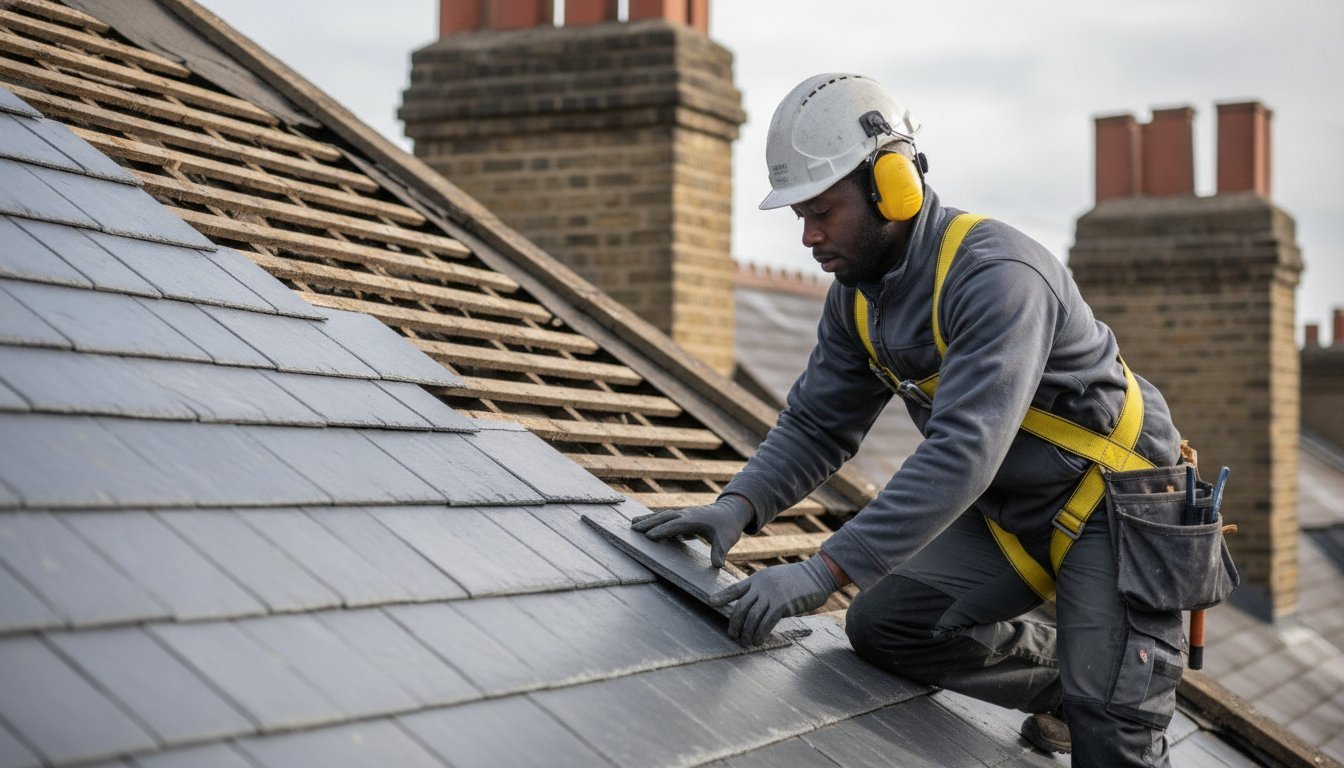
What if the slates on your roof aren’t actually the problem? For many homeowners in Hackney, the assumption is that crumbling stone is the primary culprit behind that persistent damp in the loft. In reality, the necessity for an old slate roof replacement is often driven by the “hidden” failure of Victorian iron nails and perished underlays rather than the slate itself. It’s a stressful realisation to reach, particularly when you’re balancing the anxiety of heritage material costs with the urgent need to keep your period property watertight and authentic.
We recognise that your Victorian home is a significant investment that requires a steady, expert hand to maintain its historic character. This guide will show you how to identify when your roof has reached its limit and how to manage a restoration that honours its architectural legacy. You’ll learn how to navigate the 2026 Building Regulations regarding thermal insulation while ensuring your home remains a dry, energy-efficient sanctuary for the next century. We will walk through the essential steps of sourcing quality materials and managing the technical requirements of a professional heritage installation.
Key Takeaways
- Identify the technical distinction between “nail sickness” and slate delamination to determine if your roof requires a full restoration or minor maintenance.
- Navigate the specific logistical requirements for an old slate roof replacement in Hackney, including essential scaffolding permits and pavement licences.
- Assess the long-term value of a full replacement using the “20% rule” to understand when persistent repairs become a poor financial investment.
- Learn how to upgrade your home’s thermal efficiency to meet 2026 Building Regulations whilst maintaining the structural integrity of a Victorian terrace.
- Understand the importance of sourcing authentic matching materials and professional leadwork to preserve the aesthetic value of your period property.
Signs Your Old Slate Roof Has Reached the End of Its Life
Determining whether your period property requires a few minor repairs or a complete old slate roof replacement is a common dilemma for Hackney homeowners. Whilst the slate roofing material itself is incredibly durable, often lasting well over a century, the components holding it in place have a much shorter lifespan. If you’ve noticed slates slipping into the guttering or lying on the pavement, it’s rarely a sign of individual tile failure. Instead, it usually indicates a systemic breakdown of the fixing methods used during the Victorian and Edwardian eras.
Physical signs of fatigue often manifest as “patchwork” roofing. If your roof is covered in lead or copper “tingles”, which are small strips of metal used to hook slipped slates back into place, the structure is likely struggling. A few tingles are a standard maintenance solution, but when they appear in clusters, it’s a clear signal that the original fixings have perished. When these symptoms converge, the transition from ongoing repairs to a planned old slate roof replacement becomes the most cost-effective path forward. Beyond the exterior, persistent dampness in your loft space is another critical indicator. This often means the original bitumen felt or lime torching has failed, allowing wind-driven rain to bypass the slates and soak into the timber rafters.
The Reality of Nail Sickness in Hackney Terraces
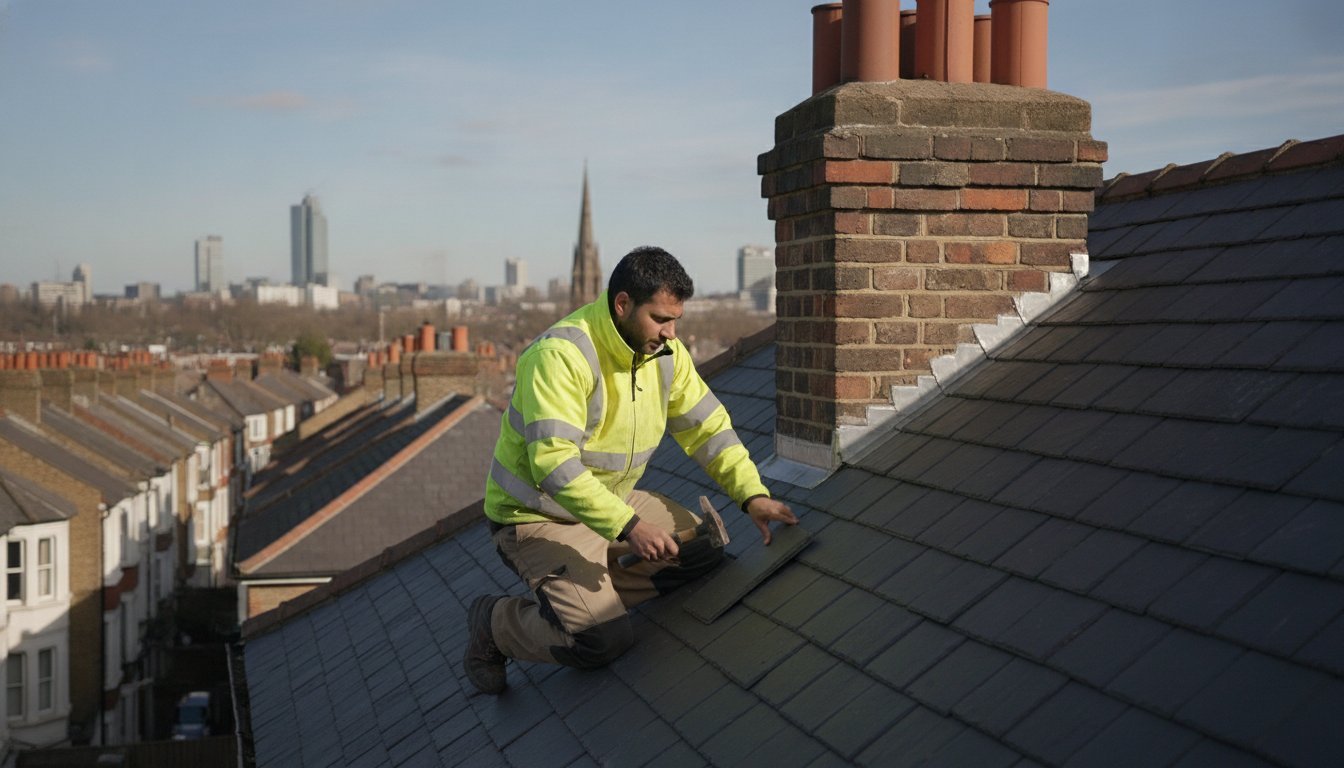
Victorian roofers typically used plain iron nails to secure slates. Over a century of exposure to London’s damp climate causes these nails to oxidise and expand, eventually rusting through completely. This chemical reaction, known as nail sickness, results in slates sliding out of position despite the stone remaining perfectly intact. Tingles offer a temporary fix, but they don’t address the underlying decay of the thousands of nails still hidden beneath the surface. Nail sickness is the most common cause for full replacement in East London.
Assessing Slate Quality: Welsh vs. Spanish
Distinguishing between natural wear and terminal decay requires a simple delamination test. High-quality Welsh slate, often found on premium heritage builds, is dense and rings like a bell when tapped. If your slates are flaking into thin layers or feel soft and “muddy” when wet, they’re likely lower-grade imports or have reached the end of their natural life cycle. Many 20th-century repairs used slates with high pyrite content, which can cause rust spots and holes to develop over time. If you aren’t sure about the state of your tiles, you can contact us for a professional assessment of your roof’s condition.
The Anatomy of a Heritage Slate Roof Replacement
A successful old slate roof replacement is a complex engineering project that extends far beyond the visible stone. Whilst the aesthetic appeal of natural slate defines the character of Hackney’s Victorian terraces, the structural integrity of the roof relies on the hidden components installed beneath the surface. In heritage restoration, we prioritise a system-based approach that combines traditional aesthetics with modern performance standards. This involves stripping the structure back to its rafters to assess the health of the timber before any new materials are introduced.
The foundation of a durable slate roof lies in the quality of the timber battens. Unlike the thin, untreated laths used by Victorian builders, modern standards require pre-treated, graded timber. These battens must be precisely spaced to ensure the correct “lap” of the slates, which prevents capillary action from drawing water upwards during heavy London downpours. Sourcing matching materials is equally vital for preserving the street scene. We focus on high-quality natural slate that mirrors the texture and hue of original Welsh or premium Spanish varieties. For those interested in the technical standards of material longevity, the National Park Service provides an excellent overview of historic slate roof repair and replacement criteria that align with our master craftsman standards.
Breathable Membranes vs. Traditional Bitumen Felt
One of the most significant upgrades in a modern old slate roof replacement is the transition from bitumen felt to high-performance breathable membranes. Traditional felt often trapped moisture within the loft, leading to timber rot over several decades. Modern membranes allow water vapour to escape whilst maintaining a completely watertight seal against the elements. This improved airflow is essential for the health of your rafters. Under the 2026 Building Regulations, ensuring proper ventilation and moisture control is a mandatory requirement for any project where more than 25% of the roof is replaced.
Specialist Leadwork and Chimney Integration
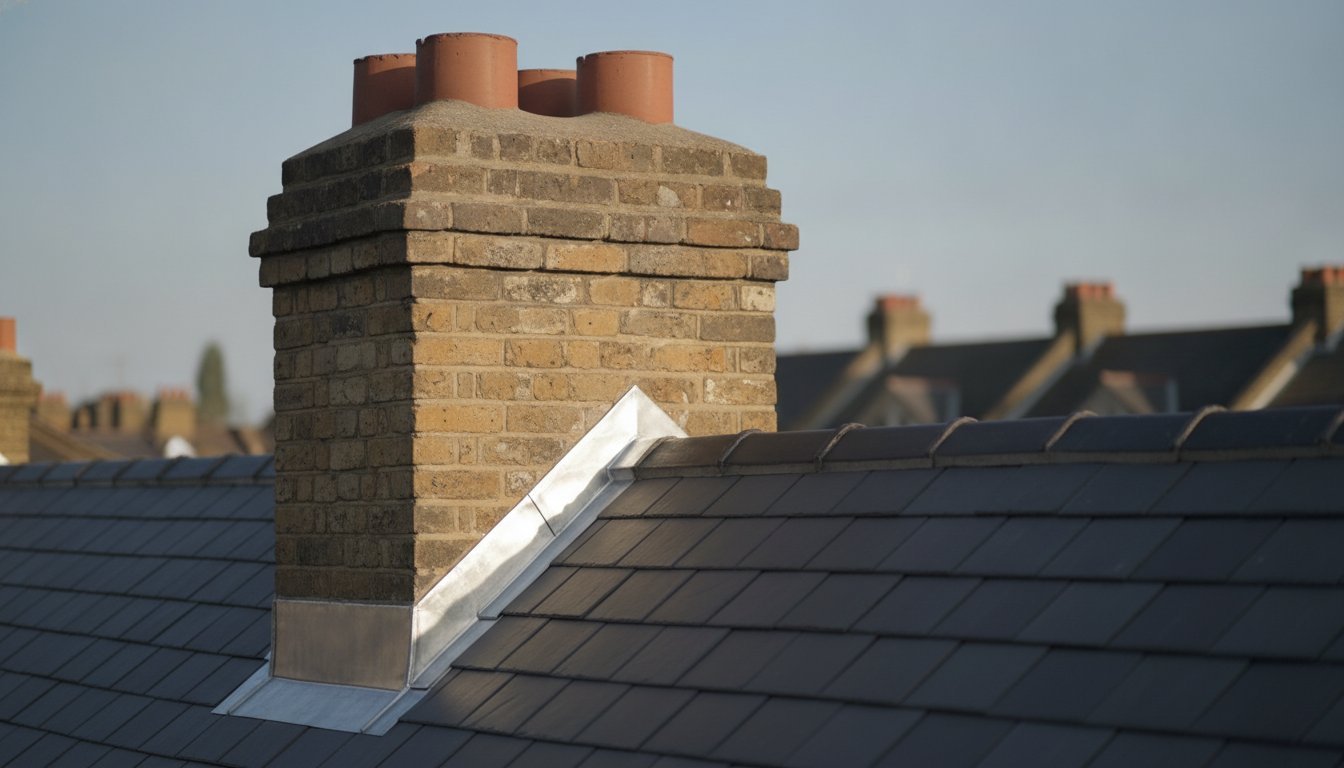
The intersections of your roof, such as valleys, dormers, and chimney stacks, are the areas most vulnerable to water ingress. We treat leadwork as a specialist discipline, using rolled lead sheet that is bossed and dressed to fit the unique contours of your property. It is often false economy to retain old lead flashings when installing new slate; therefore, we replace these elements to ensure the entire system lasts another century. This phase of the project also provides the perfect opportunity for chimney stack repointing and the installation of new pots. If you are concerned about the specific requirements of your period property, you can speak with our specialist team to discuss a tailored restoration plan.
Repair vs. Replacement: Calculating the 20% Rule
Deciding between a targeted repair and a complete old slate roof replacement requires a methodical assessment of long-term financial logic. In the roofing trade, we often apply a “20% rule” as a benchmark for structural viability. If the cumulative costs of your roof repairs over a 24-month period exceed 20% of the total quote for a full replacement, the system is likely in a state of terminal failure. Continuing to patch a roof that has reached this threshold is often a poor allocation of resources, as it fails to address the underlying “nail sickness” or underlay decay discussed in previous sections.
There are also significant insurance considerations to keep in mind. Many providers in the UK view multiple claims for slipped slates as evidence of general wear and tear rather than accidental damage. This can lead to rejected claims for internal water damage to ceilings and timberwork. A professionally executed old slate roof replacement provides a “reset” for your property’s structural health, often resulting in lower premiums and greater peace of mind. Beyond protection, a new roof allows for the integration of modern standards for energy efficiency in historic buildings, which is a critical factor for the 2026 homeowner looking to reduce utility costs whilst preserving heritage value.
When Repairs Are No Longer Cost-Effective
If you find yourself calling a roofer more than once every two years for the same cluster of slipped slates, your roof has likely entered its “patchwork” phase. Individual repairs don’t fix the perished iron nails across the rest of the structure. Whilst a repair might last a season, a full replacement is designed to protect your home for another 80 to 100 years. We recommend evaluating the risk of “unseen” leaks, which often rot rafters silently behind the scenes, making eventual replacement far more expensive than a planned restoration. You can request a professional survey to determine your roof’s current financial viability.
Property Value and Kerb Appeal in East London
In Hackney’s competitive property market, the condition of a roof is a primary factor during home surveys. A tired, sagging roofline with visible lead tingles can be a major deterrent for premium buyers who fear hidden costs. Conversely, a crisp, heritage-compliant slate roof with expertly finished leadwork significantly enhances kerb appeal and can justify a higher asking price. For properties in one of Hackney’s 35 conservation areas, using authentic materials is not just about aesthetics; it’s a requirement that preserves the long-term capital value of your investment.
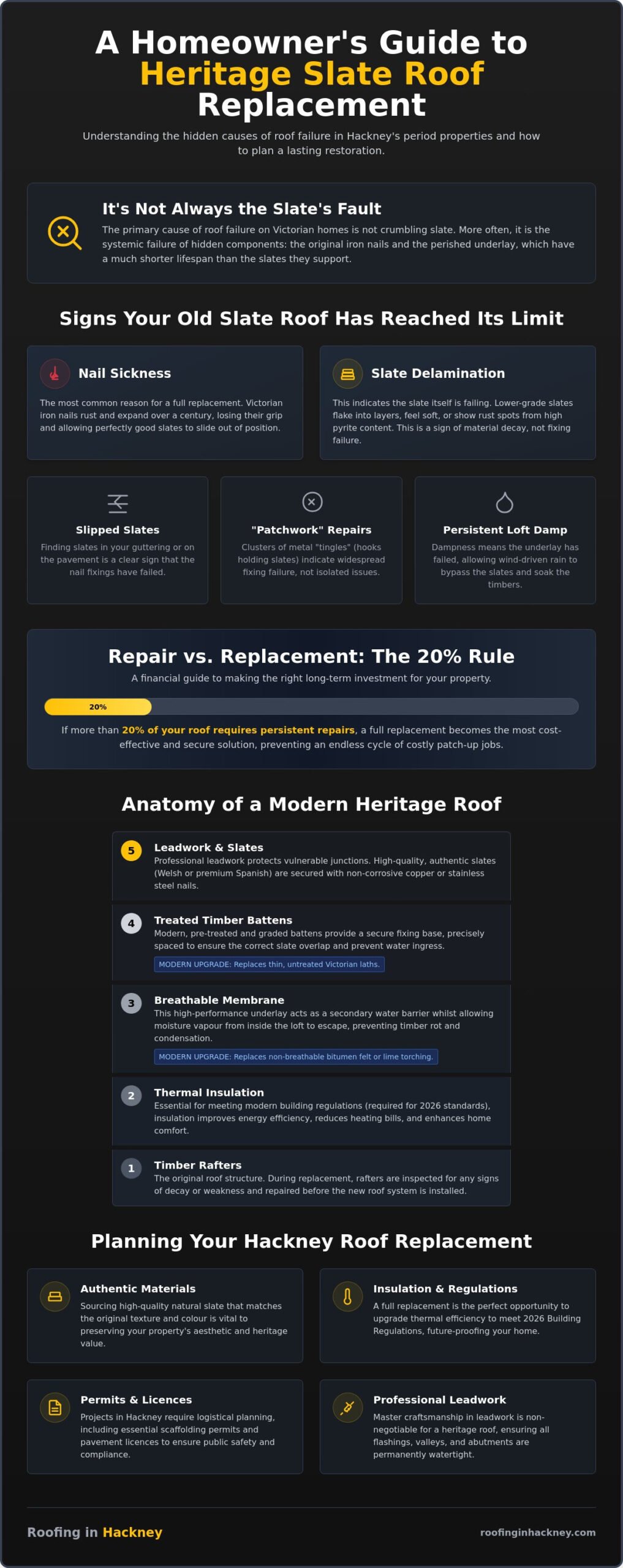
How to Plan Your Slate Roof Replacement in Hackney
Planning an old slate roof replacement in a densely populated area like Hackney requires meticulous logistical preparation. Unlike rural projects, East London restorations must account for narrow Victorian terrace streets, high foot traffic, and strict local authority regulations. A professional approach ensures the project proceeds smoothly without causing undue disruption to neighbours or incurring fines from the council. We focus on a methodical setup that prioritises site safety and structural protection from day one.
Weatherproofing is a primary concern during the transition phase. As we strip the old materials, we use industrial-grade tarpaulins to ensure your home remains watertight throughout the process. Waste management is equally vital; we organise the prompt removal of old slates, perished timber, and debris to keep the site tidy and safe. This organised approach reduces the stress typically associated with major home maintenance and ensures the property is protected against the unpredictable London weather.
Local Logistics and Scaffolding Requirements
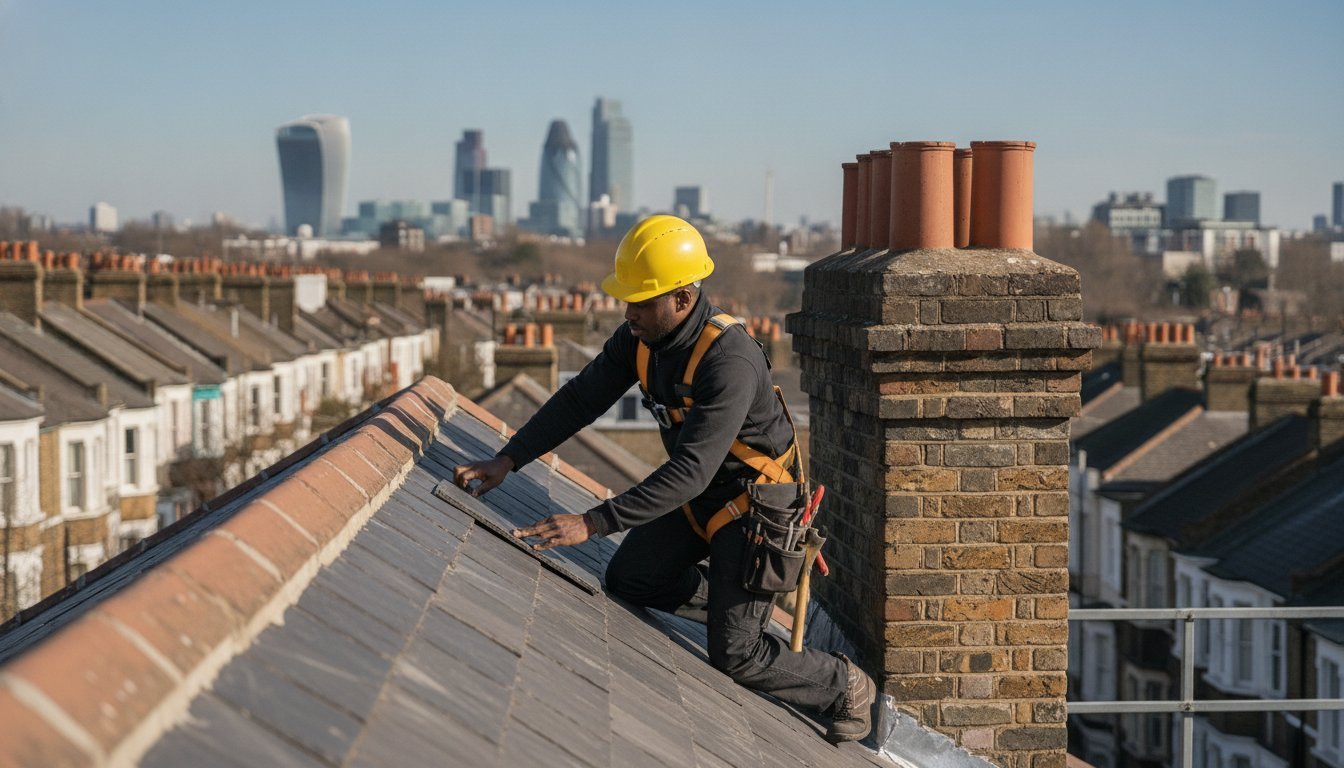
Securing the perimeter is the first critical phase. If the scaffolding needs to sit on a public pavement or road, a licence from Hackney Council is mandatory. We manage this application process, ensuring all pavement licences and parking suspensions are in place before the first pole is erected. In narrow streets, we often use specialised scaffolding designs to maintain pedestrian access. It’s also vital to verify that your contractor holds comprehensive public liability insurance to cover the unique risks of working in tight urban environments.
The Replacement Workflow Step-by-Step
Once the site is secure, the physical restoration follows a disciplined sequence designed for longevity:
- Strip-off and Inspection: We remove the original slates and fixings to expose the timber rafters. This allows us to identify any structural decay that was previously hidden.
- Membrane and Battens: We install the high-performance breathable membrane followed by treated timber battens, creating a durable foundation for the new stone.
- Slating and Leadwork: The slates are laid from the eaves upwards, with master craftsman leadwork integrated into the valleys and chimney stacks as the courses rise.
- Ridge Capping and Final Inspection: The project concludes with the installation of ridge tiles and a thorough quality check to ensure every detail meets our standards.
Following the final inspection, we provide a completion certificate to confirm the work complies with all relevant standards. If you’re ready to begin the planning phase for your period property, you can book a site survey with our Hackney team to discuss your specific requirements.
Modernising Heritage: Insulation and Energy Efficiency
An old slate roof replacement represents more than just a structural fix; it is the most effective opportunity to improve your home’s thermal performance. Whilst traditional Victorian builds were designed to breathe through porous materials, modern standards demand a more controlled approach to heat retention. Under the 2022 updates to Building Regulations Part L, if you replace 25% or more of your roof, you are legally required to upgrade the insulation to achieve a U-value of 0.16 W/m²K. This regulation ensures that your heritage restoration contributes to a lower carbon footprint and significantly reduced energy bills.
Choosing between a warm roof and a cold roof configuration is a critical decision during the planning phase. A cold roof involves placing insulation at the ceiling level, which is cost-effective but leaves the loft space subject to temperature fluctuations. In contrast, a warm roof places insulation between and over the rafters. This approach is often preferred for Victorian terraces in Hackney as it keeps the structural timbers at a consistent temperature and preserves the loft for future conversion. We focus on achieving these high thermal standards without altering the original roofline, ensuring your property remains sympathetic to the surrounding heritage streetscape.
Thermal Performance Upgrades for Pitched Roofs
Achieving modern U-values in a period property requires high-performance materials like PIR (polyisocyanurate) board insulation. By precisely cutting these boards to fit between the rafters, we can significantly reduce heat loss without sacrificing valuable internal head height. This method prevents the “thermal bridging” often found in older, poorly insulated homes. For a detailed breakdown of material choices and technical specifications, you may find our guide on Thermal Roof Insulation Upgrades useful for your project planning.
The Master Craftsman Approach
Completing a successful old slate roof replacement requires a partner who understands the delicate balance between 21st-century efficiency and 19th-century aesthetics. Our master craftsman approach ensures that every element of the project, from the precision of the lead valleys to the ventilation of the ridge tiles, meets the highest industry standards. We provide a comprehensive service that includes essential chimney repairs and repointing, ensuring your entire roof system is robust and maintenance-free. If you are ready to invest in the long-term protection of your period home, please contact Roofing in Hackney for a specialist heritage roof survey and a detailed restoration proposal.
Protecting Your Period Home for the Next Century
Restoring a period property is a commitment to preserving architectural history whilst ensuring modern comfort for your family. By moving beyond reactive, temporary patches and addressing systemic issues like nail sickness or underlay failure, you secure the structural integrity of your home for decades to come. An old slate roof replacement is not merely a standard maintenance task; it is a strategic investment that integrates high-performance insulation and specialist leadwork to meet 2026 thermal standards without compromising the unique aesthetic of Hackney’s heritage streets.
As trusted local contractors, we specialise in the intricate requirements of Victorian and Edwardian roofing systems. Our comprehensive service ensures that every technical detail, from thermal efficiency upgrades to complex chimney restoration, is handled with master craftsman precision. To move forward with confidence and clarity, we invite you to request a professional slate roof survey from Roofing in Hackney. Our team is ready to provide the expert guidance needed to transform your roof into a dry, energy-efficient asset that will stand the test of time for another 100 years.
Frequently Asked Questions
How much does it cost to replace a slate roof in Hackney in 2026?
The total investment for an old slate roof replacement depends on several variables, including the choice of natural slate, the complexity of the leadwork, and the specific scaffolding requirements for your Hackney street. Since material costs for premium Welsh or Spanish slate fluctuate, we recommend a professional site survey to provide an accurate, fixed-price quotation. Factors such as the height of the building and the need for pavement licences will also influence the final project cost.
Can I reuse my old slates when replacing the roof?
Reusing original slates is possible if the stone remains structurally sound and has not begun to delaminate. During the strip-off process, we can sort and grade your existing slates, typically salvaging between 50% and 70% for use on less visible elevations. However, the labour costs for cleaning and re-holing old slates can sometimes offset the savings on new materials. We often recommend mixing salvaged slates with high-quality matching replacements to ensure the entire system achieves a uniform 100-year lifespan.
How long does a full slate roof replacement take for a terrace house?
A standard Victorian terrace roof replacement typically takes between two and three weeks to complete, assuming favourable weather conditions. This timeline includes the initial scaffolding erection, the removal of old materials, timber repairs, and the installation of new insulation and slates. Complex projects involving extensive leadwork or chimney stack restoration may require additional time. We provide a structured workflow at the start of every project to ensure you are fully informed of the expected completion date.
Do I need planning permission to replace my slate roof in Hackney?
Planning permission is generally not required for like-for-like replacements under Permitted Development rights. However, Hackney contains 35 conservation areas and several Article 4 direction areas where these rights are restricted. If your property is listed or located within one of these protected zones, you will likely need formal consent from Hackney Council. We recommend checking your property’s status on the local planning portal before commencing any significant structural work.
What is nail sickness and can it be fixed without a full replacement?
Nail sickness is a systemic failure caused by the oxidation of original Victorian iron fixings. Once the nails have rusted through, the slates will slide out of position, even if the stone itself is in perfect condition. Because this decay usually affects the entire roof simultaneously, individual repairs or “tingles” are only a temporary solution. A full old slate roof replacement is the only permanent fix to ensure the structure remains watertight and secure against the elements.
Is it better to use natural slate or synthetic alternatives for a period home?
Natural slate remains the gold standard for period properties due to its authentic texture, superior longevity, and heritage value. Whilst synthetic alternatives are available, they rarely match the 100-year lifespan of natural stone and may not be permitted in Hackney’s conservation areas. For homeowners prioritising long-term ROI and aesthetic harmony, natural Welsh or Spanish slate is the most reliable choice for maintaining the character and resale value of a Victorian terrace.
Should I replace my chimney leadwork at the same time as the roof?
We strongly advise replacing lead valleys, flashings, and gutters during the re-roofing process. It is a false economy to install new slates around aged lead that may fail within the next decade. Integrating leadwork restoration ensures that the entire roof system is renewed simultaneously, preventing the need for disruptive and expensive repairs in the future. This approach also allows us to repoint chimney stacks and secure pots whilst the scaffolding is already in place.
Will a new slate roof improve my home’s energy efficiency rating?
Yes, a new slate roof will significantly improve your home’s thermal performance and Energy Performance Certificate (EPC) rating. Under current Building Regulations Part L, we must install insulation that achieves a U-value of 0.16 W/m²K during a full replacement. This upgrade reduces heat loss through the roof by a substantial margin, leading to lower monthly energy bills and a more comfortable living environment. By modernising the insulation layer, you transform an old, draughty structure into a high-performance thermal envelope.