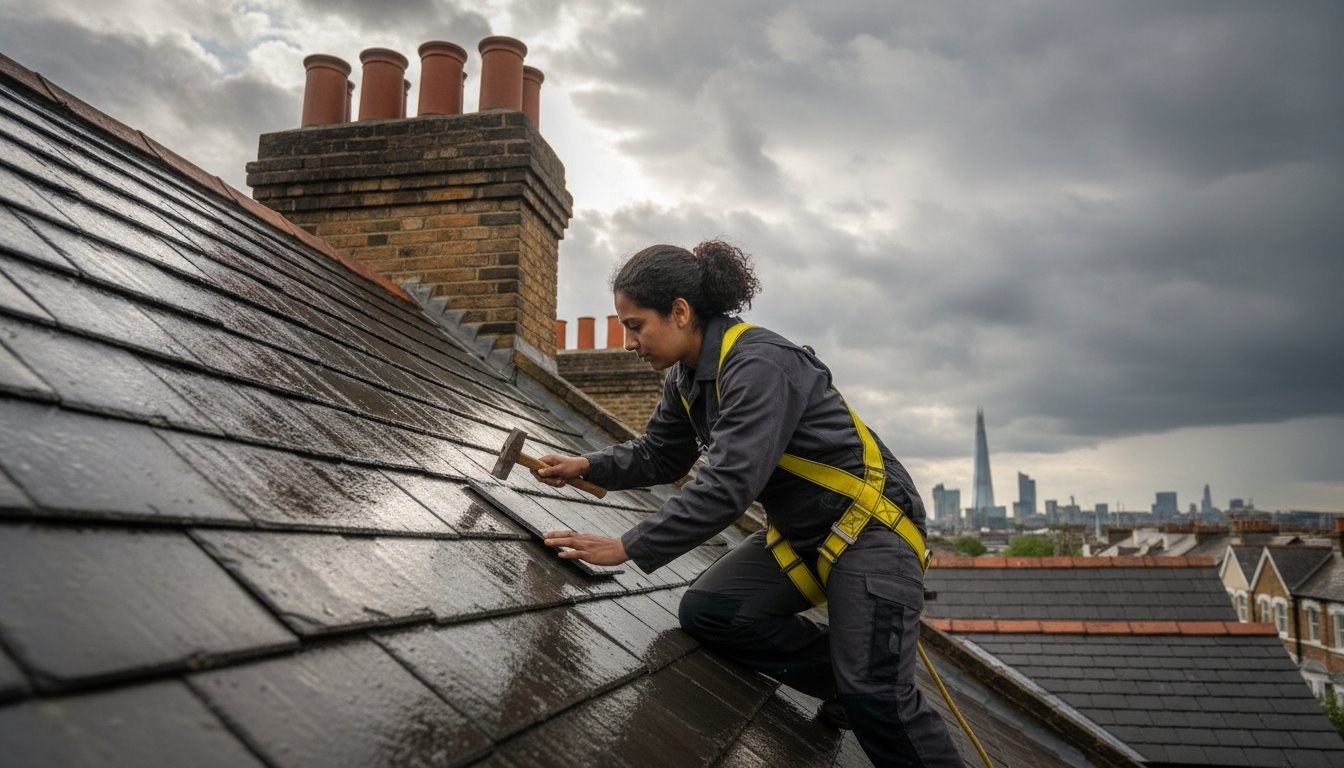
Imagine waking to the rhythmic drip of water against your bedroom floorboards after a night of gale-force winds across East London. For many homeowners in our borough, this isn’t just a hypothetical worry; it’s a sudden reality that threatens the structural integrity of a Victorian terrace or a modern apartment. When the weather clears, the immediate challenge of securing reliable storm damage roof repair Hackney becomes a race against the next downpour. It’s incredibly stressful to deal with water ingress while struggling to find a local specialist who actually understands the unique requirements of Hackney’s varied rooflines and conservation area rules.
You deserve the peace of mind that comes with a secure, professionally maintained home. This guide will show you exactly how to identify subtle damage, manage the increasingly strict 2026 insurance claim processes, and ensure your repairs meet the latest Hackney Council planning standards. We’ll walk through the essential steps of emergency management, from assessing slate displacement to understanding why precision leadwork is vital for long-term protection. By the end, you’ll have a clear, methodical roadmap to restore your property’s safety and value with absolute confidence.
Key Takeaways
- Prioritise safety by conducting a ground-level inspection with binoculars to spot slipped slates or displaced tiles without risking a climb during high winds.
- Learn to identify critical vulnerabilities in period properties, such as lifted lead flashing or dislodged slates, which are common requirements for professional storm damage roof repair Hackney.
- Understand why specialist lead welding and traditional slate techniques are essential for restoring a weather-tight seal rather than relying on temporary sealant “patches.”
- Navigate 2026 insurance requirements by providing professional roofing reports that distinguish between sudden storm damage and general wear and tear.
- Discover the value of local expertise when repairing Hackney’s unique Victorian terraces and modern structures to ensure long-term structural integrity.
What to Do Immediately After a Storm in Hackney
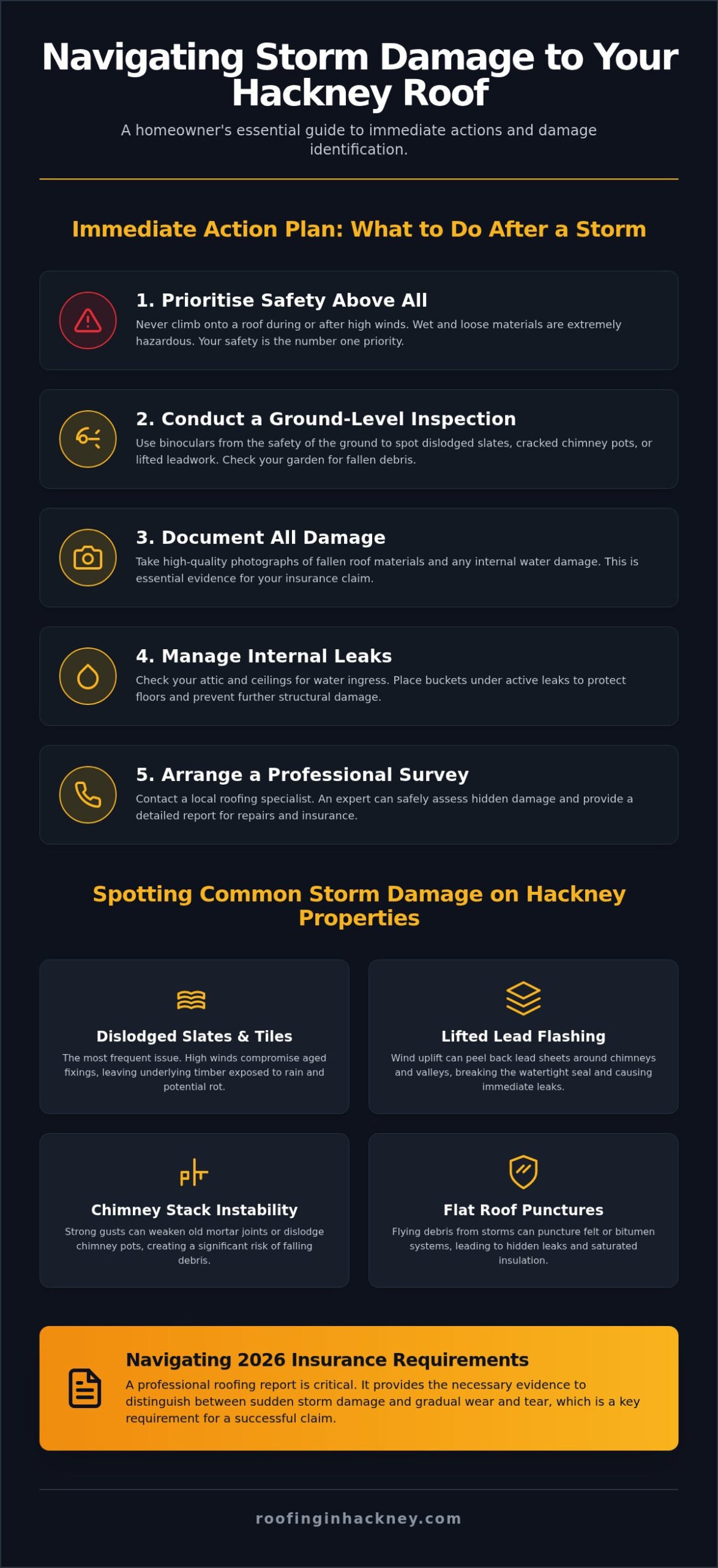
The moments following a severe weather event in East London can feel overwhelming, but your initial actions are vital for protecting your property’s long-term health. Your priority must always be personal safety; whilst the urge to assess the damage is strong, you should never attempt to climb onto a roof during or immediately after high winds. Wet slates, loose tiles, and unstable timber are incredibly hazardous. Instead, wait for the weather to settle before beginning a methodical assessment from the ground.
Conduct a thorough ground-level inspection using a pair of binoculars. This is an invaluable tool for spotting dislodged slates, cracked chimney pots, or lifted leadwork from the safety of the pavement. If you notice debris in your garden or on the street, it’s a clear indicator that you require professional storm damage roof repair Hackney. Documenting the scene is a critical part of the broader disaster restoration process. Take high-quality photographs of any fallen materials and internal water marks. These images serve as essential evidence for insurance adjusters, who are increasingly rigorous about the distinction between sudden storm impact and gradual maintenance issues.
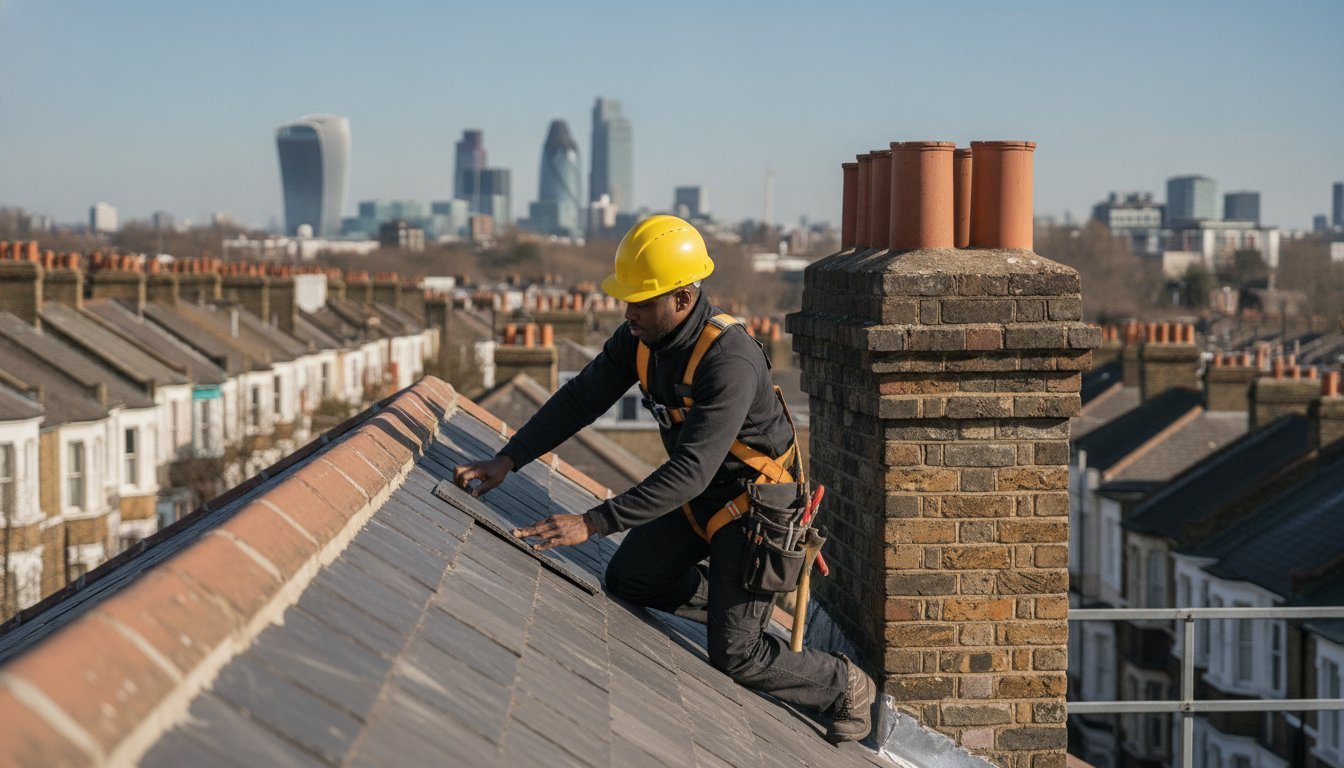
Once you’ve secured the interior, the next step is to arrange a professional survey. A local specialist can provide a detailed assessment using drones or secure ladder access to identify issues invisible from the ground. This expert approach ensures that every vulnerability, from hairline cracks in chimney mortar to loosened lead valleys, is accounted for before the next rainfall occurs. You can learn more about our local expertise on our about us page.
Safe Triage for Your Property
Managing the situation internally can prevent minor leaks from becoming structural failures. Check your attic space and ceilings, specifically focusing on areas around chimney breasts where lead flashing often fails during intense gusts. If you find an active leak, place buckets underneath to protect your flooring and ceiling joists from saturation. If it’s safe to do so from ground level using a long-reach tool, ensure that downpipes aren’t blocked by leaves or debris, as water backup can cause secondary damage to your masonry and internal plasterwork.
When to Call for Emergency Assistance
Not every leak constitutes an immediate emergency, but certain “red flags” require urgent intervention to maintain structural integrity. If you notice a sagging roofline or see large sections of missing tiles, the safety of the building may be compromised. In the densely packed streets of Hackney, falling debris also poses a significant risk to public footpaths. If your property presents a danger to passersby, it’s vital to contact us immediately to secure the site. Understanding the difference between a slipped slate and a structural emergency ensures you allocate resources where they’re most needed whilst keeping your household and the public safe.
Spotting Common Storm Damage on Hackney Properties
Identifying the specific symptoms of storm impact is the first step toward a successful insurance claim and a watertight home. In Hackney, the architectural diversity means that damage manifests differently depending on whether you own a period terrace or a contemporary apartment. Dislodged slates and clay tiles are the most frequent casualties of high winds. These components are often held in place by aged fixings that, once compromised by a gale, can leave the underlying timber battens exposed to the elements.
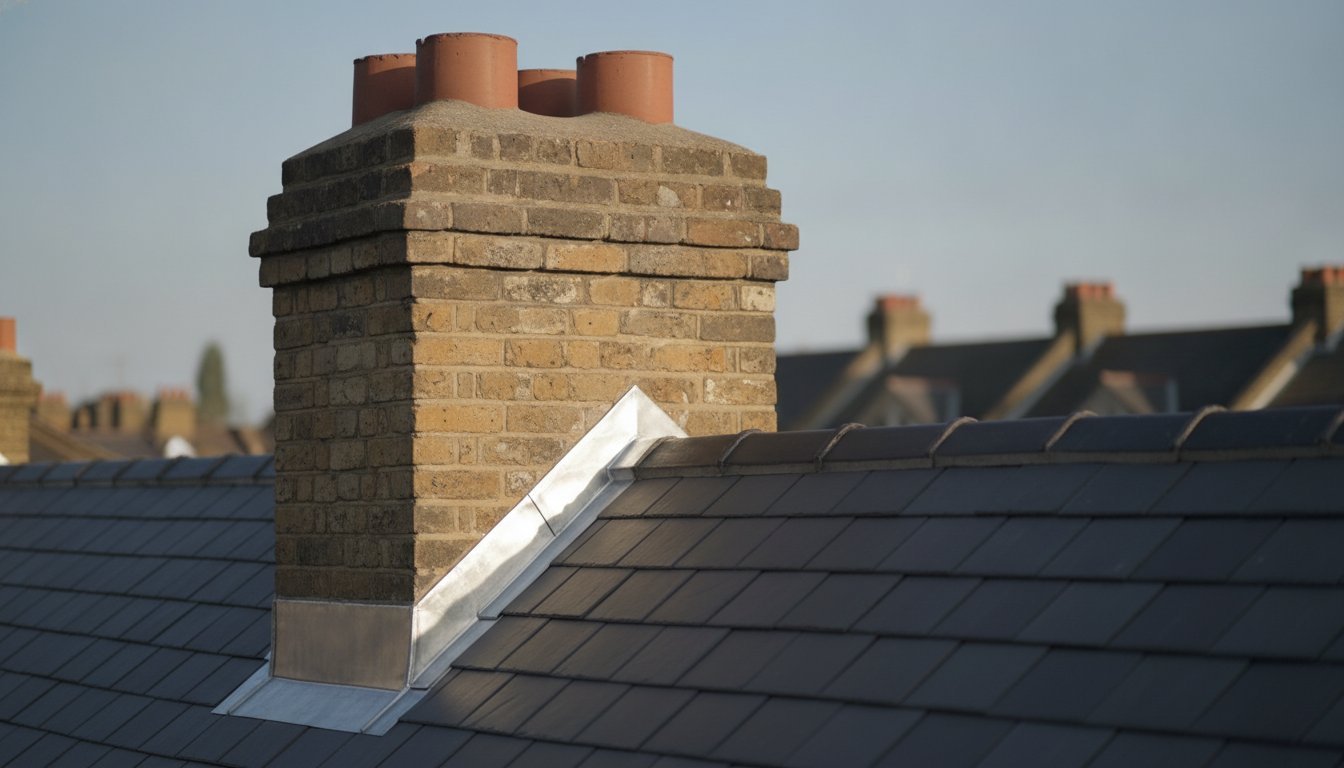
Lead flashing, whilst inherently heavy, is another critical vulnerability. Intense gusts can create a “wind uplift” effect, peeling back lead sheets from chimney bases or valley gutters. This exposes the delicate joins where the roof meets the masonry, often leading to immediate water ingress. Similarly, chimney stack instability is a common post-storm issue in East London. High winds often reveal weakened mortar joints or loosened chimney pots that may have been stable in calmer weather but now pose a significant risk of falling onto the street below.
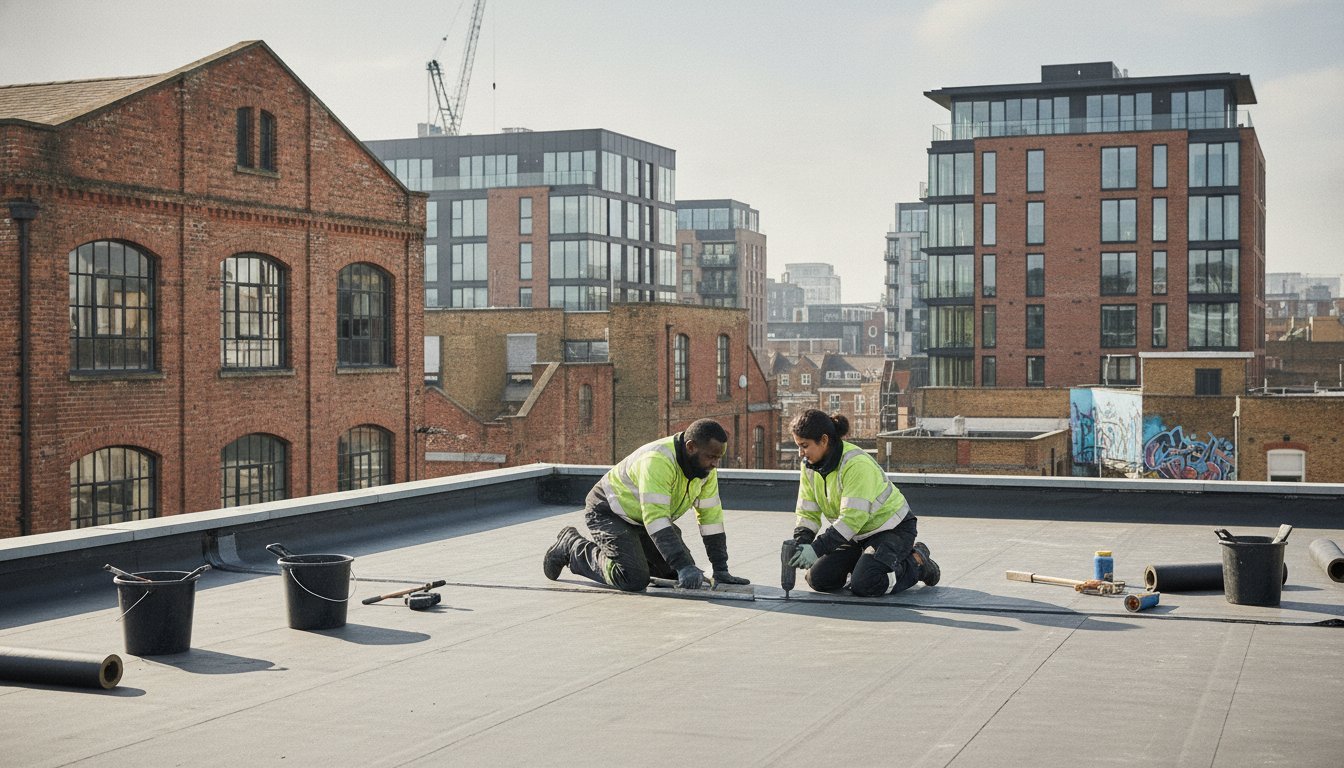
For properties with flat roofing, flying debris remains the primary threat. Older bitumen or felt systems can be easily punctured by falling branches or loose tiles from neighbouring buildings. These small apertures are often difficult to spot from the ground but can lead to significant saturation of the insulation layer over time. If you notice any of these structural red flags, it’s advisable to request a professional assessment to prevent secondary water damage. Securing expert storm damage roof repair Hackney ensures these specific vulnerabilities are addressed with long-term resilience in mind.
The Vulnerability of Victorian Terraces
Many Hackney homes feature the classic “butterfly” roof, a V-shaped design that directs water into a central internal gutter. Whilst elegant, this structure is prone to blockages and “nail sickness” where the original iron nails holding slates in place have corroded. Storms often exacerbate this hidden decay, causing multiple slates to slip simultaneously. Additionally, shared chimney stacks mean that a loose pot on your neighbour’s side can impact your property’s safety, making collaborative inspections a practical necessity for terrace dwellers.
Modern Flat Roof Warning Signs
On more contemporary builds, look for “pooling” water. This often indicates that the roof’s structural fall has shifted or that the deck has bowed under the weight of debris. Check for “alligatoring,” which are small cracks in the surface membrane that resemble reptile skin; these are entry points for moisture. It is also vital to ensure that GRP or EPDM edges haven’t been lifted by wind uplift, as a compromised perimeter can allow a storm to strip the entire membrane from the substrate.
Specialist Repairs for Heritage Slates and Leadwork
Hackney’s historic fabric, particularly in conservation areas like Victoria Park or Dalston, requires a level of technical precision that goes beyond standard maintenance. When high winds compromise a period property, the temptation to apply a quick “patch” with silicone sealant is high. However, this is a fundamental failure for heritage structures. Lead is a living material that expands and contracts with the East London sun and frost; sealant is rigid and will inevitably pull away, creating a new path for water ingress within months. This is why professional storm damage roof repair Hackney prioritises traditional craftsmanship over temporary fixes.
True restoration involves the specialist art of lead welding. By using a fusion process to bond lead sheets, we restore valleys, gutters, and aprons to a seamless, weather-tight state. It is also vital to use the correct code (weight) of lead for different orientations. For example, an exposed chimney apron requires a different thickness to a sheltered valley to ensure the material doesn’t fatigue or “creep” over time. Using the wrong weight is a common mistake that leads to premature failure during the next severe weather event.
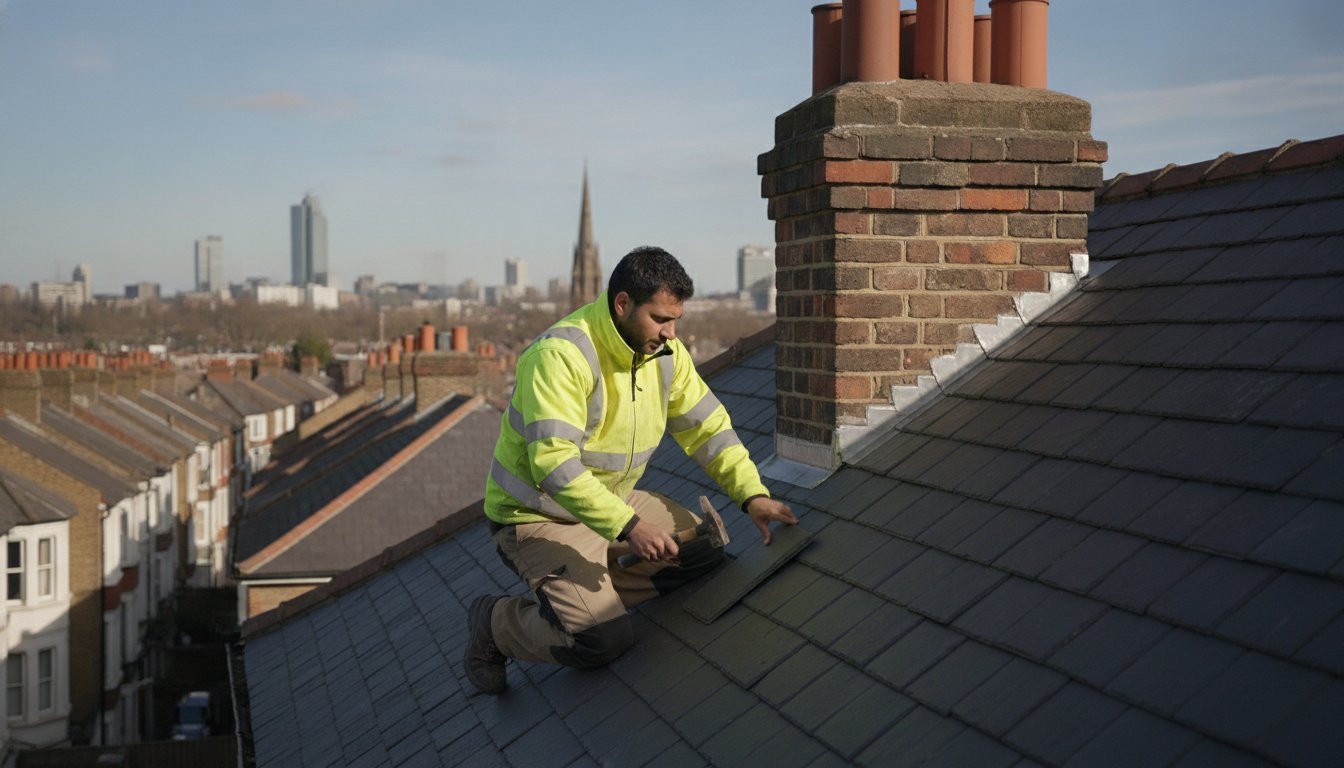
Sourcing the right materials is equally critical for maintaining the structural and aesthetic integrity of your home. A Victorian terrace shouldn’t be repaired with modern concrete tiles if the original character was Welsh slate. We focus on sourcing reclaimed or new slates that match the specific texture, thickness, and colour of your existing roof. This ensures the repair is invisible and remains compliant with local heritage guidelines, which have become increasingly strict in 2026.
Leadwork: The Roof’s Primary Defence
Lead serves as the primary barrier against the elements in complex roof junctions. After a storm, lead can become “fatigued” or warped by wind uplift. Professional re-dressing involves carefully reshaping the metal to follow the contours of the masonry without thinning the material. This process ensures that heavy rainfall is channelled directly into the drainage system rather than seeping into the roof timber. For a deeper look at these materials, see our guide on Mastering Slate Roofing in Hackney.
Chimney and Parapet Wall Maintenance
The chimney stack often acts as a sail during a North Sea gale, catching the full force of the wind. If the mortar has perished, the entire structure can become unstable. Repointing with appropriate mortar is essential for long-term stability and to prevent moisture from wicking into the brickwork. Similarly, parapet walls, common on Hackney’s Georgian terraces, can develop hairline cracks during storm events. These cracks allow water to bypass the main roof covering, leading to dampness in upper floors. Installing protective cowls and securing loose pots are final, necessary steps in a comprehensive post-storm restoration.
Navigating Insurance Claims for Roof Damage
Securing a successful insurance claim for storm damage roof repair Hackney requires a methodical approach and a clear understanding of your policy’s finer details. In 2026, insurance providers have significantly increased their scrutiny of claims following a 32% rise in the value of storm-related payouts during the previous year. To ensure your claim is processed fairly, you must be able to distinguish between sudden, accidental damage caused by a “storm” and gradual wear and tear. Insurers often use the lack of maintenance exclusion to deny claims if they believe the roof was already in a poor state of repair before the weather event occurred.
A professional roofing report is your most powerful tool during this process. This document should provide an itemised breakdown that clearly separates the necessary storm repairs from any recommended general maintenance. By providing this level of transparency, you demonstrate to the loss adjuster that you are seeking restoration for a specific event rather than a general upgrade. Given that the average UK storm damage payout in 2025 was £2,450, having a detailed, expert assessment can be the difference between a full settlement and a rejected claim. You should also act quickly; insurers expect policyholders to notify them promptly to meet their “mitigation of loss” obligations.
Documenting the Damage Correctly
Mitigation of loss refers to a policyholder’s legal obligation to take reasonable steps to prevent further damage to their property after an initial incident has occurred. To support your case, use local weather station data to prove that specific storm conditions, such as wind speeds exceeding a certain threshold, occurred on the date the damage was discovered. It is also vital to store any physical evidence, such as fallen lead flashing or original slates, until an adjuster has performed their inspection. Do not dispose of damaged materials, as they provide tangible proof of the force exerted by the wind on your property’s structure.
Working with Your Roofing Contractor
We specialise in providing the detailed, technical assessments that insurance adjusters require. This often involves the use of scaffolding to provide safe, comprehensive access for a thorough survey of high-level areas like chimney stacks and parapet walls. A ground-level photo is rarely sufficient for a complex claim; a close-up, high-resolution image of a lifted lead valley or a cracked slate provides the irrefutable evidence needed for a successful resolution. If you are currently facing water ingress and need a professional report to begin your claim, you should contact us for an emergency assessment as soon as possible.
Why Professional Hackney Roofing Specialists are Essential
Restoring a property after a severe weather event requires more than just replacing a few slates; it demands a specialist’s understanding of how Hackney’s historic and modern buildings interact with the elements. Our “Master Craftsman” approach focuses on the structural health of the entire roof system rather than offering a superficial quick fix. When you choose an expert for storm damage roof repair Hackney, you’re ensuring that the repair is integrated into the existing structure with precision, preserving the building’s character whilst enhancing its resilience against the increasingly volatile British climate.
Local knowledge is indispensable when working on East London’s unique architecture. We understand the specific timber patterns and yellow stock brickwork typical of Victorian terraces in areas like Stoke Newington and London Fields. This familiarity allows us to identify hidden vulnerabilities, such as weakened rafters or perishing mortar, that a non-local contractor might overlook. Whether we are performing intricate chimney repointing or comprehensive Victorian roof replacements, our commitment to using premium materials ensures your home remains a safe, dry sanctuary for decades to come.
Beyond the Repair: Future-Proofing Your Roof
A storm repair provides a logical opportunity to enhance your property’s performance. Many homeowners now choose to integrate thermal insulation upgrades during the restoration process, which significantly improves energy efficiency and reduces long-term heating costs. We also recommend establishing a regular maintenance schedule. By spotting minor issues like blocked gutters or slightly displaced leadwork before the next gale arrives, you can avoid the stress of emergency repairs altogether. Investing in professional leadwork and traditional slate roofing is a proven way to maintain and even increase your property’s market value in Hackney’s competitive real estate landscape.
The Roofing in Hackney Guarantee
We pride ourselves on a transparent, methodical workflow that keeps you informed from the initial drone survey to the final sign-off. Our team understands that roofing work can be disruptive, so we prioritise clean, organised, and respectful behaviour on Hackney’s residential streets. We manage all logistics, including scaffolding and material deliveries, to minimise the impact on your daily life and your neighbours. If you’ve noticed signs of wear or sudden impact damage, don’t wait for the next rainfall to test your roof’s integrity. Get a professional storm damage assessment today to secure your home’s future.
Securing Your Home’s Future Against the Elements
Recovering from a severe weather event requires a methodical approach that balances immediate safety with long-term structural integrity. As we’ve discussed, successful restoration depends on accurate documentation for insurance adjusters and the use of authentic materials like traditional slate and welded leadwork. These steps don’t just fix a leak; they preserve the heritage value and character of your property whilst ensuring it remains watertight for decades to come.
As a trusted local independent contractor, we specialise in the unique requirements of East London’s period properties. Whether you’re dealing with lifted flashing or dislodged tiles, securing a professional assessment is the most effective way to ensure your storm damage roof repair Hackney meets the latest 2026 standards. Our team brings expert leadwork and traditional slate craftsmanship to every project, providing the calm dependability you need during a stressful time. Contact Roofing in Hackney for a Professional Storm Damage Survey to restore your property’s safety and value. We’re here to help you navigate the repair process with absolute confidence and professional care.
Frequently Asked Questions
Is storm damage to my roof covered by standard buildings insurance?
Standard buildings insurance typically covers sudden storm damage, provided the incident is not the result of gradual wear and tear. Insurers in 2026 are applying much stricter criteria, often scrutinising maintenance history before approving a claim. To secure a successful payout, you must demonstrate that the damage was a direct consequence of a specific weather event rather than a pre-existing condition that should have been addressed earlier.
How much does it cost to repair a storm-damaged roof in Hackney?
The total investment for repairs depends entirely on the extent of the impact and the specific materials involved. Factors such as the height of your property, the necessity of scaffolding, and whether you have a heritage slate or modern flat roof will influence the final cost. Because every property in East London is unique, a professional site survey is the only way to obtain an accurate, itemised quote for your needs.
Can I repair a few slipped slates myself after a storm?
Attempting a DIY repair is not recommended due to significant safety risks. Roofs are often unstable after high winds, and walking on slates without specialist training can cause more damage than you intend to fix. Professional craftsmen use dedicated safety equipment and traditional techniques to ensure the repair is weather-tight. For reliable storm damage roof repair Hackney homeowners should always rely on a qualified local specialist.
How long does a typical storm damage roof repair take?
A minor repair, such as replacing a few slipped slates or re-dressing lead flashing, can often be completed within a single day. More complex structural issues or chimney repairs may require several days of work, especially if scaffolding needs to be erected first. We prioritise securing the property immediately to prevent secondary water damage, whilst the final restoration timeline depends on material availability and safe weather conditions.
What happens if my chimney stack is leaning after high winds?
A leaning chimney stack is a structural emergency that requires immediate attention. High winds can compromise aged mortar, making the stack unstable and a significant danger to both your property and the public. You should contact a specialist immediately to assess the masonry’s stability. Repairs might involve repointing or a partial rebuild, combined with professional leadwork to ensure the join between the chimney and roof remains watertight.
Will you provide a written report for my insurance company?
Yes, a comprehensive written report is a standard part of our professional service. This document includes high-resolution photographs of the damage and a detailed, itemised quote that clearly distinguishes storm-related repairs from general maintenance. Providing this level of transparency is vital for satisfying loss adjusters and meeting the “mitigation of loss” obligations required by UK insurance providers when processing your claim for storm damage roof repair Hackney.
Do I need scaffolding for a minor roof repair in Hackney?
Scaffolding is often necessary for many Hackney properties, particularly Victorian terraces with high, complex rooflines. Compliance with Work at Height Regulations is essential for the safety of our team and the public on busy residential streets. Whilst some minor tasks can be assessed via drone, a safe working platform is usually required to perform high-quality, long-lasting repairs to slates, leadwork, or chimney stacks that are otherwise inaccessible.
How can I prevent storm damage to my roof in the future?
Prevention starts with regular professional inspections to identify minor vulnerabilities before they become major failures. Ensuring that lead flashing is secure and that mortar joints are in good condition can prevent wind uplift during a gale. You might also consider upgrading your materials during a repair, such as choosing higher-quality slate or modern insulation, to enhance the overall structural resilience of your property against increasingly volatile weather.