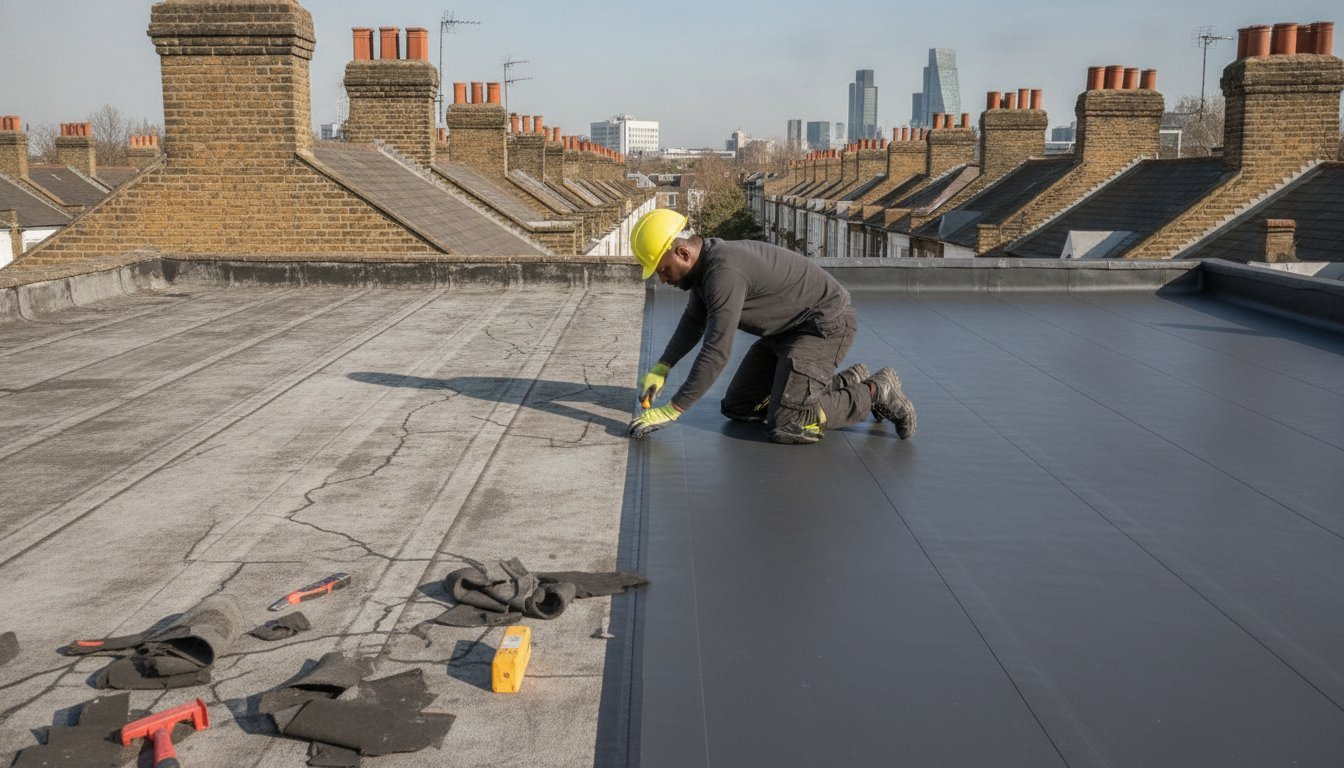
Patching a recurring leak might seem like the most cost-effective way to manage your property, but for many homeowners, these “quick fixes” often become the most expensive mistakes they’ll ever make. If you’re currently weighing up the costs of another patch against a full flat roof replacement london properties often require, you’re likely frustrated by the cycle of temporary repairs that fail after the first heavy downpour. It’s a common scenario in the city, where urban debris and temperature fluctuations put immense pressure on older roofing systems.
This guide provides a master-craftsman perspective on selecting the right solution, helping you understand when it’s time to stop repairing and start investing in modern, high-performance materials. We’ll explore the technical differences between EPDM, GRP, and traditional felt to ensure you choose a system suited to your specific building. You’ll also learn about the 2026 building regulations requiring a U-value of 0.18 W/m²K for refurbished roofs and how a “warm roof” construction provides superior energy efficiency. We’ve structured this overview to help you manage the complexities of urban roofing with confidence, focusing on long-term value and technical precision over temporary sticking plasters.
Key Takeaways
- Understand how the London “Urban Heat Island” effect and ponding water on older terraces accelerate material degradation.
- Compare the longevity of modern solutions like flexible EPDM rubber and rigid GRP fibreglass to find the best fit for your property’s structure.
- Master the “25% Rule” to determine when a full flat roof replacement london provides better lifecycle value than recurring, expensive repairs.
- Discover how professional leak detection techniques, including thermal imaging, identify trapped moisture beneath the surface before it causes structural rot.
- Learn how to vet London contractors by verifying NFRC accreditations and insurance-backed guarantees for complex period property conversions.
Common Causes of Flat Roof Failure in London Properties
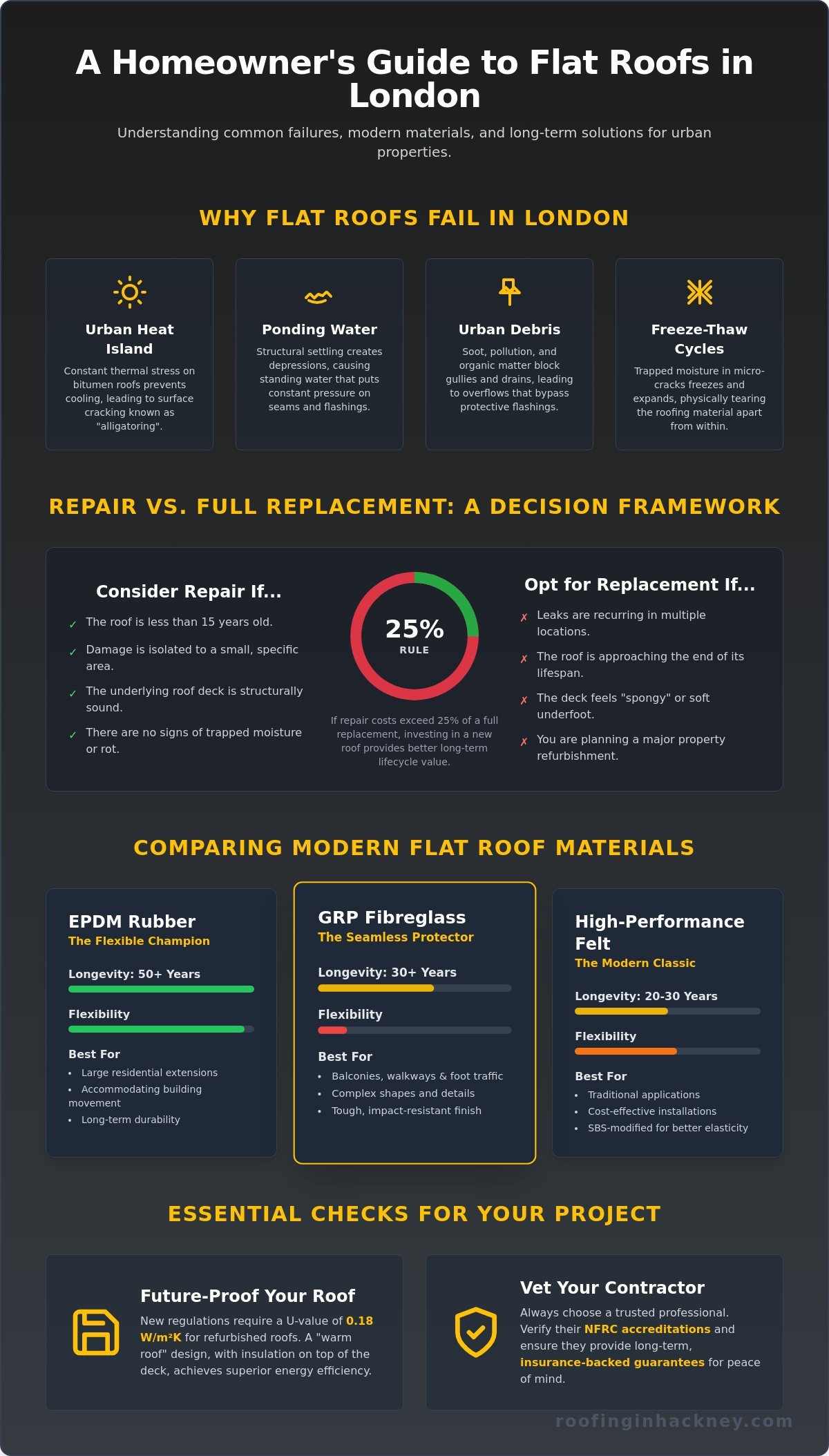
Flat roofs in the capital face a unique set of environmental challenges that differ significantly from those in more rural areas. Whilst a comprehensive overview of flat roofs highlights their versatility and design advantages, London’s specific “Urban Heat Island” effect is a primary driver of premature failure. This phenomenon causes central London to remain several degrees warmer than surrounding counties, preventing bitumen-based materials from cooling and regaining their elasticity overnight. Over time, this constant thermal stress leads to “alligatoring,” where the surface cracks and allows moisture to penetrate the substrate.
In older Hackney terraces, structural settling often creates slight depressions in the roof deck. These areas become catchments for standing water, known as ponding. Unlike pitched roofs that shed water instantly, these basins put constant hydrostatic pressure on seams and flashings. If a leak develops here, it isn’t just a drip; it’s a constant flow into the timber joists. Urban debris is another silent killer. Particulate matter from heavy traffic and soot from local heating systems settle on the roof, often mixing with organic matter to block internal gullies. When drainage fails, the resulting overflow can bypass flashings entirely, leading to a sudden need for a flat roof replacement london homeowners hadn’t prepared for.
London Weather Stressors: Rain, Heat, and Pollution
Traditional felt roofs often struggle with the city’s modern climate. We’re seeing higher summer temperature spikes followed by intense “freeze-thaw” cycles in winter. Moisture trapped in micro-cracks expands when it freezes, physically tearing the material apart from the inside. Additionally, the acidic nature of urban rainfall, combined with traffic pollutants, can chemically degrade the protective mineral chippings on older felt systems. This leaves the underlying bitumen exposed to harmful UV rays, which accelerates the drying and cracking process.
Structural Vulnerabilities in Hackney Buildings
Victorian conversions in Hackney present specific challenges for property owners. Many of these buildings have had multiple “patchwork” repairs over decades, often using incompatible materials that don’t bond correctly. We frequently find that the original timber decking has softened due to long-term condensation, a result of poor ventilation in older extensions. Identifying substrate rot early is vital. If the roof feels “bouncy” or “spongy” underfoot, it’s a clear sign that the structural integrity is compromised. In such cases, a full flat roof replacement london is usually the only way to ensure the safety and longevity of the building’s thermal envelope.
Comparing Modern Flat Roof Repair Materials: EPDM, GRP, and Felt
Selecting the most appropriate material for a flat roof replacement london project requires a technical understanding of how different membranes react to the local environment. Whilst traditional bitumen felt remains a common choice for many property owners, modern alternatives offer significantly enhanced durability and performance. Each system has specific characteristics that make it suitable for different structural requirements, from the flexibility needed for large residential extensions to the rigidity required for balconies and walkways.
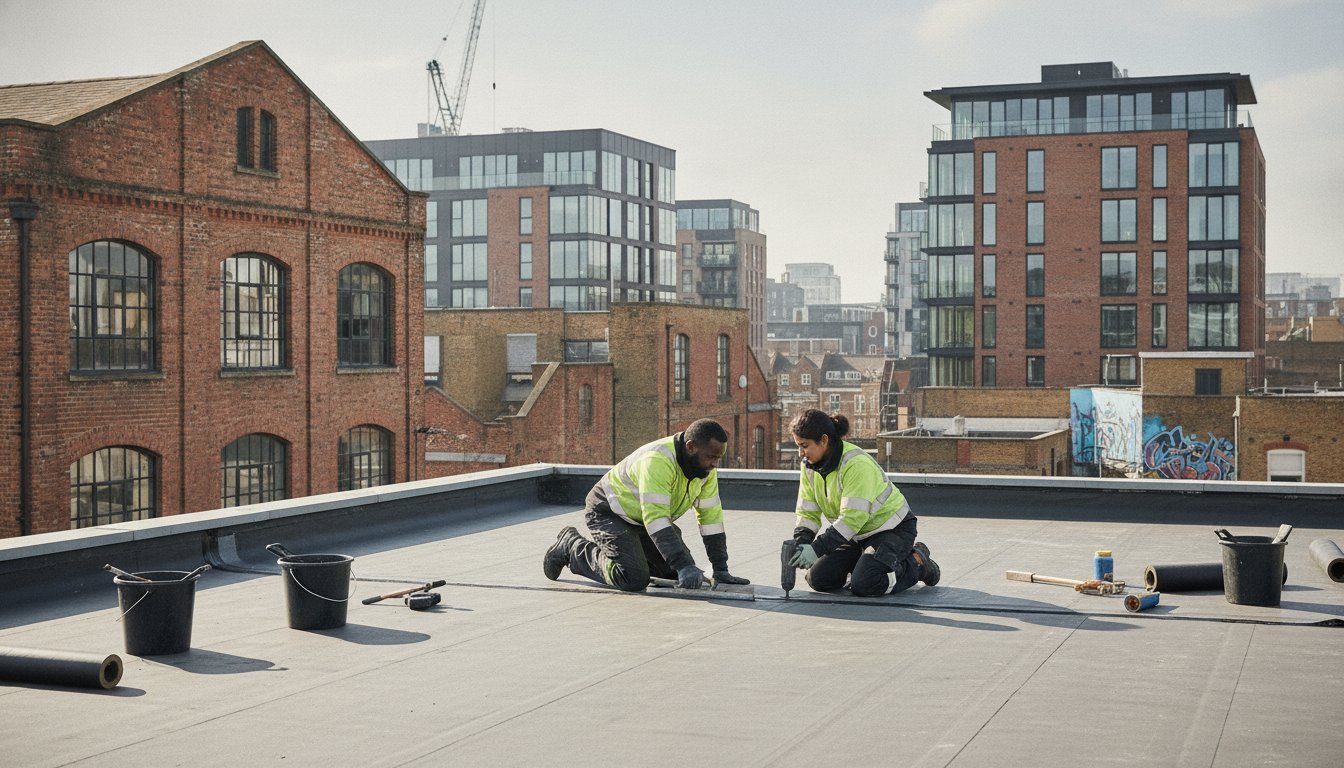
EPDM (Ethylene Propylene Diene Monomer) rubber has emerged as a flexible champion for urban repairs. It’s a single-ply membrane that remains elastic throughout its lifespan, allowing it to accommodate the building movement common in London’s varied housing stock. Conversely, GRP (Glass Reinforced Plastic) fibreglass provides a cold-applied, seamless finish that is exceptionally tough and impact-resistant. Modern high-performance bitumen felt has also evolved; today’s “torch-on” systems use SBS-modified bitumen to ensure better elasticity and longevity than the traditional pour-and-roll methods used in previous decades. If you’re evaluating the full range of modern membrane options, our single ply roofing contractors near me comparison guide provides a detailed breakdown of how these systems perform in the high-density urban environment of East London.
For buildings with complex geometries, liquid waterproofing provides a “seamless” solution. These systems are applied as a cold liquid that cures into a tough, flexible membrane, making them ideal for heritage properties where complex leadwork or multiple penetrations exist. If you’re unsure which material suits your specific property, you can speak with our technical team for a detailed assessment.
EPDM vs. GRP: Which is Better for Your London Home?
When comparing life expectancy, EPDM is the clear winner with a documented lifespan of 30 to 50 years, whereas GRP typically lasts between 25 and 40 years. However, GRP is often preferred for its sleek, grey aesthetic on modern extensions. One factor often overlooked is noise; GRP can be “creaky” during London’s rapid temperature shifts because it’s a rigid material that doesn’t expand as easily as rubber. Installation also differs significantly; EPDM is cold-applied and safer for dense urban environments, whilst GRP is highly weather-sensitive and cannot be installed during damp or cold British spells.
The Role of Liquid Roofing in Specialist Repairs
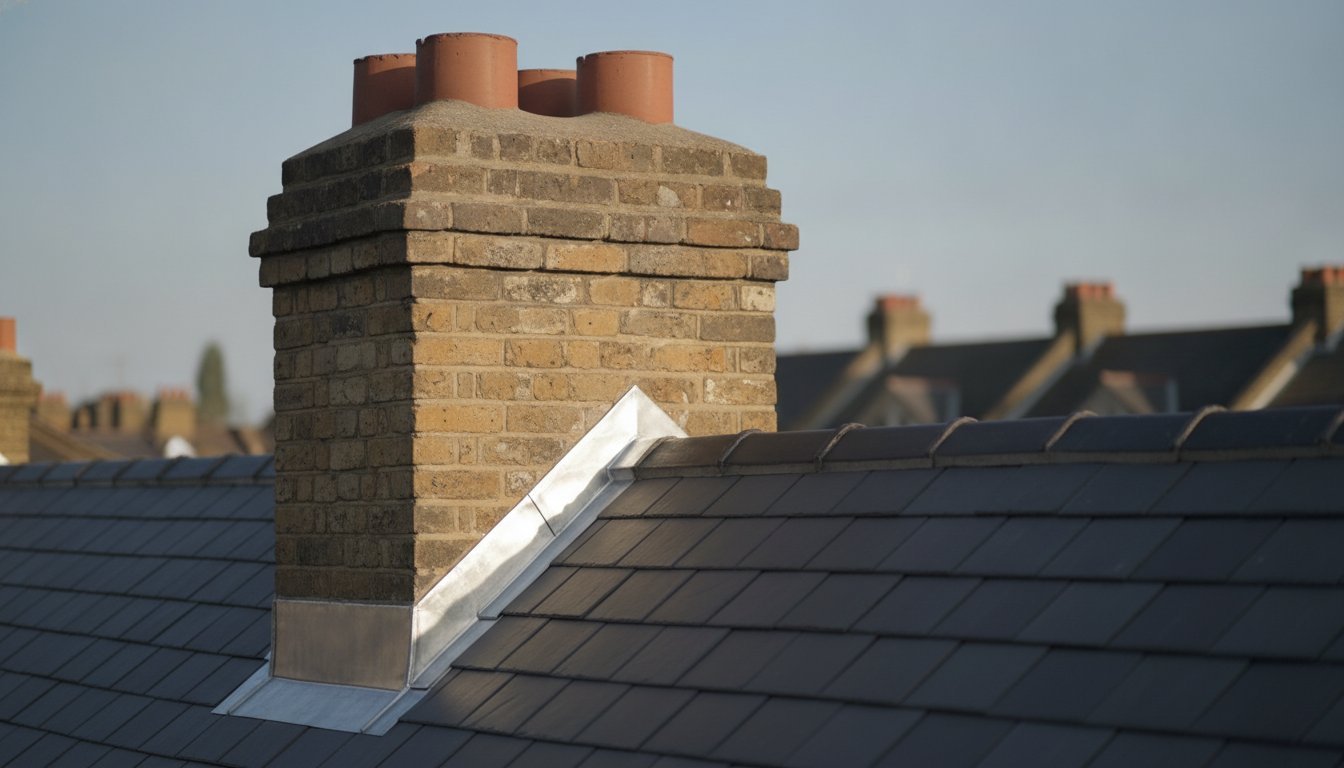
Liquid systems are increasingly popular for specialist repairs in Hackney, particularly when integrating with existing leadwork or around chimneys and skylights. Because these systems are cold-applied, they eliminate the fire risks associated with traditional hot-works, which is a critical consideration under modern UK building regulations regarding fire safety (Document B). These seamless applications ensure there are no weak points at the joints, providing a robust barrier against the driving rain and urban pollution discussed in previous sections. This makes liquid roofing an excellent choice for a flat roof replacement london where the existing structure has complex detailing that would be difficult to seal with sheet materials.
Flat Roof Repair vs. Full Replacement: A Decision Framework
Deciding whether to patch a persistent leak or invest in a full flat roof replacement london property owners often find themselves considering is fundamentally an exercise in lifecycle costing. Whilst a quick fix might appear cheaper in the short term, we advise clients to follow the “25% Rule.” If the cost of professional repairs exceeds a quarter of the total replacement value, the investment in a patch rarely yields long-term value. This is particularly true for systems approaching the end of their expected lifespan, where one repair often precedes another as the material continues to degrade.
A significant factor in this decision is the opportunity to upgrade your property’s thermal performance. As of February 2026, building regulations mandate that when replacing more than 50% of a flat roof, the thermal performance must be upgraded to achieve a U-value of 0.18 W/m²K. This isn’t just a regulatory hurdle; it’s a structural investment that reduces energy bills and eliminates the condensation issues that plague many older Hackney conversions. Modern systems must also satisfy the stringent requirements found in Fire safety: Approved Document B, providing a level of protection that older bitumen or felt installations simply cannot match.
When a Professional Repair is the Logical Choice
Repairing is the most sensible route when the damage is localised and mechanical rather than systemic. Isolated punctures, loose lead flashings, or minor joint failures on a relatively young roof can usually be resolved effectively. The key to a successful repair is matching the new material to the original substrate to ensure a chemical bond. When executed with technical precision, a professional repair can extend the life of a healthy roof deck by 5 to 10 years, delaying the need for a full flat roof replacement london whilst maintaining the building’s integrity.
Signs That a Full Roof Replacement is Unavoidable
Total system failure is often identified by widespread “alligatoring” or deep cracking across the surface, indicating that UV exposure has permanently leached the oils from the membrane. Another critical warning sign is saturated insulation. If moisture has bypassed the membrane and soaked the underlying boards, a “roof over” repair will only trap that moisture, leading to structural rot and internal damp. In these scenarios, a complete strip-back is required. You can find more detailed technical specifications for modern replacements in our Flat Roof Installation Hackney guide, which outlines the 2026 standards for urban systems.
Advanced Leak Detection and Modern Repair Techniques
Identifying the precise origin of a leak on a flat roof is often more complex than it appears. Water can travel significant distances from the point of entry before manifesting as a damp patch on a ceiling. A master-craftsman approach moves beyond the traditional “bucket and visual inspection” method, instead utilising technical diagnostic tools to map moisture with surgical precision. This ensures that any subsequent flat roof replacement london project or localised repair is based on data rather than guesswork, preventing the common mistake of patching the wrong area. For a comprehensive step-by-step approach to tracing the true source of water ingress, our guide to flat roof leak detection Hackney homeowners can follow provides a structured checklist to work through before calling a contractor.
Electronic Leak Detection (ELD) is now the industry standard for verifying the integrity of flat membranes. This process involves using either a “wet” or “dry” test to create an electrical circuit across the roof surface. Any breach in the membrane, even a pinhole invisible to the naked eye, completes the circuit and allows the technician to pinpoint the exact location of the failure. This level of accuracy is vital for London properties where complex leadwork, internal valleys, and parapet walls create multiple potential failure points. By reinforcing these weak areas with high-performance liquid coatings or renewed lead flashings, we can often resolve issues that have baffled previous contractors.
If you suspect your roof is harbouring hidden moisture, you can book a professional diagnostic survey to identify the true source of the problem before structural damage occurs.
Thermal Imaging and Drone Surveys for Hackney Roofs
Infrared thermal imaging has revolutionised how we assess the health of London’s roofing stock. These cameras detect the heat signatures of water trapped within the insulation layers. Because wet insulation retains heat longer than dry materials, it shows up as a “hot spot” on the thermal map after sunset. This technology allows us to see exactly how much of the substrate is saturated, which is a critical factor in the repair versus replacement decision discussed earlier. For high-rise London buildings or properties with restricted access, drone surveys provide a safe and efficient way to inspect high-level flashings and drainage gullies without the immediate need for expensive scaffolding.
The Problem with “Cowboy” Repairs: What to Avoid
Many temporary fixes recommended by less experienced contractors can actually accelerate the degradation of your roof. “Over-coating” a failing membrane without addressing underlying timber rot simply traps moisture inside the structure, leading to rapid decay of the joists. Similarly, using silicone sealants is a major red flag; silicone does not bond permanently to most roofing materials and will eventually peel away, often taking part of the original membrane with it. To ensure long-term performance and adequate drainage, all repairs and installations must strictly adhere to the BS 6229:2018 standards for flat roof design and maintenance. Choosing a technical specialist ensures that your flat roof replacement london or repair is compliant, durable, and professionally executed.
Choosing a Trusted London Contractor for Your Flat Roof
Selecting a contractor for a flat roof replacement london project is a decision that impacts your property’s security for decades. In a city where period architecture often meets modern extensions, finding a specialist who understands the nuances of local building stock is essential. Many London roofs fail not because of the material chosen, but because of poor execution at the interfaces between different structural elements. A master craftsman doesn’t just lay a membrane; they ensure every detail, from the timber deck to the final flashing, is technically sound.
It’s vital to verify professional accreditations before any work begins. Look for contractors who are members of the National Federation of Roofing Contractors (NFRC). This isn’t just a badge; members of the NFRC Competent Person Scheme can self-certify that their work complies with building regulations, which saves you the time and cost of a separate local authority inspection. Always insist on a detailed, itemised quote rather than a vague “ballpark” figure. Given that London roofing costs are typically 10-20% higher than the national average due to logistical complexities, transparency in pricing ensures you aren’t hit with unexpected extras mid-project.
Questions to Ask Your London Roofer Before Booking
- Do you provide a photographic survey of the damage? A professional should show you exactly where the failure points are before starting, ensuring you aren’t paying for unnecessary work.
- What specific waterproofing system do you recommend for this roof? Whether it’s EPDM, GRP, or high-performance felt, the choice should be justified based on your roof’s geometry and thermal requirements.
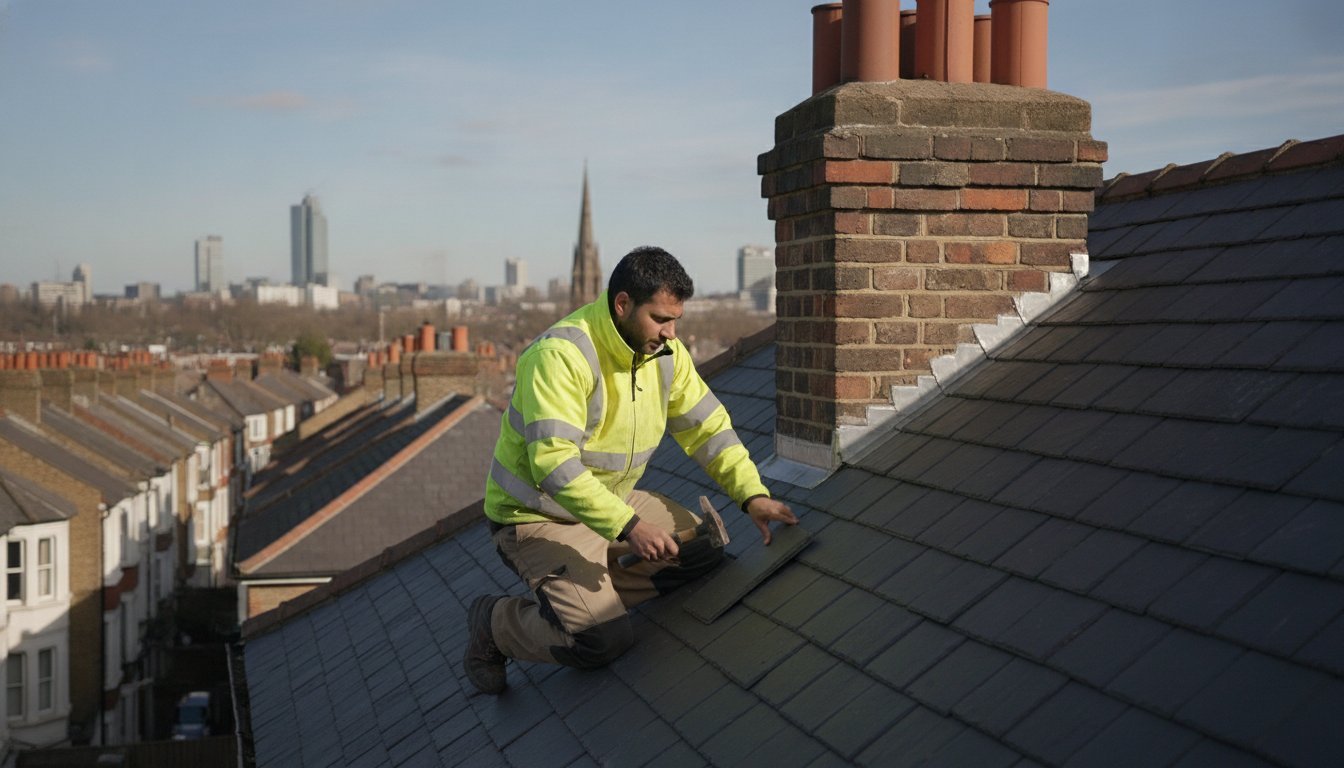
- How do you ensure the repair integrates with existing leadwork or slate? This is crucial for Hackney’s period conversions where different roofing styles often meet at parapet walls or valleys.
The Value of Local Expertise in East London
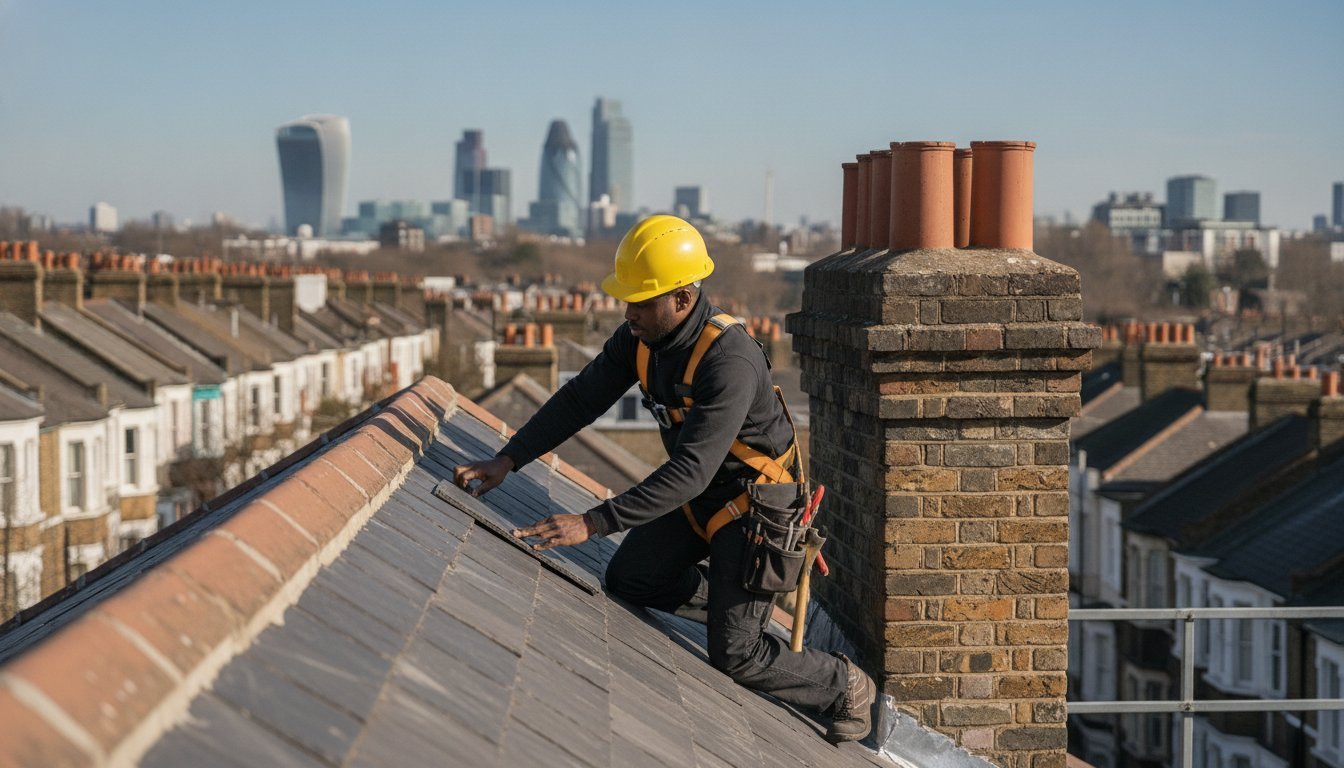
We take immense pride in our professional authority and local reliability, understanding that East London presents unique logistical challenges. Managing a flat roof replacement london requires more than just technical skill; it involves coordinating parking permits for skips, managing waste disposal in narrow streets, and ensuring minimal disruption to neighbours. By combining traditional expertise in leadwork and chimney repair with modern flat roofing systems, we provide a cohesive service that protects the character and structural integrity of your home. If you’re ready to move beyond temporary patches and invest in a long-term solution, contact us for a professional flat roof assessment to secure your property’s future.
Securing Long-Term Value for Your London Property
Managing a property in the capital requires a shift from reactive patching to proactive lifecycle management. By applying the 25% rule and understanding the technical advantages of modern membranes like EPDM and GRP, you can finally break the cycle of recurring leaks. Investing in a flat roof replacement london property owners can trust ensures your home meets the 2026 thermal standards whilst providing a durable barrier against unique urban stressors.
Our team brings over 30 years of experience as fully insured local Hackney contractors. We specialise in both modern synthetic systems and traditional leadwork, ensuring a technically sound finish for complex period conversions. To provide total clarity, we offer detailed photographic surveys with every itemised quote. This methodical approach eliminates guesswork and ensures your structural investment is protected by seasoned experts who prioritise precision over quick fixes.
If you’re ready to resolve your roofing issues with expert-led clarity, Book a Professional Flat Roof Survey in Hackney today. We look forward to securing your home with craftsmanship that stands the test of time.
Frequently Asked Questions
How much do flat roof repairs cost in London in 2026?
Costs for roofing work in the capital are influenced by material choice, structural complexity, and the 10% to 20% price uplift typical for the London market. Labour rates for skilled tradespeople in the South East reflect the higher cost of operating in the city, including parking permits and waste disposal logistics. A technical specialist will provide an itemised quote that accounts for these urban factors alongside the specific requirements of your property’s membrane.
How long should a professional flat roof repair last?
A well-executed repair on a healthy substrate should typically last between 5 and 10 years. Its longevity depends heavily on the compatibility of the repair material with the original surface and the condition of the underlying timber. If the system has reached the end of its natural life expectancy, even a professional patch may only serve as a temporary measure before a full flat roof replacement london becomes necessary.
Can you repair a flat roof in the rain in the UK?
Permanent, high-quality repairs cannot be performed during active rainfall because moisture prevents most modern membranes from bonding or curing correctly. Whilst emergency “cold-applied” compounds can provide a temporary stop-gap to prevent internal damage during a storm, they aren’t a long-term solution. A master craftsman will always wait for a dry weather window to ensure the repair is chemically bonded and technically sound.
Is EPDM better than felt for a London flat roof repair?
EPDM is often the preferred choice for London properties due to its superior flexibility and ability to handle the “Urban Heat Island” effect without cracking. It offers a life expectancy of up to 50 years, significantly outperforming traditional felt which can become brittle over time. Whilst modern torch-on felt is a robust and cost-effective option, EPDM’s seamless application makes it highly resilient against the city’s temperature fluctuations. For a full comparison of how EPDM and other single ply roofing contractors near me can advise on modern membrane systems, our dedicated guide explores the long-term performance of each option in detail.
Does home insurance cover flat roof repairs for leaks in Hackney?
Home insurance typically covers “consequential loss,” such as damage to your internal ceilings, if the leak was caused by a sudden event like a storm. However, most policies exclude repairs for leaks resulting from general wear and tear, lack of maintenance, or the natural end of the roof’s lifespan. It’s essential to check your policy’s specific terms regarding the age and maintenance records of your flat roof.
What is the most common reason for flat roofs to leak in East London?
Ponding water caused by inadequate drainage or blocked gullies is the primary cause of failure in East London’s flat roofs. Urban debris and soot can quickly accumulate in internal drainage systems, leading to standing water that puts constant hydrostatic pressure on the seams. Over time, this moisture penetrates the membrane, especially if the roof’s “fall” has settled and no longer directs water effectively toward the outlets.
How do I know if my flat roof insulation needs replacing too?
If your roof feels “spongy” or “bouncy” when walked upon, it’s a clear sign that moisture has saturated the insulation and the structural deck is compromised. When undertaking a flat roof replacement london building regulations from 2026 mandate a thermal upgrade to achieve a U-value of 0.18 W/m²K. Replacing saturated insulation is vital to prevent structural rot and to ensure your home remains energy-efficient and free from condensation.
Can I walk on my flat roof after it has been professionally repaired?
You can walk on a professionally repaired roof for essential maintenance, such as clearing gutters, but most standard membranes aren’t designed for regular foot traffic. If you use the roof as a balcony or terrace without a specialist finish, you risk puncturing the membrane and voiding your guarantee. For areas intended for frequent use, we recommend a high-durability GRP system or specific walkway tiles designed to distribute weight safely.