That damp patch on your ceiling isn’t necessarily coming from where you think it is. Flat roof leak detection in Hackney is rarely as straightforward as spotting a hole and calling a roofer; water is remarkably good at travelling several metres from its entry point before it ever shows itself indoors. By the time you notice a stain, the damage has often been building quietly for weeks.
If you’ve found yourself staring at a discoloured ceiling, unsure whether you’re dealing with a roofing failure, a condensation problem, or a plumbing issue entirely, you’re not alone. The frustration of recurring damp, combined with the very real fear of being quoted an inflated price by a contractor who hasn’t properly diagnosed the source, is something Hackney homeowners face with alarming regularity.
This guide is designed to change that. Working through a clear, structured checklist, you’ll learn how to systematically identify the most likely source of a flat roof leak, understand the tell-tale signs specific to Hackney’s mix of Victorian terrace extensions and contemporary builds, and gain the confidence to hold an informed conversation with any roofing contractor you invite onto your property. Consider this your detective’s toolkit before anyone sets foot on your roof.
Key Takeaways
- Water rarely enters where it appears indoors — effective flat roof leak detection in Hackney requires a systematic, checklist-driven approach rather than a simple visual glance at the obvious damp patch.
- Hackney’s Victorian parapet walls and East London’s urban microclimate create specific vulnerabilities that make local properties more susceptible to flat roof ingress than homeowners typically realise.
- A structured DIY inspection can safely identify the most common failure points before you invite any contractor onto your roof, giving you the knowledge to ask the right questions and avoid inflated quotes.
- When visual inspection reaches its limits, professional thermal imaging can reveal trapped moisture within the roof build-up that is entirely invisible to the naked eye — a critical step before committing to any repair.
- Understanding the distinction between a temporary patch and a root-cause repair is essential; knowing when a flat roof is genuinely beyond saving could save you thousands in repeated, short-term fixes.
Identifying the Early Warning Signs of a Flat Roof Leak
Not every damp patch signals an active leak. One of the most common mistakes Hackney homeowners make is treating a historic stain with the same urgency as fresh ingress, which can lead to unnecessary expenditure on repairs that address a problem already resolved by a previous owner. Learning to distinguish between the two is the first, and arguably most important, step in any systematic approach to flat roof leak detection in Hackney.
An active leak typically presents with a darkened, wet stain that grows or shifts after rainfall. Historic staining, by contrast, tends to appear yellowish or rust-coloured, with a defined, dry perimeter. Press the area gently with a cloth; if moisture transfers, the problem is current. If the surface feels entirely dry and the stain has a crisp edge, you may be dealing with residual discolouration from a repair that was made months or years ago.
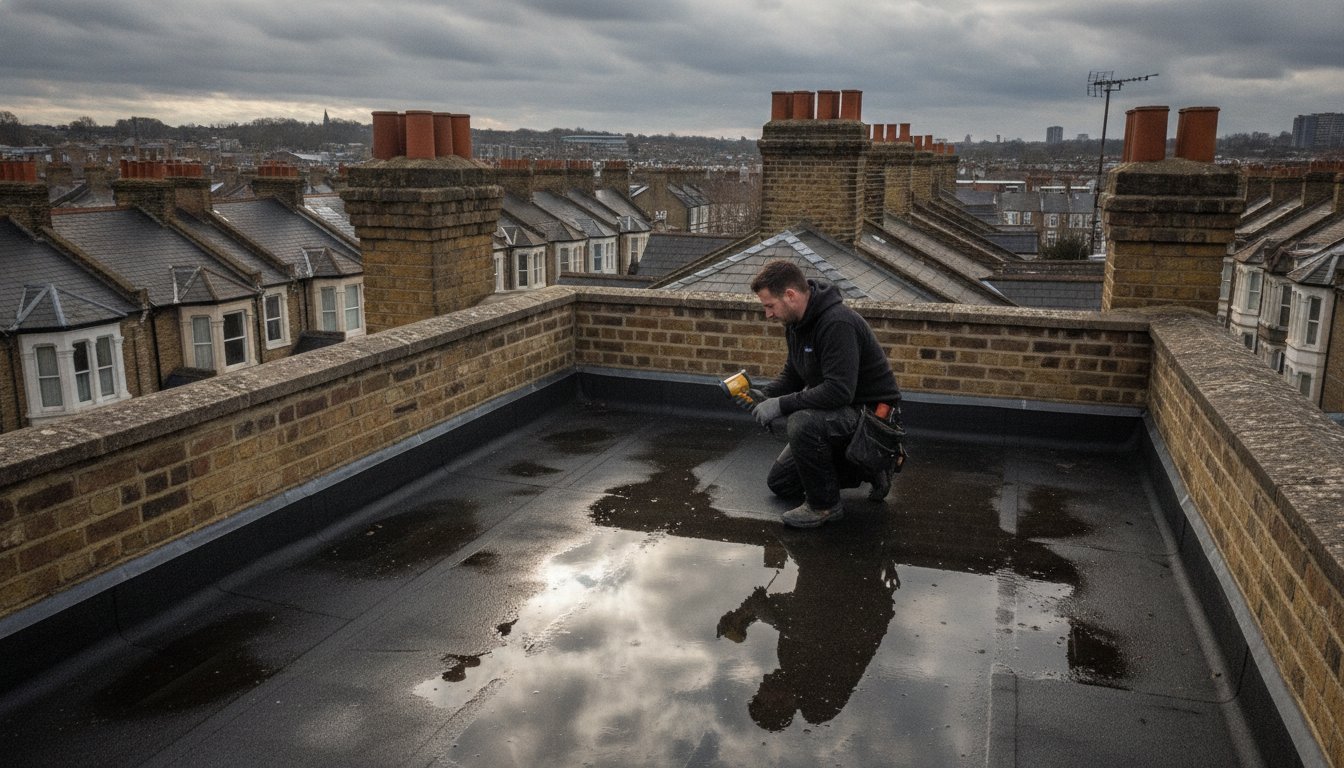
Ponding water on the roof surface deserves particular attention. When water sits for more than 48 hours following rainfall, it places sustained hydraulic pressure on the membrane, accelerating the degradation of any existing vulnerabilities. On flat roofs across East London’s Victorian terrace extensions, where roof decks have often settled unevenly over decades, ponding is frequently the earliest observable indicator that membrane failure is approaching, even before any internal signs appear. Understanding flat roof construction and common vulnerabilities helps contextualise why standing water is treated as a structural concern rather than a cosmetic nuisance.
Inside the property, two sensory cues are worth acting on immediately:
- A persistent musty or earthy smell on the top floor, particularly in rooms directly beneath the roof deck, often indicates that moisture has become trapped within the insulation layer. The membrane above may still be largely intact, but saturated insulation loses its thermal efficiency and creates conditions for mould growth within the roof build-up itself.
- Ceiling bubbles or peeling wallpaper near the tops of walls in upper-floor Hackney flats are a reliable sign of active moisture movement. Bubbling occurs when water becomes trapped beneath a paint layer; peeling wallpaper near the cornice line suggests water is tracking down from the roof structure above.
Internal vs. External Indicators
Water rarely falls vertically through a roof and lands directly beneath the entry point. In Victorian conversions, it’s common for water to enter at a parapet flashing, travel horizontally along a timber joist for a metre or more, and then drip at an entirely unrelated location. This is why a damp patch above a bedroom wardrobe doesn’t necessarily mean the roof directly overhead is failing; it may point to a failure at the perimeter, a window frame, or even a neighbouring property’s drainage. Systematically ruling out window frame failure, which tends to produce streaking patterns down the inner reveal rather than ceiling staining, is an essential early step before any roofing contractor is called.
The Role of Condensation
Hackney’s growing stock of retrofitted warm roofs introduces a complication that many homeowners and even some contractors overlook: poor ventilation within the roof build-up can produce internal moisture symptoms that are virtually indistinguishable from a genuine membrane leak. Black, powdery mould growth typically indicates a condensation problem driven by inadequate air circulation. Brown or yellow water staining, often accompanied by a tidemark, points more clearly towards roof ingress. A roof insulation upgrade, designed to eliminate cold bridging and improve thermal performance, can resolve what appears to be a recurring flat roof leak without any membrane repair being required at all. This distinction matters enormously before any remedial work begins.
Why Hackney Properties Are Vulnerable to Flat Roof Failures
Hackney’s built environment is unlike almost anywhere else in London. A dense patchwork of Victorian terrace extensions, 1960s conversions, and contemporary infill developments sits beneath an urban microclimate that subjects roofing membranes to considerable stress year-round. Tracking London rainfall and weather conditions over recent years reveals a pattern of increasingly unpredictable precipitation, with short, intense downpours replacing the steady seasonal rainfall that older roofing systems were originally designed to manage. For flat roofs across E8 and E5 in particular, this shift matters enormously.
Traditional felt roofing, still found on a significant proportion of Hackney’s terrace rear extensions, was never engineered for sustained thermal cycling. The combination of East London’s urban heat island effect during summer months and sharp overnight temperature drops in winter causes the felt to expand and contract repeatedly, accelerating the formation of hairline cracks and blistering at the surface. Add atmospheric pollution, which degrades bitumen-based systems over time by breaking down the oils that keep the material supple, and you have conditions that routinely shorten the functional lifespan of older felt and asphalt roofs well below their theoretical expectancy. If traditional bitumen felt simply can’t keep pace with the demands of your Hackney home, comparing single ply roofing contractors near me against legacy materials is a worthwhile next step before committing to any replacement.
Oxidised asphalt, a common sight on flat roofs across Hackney’s Victorian stock, presents its own specific failure mode. As the surface loses its flexibility, it becomes brittle and prone to cracking along any movement joint or at the point where it meets a vertical upstand. These cracks rarely announce themselves dramatically; they develop gradually, often remaining invisible until water has already been tracking through the roof build-up for weeks.
Parapet Walls and Leadwork Issues
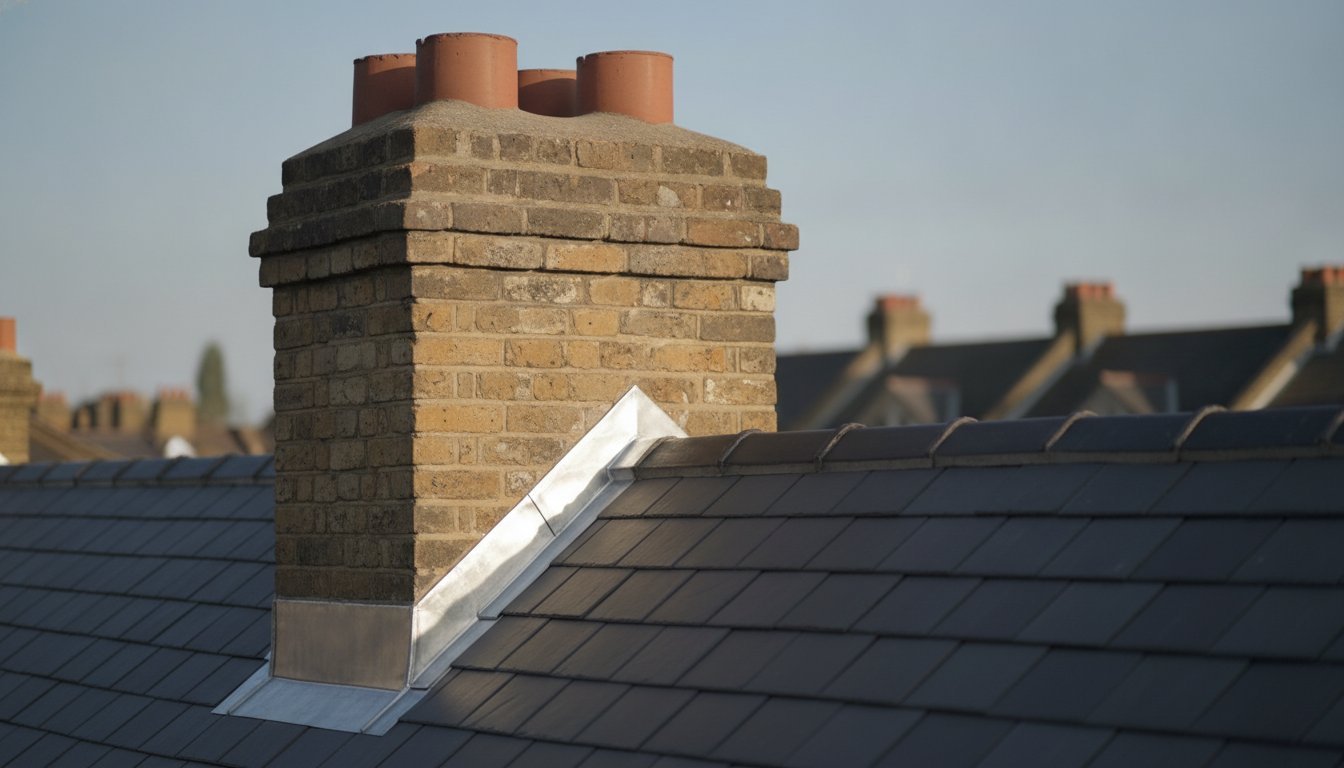
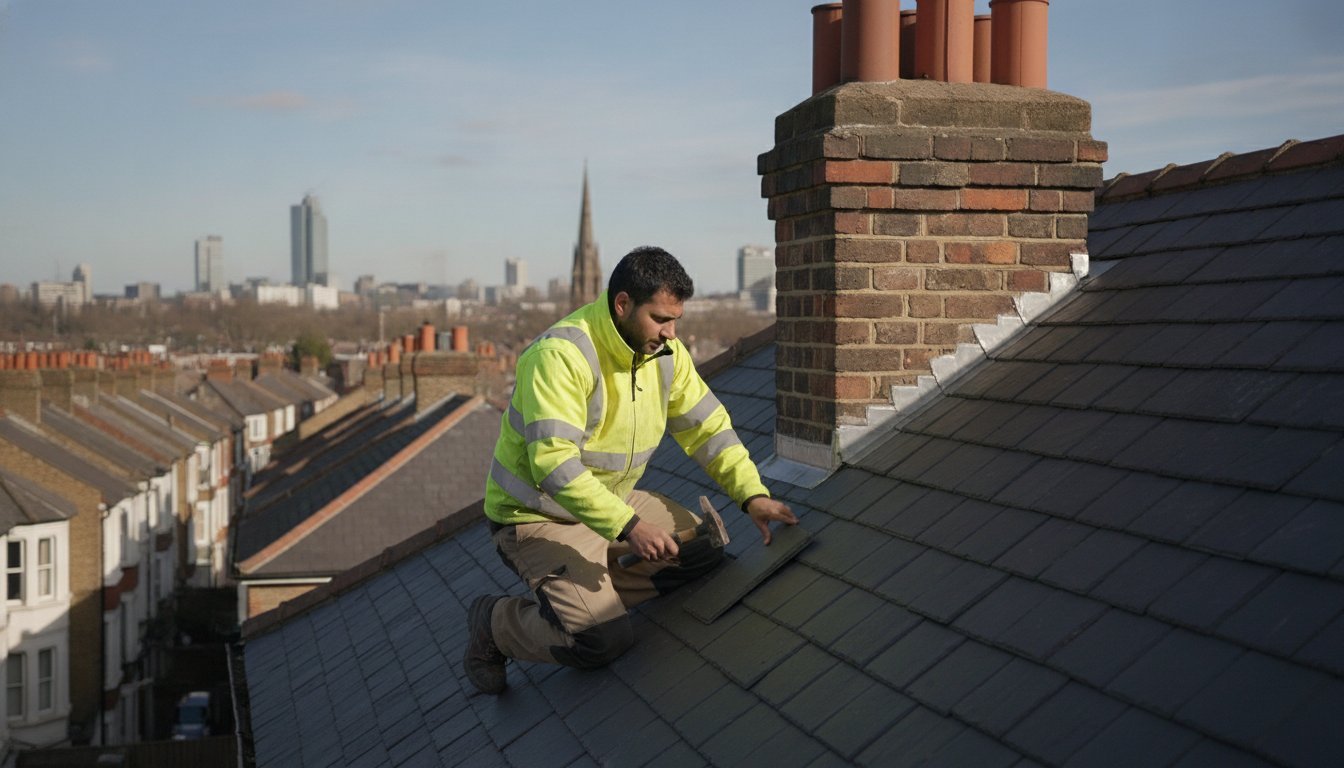
Victorian parapet walls are one of the most consistent culprits identified during flat roof leak detection in Hackney. Cracked mortar joints in the coping stones allow water to saturate the masonry, which then migrates downward and bypasses the roof membrane entirely at the wall junction. Lead flashing at the roof-to-wall junction is the critical barrier here; when it lifts, corrodes, or is poorly dressed into the mortar bed, water finds an unobstructed path into the roof structure. “Blown” render on parapet faces compounds this significantly. Where render has separated from the underlying brickwork, it creates a concealed void that collects and channels rainwater directly towards the roof deck, often in a location that appears entirely sound from street level.
Debris and Drainage in Urban East London
Hackney’s proximity to Victoria Park, London Fields, and numerous street trees means leaf litter accumulates on flat roofs at a rate that many homeowners underestimate. Blocked outlets cause ponding; ponding accelerates membrane degradation. In modern Hackney flats, internal downpipes present an additional risk that external guttering simply doesn’t: a blockage or joint failure within the building fabric can go undetected for months, with water dispersing silently through the ceiling void. Urban pigeons are a further, often overlooked, factor. Nesting debris compacted around outlets restricts drainage and creates sustained wet zones on the roof surface, precisely the conditions that initiate membrane failure at its most vulnerable points.
Understanding these local vulnerabilities isn’t just academic; it’s the foundation of any effective diagnosis. If you’re concerned about any of these failure points on your property, speak to a specialist who understands Hackney’s specific building stock before commissioning any repair work.
The Homeowner’s DIY Flat Roof Leak Detection Checklist
Before any contractor sets foot on your property, a methodical self-inspection can save you considerable time, money, and the frustration of receiving a diagnosis that doesn’t hold up to scrutiny. The goal here isn’t to replace professional expertise; it’s to give you enough grounded knowledge to triage the problem accurately, distinguish a roofing failure from a plumbing issue, and arrive at any contractor conversation fully informed.
Safety first. Never access a flat roof in wet, icy, or windy conditions. Wear non-slip footwear, avoid walking near the roof edge without a fixed anchor point, and if the roof deck feels soft or spongy underfoot, retreat immediately. A saturated deck can fail without warning. Much of what you need to assess can be observed from a loft hatch, an upstairs window, or the top of a fixed ladder positioned safely at the eaves.
Step-by-Step Roof Surface Inspection
Start with the membrane itself. On older felt or asphalt roofs, look for alligatoring: a pattern of interconnected cracks across the surface that resembles reptile skin. This indicates the bitumen has lost its elasticity and is no longer waterproof under hydraulic pressure. On EPDM rubber systems, run your eye carefully along every seam and lap joint; lifted or bubbling edges are the primary failure point for this material. GRP fibreglass roofs tend to fail at the perimeter upstand rather than the field, so check where the flat section meets any vertical surface. Punctures from dropped tools, fallen branches, or ill-placed foot traffic are worth looking for too; they’re often smaller than expected and easily missed without close inspection.
Drainage and Perimeter Audit
Clear every outlet of debris before you assess drainage behaviour. Once cleared, pour a bucket of water onto the roof surface and observe how it tracks. Water pooling rather than flowing towards an outlet confirms a falls problem that will accelerate membrane degradation over time. Inspect the drip edge and any gravel stops for rust, gaps, or lifting, as these components are frequently the unacknowledged entry point for water that later presents as ceiling staining well inside the building. Check every roof light or skylight seal methodically; a failed silicone bead around a skylight frame is one of the most common sources of what homeowners mistakenly attribute to membrane failure.
The water test is a practical and underused tool for flat roof leak detection in Hackney properties. With a second person stationed inside the property, systematically apply water with a garden hose to one section of the roof at a time, working from the lowest point upward. Wait several minutes between zones. When your colleague reports moisture appearing internally, you’ve isolated the approximate entry zone. This approach won’t work on every roof configuration, but on straightforward Victorian rear extensions it can narrow a diagnosis considerably before any professional is engaged.
Internal Mapping
Inside the property, don’t simply note where the damp patch is. Measure its distance from the nearest external wall and from any roof penetration such as a flue or pipe. Photograph the stain against a tape measure for scale. If you have loft access above the affected ceiling, inspect the underside of the roof deck and the tops of the joists with a torch; damp timber, white mineral deposits, or dark staining on the wood will indicate the approximate travel path of the water and help distinguish roof ingress from a plumbing leak running from pipework above. A plumbing leak typically produces a consistent, localised drip pattern directly below the source, whereas roof water tends to spread laterally along joists before dropping.
Compile your photographs, measurements, and water test observations into a single document before any contractor visits. This record is equally valuable for an insurance claim as it is for holding a roofer accountable to a proper root-cause diagnosis rather than a surface patch. If your inspection raises more questions than it answers, contact our Hackney team for a professional survey that goes beyond what any visual inspection alone can confirm.

Professional Leak Detection Methods: Beyond the Naked Eye
There’s a point in every flat roof investigation where visual inspection simply runs out of road. The membrane looks intact. The flashings appear sound. Yet the damp patch keeps returning. This is where technology-led detection methods become not just useful, but essential. For flat roof leak detection in Hackney properties with complex build-ups or layered repair histories, professional diagnostic tools can reveal what no amount of careful looking ever will.
Thermal imaging works by detecting temperature differentials across the roof surface. Dry insulation and saturated insulation retain heat at different rates; a calibrated infrared camera captures these variances as a thermal map, highlighting zones where moisture has become trapped within the roof build-up long before any internal symptom appears. Surveys are typically conducted at dusk or dawn, when the temperature contrast between wet and dry areas is at its most pronounced. The result is a precise, documented picture of moisture distribution across the entire roof plane, not just the area directly above a visible stain.
Tracer gas and smoke testing serve a different but complementary purpose. Where thermal imaging identifies moisture presence, tracer gas testing traces the actual air path that water follows into the building. A non-toxic gas is introduced beneath the membrane; a sensitive detector above the surface identifies exactly where it escapes. On Victorian terrace extensions where water may be entering at a parapet and travelling two metres laterally before dropping, this method isolates the true entry point with a precision that no surface inspection can match.
Electronic Leak Detection (ELD) Explained
Electronic leak detection is the most accurate method available for pinpointing breaches in modern non-conductive flat roof membranes, including EPDM and single-ply systems. Two distinct approaches exist. Wet roof ELD applies a low-voltage electrical current across a water film on the roof surface; where the membrane is breached, the current passes through and is detected below. Dry roof ELD uses a high-voltage pulse across the membrane surface itself, identifying any point where the electrical field breaks down. Both methods produce precise, mappable results that eliminate the guesswork from any subsequent repair programme. The cost of a professional ELD survey is typically recovered many times over by avoiding a speculative patch repair that misses the actual breach by half a metre.
Insurance and “Trace and Access”
Many Hackney homeowners don’t realise that their buildings insurance policy may include trace and access cover, which contributes towards the cost of professionally locating a leak before repairs begin. The critical requirement is a documented professional report, not a contractor’s verbal assessment. A written survey with thermal or electronic evidence satisfies most insurers’ requirements and provides a defensible baseline should any dispute arise over the cause or extent of damage. We assist homeowners in compiling the documented evidence that insurance claims require, ensuring that the diagnostic process is recorded with the rigour that protects your position throughout.
If your own inspection has raised more questions than it’s answered, speak to our Hackney team about a professional flat roof survey that goes well beyond what visual assessment alone can confirm.
From Detection to Durable Repair: Protecting Your Hackney Home
Once the source of ingress has been accurately identified, the next decision is often the most consequential one a homeowner makes: patch it, or replace it properly. Getting this wrong is expensive. A temporary fix applied to a membrane that’s structurally exhausted will fail again, sometimes within a single winter, leaving you with the same repair bill compounded by additional internal damage.
Emergency patches have a legitimate role. If flat roof leak detection in Hackney reveals a discrete, isolated breach on an otherwise sound membrane, a targeted repair using compatible materials can buy time and prevent further internal damage whilst a longer-term programme is planned. The critical distinction is that a patch addresses a symptom. Where the underlying membrane has oxidised, lost its flexibility, or been compromised across multiple zones, patching is simply deferring the inevitable at cost.
The honest question to ask any contractor is this: are you repairing a roof, or repairing a problem on a roof that needs replacing? A flat roof is generally considered beyond economical repair when any of the following apply:
- The membrane is exhibiting widespread alligatoring or surface cracking across more than a third of the roof plane
- Thermal imaging has confirmed saturated insulation across multiple zones, indicating the build-up has been compromised for an extended period
- Multiple previous patch repairs are visible, each addressing a different failure point
- The deck substrate beneath the membrane has begun to soften or delaminate
In these circumstances, continued patching doesn’t protect the property; it delays a necessary investment whilst water quietly continues its work.
Choosing the Right Modern Membrane
For Hackney’s Victorian terrace extensions, the three most practical modern options are EPDM rubber, GRP fibreglass, and liquid-applied systems. EPDM offers exceptional flexibility and longevity, making it well-suited to roofs with complex detailing or irregular perimeters. GRP delivers a fully seamless, rigid finish that performs reliably on straightforward rectangular decks. Liquid-applied membranes are particularly effective on roofs with numerous penetrations or existing detailing that would be difficult to strip back entirely. Homeowners weighing these options against modern single-ply alternatives will find a detailed breakdown in our Hackney homeowner comparison guide to single ply roofing systems.
Critically, any membrane replacement on an older Hackney property should be assessed against current thermal performance requirements. A warm roof upgrade, repositioning insulation above the deck rather than between joists, eliminates the cold bridging that drives condensation-related moisture symptoms. Addressing thermal performance at the same time as waterproofing isn’t just best practice; it often resolves recurring internal damp that has persisted despite previous repair attempts. Our flat roof installation guide covers modern systems and materials in detail for homeowners weighing their options.
Why Choose a Hackney Specialist?
Local knowledge genuinely matters here. A contractor familiar with Hackney’s building stock understands the specific behaviour of Victorian parapet walls, the detailing challenges presented by East London’s terrace extensions, and the building regulation requirements that apply to flat roof works in the borough. Thermal upgrades to roof build-ups may require compliance with Part L of the Building Regulations; a specialist will navigate this as a matter of course rather than as an afterthought.
Effective flat roof leak detection in Hackney is only the beginning. The value of working with a roofing specialist who doesn’t simply patch and leave cannot be overstated. Root-cause diagnosis, matched to the right long-term material solution, is what protects a Hackney home for decades rather than seasons. Get a professional flat roof assessment today and ensure any repair is built to last.
Take the Next Step Towards a Dry, Protected Home
A recurring damp patch rarely resolves itself. What this guide has established is that effective flat roof leak detection in Hackney depends on three things working together: a systematic approach to identifying where water is genuinely entering, an understanding of why Hackney’s Victorian building stock creates specific vulnerabilities, and the confidence to know when professional diagnostic tools are needed to go further than any visual inspection can.
The difference between a repair that lasts and one that doesn’t almost always comes down to root-cause diagnosis. Patching a symptom whilst the underlying failure continues is a costly cycle that Hackney homeowners shouldn’t have to repeat.
Our team are Hackney-based specialists with deep expertise across both Victorian and modern flat roof systems. Every survey we carry out produces transparent, expert-led reporting that gives you a clear picture of what’s happening and what genuinely needs to be done.
Don’t let water keep working quietly through your roof structure. Book a professional flat roof survey in Hackney and get the clarity you need to protect your home properly.
Frequently Asked Questions About Flat Roof Leak Detection in Hackney
How much does professional flat roof leak detection cost in Hackney?
We don’t publish fixed prices for leak detection surveys, as costs vary considerably depending on roof size, accessibility, and the diagnostic methods required. A straightforward visual survey on a small terrace extension will cost considerably less than a full thermal imaging or electronic leak detection assessment on a larger commercial roof. Contact a Hackney-based specialist directly for a survey quote; always ask for a written breakdown of what the survey includes before agreeing to anything.
Can I find a flat roof leak myself without a ladder?
You can gather a surprising amount of useful information from ground level and inside the property. Observing the roof surface from an upstairs window, checking internal ceiling stains against a tape measure, and inspecting the underside of the roof deck through a loft hatch will all help you narrow down the likely failure zone. The water test described in this guide requires only a garden hose and a second person stationed inside. A ladder becomes necessary only when you need to inspect flashings, outlets, or membrane seams at close range.
Is a damp patch on the ceiling always caused by a roof leak?
No, and assuming it is can lead to unnecessary roofing expenditure. Condensation within a poorly ventilated roof build-up, a plumbing joint failure above the ceiling void, and even a leaking window frame can all produce internal damp symptoms that closely resemble roof ingress. A plumbing leak tends to produce a consistent, localised drip directly below its source; roof water typically spreads laterally along joists before dropping. Ruling out these alternatives before calling a roofer is an essential first step.
Will my Hackney building insurance pay for leak detection?
Many buildings insurance policies include trace and access cover, which contributes towards the cost of professionally locating a leak’s source before repairs begin. The key requirement is a documented professional report, not a contractor’s verbal assessment. A written survey supported by thermal imaging or electronic leak detection evidence satisfies most insurers’ requirements. Check your policy schedule carefully and contact your insurer before commissioning any survey work, as some policies require prior authorisation.
How long does a typical flat roof leak detection survey take?
A visual inspection of a standard Victorian terrace rear extension typically takes between one and two hours, including internal mapping and perimeter checks. Thermal imaging surveys require specific lighting conditions, usually conducted at dusk or dawn, and may take longer depending on roof complexity. Electronic leak detection on a larger roof can extend the process further. Regardless of method, a thorough survey that produces a written report with documented findings will always take longer than a quick visual glance, and that additional time is what makes the diagnosis reliable.
What is the most common cause of flat roof leaks in East London?
Across Hackney’s Victorian terrace extensions, failed or lifted lead flashing at parapet wall junctions is consistently the most frequently identified failure point during flat roof leak detection in Hackney surveys. Cracked mortar in coping stones allows water to saturate the masonry, which then bypasses the membrane at the wall junction entirely. Blocked drainage outlets causing sustained ponding are a close second, particularly on roofs beneath Hackney’s street trees, where leaf litter accumulates rapidly and restricts water flow towards outlets.
Should I repair my flat roof or replace the whole thing?
A targeted repair is appropriate when the breach is isolated and the surrounding membrane remains structurally sound and flexible. Replacement becomes the more economical long-term decision when the membrane shows widespread cracking or alligatoring across a significant portion of the roof plane, when thermal imaging confirms saturated insulation across multiple zones, or when multiple previous patch repairs are already visible. Repeated patching on an exhausted membrane rarely pays for itself; it simply defers the cost whilst water continues to work through the build-up.
What happens if a flat roof leak is left untreated?
Untreated ingress rarely stays contained. Water tracking through a roof build-up will saturate insulation, reducing its thermal performance and creating conditions for mould growth within the ceiling void. Over time, sustained moisture contact causes timber joists and deck substrates to soften and delaminate, turning what began as a membrane repair into a structural replacement project. Internal finishes, electrics, and stored belongings are all at risk. The cost of addressing a flat roof leak at an early stage is almost always a fraction of what remediation requires once the damage has been allowed to accumulate.