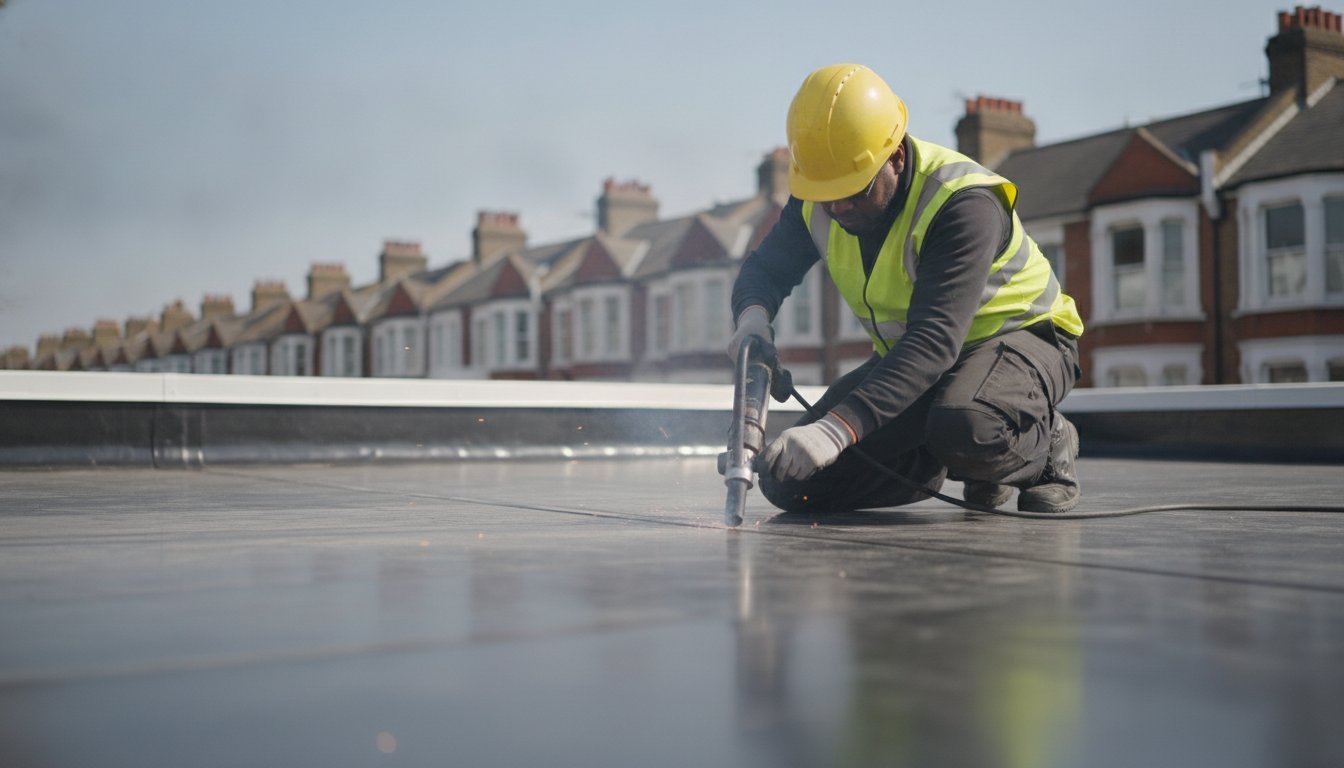
The lowest quote for a new roof often proves to be the most expensive mistake a homeowner can make. It’s understandable to feel overwhelmed by opaque pricing and the nagging fear that hidden structural issues, such as timber rot or inadequate drainage, might suddenly inflate your final bill. When you’re researching the flat roof installation cost Hackney contractors are quoting, you deserve a level of transparency that goes beyond a simple ballpark figure.
We recognise that a roof is more than just a surface; it’s a critical layer of protection for your property and your peace of mind. This guide provides a detailed, expert-led breakdown of the investment factors involved in 2026, ensuring you have the technical facts to make a secure and lasting decision. We’ll explore how material choices like EPDM and GRP fibreglass impact long-term durability, why modern thermal insulation is a non-negotiable requirement for energy efficiency, and how specific London market conditions influence the balance of labour and craftsmanship. By the end, you’ll have the confidence to choose a system that offers both structural integrity and genuine value for money.
Key Takeaways
- Evaluate the performance and longevity of EPDM rubber and GRP fibreglass against traditional bitumen to determine the best long-term value for your property.
- Understand your legal obligations under Part L of the Building Regulations and how mandatory thermal insulation upgrades impact the overall project price.
- Gain a transparent breakdown of the variables that define a flat roof installation cost Hackney residents should expect, including local logistical factors like skip permits.
- Discover how integrating specialist leadwork and heritage-sensitive techniques ensures your new roof complements Hackney’s unique period architectural styles.
- Learn to identify the essential components of a professional, comprehensive quote to protect yourself from hidden costs and inferior craftsmanship.
Primary Factors Influencing Flat Roof Installation Cost in Hackney
Calculating a flat roof installation cost Hackney homeowners can rely on requires looking far beyond a simple price per square metre. Whilst a detached garage might seem straightforward, a multi-level extension with integrated drainage and complex skylights presents a different technical challenge entirely. The intricacy of the perimeter details, such as where the flat membrane meets a brick parapet or transitions into a slate pitch, significantly influences the total investment required for a professional finish.
Size and Structural Complexity
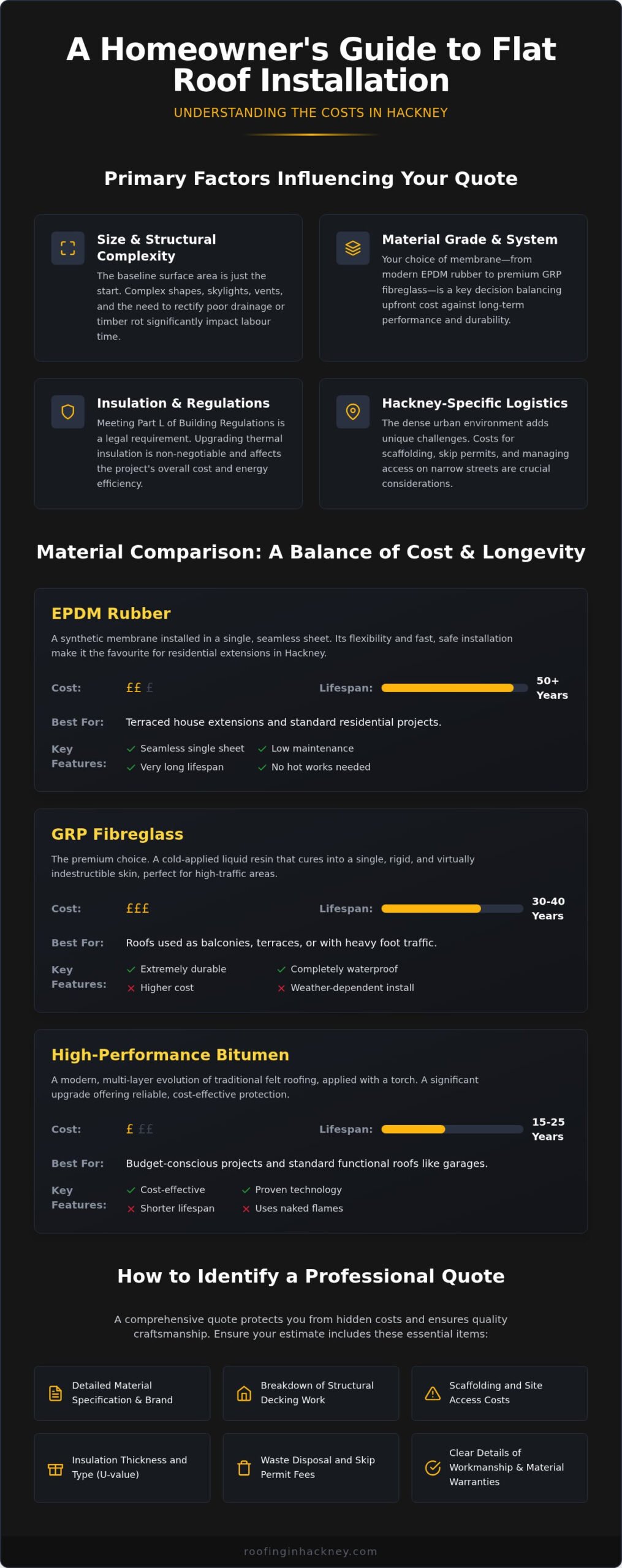
Surface area provides the baseline for any quote, but the geometry of the roof often dictates the volume of waste and the hours required for precise detailing. Features like roof lanterns or multiple ventilation pipes add “cutting in” time for the installation team. If the initial stripping process reveals structural rot or “ponding” issues caused by poor falls, the timber joists may need replacement or “firring” to ensure water runs off correctly. Additionally, Hackney’s dense urban layout means that roof height and site access are major factors. Higher elevations require more extensive scaffolding, whilst narrow residential streets often necessitate specific parking permits for skips and delivery lorries.
Material Grade and System Choice
The membrane you select is a pivotal decision that balances immediate expenditure against decades of performance. Whilst traditional bitumen felt remains a functional option, modern single-ply membranes or EPDM rubber offer vastly superior longevity and weather resistance. Gaining a technical overview of Flat roof materials and construction helps in selecting a system that aligns with your property’s specific needs. Premium systems often carry 20 to 25-year warranties, which adds significant value to the property. Choosing the “cheapest” material can be a false economy, as these systems often require expensive repairs or replacement much sooner than their modern counterparts.
Professional expertise is the most critical variable in any roofing project. A specialist contractor brings deep knowledge of East London’s unique building stock, ensuring that modern thermal standards are met without compromising the structural integrity of Victorian or Edwardian homes. This level of craftsmanship ensures that the substrate is perfectly prepared, which is the only way to guarantee a fair and transparent flat roof installation cost Hackney residents can justify as a long-term investment.
Material Comparison: Price Points for EPDM, GRP, and Bitumen
Selecting the right membrane is a strategic balance between your immediate budget and the expected service life of the structure. Whilst the initial flat roof installation cost Hackney residents are quoted varies by material, the true value is found in the life-cycle cost. A cheaper entry-level system might require total replacement in fifteen years, whereas a premium installation could remain watertight for half a century. We approach every project with the mindset of a master craftsman, ensuring the chosen system aligns with the architectural demands of your property.
The Pros and Cons of Single-Ply Systems
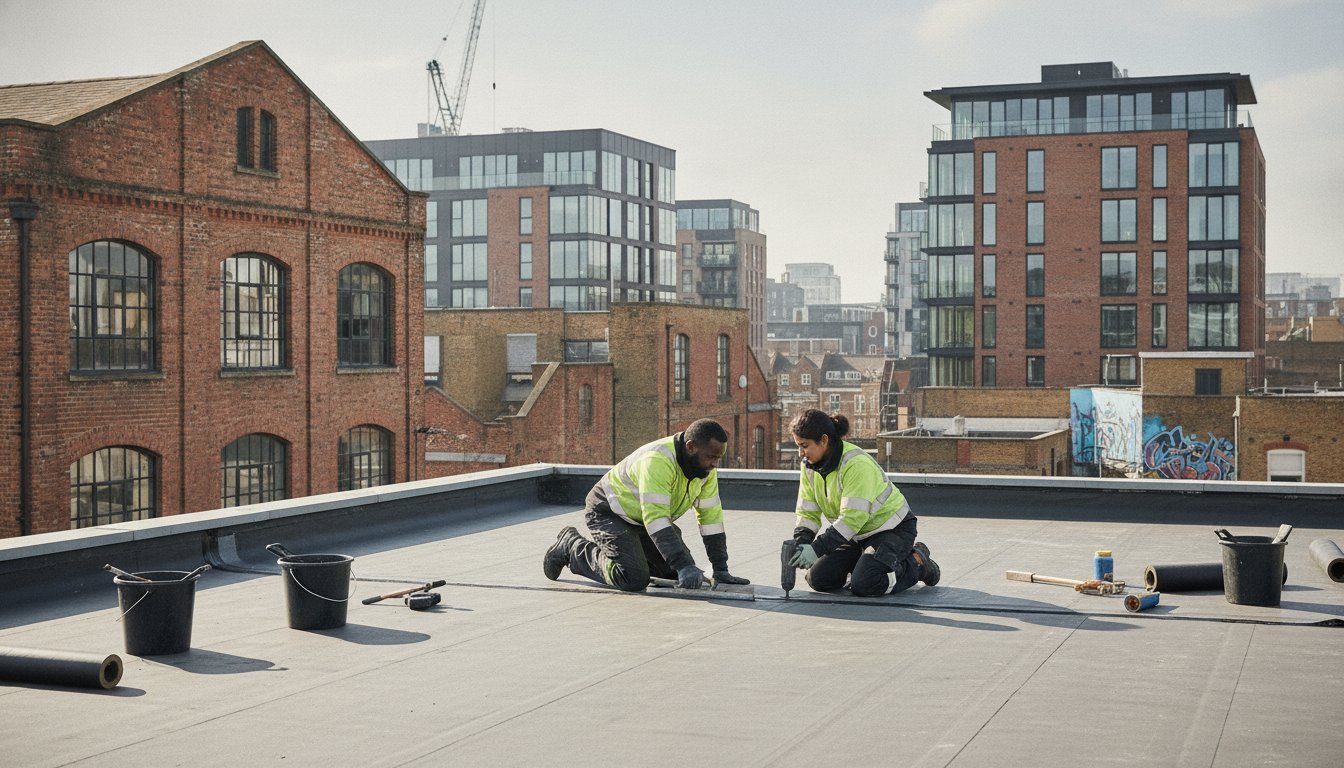
EPDM rubber has emerged as the mid-range favourite for Hackney residential extensions. It’s a synthetic membrane that we typically install in a single, seamless sheet, which significantly reduces the risk of joint failure. Because EPDM is lightweight and requires no “hot works” or naked flames, the installation is often faster and safer than traditional methods. This efficiency helps keep labour costs manageable whilst providing a lifespan that frequently exceeds 50 years. Maintenance is exceptionally low; the material doesn’t support moss growth and remains flexible enough to handle the thermal expansion common in London’s varied climate. For most terraced house extensions, it represents the most logical intersection of durability and price.
Premium GRP and High-Performance Bitumen
GRP fibreglass is the premium choice for roofs that double as balconies or terraces. It’s a cold-applied liquid resin reinforced with glass matting, curing into a single, rigid skin that’s virtually indestructible. Whilst it commands a higher price due to the intensive labour and weather-dependent installation process, its structural rigidity is unmatched. On the other hand, modern high-performance torch-on bitumen is a significant upgrade from the felt roofs of the past. These three-layer systems utilise SBS-modified bitumen, which is far more resilient than heritage materials. According to the National Federation of Roofing Contractors (NFRC), the success of these systems depends entirely on the technical proficiency of the installer, particularly when detailing around complex perimeters.
For buildings with highly irregular shapes or numerous plant installations, liquid-applied membranes offer a versatile alternative. These systems flow into every crevice, creating a bespoke waterproof layer amongst even the most awkward roof geometries. If you’re weighing up these options for your own home, we can provide a professional assessment to determine which material offers the best long-term protection for your specific roof deck. Choosing the right system now prevents the stress of premature repairs later, securing your investment for decades to come.
The Impact of Insulation and Building Regulations on Cost
Many homeowners are surprised to learn that thermal insulation is rarely an optional extra. Under Part L of the Building Regulations, if you’re replacing more than 50% of your roof area, you’re legally required to upgrade its thermal performance to meet current standards. This regulation ensures that properties contribute to national energy efficiency targets, but it also fundamentally alters the flat roof installation cost Hackney residents see on their initial quotes. Skimping on these standards isn’t just a regulatory risk; it’s a decision that leads to higher energy bills and potential issues with dampness and condensation for decades to come.
Warm Roof Insulation: The Modern Standard
The warm roof system has become the industry benchmark for residential extensions. In this configuration, we place high-grade PIR (polyisocyanurate) insulation boards directly on top of the structural decking, creating a continuous thermal “envelope.” This method keeps the roof timber at the same temperature as the interior of the house, which effectively moves the dew point to the outside of the structure. Whilst the material cost of these rigid boards is higher than traditional mineral wool, the benefits are significant. A warm roof prevents the structural rot associated with internal condensation and provides a superior base for modern membranes like EPDM or GRP. Investing in these thermal roof insulation upgrades ensures your home remains cool in the summer and holds heat effectively during London’s winter months.
Cold Roof Alternatives and Regulatory Compliance
In certain scenarios, such as when height restrictions or existing parapet walls limit how high a roof can sit, a cold roof remains the only viable option. Here, the insulation is packed between the joists, leaving a vital ventilation gap above it. This gap is non-negotiable; without adequate airflow, “interstitial condensation” can occur, silently rotting the timber deck from the inside out. Ensuring this ventilation is compliant often adds complexity and labour time to the project. For larger commercial roofing Hackney projects, meeting specific U-value targets is even more rigorous, often requiring bespoke calculations to balance thermal performance with structural weight limits.
Ultimately, the additional expenditure on insulation pays for itself through reduced heating requirements. We approach every installation with a commitment to technical precision, ensuring that your roof doesn’t just look professional but performs to the highest modern standards. A well-insulated roof is a core component of a property’s long-term value, providing a level of comfort and structural security that far outweighs the initial price of the materials.
Hackney Specific Costs: Logistics, Access, and Period Features
The “Hackney Premium” is a technical reality that any property owner in East London must consider when budgeting for structural work. Unlike projects in suburban areas with ample driveway space, the flat roof installation cost Hackney contractors quote is heavily influenced by the borough’s high-density urban environment. Navigating narrow residential roads requires meticulous logistical planning. Parking permits for work vehicles and the cost of skip hire in controlled zones often carry significant daily fees, which must be factored into a transparent estimate to avoid unexpected surcharges during the build.
Access and Scaffolding Challenges in East London
Many terraced properties in areas like Dalston or Shoreditch offer no side or rear access. This means every roll of EPDM and every insulation board must be hoisted over the front of the building or, in some cases, carried through the living space. These constraints naturally increase labour time and require additional protective measures for the interior. Furthermore, if scaffolding needs to be erected on a public thoroughfare, we must secure a pavement licence from Hackney Council. These administrative steps are essential for safety and compliance, but they do contribute to the overall project duration and the final investment required.
Leadwork and Detailing for Heritage Properties
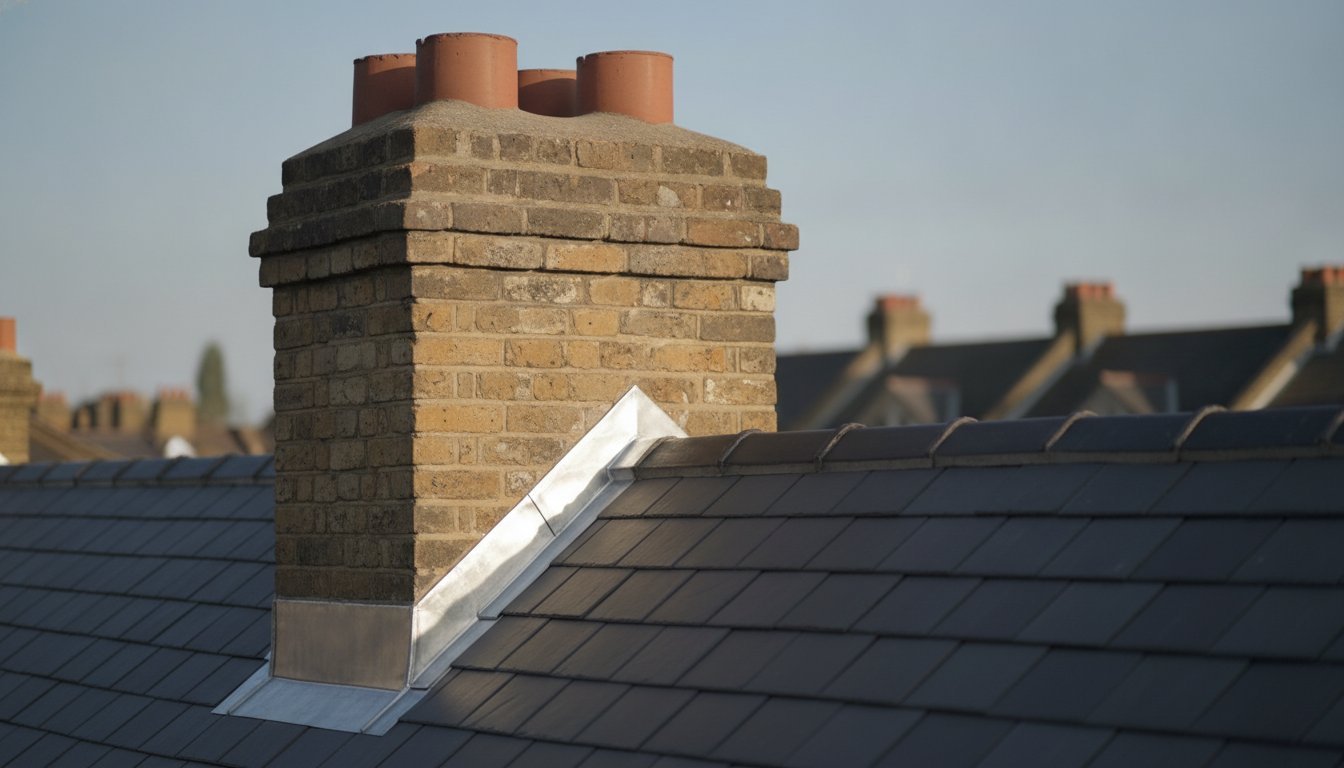
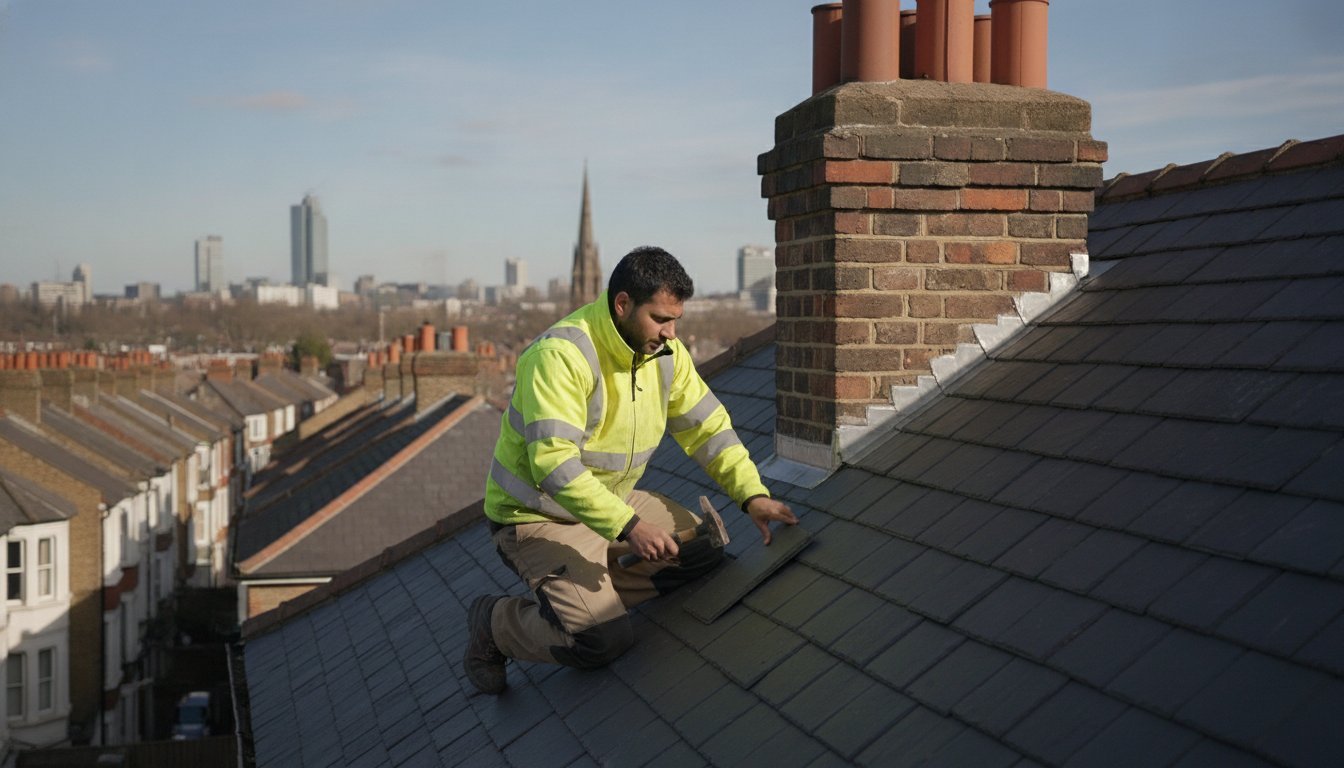
Integrating a modern flat roof with a Victorian or Edwardian terrace requires more than just a waterproof membrane. Traditional expert leadwork Hackney specialists provide is essential for creating a watertight seal where the roof abuts aged brickwork. Precision lead welding is a skilled craft that ensures longevity in areas where modern adhesive alternatives frequently fail over time. This is especially critical in Hackney’s many Conservation Areas, where aesthetic requirements often dictate the use of heritage-appropriate materials to preserve the architectural integrity of the street. Ensuring a seamless transition between a new flat roof and existing slate tiles requires a master craftsman’s touch to prevent future leaks.
Waste management presents another specific challenge in high-density zones. The disposal of old bitumen, timber, and insulation requires efficient skip rotation, which is difficult to coordinate in restricted parking areas. We manage these complex logistics as part of our steady, methodical workflow, ensuring your site remains clean and compliant with local regulations. If you are planning an installation for a period property, request a site-specific consultation to ensure these local factors are accurately accounted for in your project plan.
How to Obtain an Accurate Flat Roof Quote in Hackney
Securing a reliable estimate requires more than a casual glance from the street level. To provide a flat roof installation cost Hackney residents can actually use for financial planning, a contractor must conduct a physical survey of the roof deck. A professional quote shouldn’t be a single figure scribbled on a notepad; it must be a comprehensive document that itemises every aspect of the project. This includes a clear breakdown of high-performance materials, skilled labour hours, waste disposal fees, and VAT. Transparency at this stage is the hallmark of a master craftsman, ensuring that the price you agree upon is the price you pay when the work is completed.
Red flags are often easy to spot if you know what to look for. Beware of “back-of-an-envelope” estimates that lack technical detail or contractors who insist on cash-only deals to “save on the VAT.” These approaches offer no legal protection and often signal a lack of professional insurance. Choosing a specialist with proximity to Hackney Central or Homerton provides practical advantages; local experts understand the specific challenges of East London’s building stock and can respond quickly to site-specific needs. Before your surveyor arrives, identify any known leak points and ensure access routes to the roof are clear to facilitate a thorough inspection.
Questions to Ask Your Hackney Roofer
Probing the technical depth of your contractor helps verify their expertise. Always inquire about insurance-backed guarantees; these protect your investment even in the unlikely event that the firm ceases trading. You should also ask for a detailed explanation of their insulation strategy. As we’ve discussed regarding Part L compliance, your roofer should be able to explain exactly how they intend to meet specific U-value targets. Finally, confirm the projected timeline and their contingency plans for typical British weather. A well-organised team will have a methodical process for protecting your home’s interior whilst the roof is exposed.
The Roofing in Hackney Difference
We pride ourselves on providing an expert-led service that prioritises long-term structural integrity over short-term shortcuts. Our history as a trusted local roofing contractor means we’ve built our reputation on transparency and technical proficiency. We don’t believe in high-pressure sales; instead, we offer fixed-fee quotes that reflect the true requirements of your property’s architecture. If you’re ready to secure your home with a durable, energy-efficient system, request a professional flat roof assessment and quote today. We’ll provide the clarity and confidence you need to make an informed investment in your property’s future.
Securing Long-Term Value for Your Hackney Property
Investing in a new roof is a significant commitment that requires a balance of technical precision and local expertise. We’ve explored how the flat roof installation cost Hackney residents pay is defined by more than just square footage. Success depends on selecting the right membrane for your building’s specific geometry and ensuring that mandatory thermal insulation upgrades are integrated correctly. By prioritising quality materials and adhering to Part L regulations, you don’t just protect your structure; you enhance its energy efficiency and market value for decades to come.
Our team brings a master craftsman’s approach to every project, specialising in both traditional leadwork for period properties and high-performance modern membrane systems. As fully insured and accredited local contractors, we provide detailed, transparent quotes with no hidden East London surcharges. We believe that clear communication and technical proficiency are the only ways to ensure a stress-free installation. Request your bespoke flat roof installation quote from our Hackney team today and take the first step toward a secure, watertight future for your home.
Frequently Asked Questions
How much does a new flat roof cost per square metre in Hackney?
The price per square metre is determined by your choice of membrane and the complexity of the installation. Whilst national averages exist, the flat roof installation cost Hackney residents experience is typically 10 to 20% higher due to London labour rates and logistical challenges. EPDM rubber is often more cost-effective for residential extensions, whereas GRP fibreglass commands a premium for its structural rigidity. These figures must always include the mandatory thermal insulation required by Part L regulations.
Is it cheaper to repair or replace my flat roof?
A localised repair is initially less expensive, but it often serves as a temporary measure for an ageing system. If more than 50% of the roof requires attention, Building Regulations mandate a full replacement including insulation upgrades. We recommend a professional survey to check for timber deck saturation. Replacing an old roof with a modern membrane like EPDM provides a 50-year life expectancy, which represents far better long-term value than repeated, costly patch repairs.
Do I need building regulations approval for a flat roof replacement?
Yes, Building Regulations approval is generally required if you are replacing more than half of the roof’s surface area. This is primarily to ensure the structure meets current Part L thermal standards for fuel and power conservation. As local specialists, we ensure that every installation complies with these mandatory U-value targets. Failure to obtain this certification can complicate future property sales, so it’s essential to work with a contractor who understands these legal obligations.
How long does a professional flat roof installation take to complete?
Most residential flat roof projects in Hackney are completed within one to three days. The duration depends on the total surface area and the condition of the underlying timber joists found once the old material is stripped. Whilst modern systems like EPDM allow for rapid installation, GRP fibreglass requires dry conditions to cure correctly. We always provide a clear timeline during the consultation, including contingency plans for the unpredictable London weather to keep your home protected.
Why is insulation so expensive for flat roofs?
The cost of insulation reflects the high performance of modern PIR rigid boards required to meet strict thermal standards. These materials are engineered to provide maximum heat retention with minimal thickness, which is vital for maintaining roof heights in terraced properties. Whilst the initial investment is higher, these upgrades significantly reduce annual heating bills. Investing in quality insulation is the most effective way to offset the long-term flat roof installation cost Hackney homeowners face by improving energy efficiency.
Does the type of material I choose affect my home insurance premiums?
Yes, insurers often favour modern, durable materials over traditional felt due to their superior fire ratings and reduced risk of leaks. EPDM and GRP are highly regarded for their longevity and resistance to extreme weather. Some providers may offer lower premiums if your roof is installed by an accredited contractor using systems with long-term warranties. It’s always advisable to notify your insurance provider of the specific material used to ensure your policy remains valid and accurately reflects your property’s value.
What are the hidden costs I should watch out for when getting a quote?
Hidden costs often arise from structural issues that only become visible after the old roof is removed, such as rotted decking or joists. Other common variables include Hackney-specific logistical fees like pavement licences for scaffolding or parking permits for skips. A transparent quote should clearly outline whether these administrative costs are included. We prioritise detailed surveys to identify potential complications early, ensuring our fixed-fee estimates provide a realistic reflection of the total investment required for your project.
Can you install a flat roof during the winter months in London?
Flat roofs can be installed during the winter, provided the weather remains dry. EPDM rubber is particularly suited to colder months as it is a “cold-applied” system that doesn’t rely on heat or specific temperatures to set. In contrast, GRP fibreglass requires temperatures above 5 degrees Celsius to cure correctly. Our methodical workflow involves monitoring local forecasts closely and using temporary coverings to ensure your property remains watertight and secure throughout the entire installation process, regardless of the season.