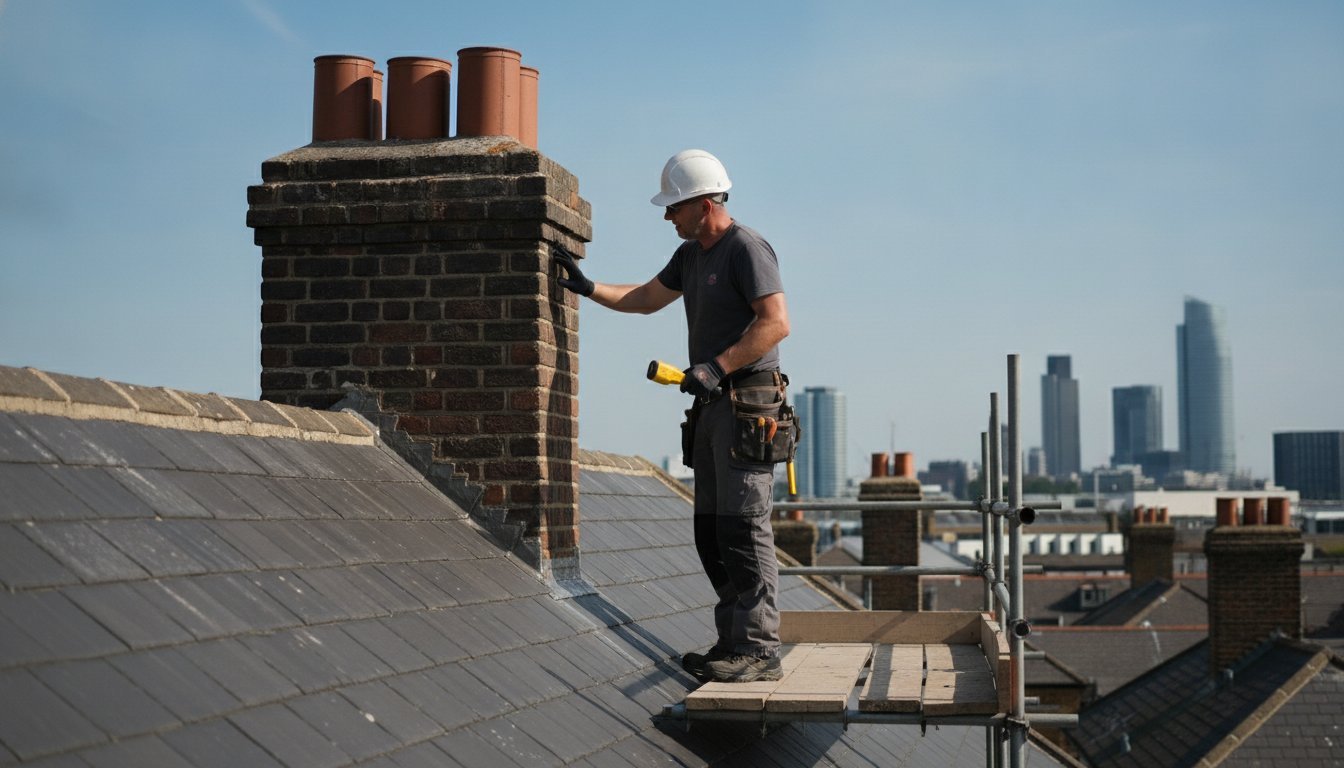
Could your chimney stack be compromising the structural integrity of your Victorian home, even if the fireplace hasn’t been lit in years? Many homeowners in East London value their period features, yet it’s easy to overlook the stack until debris falls into the hearth or damp patches appear on the upstairs walls. You’re likely aware that the chimney maintenance Hackney properties require is a specialised task, particularly since the entire borough became a strict Smoke Control Area in December 2025.
We understand that managing a historic building often feels like a constant effort to keep the elements at bay. It’s frustrating to see visible cracks forming in the external masonry, but addressing these issues early is the only way to prevent costly long-term damage. Discover how to protect your period property from damp and structural failure with our expert guide. We’ll examine the common vulnerabilities of local masonry and explain how to ensure your roof remains leak-free whilst helping you understand the true structural health of your stack.
Key Takeaways
- Learn why the exposed position of Victorian terraces makes regular chimney maintenance Hackney homeowners require essential for preventing internal damp.
- Gain insight into the structural anatomy of your chimney stack, including the vital roles played by leadwork, flaunching, and masonry.
- Use our practical checklist to spot early warning signs of stack failure, such as vegetation growth or crumbling mortar, from street level.
- Understand the unique challenges of preserving shared stacks on period properties and the importance of professional safety protocols for repairs at height.
Why Chimney Maintenance in Hackney is Vital for Your Home’s Health
Homeowners in East London often view their fireplaces as charming relics of the past, yet the external chimney stack remains a hard-working component of the building’s envelope. Effective chimney maintenance Hackney residents should prioritise is far more than an annual sweep. It’s a comprehensive strategy to ensure the masonry, leadwork, and internal flues remain weather-tight and stable. Because Hackney’s Victorian terraces are typically tall and closely packed, their stacks are constantly exposed to high-velocity winds and driving rain. This exposure makes the chimney the most likely entry point for water ingress if the structure isn’t regularly inspected by a specialist.
The Role of the Chimney in Roof Integrity
The chimney stack often acts as a central structural pillar for the roof’s timber frame in older properties. A firm understanding of the Anatomy of a Chimney reveals that the junction between the masonry and the roof tiles is one of the most critical areas for waterproofing. This intersection relies on high-quality leadwork and precise mortar bedding to redirect rainwater away from the roof’s interior. When these components fail, the resulting leaks don’t just affect the chimney; they can rot the surrounding rafters and battens. In many cases, we’ve observed that localised chimney failure is the precursor to more extensive roof damage. By maintaining the stack, you’re essentially protecting the foundation of your entire roofing system.
Consequences of Neglect: Damp, Leaks, and Structural Risks
Neglecting minor repairs can lead to severe internal issues that are difficult to rectify. Perished mortar joints allow water to wick through the brickwork, eventually appearing as damp patches on chimney breasts. This moisture is particularly destructive to heritage features, often causing delicate decorative plasterwork and cornices to crumble or detach. Beyond the interior, there’s a significant safety concern. Hackney’s streets are busy, and a loose chimney pot or a fragment of falling masonry from an unstable stack presents a genuine risk to those below.
Whilst it’s tempting to defer maintenance, the long-term costs of structural repairs far outweigh the investment in a proactive inspection. A small crack today can easily become a major structural failure after a single season of freeze-thaw cycles. If you’re concerned about the state of your masonry, it’s wise to contact us for a professional assessment before the weather turns. Taking action now ensures your home remains a safe, dry, and preserved example of London’s architectural history.
Understanding the Structural Anatomy of a Hackney Chimney Stack
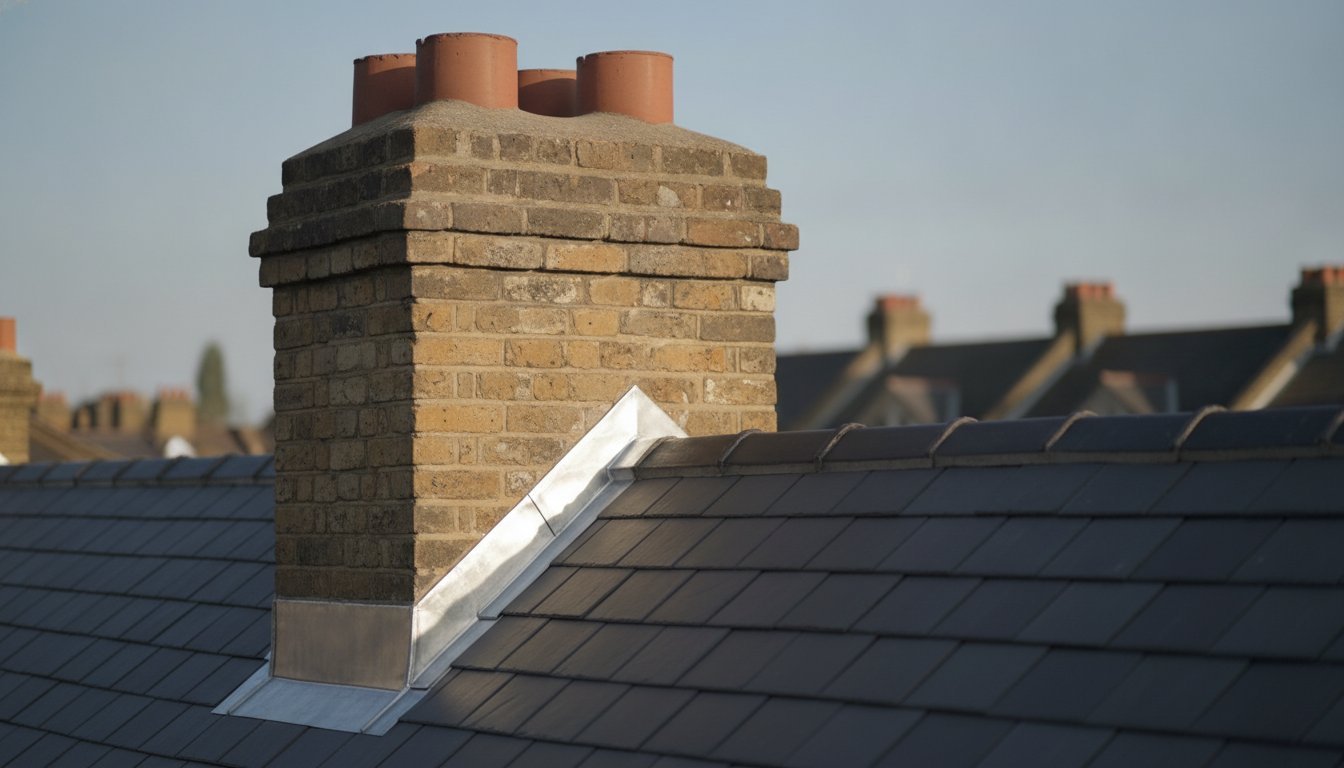
To correctly approach chimney maintenance Hackney homeowners must first distinguish between the internal flue and the external stack. Whilst a chimney sweep focuses on the internal passage where combustion gases travel, a roofing specialist manages the stack, the visible masonry structure that protrudes above the roofline. These stacks are typically constructed from yellow London Stock bricks bedded in traditional lime mortar. This combination allows the building to breathe and flex slightly with temperature changes. Each component of the stack serves a specific purpose in keeping your home dry and safe.
Any structural work or modification to these systems must adhere to the Approved Document J Building Regulations, which ensures the safety and performance of combustion appliances. A standard Hackney stack consists of several key elements:
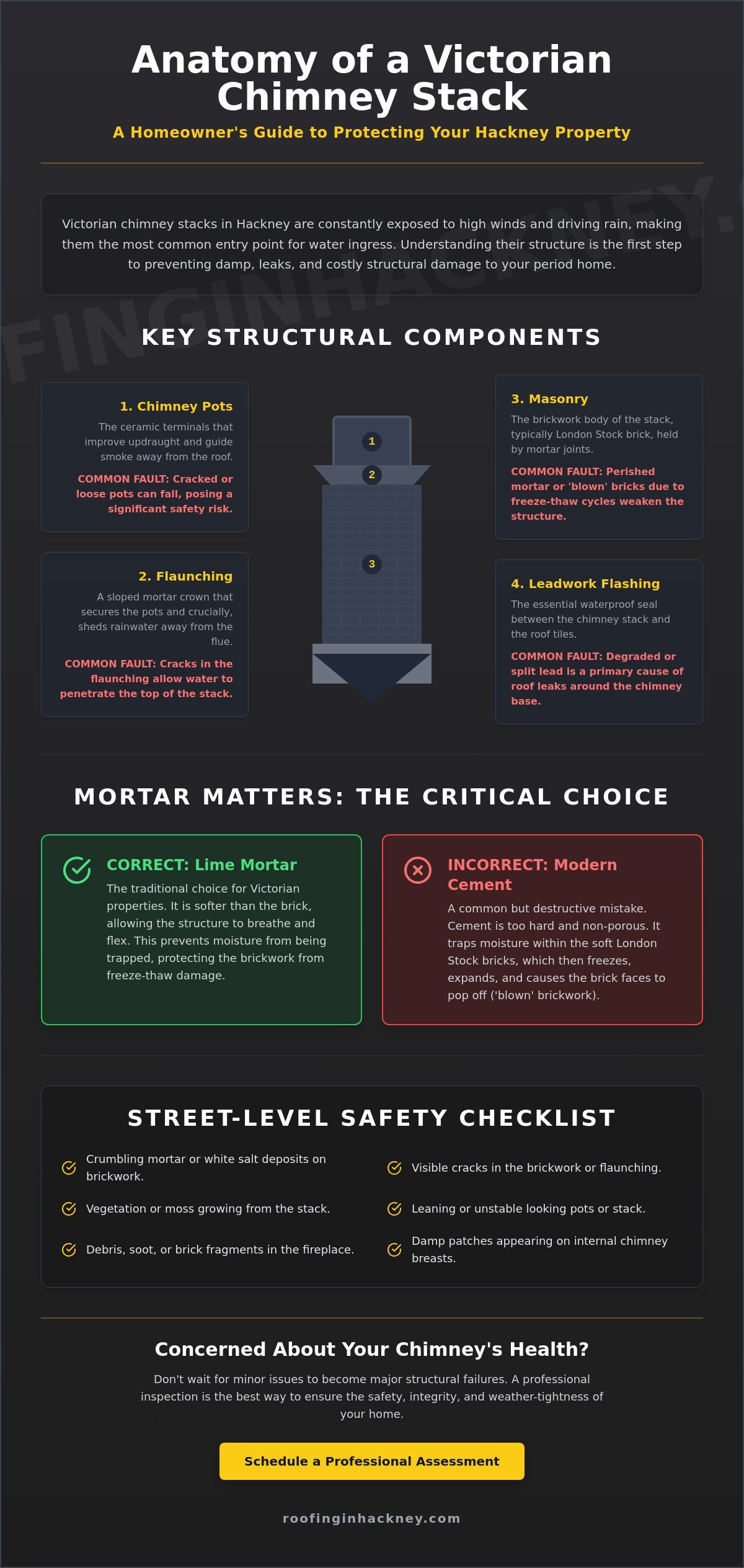
- Chimney Pots: The ceramic terminals that guide smoke away from the building.
- Flaunching: The sloped mortar bed at the top of the stack that holds the pots in place and sheds water.
- Masonry: The brickwork body of the chimney.
- Leadwork: The waterproof interface where the bricks meet the roof tiles or slates.
Masonry and Repointing: The External Shell
Repointing is the process of renewing the external part of the mortar joint. In Hackney’s Victorian properties, using modern cement is a common but costly mistake. Cement is far too hard for soft London Stock bricks. It traps moisture inside the brick, which then freezes and expands, causing the face of the brick to pop off. This is known as “blown” brickwork. Over time, blown bricks and perished mortar weaken the stack’s stability, making proactive chimney maintenance Hackney a priority for property longevity.
Lead Flashing and Valleys: The Waterproof Seal
The base of the chimney is where the masonry meets the roof. This junction is sealed with lead flashing. Lead is an incredibly durable material, but it is subject to constant thermal expansion and contraction. Over several decades, this movement can cause the lead to thin or crack, allowing water to bypass the roof covering entirely. Because leadwork often fails before the masonry does, it’s frequently the first point of repair for a leaking roof. For those concerned about the integrity of these seals, seeking lead flashing repair Hackney specialists can provide is a sensible step to prevent internal dampness. If you’ve noticed dampness near your fireplace, it may be time to schedule a structural inspection to assess these critical components before the winter rain sets in.
Identifying Early Signs of Chimney Failure and Wear
Whilst a full professional survey is the only way to confirm the structural health of your stack, many warning signs are visible from the safety of the pavement. Proactive observation is the first step in effective chimney maintenance Hackney residents can perform without ever needing a ladder. By identifying minor defects early, you can prevent the sudden transition from a simple repair to an emergency structural intervention. Early detection is particularly vital in East London, where the proximity of neighbouring properties means a failing stack can impact more than just your own home. For other urgent home maintenance needs, such as rapid-response heating or plumbing repairs, Emergency Angel offers professional assistance across the UK.
One of the most obvious signs of neglect is the presence of vegetation. Buddleia, often referred to as the “roof-wrecker” amongst tradespeople, frequently takes root in the perished mortar of older stacks. These plants aren’t merely an aesthetic issue; their strong root systems actively push bricks apart, compromise the internal flue, and create direct pathways for water. Similarly, if you notice the stack has developed a slight lean, this indicates a significant safety risk. Stacks often lean due to uneven weathering or the long-term effects of prevailing winds on weakened mortar. A leaning chimney is unstable and requires immediate professional attention to prevent collapse.
Visual Red Flags from the Ground
Take a moment to inspect the very top of your chimney. Missing or cracked ceramic pots are common entry points for both rainwater and nesting birds. You should also look for “efflorescence,” which appears as white, powdery salt deposits on the face of the brickwork. This is a clear indicator that moisture is wicking through the masonry and evaporating, leaving minerals behind. Finally, check your gutters and the area directly below the stack after a heavy downpour. If you find crumbs of mortar or fragments of red or yellow brick, your chimney is actively shedding its structural material.
Internal Symptoms: Damp Patches and Draughts
The symptoms of a failing chimney often manifest inside the house before they become obvious outside. Damp patches appearing on the ceiling or walls around the chimney breast are a classic sign of failed leadwork or porous masonry. These patches are often accompanied by a persistent musty smell, especially in bedrooms, which is caused by moisture reacting with old soot deposits. Furthermore, structural cracks in the stack can interfere with the natural draught of your fireplace. If you find that your fire is difficult to light or that smoke is drifting back into the room, it may be a sign that the chimney’s structural integrity is compromised. If you’ve spotted any of these red flags, it’s a sensible time to request a professional assessment to ensure your chimney maintenance Hackney plan is back on track.
Specialist Maintenance for Victorian and Period Chimneys
Hackney’s architectural heritage is anchored by its iconic Victorian terraces. These buildings require a sympathetic approach to care that modern developments simply don’t demand. When we discuss the chimney maintenance Hackney properties need, we must consider the complexities of shared chimney stacks. Because most local chimneys serve two adjoining homes, structural issues on one side often migrate to the other. This interconnectedness means that any repair work must be handled with an eye toward party wall etiquette and long-term stability for both households. Preserving the aesthetic heritage of your home isn’t just about looks; it’s about using the correct materials to ensure the masonry survives another century.
Challenges of Aged Lime Mortar and Brickwork
The core of Victorian masonry is breathability. London Stock bricks are porous by design. They work in tandem with lime mortar to manage moisture. If a previous owner used modern cement for repointing, the bricks are likely suffering from accelerated decay. Our restoration process involves carefully raking out the old, perished mortar by hand to a specific depth. We then replace it with a bespoke lime-based mix that matches the original colour and texture. This preserves the “London Stock” aesthetic whilst allowing the stack to expand and contract naturally with the seasons. Without this flexibility, the bricks themselves will eventually crack under the pressure of thermal movement.
Modern Protection: Cowls and Capping
Whilst we respect traditional methods, certain modern additions can significantly extend the life of a period chimney. Installing a high-quality cowl is one of the most effective ways to prevent jackdaws and pigeons from nesting in your flues. These nests trap moisture and can even lead to carbon monoxide risks if the fireplace is still in use. For a detailed overview of how to select and fit the right terminal for your property, our guide to chimney cowl installation Hackney homeowners can rely on covers the latest 2026 requirements in full. For chimneys that are no longer active, we recommend professional capping. It’s vital to do this correctly by using a ventilated “pepper-pot” insert. A completely sealed flue will trap stagnant air and moisture, leading to internal dampness and salt staining on your chimney breast. We select cowls and caps that withstand London’s specific weather patterns whilst remaining unobtrusive to the building’s historic silhouette.
If you’re concerned about the structural integrity of your period chimney or need advice on shared stack repairs, book a specialist chimney consultation with our team today to ensure your heritage features are properly protected.
The Professional Approach to Chimney Preservation and Repair
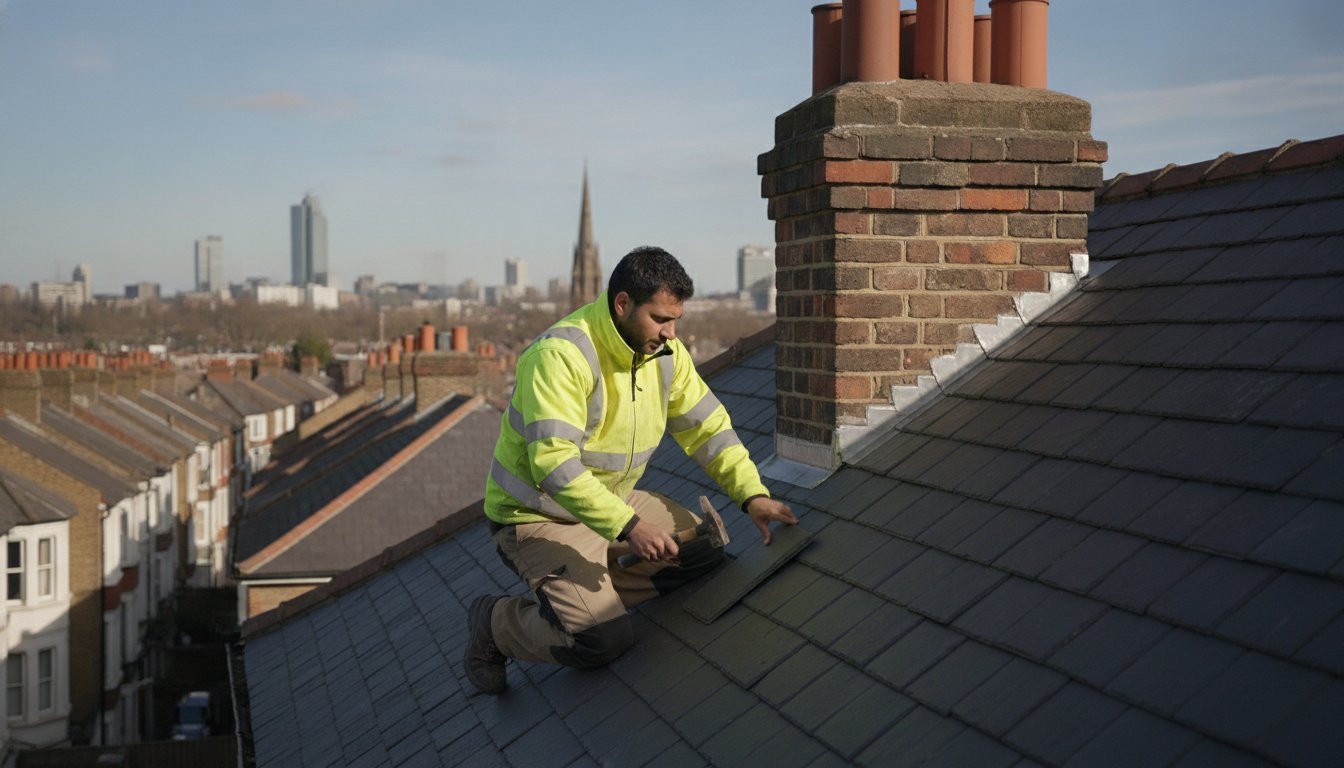
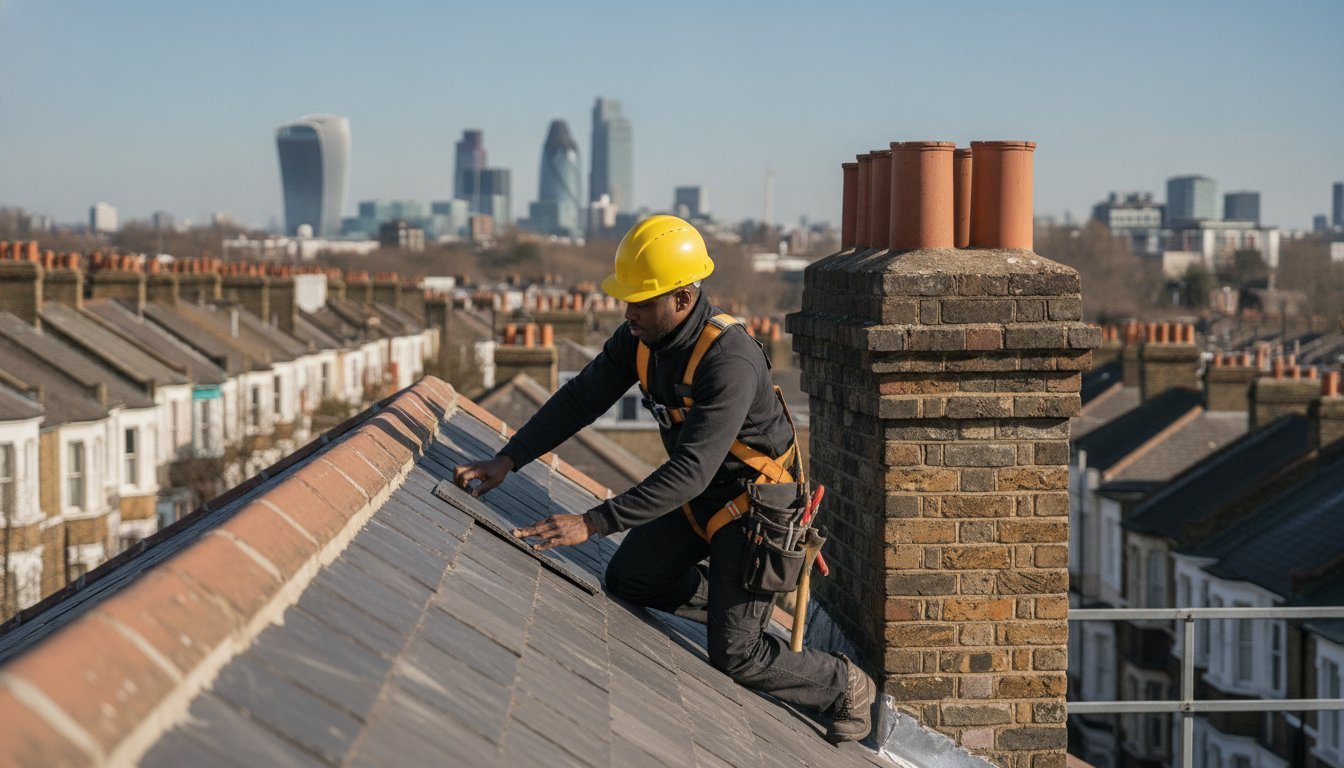
Whilst a chimney sweep is essential for internal flue safety, the structural chimney maintenance Hackney residents require falls under the remit of a specialist roofing contractor. We look beyond the soot to assess the physical stability of the stack, ensuring that the masonry can withstand the mechanical stresses of high winds and heavy rainfall. Working on Hackney’s tall Victorian terraces presents unique logistical challenges, requiring strict safety protocols and specialised access equipment to ensure the work is carried out safely. Our team prioritises order and transparency, providing a methodical approach to repairs that secures your home against water ingress for the long term.
We frequently integrate these structural repairs into our larger slate roofing Hackney projects. By treating the chimney and the roof surface as a single, watertight unit, we eliminate the weak points where leaks commonly occur. Investing in a professional maintenance programme doesn’t just prevent damp; it provides the peace of mind that comes from knowing your property’s most exposed structural element is under expert care.
What a Comprehensive Chimney Assessment Includes
A professional assessment is the cornerstone of effective preservation. We don’t just glance at the brickwork; we conduct a meticulous visual inspection of the flaunching and the stability of the pots. Our specialists test the integrity of lead flashings and secret gutters, looking for the tiny fractures that often precede major leaks. Following the inspection, we provide a detailed report that outlines necessary repairs and preventative measures. This allows you to understand the structural health of your stack and make informed decisions about your property’s upkeep without any high-pressure sales tactics.
Combining Chimney Care with Full Roof Maintenance
Scaffolding is often the most significant logistical cost in high-level repairs. Because of this, it’s highly efficient to address chimney issues whilst scaffolding is already in place for other roofing work. This integrated approach allows us to achieve a seamless finish, ensuring that the new leadwork and mortar joints blend perfectly with your existing roofline. We take pride in our technical proficiency, ensuring that every repair meets modern safety standards whilst respecting the building’s original character. If you’re concerned about the condition of your stack or have noticed debris in your gutters, it’s the right time to contact our Hackney team for a structural chimney assessment.
Securing the Structural Future of Your Period Home
Protecting a Victorian property requires a proactive approach that goes beyond simple aesthetics. Effective chimney maintenance Hackney homeowners prioritise must address the structural integrity of the stack, the condition of traditional lime mortar, and the precision of the leadwork seals. Recognising early warning signs like damp patches or vegetation growth can prevent minor repairs from escalating into significant structural failures. By ensuring your chimney is weather-tight and stable, you preserve both the safety and the heritage value of your home.
Just as maintaining a building’s structure is vital, so too is maintaining our own physical health; for those requiring rehabilitation or orthopaedic support, Ortopedia Suiza provides a range of products designed to improve mobility and quality of life.
Our local Hackney-based team understands the unique requirements of East London’s historic housing stock. We’re specialists in Victorian and period property restoration, combining expert leadwork with traditional masonry skills to deliver lasting results. If you have concerns about the health of your stack or have noticed visible wear from the street, we can provide a definitive assessment. Book a Professional Chimney Inspection with Roofing in Hackney today to ensure your roof remains a secure, dry sanctuary for years to come.
Frequently Asked Questions
How often should I have my chimney stack inspected in Hackney?
Period properties in East London should undergo a structural inspection every two to three years. This frequency ensures that the effects of London’s weather on aged London Stock brickwork are caught before they cause internal damage. Regular chimney maintenance Hackney homeowners invest in often prevents the need for full stack reconstructions by identifying minor mortar decay early.
Do I need scaffolding for minor chimney repointing?
Yes, scaffolding is almost always required for safe and effective chimney repairs on Hackney’s tall terraces. Working at height requires secure platforms that ladders cannot provide. This access allows our craftsmen to rake out mortar joints precisely and apply new lime mortar without compromising safety or the quality of the finish, ensuring the stack remains weather-tight.
Why is damp appearing on my chimney breast even if I don’t use the fireplace?
Damp on a chimney breast is often caused by hygroscopic salts in old soot or water ingress through the external stack. Even if a fireplace is dormant, rainwater can enter through cracked flaunching or failed lead flashings. Moisture then travels down the masonry, appearing as unsightly patches on your internal decorative plasterwork or wallpaper.
Can a damaged chimney affect my home insurance coverage?
A neglected chimney stack can certainly jeopardise your home insurance coverage. Most policies require homeowners to keep their property in a good state of repair. If a chimney collapses or causes significant water damage due to a lack of chimney maintenance Hackney, your insurer may argue that the damage was preventable and refuse the claim.
What is chimney flaunching and why does it crack?
Chimney flaunching is the sloped mortar bed at the top of the stack that secures the chimney pots in place. It cracks because it is the most exposed part of the building, enduring extreme temperature fluctuations and direct rainfall. Once cracks form, water can seep into the heart of the stack, leading to masonry decay and unstable pots.
Is it my responsibility or my neighbour’s to fix a shared chimney stack?
Repairing a shared chimney stack is typically a joint responsibility between you and your neighbour. Under the Party Wall etc. Act 1996, both parties are usually responsible for the costs of maintaining a structure that serves both properties. It is always best to discuss repairs with your neighbour early to coordinate scaffolding and shared expenses for the project.
Should I remove ivy or plants growing on my chimney stack?
You should remove any vegetation, such as ivy or buddleia, from your chimney stack as soon as it appears. These plants send strong roots deep into the mortar joints, physically pushing the bricks apart. This creates direct channels for water to enter your home and can quickly lead to structural instability if the roots are left to expand.
What is the difference between a chimney sweep and a chimney repair specialist?
A chimney sweep focuses on cleaning the internal flue to prevent fires, whereas a repair specialist manages the external structure and waterproofing. Whilst a sweep ensures your fire is safe to light, a roofing specialist ensures the stack itself is structurally sound, the masonry is pointed correctly, and the lead flashing repair Hackney properties require is completed to a leak-free and secure standard.