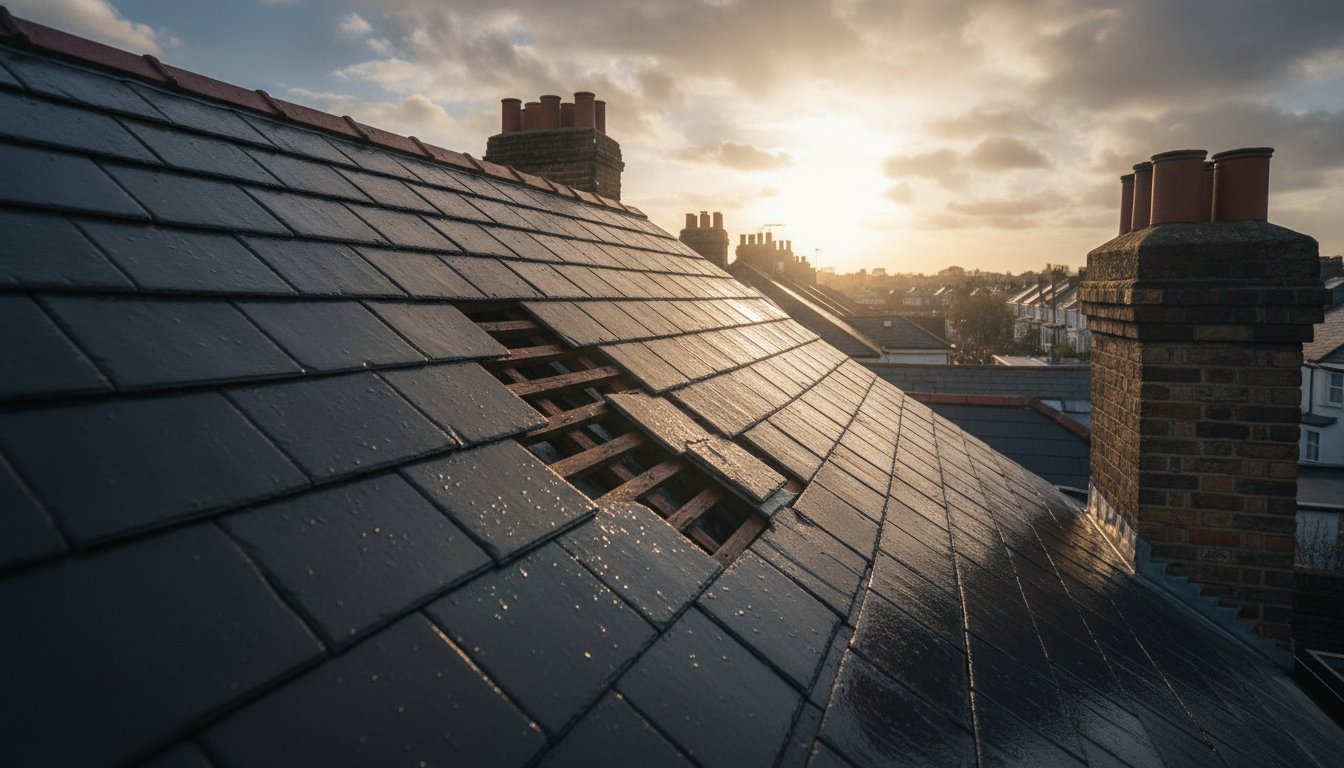
A single displaced slate on a Victorian terrace in Dalston doesn’t just look untidy; it’s an open invitation for the next London downpour to saturate your insulation and ruin your interior plasterwork. When water begins to ingress, the pressure to find a specialist for an emergency slate roof repair in Hackney can feel overwhelming, especially whilst worrying about the potential for escalating costs or a repair that looks out of place amongst your neighbours’ properties.
We understand that your priority is a swift resolution that stops the damp immediately, yet you also want to ensure the work respects the historical integrity of your home. It’s a common concern for local homeowners who fear that a hasty call-out might lead to poor workmanship or a lack of transparency regarding fees. You deserve a solution that provides both technical precision and peace of mind.
This guide provides a clear, methodical response plan to secure your property today and arrange a repair that matches your existing slate and leadwork perfectly. You’ll learn the immediate actions to take to prevent further damage, the specific heritage constraints affecting the borough’s 1,300 listed buildings, and how a structured approach ensures your roof remains both watertight and aesthetically consistent for the long term.
Key Takeaways
- Learn how to safely manage internal water ingress and protect your ceilings whilst waiting for an emergency slate roof repair in Hackney.
- Identify the common technical causes of slate failure, such as nail sickness, to ensure your permanent repair addresses the root of the problem.
- Understand why professional “tingles” are an acceptable temporary measure, whereas silicone sealants are a detrimental fix that should be avoided.
- Navigate Hackney’s heritage and conservation area requirements to ensure all emergency works comply with local building regulations and avoid potential fines.
- Discover the critical questions to ask potential contractors to verify their technical proficiency in traditional slate and leadwork.
Immediate Steps: What to Do When Your Slate Roof Fails
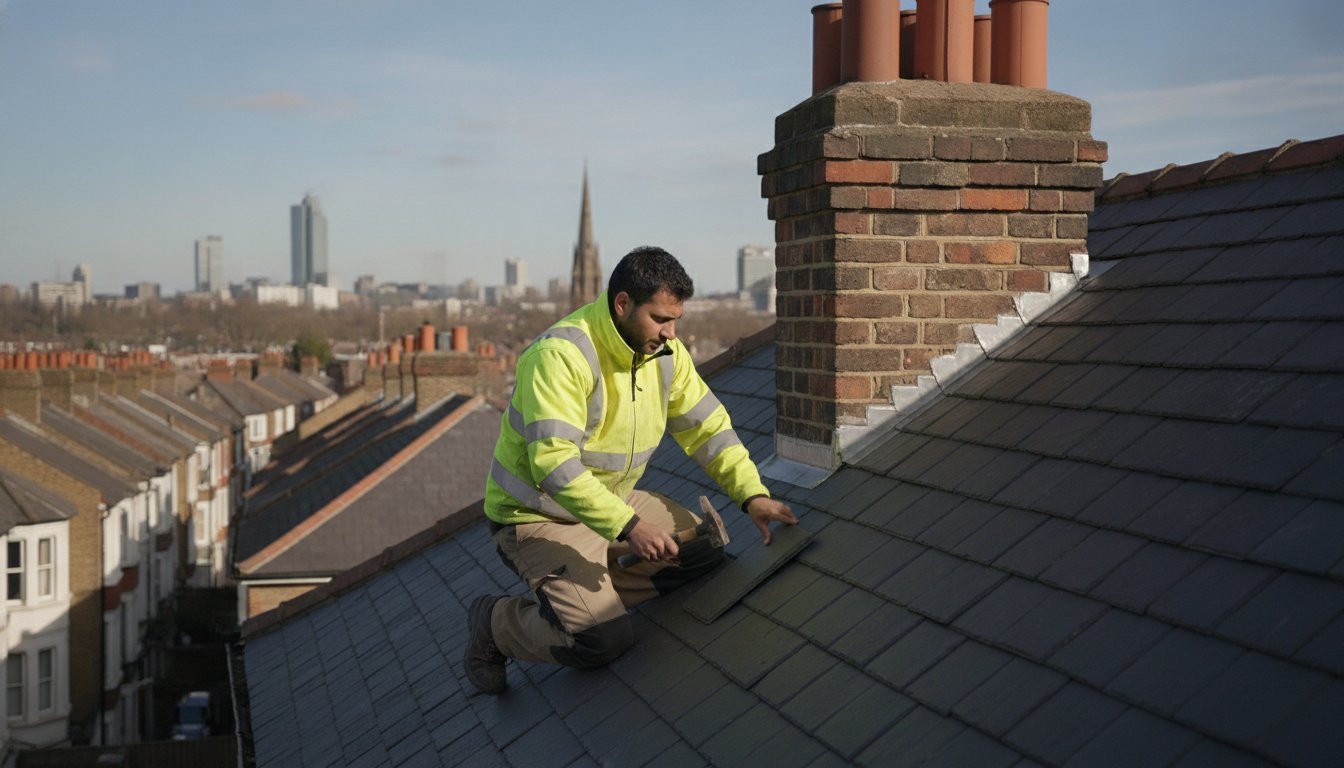
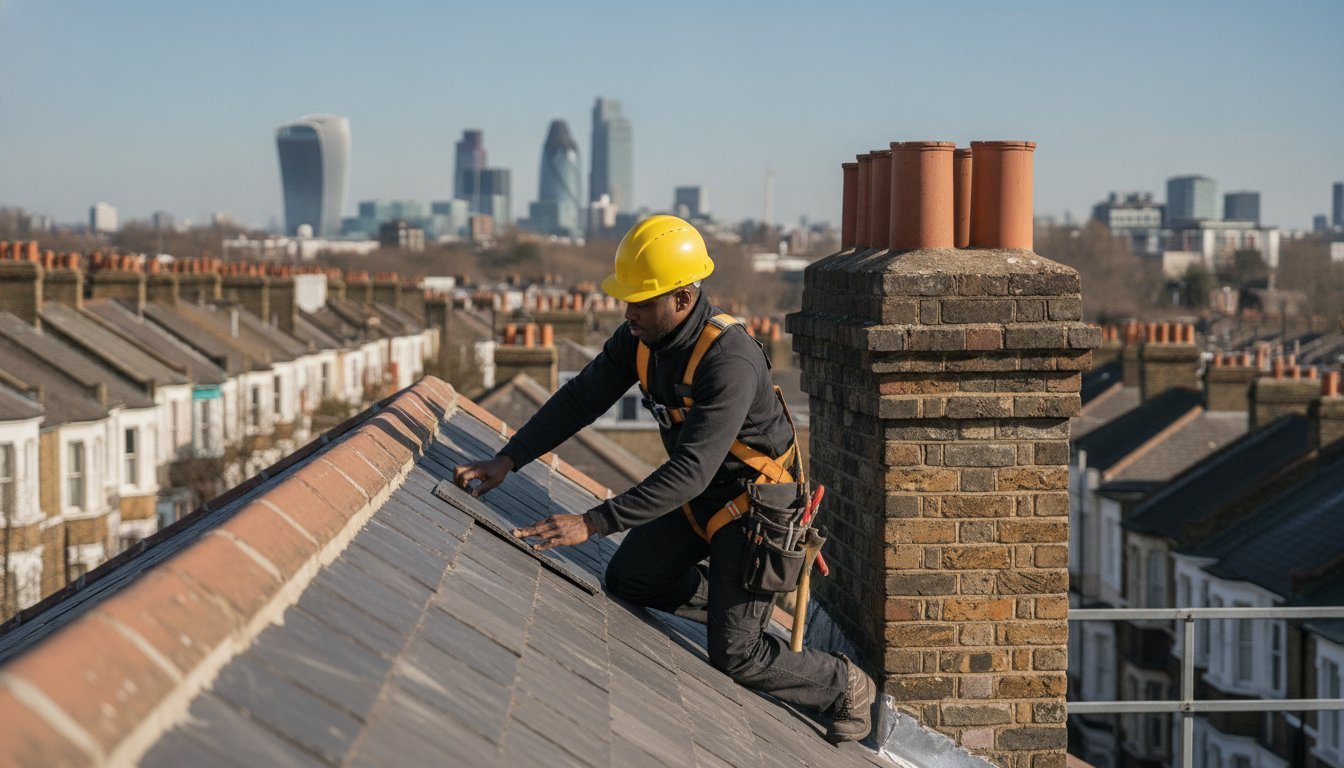
Discovering a leak during a storm is a stressful experience for any homeowner. Whilst your first instinct might be to find a ladder, the most effective response is one of calm containment. The durability of slate roofing makes it a premier choice for Hackney’s Victorian terraces, but when a component fails, the water ingress can be significant. Securing an emergency slate roof repair in Hackney requires a methodical approach that prioritises your safety and the preservation of your property’s interior.
Securing Your Property Internally
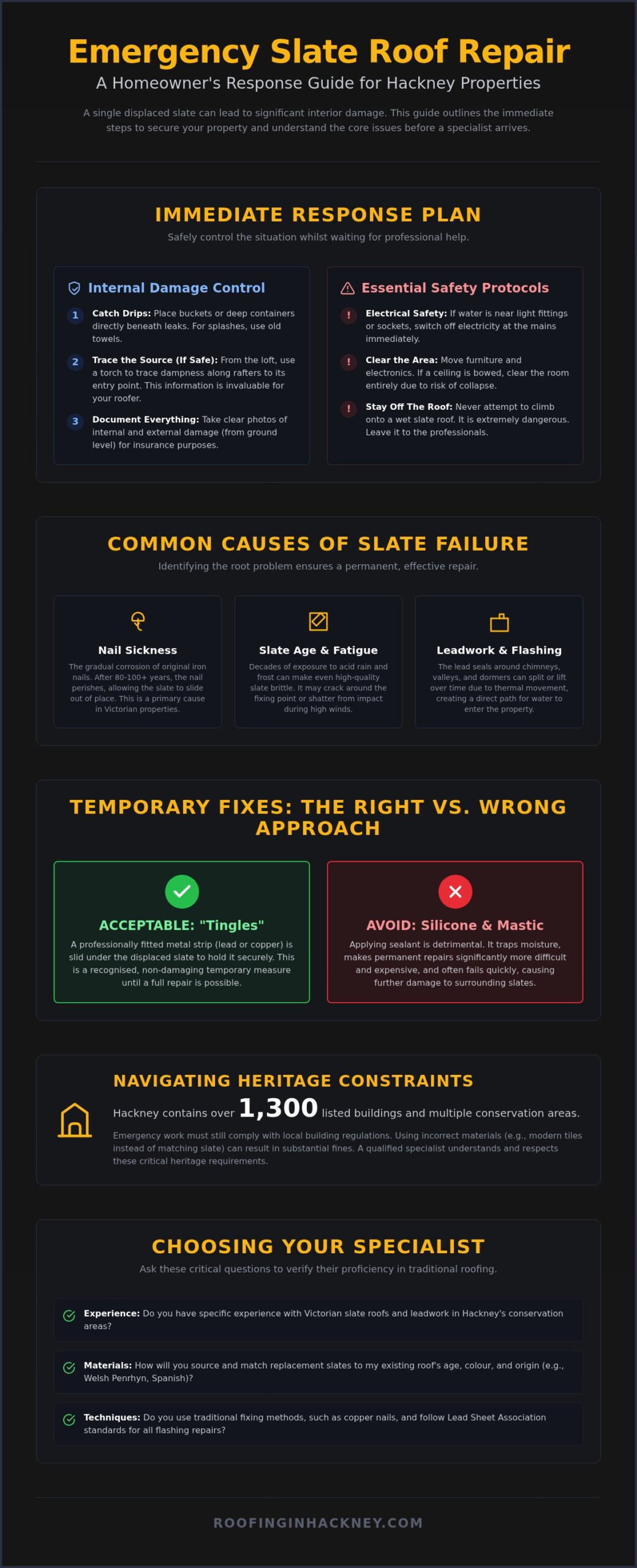
Your primary goal before a professional arrives is to mitigate damage to your belongings. Place buckets or deep containers beneath active drips to catch water. If the leak is hitting a flat surface, lay down old towels or waterproof sheeting to prevent water from spreading into floorboards or through to the ceiling below. It’s helpful to understand that water rarely travels in a straight line; it often “tracks” along rafters or joists before dripping. If you can access your loft space safely, use a torch to trace the dampness back to its entry point. This information is invaluable for your roofer, as it helps them locate the external fault more quickly.
Safety Protocols for Homeowners
Safety must always come before property maintenance. Slate becomes incredibly slippery when wet, and aged tiles can be brittle, snapping under the slightest pressure. You should never attempt to climb onto the roof yourself. Instead, follow these essential safety steps:
- Electrical Safety: If water is leaking near light fittings, sockets, or consumer units, switch off the electricity at the mains immediately.
- Clear the Area: Move furniture and electronics away from the affected zone. If a ceiling looks heavy or bowed, clear the room entirely, as there’s a risk of plaster collapse.
- Avoid DIY Fixes: Don’t try to nail down tarpaulins. This often shatters neighbouring slates, turning a minor repair into a much larger structural issue.
Once the immediate danger is managed, document everything. Take clear photographs of the internal dampness and any visible external damage from ground level. This evidence is vital for insurance purposes. Because Hackney’s architecture is so distinct, you need a specialist who understands the specific requirements of period properties. A master craftsman won’t just stop the leak; they’ll ensure the repair respects the building’s history. When you’re ready to arrange a professional assessment, you can contact us to discuss the next steps for your property.
Common Causes of Emergency Slate Failures in Hackney Properties
Hackney’s skyline is defined by its dense concentration of Victorian and Edwardian architecture, where traditional slate remains the dominant roofing material. Whilst these roofs are incredibly resilient, they aren’t immortal. Understanding why a failure occurs is the first step in ensuring your emergency slate roof repair in Hackney is a permanent fix rather than a temporary patch. Often, what appears to be a simple displaced slate is actually a symptom of a much deeper structural or material fatigue.
Understanding Nail Sickness in Victorian Terraces
Nail sickness is the gradual corrosion of slate fixings. Many period properties in areas like Stoke Newington and Hackney Central still rely on their original Victorian fixings. Over 80 to 100 years of service, the iron nails used by original builders oxidise and thin due to moisture exposure. Eventually, the nail head perishes, and the slate simply slides down the roof slope under its own weight. This is a systemic issue; if you notice multiple slates “slipping” into your gutters, it’s often a sign that the entire roof covering is reaching the end of its natural life cycle rather than a result of isolated storm damage.
Age also affects the slates themselves. Whilst high-quality Welsh slate is renowned for its longevity, decades of exposure to London’s acidic rain and variable weather can make even the most durable materials brittle. During high winds, these aged slates can snap around the fixing point or shatter upon impact from falling branches or debris. Following Historic England’s technical guidance on traditional repairs is essential here to ensure that any replacement materials match the weight and performance of the original stones.
Leadwork and Flashing Vulnerabilities
The edges and junctions of your roof are frequently the first areas to fail. Lead valleys and flashings are designed to channel water away from the roof’s internal structure, but they are subject to significant thermal expansion and contraction. Over time, this constant movement causes fatigue cracks in aged lead. When these cracks appear, water bypasses the slate layer entirely, leading to sudden and heavy internal leaks.
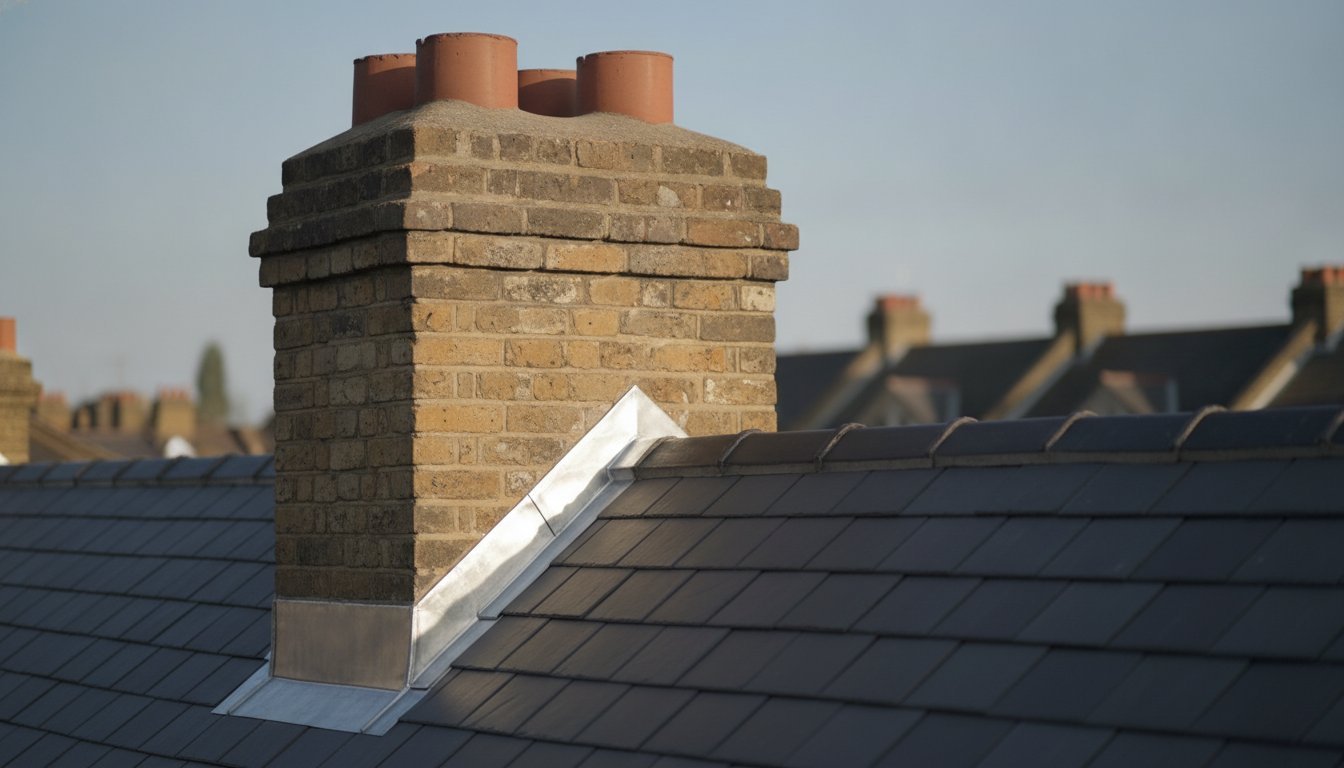
There is also a critical relationship between chimney repointing and roof water-tightness. Failing mortar on a chimney stack or a perished chimney pot can allow water to seep behind the lead soakers and flashings. This moisture then tracks down the rafters, appearing as a damp patch on a bedroom ceiling. For complex issues involving these peripheral components, it’s vital to engage Specialist Leadwork Repairs & Chimney Services to ensure a cohesive, watertight seal. If you’ve noticed a sudden leak near a chimney breast, you can request a professional inspection to identify the precise entry point before the damp spreads further.
Temporary Fixes vs. Permanent Specialist Repairs
When a leak is active, the primary goal of an emergency slate roof repair in Hackney is to halt water ingress before it compromises your ceilings. However, there’s a significant difference between a temporary patch and a professional restoration. Homeowners often face the choice between a rapid “make-safe” and a permanent specialist repair. Whilst a temporary fix buys you time, it shouldn’t be mistaken for a long-term solution, especially on the ageing rooflines of East London.
We’ve seen many instances where “cowboy” contractors use silicone sealants or bitumen-based “flash-band” to glue slates together. These methods are fundamentally flawed. Silicone traps moisture against the slate and prevents the roof from “breathing,” which can lead to accelerated rot in the underlying timber battens. A master craftsman understands that slate is a natural product that requires mechanical fixing, not chemical adhesives, to remain functional for another century.
The Emergency Tingle: A Double-Edged Sword
A “tingle” is a thin strip of lead or copper that’s hooked over the top of a replacement slate and bent around the bottom edge to hold it in place. It’s a standard industry technique for securing an isolated slipped slate without disturbing the surrounding courses. Tingles are perfectly appropriate as an immediate measure to keep a property watertight whilst a full assessment is conducted. However, they are a double-edged sword. If your roof begins to look like it’s covered in metallic strips, it’s a clear indicator of systemic nail sickness.
When more than a handful of slates require tingles, the structural integrity of the entire covering is in question. At this stage, individual repairs become a case of diminishing returns. It’s often more cost-effective to consider Re-roofing Victorian Houses in Hackney rather than continuing with piecemeal patches that fail to address the decaying original fixings.
Professional Slate Matching and Replacement
A permanent repair requires more than just stopping a leak; it requires technical precision. We prioritise sourcing reclaimed Welsh slate to ensure any new additions match the weathered aesthetic and weight of your existing roof. Using the wrong type of slate, such as a modern synthetic or a thin imported alternative, can cause uneven weight distribution and look jarring amongst Hackney’s heritage architecture.
Longevity is also determined by the fixings. We use stainless steel or copper nails, which don’t rust like the original iron versions. A specialist also ensures the “head lap”—the distance the top of a slate is covered by the two courses above it—is calculated correctly for the pitch of your roof. If the head lap is too short, capillary action can draw water upwards between the slates during heavy rain, causing mysterious leaks even when the slates appear perfectly intact. If you’re unsure about the state of your roof’s timbers or the quality of previous repairs, you can request a professional survey to establish a clear, long-term plan for your home.
Navigating Heritage Constraints during Emergency Works
Hackney’s architectural history is a point of pride for the community, but it introduces a layer of legal complexity when you require an emergency slate roof repair in Hackney. You aren’t just managing a leak; you’re stewarding a piece of the borough’s heritage. With approximately 1,300 listed buildings across the area, homeowners must balance the urgency of a repair with the strict requirements of local planning policy. Failing to respect these constraints can lead to more than just a leaky roof; it can result in costly enforcement notices.
Working within Hackney Conservation Areas
Many East London streets fall within protected zones where the exterior appearance of a property is heavily regulated. If your home is listed or located in one of Hackney’s many conservation areas, the council generally permits like-for-like repairs without formal consent, provided the materials and methods are identical to the original construction. However, you must be cautious. Carrying out works that change the building’s character or involve the removal of significant historic material without permission is a criminal offence. For a comprehensive breakdown of these specific local requirements, you can explore our guide on Mastering Slate Roofing in Hackney.
Sourcing the Correct Materials
Sourcing the correct slate is critical for both aesthetic harmony and long-term legal compliance. Whilst original Welsh Bangor Blue slates are the gold standard for Victorian terraces, high-quality Spanish or Brazilian slates are frequently used today for their excellent durability. The priority is ensuring the texture, thickness, and colour match the existing roofline and neighbouring properties. We strongly advise against “cheap” synthetic alternatives or modern concrete tiles. These materials often fail to meet building regulations for heritage zones and can result in significant council fines. Using the wrong material doesn’t just look out of place amongst the local vernacular; it can also affect the structural weight distribution of your roof timbers.
A professional roofer acts as a vital liaison between your home’s immediate needs and the planning department’s expectations. We focus on ensuring every emergency slate roof repair in Hackney we perform uses materials that respect the local architectural style whilst providing a watertight seal. If you’re concerned about compliance or need help sourcing reclaimed materials for a period property, contact our specialist team to arrange a heritage-compliant inspection and secure your property correctly.
Choosing a Specialist for Emergency Slate Repairs in Hackney
When water is dripping through a ceiling, the temptation to hire the first contractor who answers the phone is significant. However, an emergency slate roof repair in Hackney requires a specific technical skillset that general builders often lack. Slate is a demanding material; it requires a specialist who understands the nuances of nail patterns, head laps, and lead integration. Vetting a contractor during a crisis is difficult, but asking specific questions about their experience with traditional Welsh slate and lead burning can help you identify a true master craftsman.
Transparency is the cornerstone of a professional emergency service. You should expect a clear, methodical breakdown of costs before any work commences. A reliable specialist avoids vague estimates, providing instead a structured quote that distinguishes between the immediate “make-safe” actions and the permanent restoration requirements. This approach eliminates the fear of hidden extras and ensures you are paying for high-quality craftsmanship rather than a rushed, temporary patch.
The Benefit of Local Expertise
Local knowledge is invaluable when dealing with East London’s unique housing stock. Hackney’s Victorian terraces often feature complex “butterfly” roof structures and internal parapet gutters that require specific drainage considerations. A contractor with a deep local presence understands these architectural quirks and likely has established relationships with specialist material yards across the borough. This ensures that even in an emergency, the correct reclaimed slates can be sourced rapidly to maintain the aesthetic harmony of your street. You can learn more about our commitment to the area’s period properties on our About Us page.
Securing a Long-Term Warranty
An emergency repair shouldn’t be viewed as a fleeting fix. Even when performed under urgent conditions, professional slate work should be backed by a workmanship guarantee. This provides you with the security that the repair has been executed to a high standard and will withstand future London winters. Once the immediate leak is resolved, your specialist should provide a summary of the roof’s overall condition. This allows you to plan for methodical maintenance, such as clearing parapet gutters or replacing rusted fixings, before they escalate into another crisis.
Choosing a partner who combines traditional technical proficiency with modern standards of reliability ensures your home remains protected for decades. If you are currently facing water ingress or have noticed displaced slates after a storm, contact Roofing in Hackney for a professional emergency assessment. We provide the calm, expert-led response needed to secure your property and preserve its architectural integrity.
Securing Your Hackney Home for the Long Term
A sudden roof failure in a period property is more than a technical fault; it’s a direct threat to a historical asset. By following a methodical response plan, you can mitigate water ingress immediately whilst ensuring that the eventual repair respects the borough’s unique architectural vernacular. Successful restoration depends on balancing urgent action with the technical precision of a master craftsman who understands the specific requirements of Victorian and Edwardian structures.
Our local Hackney-based team is positioned to provide a rapid response, combining traditional skills with modern reliability. We specialise in period property roofing, ensuring that every emergency slate roof repair in Hackney includes expert leadwork and exact slate matching to maintain your home’s character and value. Taking a structured approach now prevents a minor leak from escalating into a significant structural issue later.
If your property has been compromised by storm damage or age-related fatigue, we are here to help you navigate the repair process with transparency and technical mastery. Secure Your Hackney Home Today – Contact Our Emergency Slate Specialists for a professional assessment that puts your property’s integrity first.
Frequently Asked Questions
How much does an emergency roof repair cost in Hackney?
Costs for an emergency slate roof repair in Hackney vary based on the time of the call-out and the complexity of the damage. A specialist will typically charge a call-out fee to attend and make the property safe, with a follow-up quote provided for permanent restoration. Factors such as the requirement for scaffolding and the sourcing of reclaimed slates for period properties will influence the final investment required to secure your home.
Can a slate roof be repaired in the rain?
Full repairs are rarely possible during heavy rain because wet slate is exceptionally slippery and dangerous to walk on. However, a specialist can often perform “make-safe” procedures from a ladder or tower, such as applying temporary waterproof sheeting or securing displaced slates with tingles. These immediate actions prevent further internal damage whilst we wait for a dry window to complete a methodical, permanent repair that meets our craftsmanship standards.
What is the most common cause of slate roof leaks in East London?
The most frequent cause in Hackney’s Victorian housing stock is “nail sickness,” where the original iron fixings have corroded after a century of service. This causes slates to slide out of position, exposing the roof timbers to the elements. Perished lead flashings around chimney stacks and in valley gutters are also common culprits. These vulnerabilities are often exposed during high winds or heavy London downpours, leading to sudden water ingress.
How do I know if I need a repair or a full roof replacement?
A single displaced slate from storm damage usually only requires an isolated repair. However, if you notice slates slipping across multiple areas of the roof, it often indicates systemic nail fatigue. We recommend a full replacement if the fixings are failing across the entire structure. Furthermore, if you are replacing more than 25% of the roof area, building regulations typically require the work to meet modern thermal and structural standards.
Will my home insurance cover emergency slate roof repairs?
Insurance typically covers sudden damage caused by a specific event, such as a storm or a fallen branch. It’s less likely to cover leaks caused by long-term wear and tear, such as gradual nail sickness or lack of maintenance. It’s essential to document the damage with clear photographs and check your policy’s specific terms. We can provide the professional reports and technical evidence required to assist with your insurance claim process.
Are there specific rules for slate roofs in Hackney conservation areas?
Hackney Council enforces strict heritage rules within conservation areas and for its 1,300 listed buildings. Repairs must generally be “like-for-like,” meaning replacement slates must match the original material in colour, size, and texture. Using modern concrete tiles or synthetic slates without permission can result in enforcement notices and fines. We ensure all our emergency works respect these local architectural requirements to maintain the historical integrity and value of your property.
What is nail sickness and can it be fixed without a full re-roof?
Nail sickness is the corrosion of the iron nails that fix slates to the roof battens. Whilst you can temporarily secure individual slates using lead or copper strips called tingles, this does not address the underlying decay of the remaining fixings. If the problem is widespread, tingles are merely a short-term patch. A full re-roof is the only way to ensure the long-term structural integrity and water-tightness of a property suffering from systemic nail sickness.
How long does a professional slate roof repair typically take?
A straightforward repair involving a few slates can often be completed within two to four hours once safe access is established. More extensive work, such as replacing lead valleys or repairing chimney flashings, may take a full day. The duration depends on the height of the building and the complexity of the roof structure. We prioritise working efficiently to restore your home’s security whilst ensuring every detail meets our rigorous technical standards.