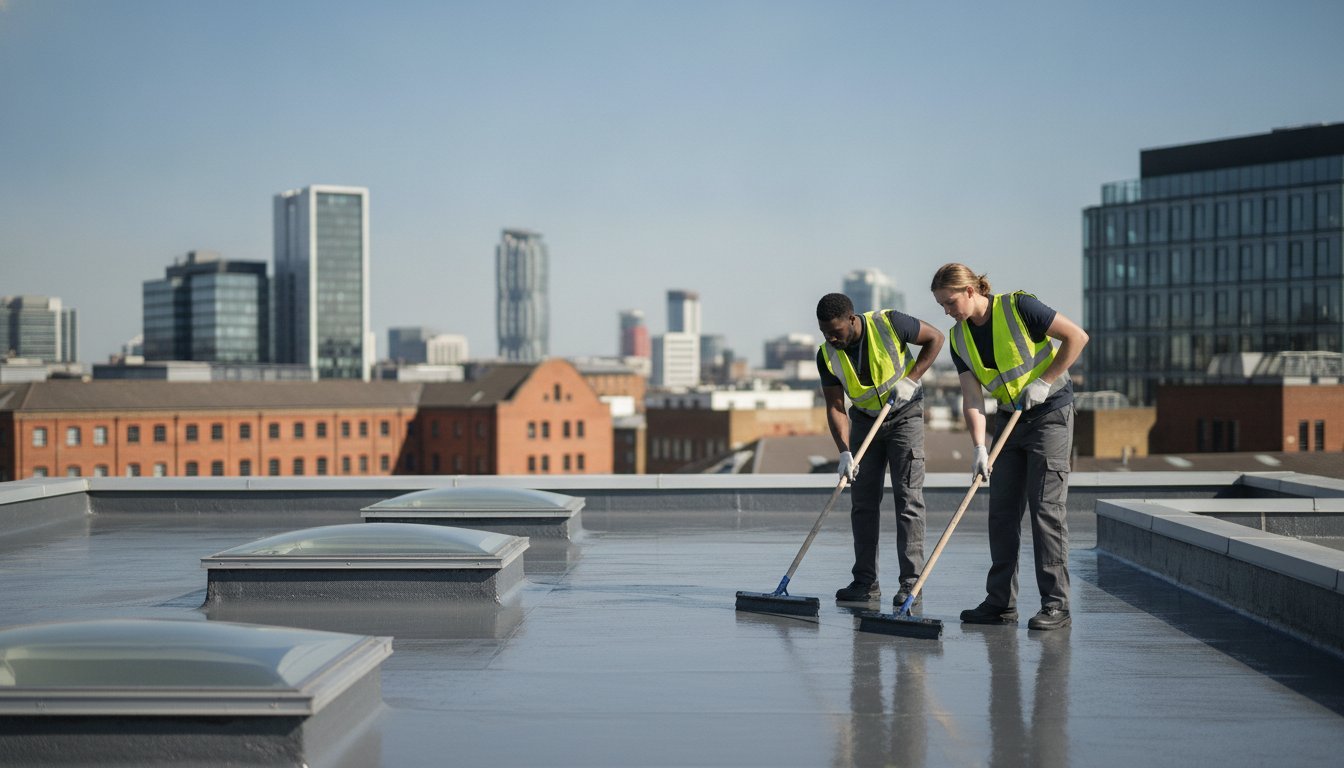
Did you know that a poorly insulated roof can account for up to 25% of your commercial building’s total heat loss? For many property managers, a flat roof is often a hidden liability until water ingress appears or heating costs become unsustainable. It’s common to feel overwhelmed by the technical jargon surrounding commercial flat roofing London, especially when you’re trying to balance long-term durability with the need for minimal business disruption.
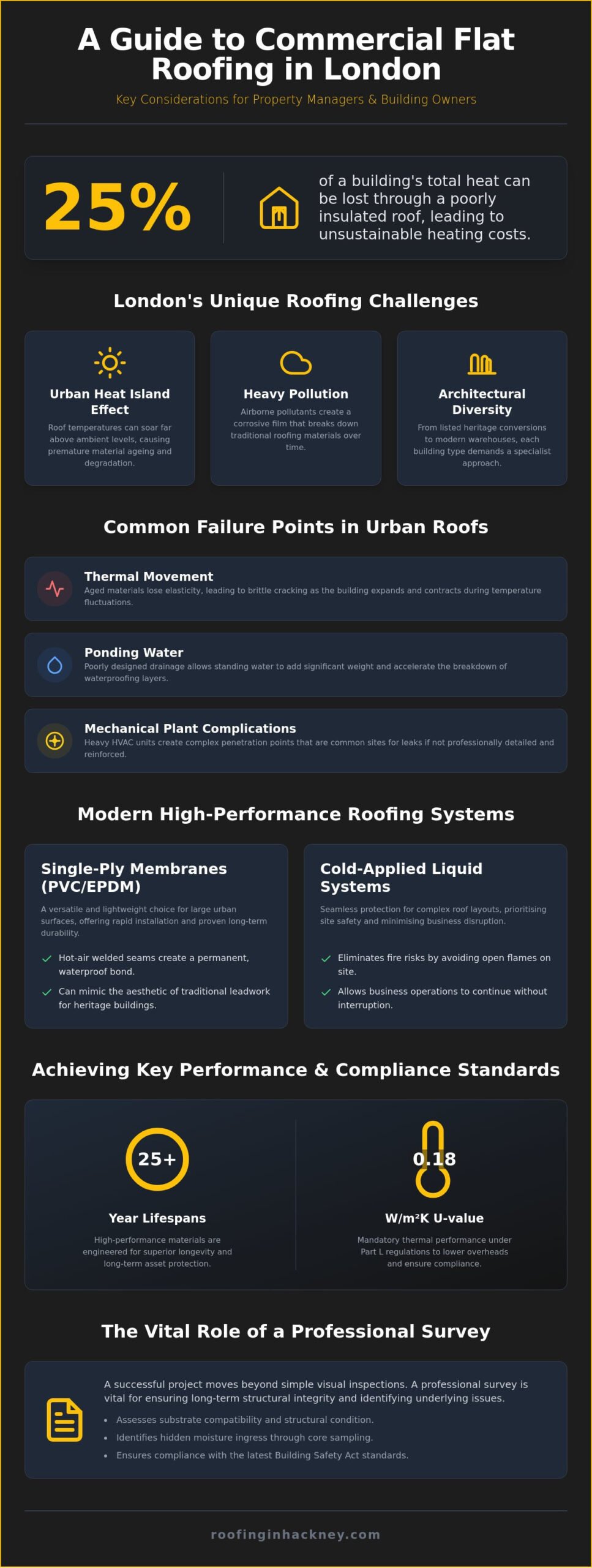
You deserve a roofing system that provides total peace of mind and meets the latest 2022 Building Safety Act standards. This guide clarifies the most reliable solutions for London’s unique architectural landscape, from heritage conversions to large-scale warehouses. We will examine high-performance materials that offer 25-year lifespans and explain how to achieve the mandatory 0.18 W/m²K U-value to lower your overheads whilst ensuring full regulatory compliance.
Key Takeaways
- Understand how London’s unique urban environment, including the heat island effect and pollution, dictates the selection of high-performance materials.
- Discover the safety and operational benefits of modern cold-applied systems that allow for seamless installation without disrupting your daily business activities.
- Learn how to achieve mandatory thermal standards and reduce operational costs through strategic roof insulation upgrades and compliance with Part L regulations.
- Identify why a detailed professional survey is vital for a successful commercial flat roofing London project, moving beyond simple visual inspections to ensure long-term structural integrity.
- Gain insights into evaluating local specialist credentials, from manufacturer approvals to health and safety standards, for a reliable and high-quality result.
The Landscape of Commercial Flat Roofing in London
Commercial flat roofing is a multi-layered system designed for high-traffic urban environments. In a city as architecturally diverse as London, these structures must perform under immense pressure. The local climate presents a unique set of challenges; the urban heat island effect can cause roof temperatures to soar far above ambient levels, whilst heavy pollution creates a corrosive film on building surfaces. Historically, many buildings relied on basic “felt and grit” applications, but these are no longer sufficient for modern demands. We’ve seen a decisive shift toward high-performance engineered membranes that offer superior flexibility and chemical resistance. Gaining a clear understanding of Flat roof construction is the first step in identifying why modern systems are now the industry standard for London’s commercial sector.
London’s Architectural Mix: Heritage Conversions vs. Modern Units
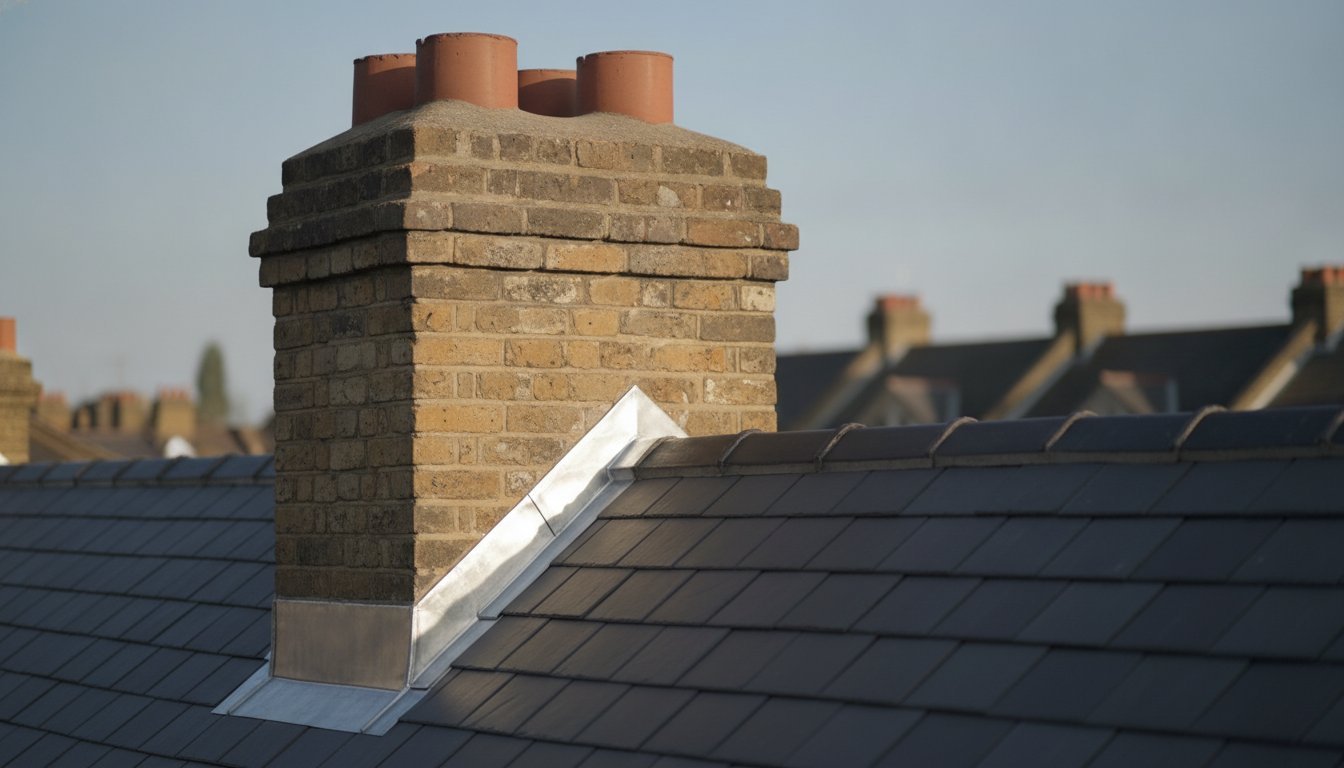
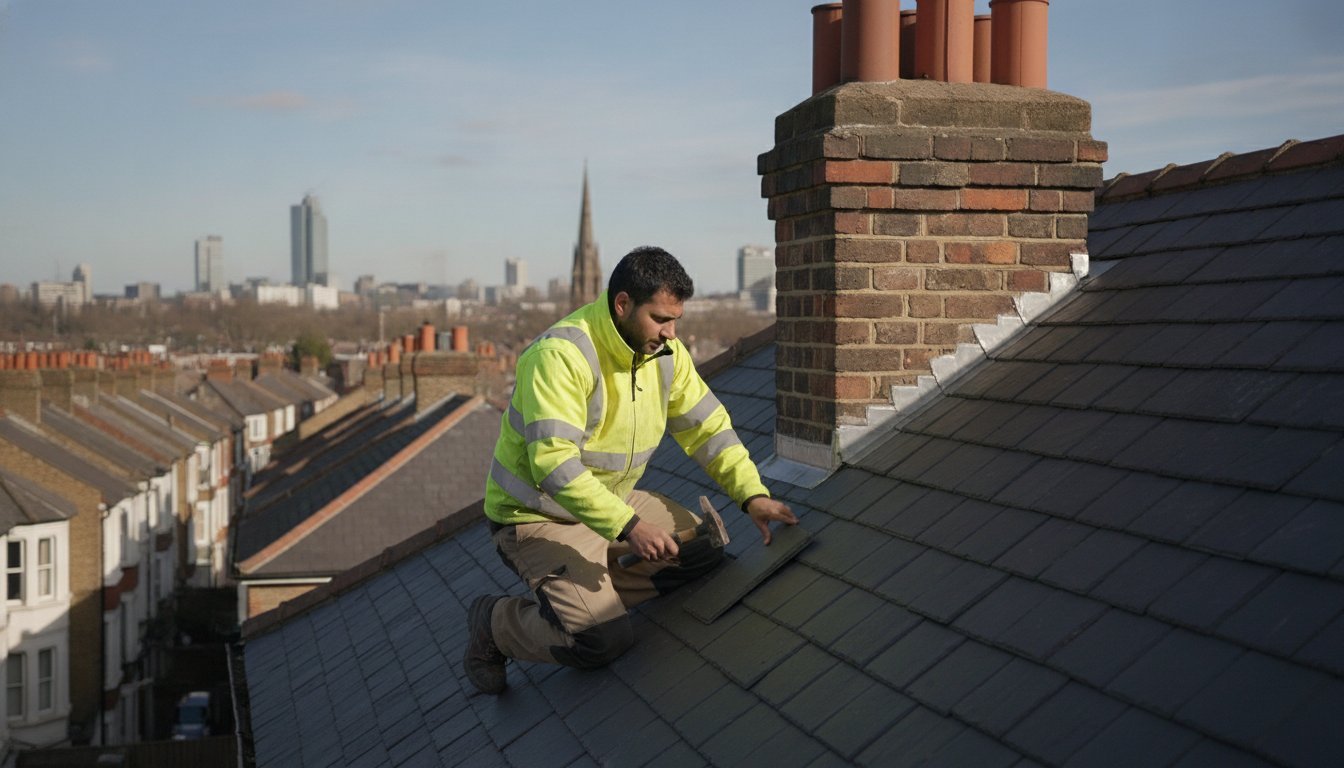
London’s commercial landscape is a complex blend of the old and the new. In boroughs like Hackney, Victorian warehouse conversions present specific challenges for commercial flat roofing London. These buildings often feature original brickwork and complex parapet walls that require intricate leadwork and specialist detailing to prevent moisture ingress. Conversely, modern steel-frame commercial units in industrial hubs demand systems that can accommodate the structural vibrations and rapid thermal changes associated with large-span buildings. Property owners in conservation areas face the additional hurdle of balancing aesthetic requirements with modern waterproofing standards. It’s a task that requires integrating contemporary insulation and high-performance drainage systems whilst maintaining the building’s historic profile and visual harmony.
Identifying Common Failure Points in Urban Commercial Roofs
Failure in a commercial roof is rarely a sudden event; it’s usually the result of cumulative stress that goes unnoticed. Urban roofs are particularly susceptible to specific mechanical and environmental pressures that accelerate the breakdown of traditional materials. Common issues we identify during surveys include:
- Thermal Movement: Aged bituminous materials often lose their elasticity over time. This leads to brittle cracking as the building expands and contracts during London’s temperature fluctuations.
- Ponding Water: Poorly designed urban roof decks or blocked drainage channels can allow water to sit for long periods. This standing water adds significant weight to the structure and accelerates the breakdown of the waterproofing layer.
- Mechanical Plant Complications: Modern commercial roofs are frequently used to house heavy HVAC units and plant machinery. These installations create complex penetration points and high-traffic areas for maintenance teams, which are common sites for leaks if the membrane isn’t properly reinforced.
By identifying these vulnerabilities early, businesses can move from reactive repairs to a strategy of proactive asset management. A structured approach to commercial roof maintenance London ensures that these common failure points are engineered out of the system from the start. Transitioning to modern commercial flat roofing London solutions further guarantees long-term structural resilience.
Evaluating Modern Flat Roofing Systems for London Businesses
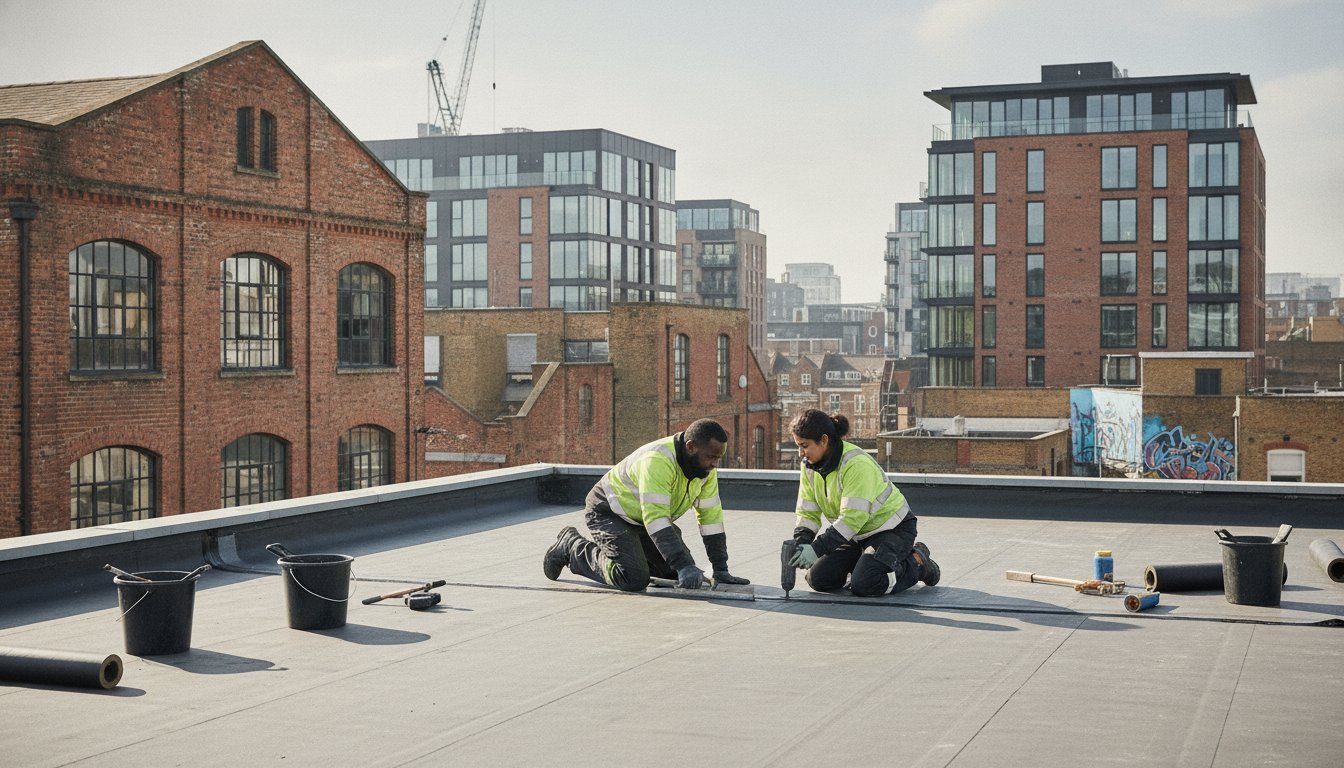
Selecting the right system for commercial flat roofing London projects requires a detailed assessment of the existing building substrate. It isn’t enough to simply choose the most popular material; the new system must be chemically and structurally compatible with the deck beneath it. We’ve seen a significant industry shift toward cold-applied systems. These methods eliminate the risks associated with open flames on site, which is a vital consideration for occupied London offices or retail units where fire safety and insurance premiums are paramount. Precision in material selection ensures that the installation performs as expected for decades rather than years.
Single-Ply Membranes: The Versatile Urban Choice
Single-ply membranes, such as PVC and EPDM, are highly versatile for large-scale urban surfaces. PVC systems are favoured for their speed of installation, utilising hot-air welded seams to create a permanent, waterproof bond. For heritage buildings or properties in conservation areas, these membranes can be finished with profile strips that mimic traditional leadwork. This allows businesses to achieve a classic aesthetic whilst benefiting from modern performance and durability. It’s an efficient way to protect large square-metres without the weight of traditional metals.
Liquid-Applied Systems: Seamless Protection for Complex Layouts
Liquid roofing offers a seamless advantage that is particularly beneficial for complex London roofscapes. If your roof is crowded with HVAC units, pipes, or chimneys, traditional sheet materials can struggle to provide a perfect seal at every penetration point. Liquid systems are applied as a cold fluid that cures into a tough, elastic membrane. This eliminates joint failure risks and ensures a tailored fit around every structural detail. Because they’re cold-applied, there’s no fire risk to the building during the works, making them ideal for high-density urban areas.
Reinforced Bituminous Membranes (RBM): The Modern Multi-Layer Approach
Modern Reinforced Bituminous Membranes have evolved far beyond the old torch-on felts of the past. These multi-layer systems now incorporate high-performance polyesters and glass fibres for extreme puncture resistance. They’re ideal for high-traffic roofs where regular maintenance access is required for plant machinery. Most modern RBM specifications come with robust 20 to 30 year guarantee profiles, providing long-term security for your investment.
A professional approach focuses on the critical details that standard installations might overlook. This includes reinforced detailing around parapet walls and ensuring drainage outlets are properly integrated to prevent ponding. All structural roofing works must align with the requirements outlined in Approved Document A to ensure the building remains safe under the weight of new materials. If you’re unsure which system suits your specific structure, you can speak with our technical team for a professional assessment of your commercial flat roofing London needs.
Thermal Performance and Sustainability in Commercial Roofing
Modern energy standards have transformed the roof from a simple waterproof lid into a critical component of a building’s thermal envelope. For commercial flat roofing London, the focus has shifted toward high-performance insulation that meets or exceeds the 2021 updates to Building Regulations Part L. These regulations now mandate a U-value of 0.18 W/m²K for replacement roofs, a standard that requires precise material selection and installation. Beyond mere compliance, a well-insulated roof is a strategic asset that directly reduces operational costs by minimising heat loss in winter and heat gain during London’s increasingly warm summers.
The financial benefits extend to the long-term value of the property itself. Professionally executed thermal roof insulation upgrades can significantly improve a building’s EPC rating, which is increasingly vital for commercial landlords facing tighter energy efficiency standards. By investing in superior thermal performance, businesses can future-proof their assets against evolving environmental legislation whilst enjoying a more stable internal environment for staff and stock alike.
Warm Roof vs. Cold Roof Configurations
The “warm roof” design is now the industry standard for modern commercial upgrades. In this configuration, the insulation is placed above the structural deck, keeping the entire building fabric at a consistent temperature. This method effectively eliminates the risk of interstitial condensation, which is a common cause of structural rot in older “cold roof” systems. However, adding a thick layer of high-performance insulation increases the overall height of the roof. A specialist contractor must assess whether parapet walls need to be raised or if existing door thresholds and drainage outlets require adjustment to accommodate the new profile. It’s a technical challenge that requires a methodical approach to ensure both thermal efficiency and structural integrity.
Green and Blue Roof Systems: Urban Environmental Standards
London’s urban planning increasingly demands sustainable roofing solutions that contribute to the city’s biodiversity and water management. Green roofs, often featuring sedum blankets or wildflower meadows, provide excellent thermal mass and natural insulation whilst supporting local ecosystems. They’re particularly effective at mitigating the urban heat island effect mentioned in earlier sections.
Blue roofs are another emerging trend in commercial flat roofing London. These systems are specifically designed to manage sustainable urban drainage (SuDS) by temporarily attenuating rainwater during heavy storms. This reduces the pressure on London’s overstretched Victorian sewer systems. Before committing to a living or blue roof, a structural survey is essential. These systems add considerable weight to the building, meaning the structural substrate must be verified as capable of supporting the additional load under both dry and saturated conditions.
The Professional Survey: Navigating Compliance and Building Regs
A visual inspection is a useful starting point, but it’s never enough for a complex commercial flat roofing London project. Whilst a surface walk-over might identify obvious splits or debris, it cannot reveal the condition of the structural deck or the presence of moisture trapped within the insulation layers. A professional survey must be methodical and evidence-based to ensure that any proposed solution is both technically sound and legally compliant. This is particularly critical under the Building Safety Act 2022, which now requires verifiable competency for all regulated building work, ensuring that every stage of the project is documented and performed to the highest standards.
Core Sampling and Moisture Probing
To understand the true state of a roof, we perform core sampling. This involves taking a small, physical cross-section of the roofing system to identify the exact buildup of materials and the condition of the substrate. This process is often paired with electronic leak detection and moisture probing to find hidden breaches amongst the layers that a drone or simple visual check would miss. These diagnostic tools are essential for determining if a roof can safely be over-layed with a new membrane or if the saturation levels require a full strip-back and replacement. Making this distinction early prevents the costly mistake of sealing moisture into the building fabric, which would inevitably lead to structural rot.
Planning for Part L Compliance
The legal landscape for commercial roofing has tightened significantly. Under the 2021 updates to Building Regulations Part L, if roofing works exceed 50% of the total roof area, the entire roof must be brought up to current thermal standards. For most London businesses, this means achieving a mandatory U-value of 0.18 W/m²K. We use the survey data to calculate precise insulation requirements, ensuring your project meets these energy efficiency targets whilst also adhering to fire safety standards. For buildings over 18 metres, materials must achieve a BROOF(t4) classification under EN 13501-5 to ensure maximum fire resistance in high-density urban areas.
Accurate drainage is equally vital to long-term performance. Current standards require a minimum fall of 1:40 to ensure water moves efficiently toward outlets. During the survey, we assess the existing falls and drainage capacity to prevent the “ponding” issues that frequently plague older urban structures. This level of technical scrutiny ensures that your new system is not just waterproof, but fully compliant with all modern structural and environmental regulations. To ensure your property meets these rigorous standards, you can book a technical survey with our specialist team to receive a detailed assessment of your building’s requirements.
Selecting a Local Specialist for Your Commercial Project
Choosing a contractor for commercial flat roofing London is a decision that impacts your business’s operational continuity as much as its structural integrity. Beyond technical skill, local firms possess a distinct logistical edge that national providers often struggle to replicate. A specialist based within the capital understands the intricacies of London’s parking permits, narrow access routes, and low-emission zones. These factors can easily derail a project’s timeline if they aren’t managed with precision. By partnering with a local expert, you ensure that materials arrive on schedule and that site teams are familiar with the specific access challenges of your neighbourhood.
A professional approach to commercial flat roofing London requires a rigorous evaluation of credentials before any work commences. You should expect your chosen partner to provide comprehensive documentation, including public and employers’ liability insurance, site-specific health and safety assessments, and manufacturer approvals. These approvals are vital; they ensure that the installation team is certified to apply specific high-performance membranes, which is often a prerequisite for valid long-term warranties. This level of transparency builds the grounded, reassuring partnership necessary for such a significant structural investment.
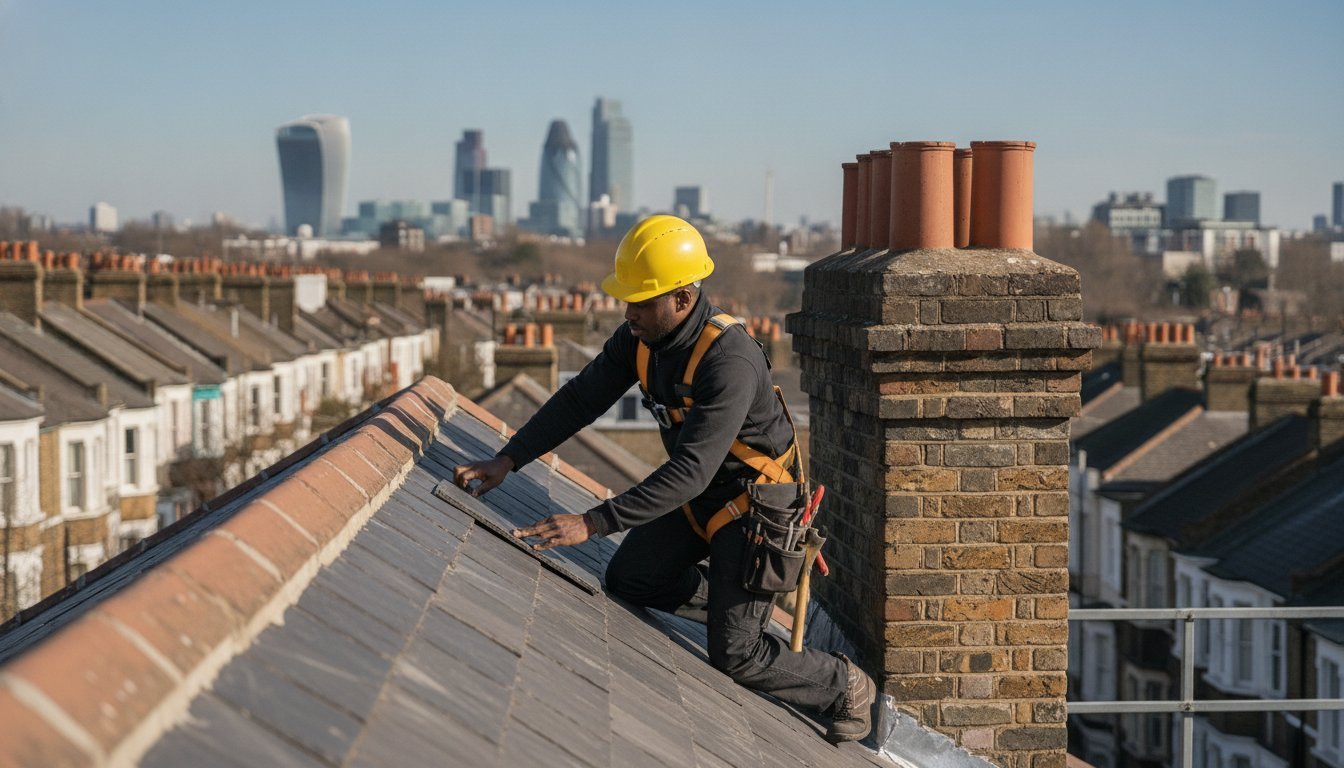
We recognise that your business doesn’t stop just because the roof needs attention. A dependable specialist organises works to ensure minimal disruption, often scheduling noisy phases or heavy crane lifts outside of peak operating hours. Roofing in Hackney occupies a unique position in this landscape by combining traditional leadwork craftsmanship with advanced modern flat systems. This dual expertise is particularly valuable for London’s heritage commercial buildings, where modern waterproofing must be seamlessly integrated with historic architectural features like parapets and chimneys.
The Advantage of Local Hackney Expertise
Our deep familiarity with the local building stock in East London allows us to anticipate architectural quirks before they become costly delays. Whether it’s a Victorian warehouse conversion in Hackney or a modern industrial unit, we understand the common structural challenges inherent to the area’s history. This local knowledge extends to our relationships with regional suppliers, ensuring project continuity even when national supply chains face pressure. Furthermore, should you require post-installation support or routine maintenance, our proximity allows for rapid response times that keep your facility protected year-round. Property managers seeking a comprehensive overview of local roofing standards and planning requirements will find our guide to reliable commercial roofing Hackney an invaluable resource for navigating the 2026 regulatory landscape.
Taking the Next Step with Your Commercial Roof
A professional commercial roofing quote is more than a simple price; it’s a comprehensive roadmap for your project. It should include a detailed programme of works, a clear safety plan, and a breakdown of the materials selected for your specific substrate. This structured approach ensures that every phase of the installation is predictable and transparent. If you’re ready to secure your building’s future, we invite you to contact us for a comprehensive site survey. Our technical team will provide a methodical assessment of your roof’s performance and a clear strategy for achieving a leak-free, compliant, and thermally efficient result.
Future-Proofing Your Commercial Property
Securing a high-performance roof is a strategic decision that protects both your building fabric and your business’s bottom line. We’ve established that commercial flat roofing London requires a methodical approach, from choosing chemically compatible materials to ensuring compliance with the latest Part L thermal standards. By moving beyond simple repairs toward engineered, long-term systems, you can eliminate the stress of recurring leaks whilst significantly improving your property’s energy efficiency and EPC rating.
Our team combines technical mastery with a customer-centric ethos, acting as approved installers of high-performance membranes for diverse structures. We pride ourselves on our expertise in both Victorian heritage conversions and modern commercial units, backed by comprehensive insurance and full health and safety compliance. This grounded approach ensures that your structural investment is managed with the care and precision it deserves.
Ready to gain a clear understanding of your roof’s condition? Book a Professional Commercial Roof Survey with Roofing in Hackney to receive a technical assessment tailored to your building’s specific needs. We look forward to providing the reliable, expert-led service your business requires.
Frequently Asked Questions
How long does a commercial flat roof typically last in London?
Modern commercial flat roofing London systems typically provide a service life of 25 to 50 years depending on the material selected. High-performance single-ply membranes like EPDM and GRP fibreglass often reach the upper end of this range when correctly maintained. Traditional bituminous systems have also evolved; modern multi-layer specifications now offer robust 20 to 30 year guarantee profiles for added peace of mind.
Do I always need to replace the entire roof if there is a leak?
A full replacement isn’t always necessary if the underlying structural deck and insulation remain in good condition. We determine this through core sampling and moisture probing to check for saturation within the layers. If the moisture levels are low, an overlay system can be a cost-effective way to restore waterproofing whilst minimising disruption to your daily business operations.
What are the fire safety regulations for commercial flat roofs?
Commercial roofing must adhere to strict fire performance standards, particularly for buildings exceeding 18 metres in height. In these cases, materials must achieve a BROOF(t4) classification under the EN 13501-5 standard to ensure adequate resistance to external fire spread. It’s vital that your contractor provides evidence of these classifications during the specification phase to ensure full legal and safety compliance.
Can I install solar panels on a new flat roof membrane?
You can certainly install solar PV systems on modern flat roof membranes, provided the structure is verified as capable of supporting the additional load. It’s essential to use non-penetrative mounting systems or specialised brackets that integrate seamlessly with the waterproofing layer. We recommend coordinating the solar installation with your roofing project to ensure that manufacturer warranties remain fully intact.
How much does a commercial flat roof replacement cost in London?
The total investment for a commercial roof replacement varies based on the square-metres, the chosen material, and the complexity of site access. Factors such as the requirement for mandatory insulation upgrades or the presence of heavy plant machinery also influence the final cost. Because every building presents unique challenges, we provide bespoke quotations following a comprehensive technical survey of your property.
What is the best flat roofing material for a warehouse with heavy plant machinery?
For warehouses with heavy plant machinery or frequent maintenance traffic, Reinforced Bituminous Membranes (RBM) are often the superior choice due to their high puncture resistance. Alternatively, liquid-applied systems are excellent for roofs with numerous penetrations, as they cure into a seamless, elastic skin. Both systems offer the durability required to withstand the mechanical stresses associated with industrial equipment and regular foot traffic.
Do I need planning permission to replace my business’s flat roof?
Planning permission is generally not required for a like-for-like roof replacement under permitted development rights. However, you may need to submit an application if your building is in a conservation area or if the roof height increases significantly to accommodate new insulation. It’s always best to check with your local authority or a professional surveyor before commencing works on a commercial flat roofing London project.
How does the London climate affect flat roof material choice?
London’s unique climate, characterised by the urban heat island effect and high pollution levels, requires materials with excellent thermal stability and chemical resistance. Rapid temperature fluctuations can cause significant thermal movement in older materials, leading to splits and cracks. Modern engineered membranes are designed to remain flexible across a wide temperature range, ensuring they don’t become brittle under the capital’s environmental pressures.