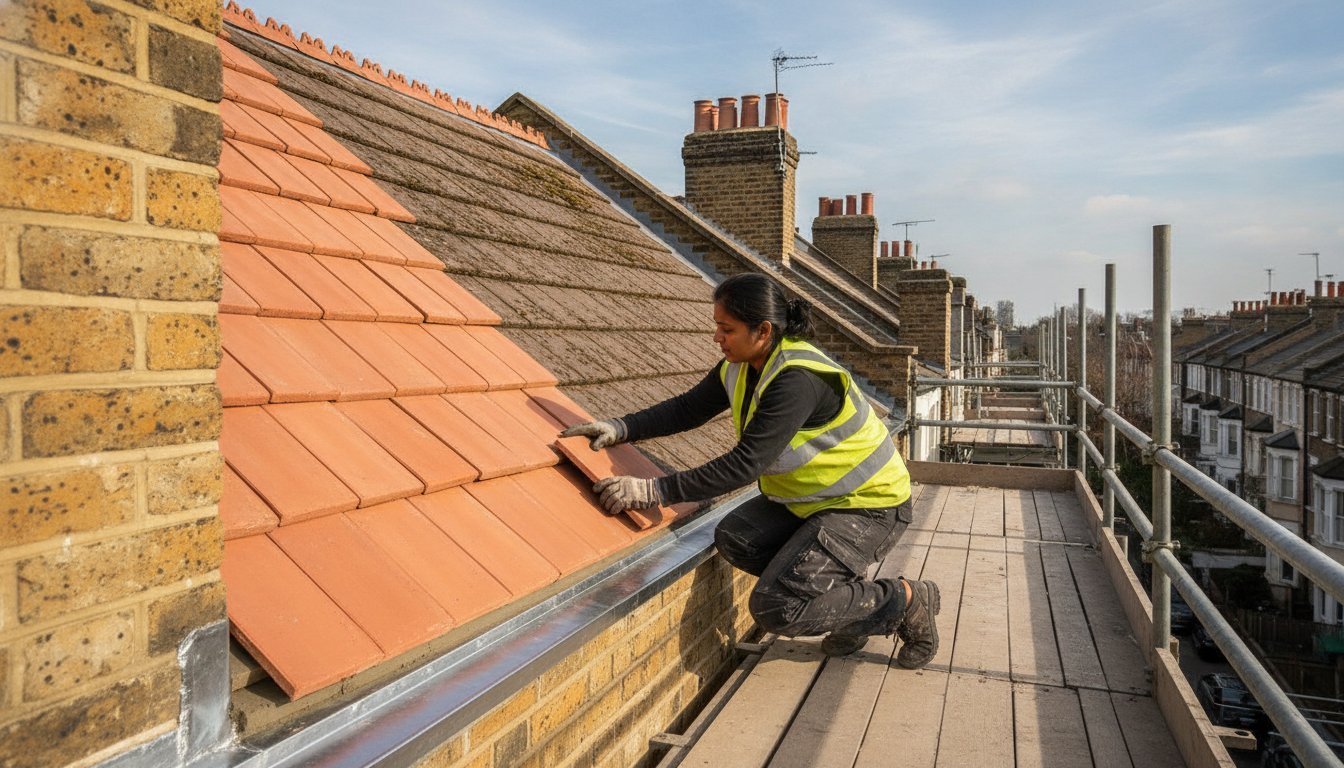
If your Victorian or Edwardian home has stood for over a century, is it wise to risk its structural integrity with a roofing solution that lacks the same heritage pedigree? For many homeowners in East London, the prospect of a clay roof tile replacement Hackney project feels daunting, especially when balancing the demands of local conservation officers against the need for modern thermal efficiency. You likely understand that while clay tiles offer unmatched longevity, the process of sourcing the right match and a craftsman who respects period architecture is no small task.
This guide provides a clear, methodical roadmap to help you navigate these complexities with confidence. You’ll discover how to identify the signs of failure in your current roof, select materials that enhance your property’s kerb appeal, and coordinate with the local council to ensure full compliance. We also explain how to integrate high-performance insulation and essential chimney repairs to create a weather-tight system designed to last sixty years or more. By the end of this article, you’ll have the technical knowledge required to transform a necessary maintenance task into a valuable investment in your home’s future.
Key Takeaways
- Learn how to recognise the subtle signs of clay tile failure caused by London’s unique urban environment before they lead to significant structural damage.
- Discover how to select materials that preserve the “London Look” and satisfy local conservation requirements during your clay roof tile replacement Hackney project.
- Understand the technical framework used to decide between a targeted patch repair and a full replacement to ensure the best long-term return on investment.
- Gain practical insights into managing the logistical challenges of East London street access and the critical role of scaffolding safety in high-traffic residential areas.
- Explore the benefits of combining a roof replacement with professional chimney repairs and insulation upgrades to create a complete, energy-efficient solution for your period home.
Identifying the Need for Clay Roof Tile Replacement in Hackney
Clay tiles are renowned for their durability, often lasting over a century on East London’s Victorian and Edwardian terraces. However, Hackney’s urban environment places unique stresses on these heritage materials. High levels of particulate matter from city traffic can settle on tiles, whilst the freeze-thaw cycles of British winters cause moisture trapped within the clay to expand. Over decades, this process transitions from simple aesthetic weathering to genuine structural failure. Recognising the difference is vital; a weathered patina adds character, but brittle tiles that crumble under pressure require a professional clay roof tile replacement Hackney to protect the timber rafters beneath. Delaying action often leads to saturated insulation and costly timber rot, making early detection a financial necessity.
Common Signs of Clay Tile Failure
When inspecting your roof from the ground or during a loft survey, look for these specific indicators of deterioration:
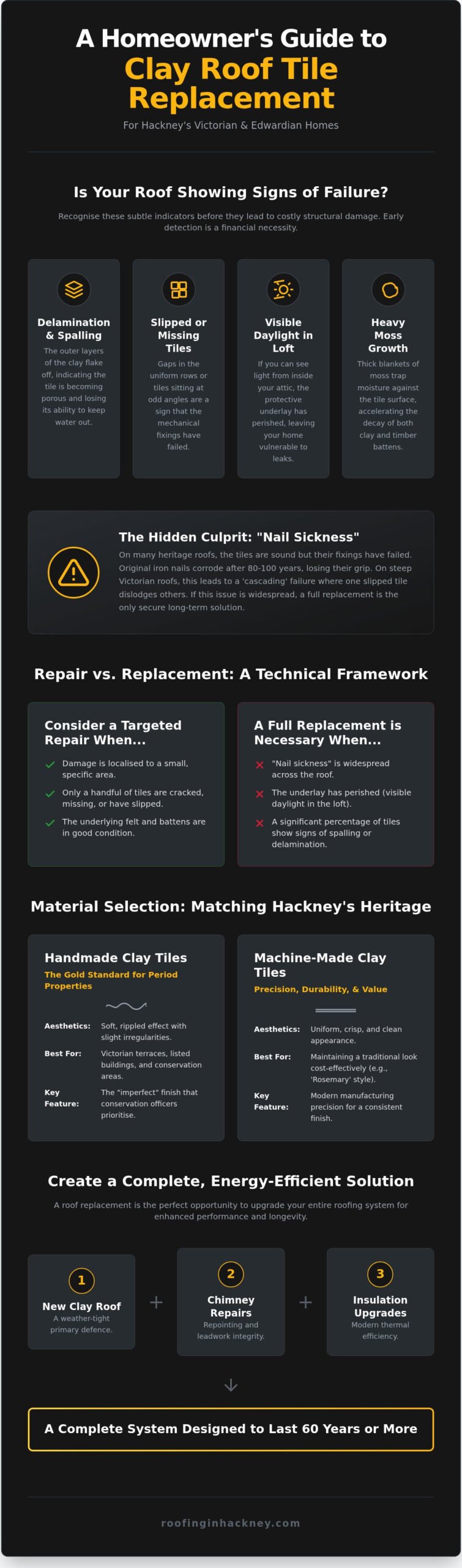
- Delamination and spalling: This occurs when the outer layers of the clay flake off. It is a sign that the tile is becoming porous and losing its weather-tight qualities.
- Slipped or missing tiles: If you notice tiles sitting at odd angles or gaps in the uniform rows, the mechanical fixings have likely failed.
- Visible daylight in the loft: If you can see light through the roof from inside your attic, the protective underlay has perished, leaving your home vulnerable to leaks.
- Heavy moss growth: Whilst a small amount of lichen is normal, thick moss blankets trap moisture against the tile surface, accelerating the decay of both the clay and the timber battens.
The Impact of “Nail Sickness” on Heritage Roofs
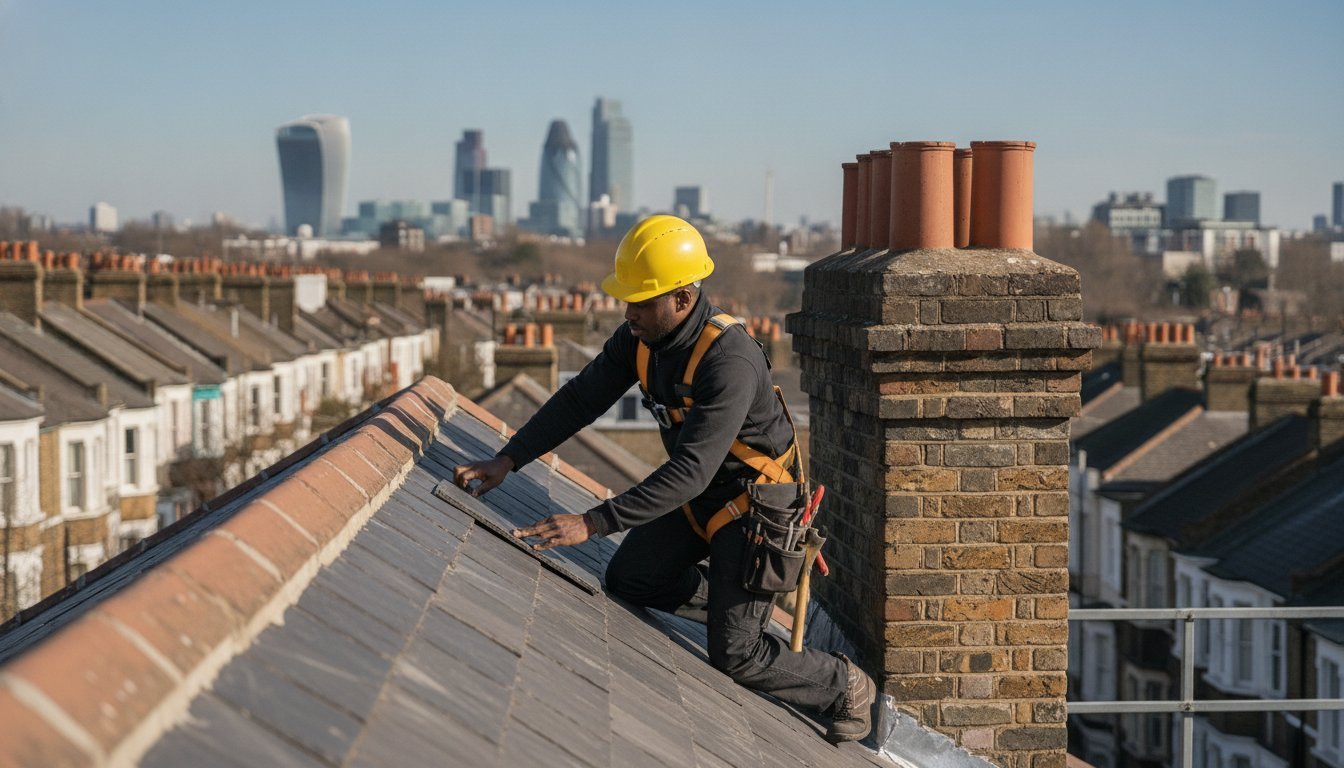
In many of Hackney’s older properties, the tiles themselves remain in relatively good condition, but the fixings holding them in place have reached the end of their life. Historically, roofers used iron nails which, over eighty to a hundred years, succumb to corrosion. This is commonly known as “nail sickness.” As these nails rust away, they lose their grip on the timber battens. On the steep pitches typical of local Victorian architecture, this often leads to a “cascading” effect where one slipped tile knocks others out of place. Whilst it is tempting to simply push tiles back or use lead “tingles” for a temporary fix, these are often sticking plasters for a systemic issue. If nail sickness is widespread, a full clay roof tile replacement Hackney is the only way to ensure the roof remains secure for the next sixty years.
Material Selection: Matching Hackney’s Architectural Heritage
Hackney’s aesthetic identity is deeply rooted in its clay-tiled skylines. When undertaking a clay roof tile replacement Hackney, the primary objective is to preserve the architectural integrity that defines East London’s heritage. Clay is the traditional choice because it ages with a richness that concrete simply cannot replicate. While modern concrete alternatives are often cheaper, they lack the thin, elegant profile of clay and tend to fade as their pigments oxidise over time. A well-executed clay roof maintains the property’s historical value and ensures the building remains sympathetic to its surroundings.
Beyond aesthetics, the longevity of clay is a significant factor in property valuation. A high-quality clay installation can last upwards of 60 years, whereas concrete often requires attention much sooner. For homeowners in conservation areas, using the correct heritage materials isn’t just a preference; it is frequently a legal requirement. Investing in authentic materials prevents the loss of character that occurs when period features are replaced with modern substitutes. This is a long-term investment in both the structural health and the market appeal of your home.
Handmade vs. Machine-Made Clay Tiles
Handmade tiles are the gold standard for Victorian terraces. They possess slight irregularities in shape and texture, which create a soft, rippled effect across the roof. This “imperfect” finish is exactly what conservation officers prioritise in protected areas. Machine-made tiles provide a more uniform, crisp appearance. They are a cost-effective way to maintain a traditional look whilst benefiting from modern manufacturing precision. Amongst these, the “Rosemary” style remains an iconic choice for London homes, valued for its classic dimensions and deep, earthy tones.
Colour and Texture Matching for Conservation
Achieving a seamless blend with neighbouring properties requires a keen eye for colour and finish. Most Hackney roofs feature “Red” or “Brindle” hues, which are often a mix of shades to avoid a flat, monochromatic appearance. Sand-faced tiles offer a granular, matte finish that helps new tiles weather in quickly, whilst smooth tiles provide a cleaner, more contemporary feel. Sourcing the correct texture is vital because a mismatch creates a jarring “patchwork” effect that detracts from the street’s character. If you are unsure which profile matches your terrace, speaking with a local specialist can help you secure samples that meet both your aesthetic goals and local planning guidelines.
Repair vs. Replacement: A Technical Framework for Homeowners
Deciding between a targeted repair and a full clay roof tile replacement Hackney involves evaluating more than just the immediate leak. For many Hackney homeowners, the temptation to “patch and mend” is strong, but this approach often masks systemic deterioration. A single patch repair is perfectly suitable for isolated incidents, such as a tile broken by a falling branch or a loose piece of leadwork. However, if the underlying cause is material fatigue or the widespread corrosion of fixings, these small interventions become a cycle of diminishing returns. The cumulative cost of multiple call-outs and recurring scaffolding can quickly approach the investment required for a permanent solution.
The hidden costs of repeated repairs are not just financial; they involve the recurring stress of potential internal damage. Each time a leak occurs, moisture penetrates the building envelope, risking the health of heritage timbers and delicate internal plasterwork. A complete replacement provides a “clean slate” for the property, ensuring every component from the rafters up meets modern standards. Crucially, this process facilitates the installation of thermal roof insulation upgrades, which significantly improve the comfort of the home whilst reducing long-term energy expenditure.
The 20% Rule for Roof Replacement
As a specialist advisor, we often apply the “20% rule” to help clients make an informed choice. If more than a fifth of the roof surface shows signs of spalling, delamination, or displacement, it indicates that the entire system is failing. At this point, the labour costs involved in individual replacements make little sense when the timber battens and old-fashioned bitumen felt are likely nearing collapse. Stripping the roof allows for a professional assessment of the structural rafters, ensuring the building’s foundation is secure before new tiles are laid.
Long-term Value and Energy Efficiency
Choosing a professional roof replacement in Hackney offers benefits that go beyond simple leak prevention. Modern installations utilise vapour-permeable membranes that allow moisture to escape from the house whilst blocking external rain. This transition from non-breathable felt to modern materials is essential for preventing damp in period properties. By future-proofing your home against increasingly volatile weather, you protect both the building’s fabric and its market value in a competitive London landscape.
The Replacement Process and Local Considerations
Executing a clay roof tile replacement Hackney requires more than technical skill; it demands meticulous logistical planning. Hackney’s dense urban layout, characterised by narrow residential streets and high-traffic corridors, presents unique challenges for site access. Organising a project here involves coordinating parking permits for skips and ensuring that scaffolding is erected with minimal disruption to pedestrians. Safety is paramount, especially in terraced environments where properties are closely packed. We prioritise a clean site, using debris chutes and dust suppression to protect your garden and your neighbours’ property whilst work is underway.
Communication with neighbours is a vital part of the process. In terraced or semi-detached homes, roofing work often involves shared party walls and integrated guttering systems. We ensure that all adjoining structures are protected and that your neighbours are informed of the timeline. Furthermore, every full replacement must comply with current UK Building Regulations. This includes mandatory upgrades to thermal performance under Part L, ensuring that your new roof isn’t just weather-tight, but also contributes to a more energy-efficient home.
Navigating Hackney Conservation Areas
A significant portion of Hackney falls within designated conservation areas, such as De Beauvoir, Victoria Park, or Clapton Common. If your property is situated in one of these zones, you may be subject to Article 4 Directions. This often means that a “like-for-like” replacement is a legal requirement to maintain the street’s historical character. We work closely with local planning officers to ensure that the chosen clay tiles match the original weight, colour, and profile. Sourcing approved samples early in the planning phase prevents costly delays and ensures your investment remains fully compliant with local heritage standards.
Step-by-Step Replacement Workflow
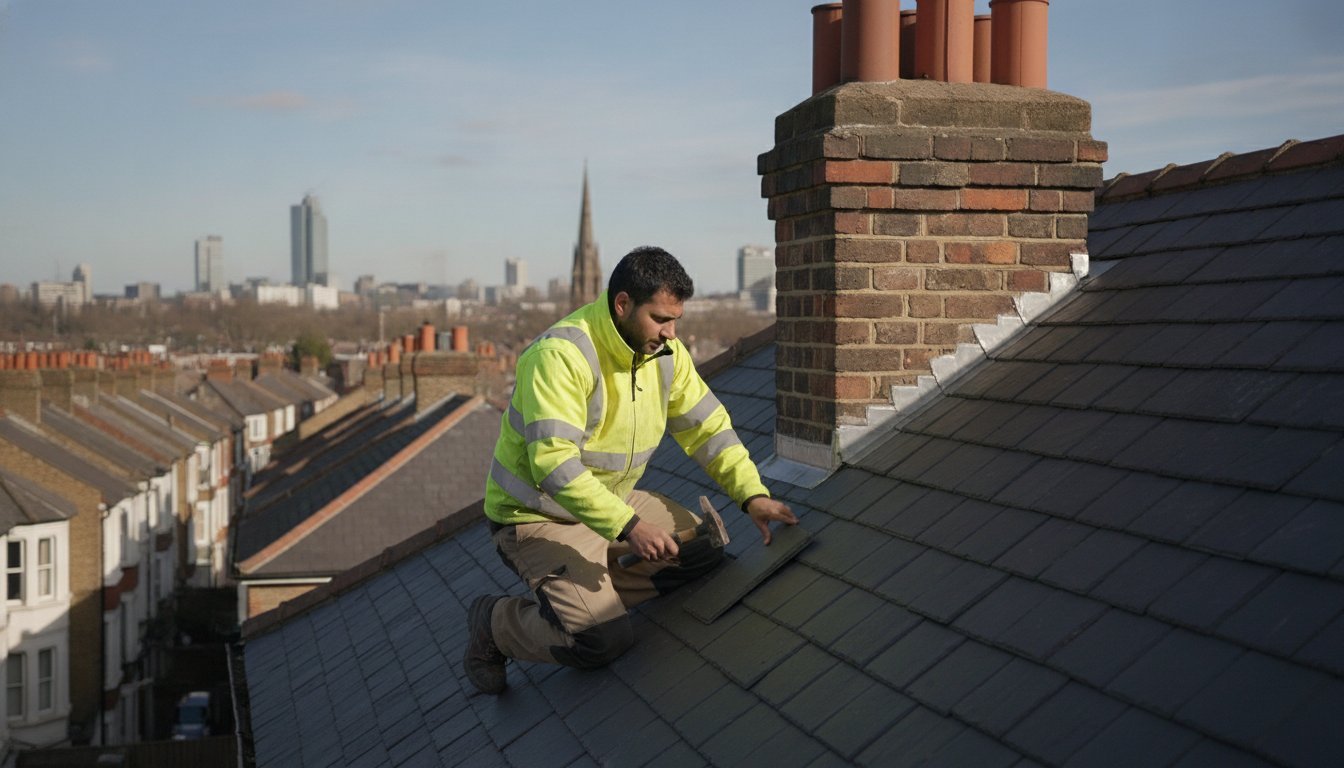
Our methodical approach ensures transparency at every stage of the build. The process begins with site preparation and the erection of secure, high-access scaffolding. Once the site is safe, we carefully strip the existing clay tiles. This stage is critical; it allows us to inspect the underlying timber rafters for signs of rot or structural deflection that may have been hidden for decades. After any necessary timber repairs, we install a high-performance vapour-permeable underlay and treated timber battens, laid to precise gauges.
The final phase involves the precision laying of your new clay tiles. We pay particular attention to the “valleys” and “hips” of the roof, where water run-off is most concentrated. This stage includes the integration of expert leadwork around chimneys and abutments to create a permanent, watertight seal. If you are planning a heritage project and want to ensure your home meets both modern standards and conservation rules, request a professional site survey to discuss your specific requirements.
Why Choose a Hackney Specialist for Your Clay Roof
Choosing a contractor who understands the specific vernacular of East London is the difference between a functional roof and a heritage restoration. Hackney’s Victorian and Edwardian streets require a specialist who respects original construction methods whilst implementing modern safeguards. We focus on preserving the character of these properties, ensuring they meet current performance standards without losing their historical soul. A professional clay roof tile replacement Hackney project should not be viewed as a standalone task; it is an opportunity to restore the entire upper structure of your home with technical precision.
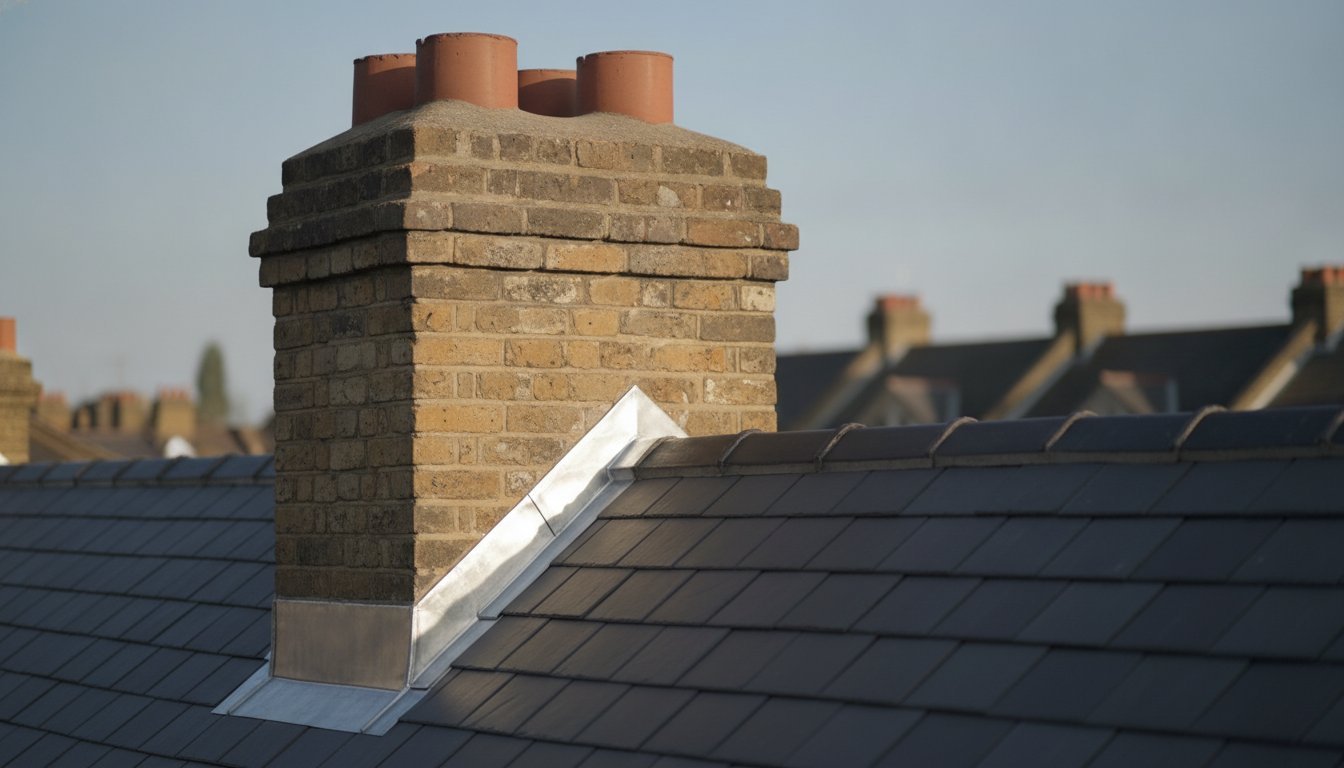
Our local expertise allows us to anticipate the specific needs of Hackney buildings, from the unique pitch of a London terrace to the condition of old stock brickwork. When we replace a roof, we often find that the chimneys have suffered decades of neglect due to their height and lack of accessibility. By combining your tile replacement with chimney repairs and repointing, we provide a complete solution that prevents future scaffolding costs. This integrated approach ensures every junction is secure and every detail, from the ridge tiles to the lead abutments, is executed with the care of a master craftsman.
A Comprehensive Heritage Approach
Our mastery of traditional materials extends beyond clay. We are equally dedicated to mastering slate roofing in Hackney, providing homeowners with versatile options for their period properties. Precision leadwork is at the heart of our service, protecting vulnerable valleys and ensuring chimneys are perfectly flashed against the elements. We understand that living in a dense urban area makes construction stressful. Because of this, we manage our projects with a focus on calm efficiency, organising logistics to minimise noise and disruption for you and your neighbours whilst maintaining a tidy, professional site.
Requesting Your Professional Survey
The first step toward a secure home is a thorough site assessment. Our surveys go beyond a simple visual check; we examine the structural integrity of the timbers and the condition of the existing masonry to identify any underlying issues. Following the survey, we provide a detailed, itemised quote. This transparency ensures you understand exactly where your investment is going, with no hidden costs or surprises mid-project. Taking this first step ensures your property remains a beautiful, weather-tight asset for decades to come, backed by the reliability of a trusted local specialist.
Securing Your Property’s Heritage for the Next Generation
Investing in a clay roof tile replacement Hackney is a commitment to the long-term health and historical value of your home. By selecting authentic materials that match the street’s character, you ensure your property remains a standout feature of East London’s architectural landscape. A methodical approach allows for the integration of vital thermal insulation and the restoration of chimneys, creating a complete building envelope that performs to modern standards.
Working with specialists in Hackney heritage properties means navigating conservation rules and logistical challenges with ease. Our expertise in precision leadwork and chimney repair ensures that your investment is protected from the top down. We pride ourselves on providing a transparent, expert-led service that turns complex structural maintenance into a straightforward improvement. Whether you’re addressing “nail sickness” or planning a full restoration, the right partnership makes all the difference.
Contact Roofing in Hackney today for a professional clay roof survey to begin your property’s transformation. Your heritage home deserves the care of a master craftsman.
Frequently Asked Questions
Do I need planning permission to replace clay tiles in Hackney?
You generally don’t need planning permission for a like-for-like clay roof tile replacement Hackney project, as this falls under permitted development. However, many Hackney homes are situated within conservation areas where Article 4 Directions are in place. These regulations often mandate that any changes to the roof’s appearance or materials require formal approval. It’s always best to check with Hackney Council’s planning department before starting work to ensure your project remains compliant with local heritage guidelines.
How long does a full clay roof tile replacement take on a standard terrace?
A standard mid-terrace property typically takes between seven and ten working days to complete. This timeline includes the erection of safe scaffolding, the careful stripping of old materials, and the installation of new high-performance underlay and battens. Complex projects involving extensive leadwork or chimney repairs may take slightly longer. We always provide a clear schedule at the start of a clay roof tile replacement Hackney project, though London’s unpredictable weather can occasionally influence the final completion date.
Can I use concrete tiles instead of clay to save money?
Whilst concrete tiles are often less expensive, they are rarely suitable for Hackney’s period properties. Concrete is significantly heavier than clay, which can put undue stress on original Victorian timber rafters. Additionally, concrete tiles tend to lose their colour over time and lack the thin, elegant profile of traditional clay. In many local conservation areas, using concrete instead of clay is prohibited because it detracts from the street’s historical character and can lower your property’s resale value.
What is the average lifespan of a new clay tile roof in London?
A professionally installed clay roof is designed to last for sixty years or more. Modern clay tiles are fired at extremely high temperatures, making them highly resistant to the freeze-thaw cycles and urban pollutants found in East London. When combined with high-quality treated timber battens and vapour-permeable underlay, the system provides a robust barrier against the elements. Regular maintenance, such as clearing gutters and inspecting leadwork, will help ensure your roof reaches its full life expectancy.
Is it possible to reuse any of my old clay tiles?
It’s often possible to salvage a portion of your original tiles if they haven’t suffered from delamination or brittle failure. Many homeowners choose to reuse sound tiles on the rear elevation of the property whilst using new, matching tiles for the front to maintain kerb appeal. We carefully inspect every tile during the stripping process to determine its structural integrity. Reusing tiles can help preserve the authentic look of a heritage roof whilst reducing material waste.
How much does clay roof tile replacement cost in Hackney?
The total cost of a replacement depends on several variables specific to your property. These include the roof’s square footage, the complexity of the pitch, and the logistical requirements for scaffolding in dense residential streets. Material choice, such as opting for handmade rather than machine-made tiles, also influences the final investment. We provide detailed, itemised quotes after a physical site survey to ensure you have an accurate understanding of the work required for your specific Hackney home.
Should I replace my gutters at the same time as my roof tiles?
Replacing your guttering whilst the scaffolding is already in place is a highly efficient and cost-effective strategy. A new roof needs a reliable drainage system to prevent water from backing up and damaging the eaves or fascia boards. Integrating gutter replacement into your project ensures that the entire water management system is cohesive and functional. It also eliminates the need for separate scaffolding costs in the future, providing better long-term value for your property maintenance budget.
How do I know if my roof has nail sickness?
Nail sickness is most evident when you see tiles slipping out of alignment across the roof’s surface. On the ground, you might find rusted nail heads or small fragments of corroded iron in your gutters after heavy rain. If you can see daylight through the roof from inside your loft, it’s a clear sign that the fixings have failed and the tiles are no longer secure. A professional survey is the most reliable way to confirm the extent of the issue.