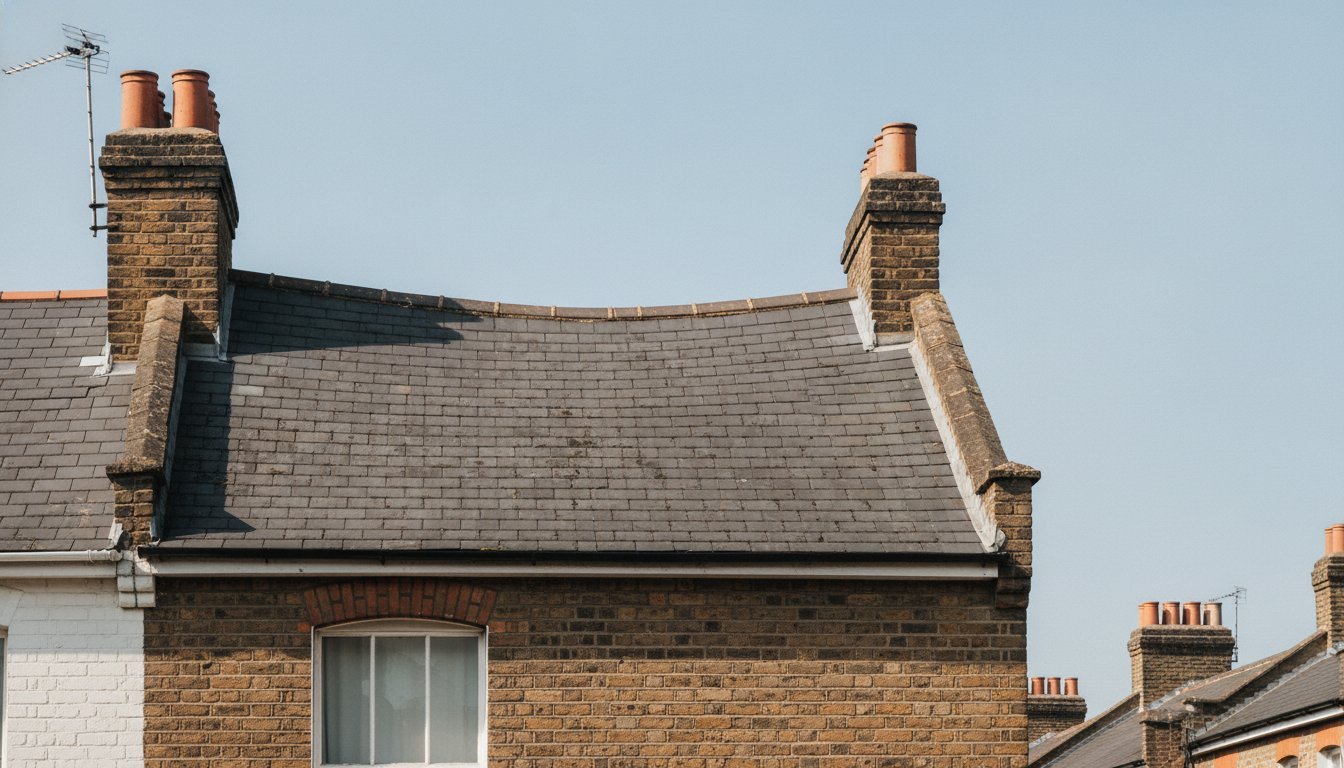
That noticeable dip in your Victorian terrace roofline isn’t just “period character”; it’s a progressive structural failure that could eventually lead to a ceiling collapse. If you’ve spent weeks staring at a bowing ridge or a dipping slope, you’re likely caught between the fear of immediate danger and the anxiety of a massive London repair bill. It’s a common dilemma for homeowners in East London, but ignoring the signs only allows the underlying timber fatigue to worsen. When it comes to sagging roof repair Hackney residents often worry that a full replacement is the only option, yet many period properties can be saved through targeted structural reinforcement.
We understand that your home is your most significant investment, and the thought of structural defects is deeply unsettling. This guide will help you identify the specific causes of your dipping roofline, from undersized rafters to the added weight of modern tiles, and explain the professional methods used to restore its strength. You’ll discover how to assess whether a repair is viable and gain a clear understanding of the local regulations involved in 2026. By the end, you’ll have the peace of mind that comes from knowing exactly how to protect your property’s structural integrity for the long term.
Key Takeaways
- Learn how to distinguish between minor cosmetic dips and dangerous structural failure by identifying “wavy” tile lines and internal ceiling cracks.
- Understand why rafter spread is the primary culprit in Hackney period terraces and how traditional timber fatigue impacts property value.
- Discover when a professional sagging roof repair Hackney specialist can save your existing structure through jacking and reinforcement rather than a full replacement.
- Follow our methodical step-by-step repair workflow, including structural surveys and the use of high-grade timbers to restore your roof’s original strength.
- Gain clarity on the criteria for repair versus replacement to ensure you invest in a solution that provides long-term structural integrity.
Identifying a Sagging Roof in Hackney: Signs and Structural Risks
A sagging roof is more than a cosmetic blemish; it’s a physical manifestation of internal structural strain. In technical terms, it refers to the visible dipping of the ridge line or the inward bowing of the roof slopes. When a roof begins to lose its original profile, it’s a clear signal that the underlying structural integrity of the building has been compromised. Whilst many Hackney residents view a slightly uneven roofline as part of the “period charm” of a Victorian terrace, there is a distinct difference between century-old settlement and active timber failure. A visible sag usually indicates that the roof’s internal skeleton can no longer support the weight of the covering, often leading to a situation where sagging roof repair Hackney specialists must intervene to prevent a total collapse.
The risks associated with a dipping roofline are progressive. In the local climate, a dip in the roof slope creates a catchment area for rainwater. This pooling water accelerates the deterioration of roofing materials and puts immense pressure on joints that weren’t designed to be submerged. For the historic housing stock in East London, this often means that what starts as a minor timber issue quickly evolves into rot that compromises the entire building envelope.
External Warning Signs on the Roofline
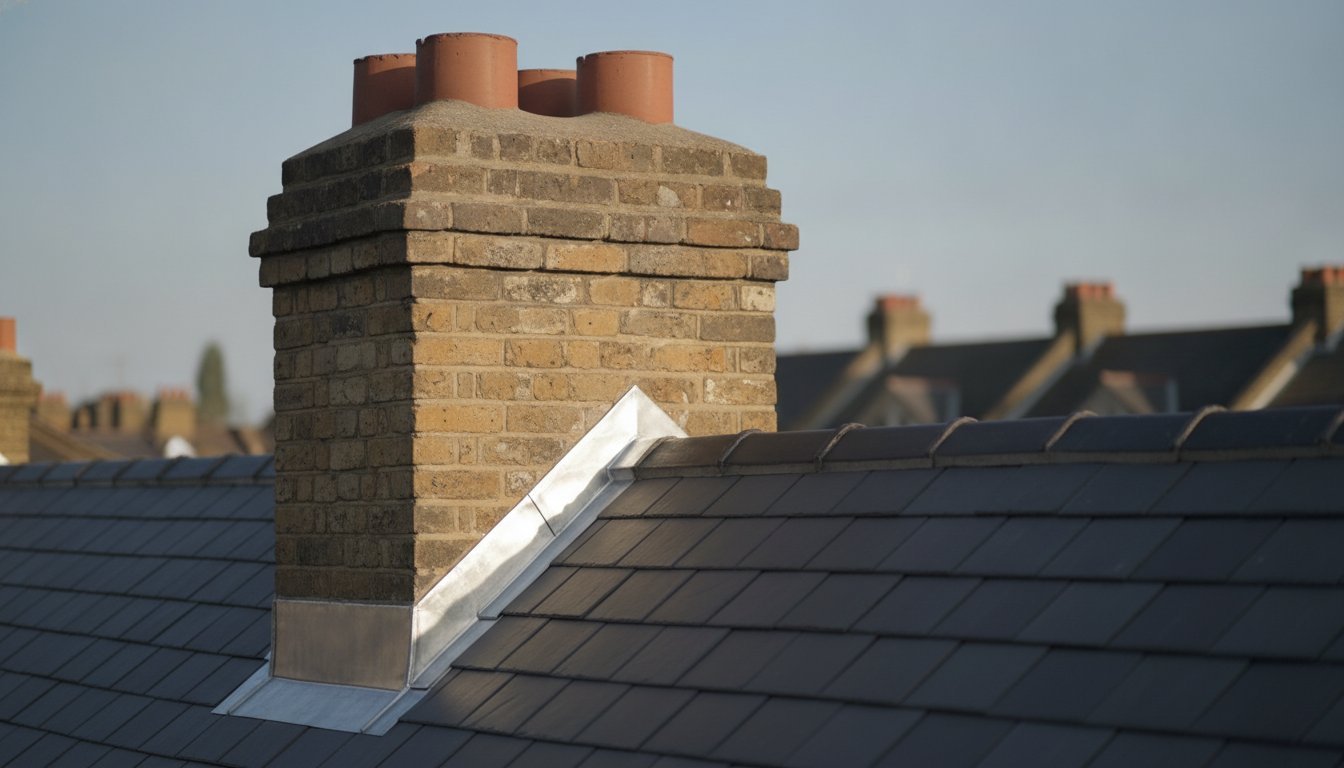
Identifying a problem often starts with a simple walk across the street. If you stand back from your property and look at the ridge line, which is the very top peak, it should be perfectly horizontal. Any dip in the centre suggests the rafters are struggling. You might also notice “wavy” lines across the roof slopes. This is particularly problematic for slate roofing Hackney homes often feature, as even a small amount of movement can cause heavy slates to unseat or crack. Another subtle sign is a “kink” in your guttering. When rafters push outwards, they often displace the fascia boards, causing the gutters to slope incorrectly and leading to water pooling where it shouldn’t.
Internal Indicators within the Loft Space
The most revealing evidence is usually found inside the loft. If you can see pinpricks of daylight through the roof covering where no vents exist, the timber movement has likely pulled the waterproofing layers apart. Look closely at the purlins and the rafters. If you spot cracks in the wood or visible bowing, the structure is under excessive stress. Damp patches amongst the insulation are also a major red flag. These leaks often occur because the sagging has created gaps in the lead flashing around chimneys or valleys, allowing rain to bypass the primary defences of the home. Professional sagging roof repair Hackney services focus on identifying these failure points before they result in interior ceiling damage.
Why is My Roof Sagging? Common Causes in East London Properties
Understanding the root cause of a dipping roofline is the first step toward a permanent solution. In the historic streets of East London, roofs often suffer from a combination of aged materials and original design limitations. Many Victorian properties were constructed at a time when timber was used sparingly, meaning rafters were often sized to the absolute limit of their load-bearing capacity. Over a century later, these timbers naturally begin to yield under the constant pressure of gravity and weather. When seeking sagging roof repair Hackney homeowners often find that their property has been pushed beyond its structural limits by modern additions or neglected maintenance.
Water ingress is another primary culprit. Localised leaks, particularly around chimney stacks or valleys, lead to wet rot. This biological decay softens the timber fibres, causing the wood to lose its stiffness and bow under the weight of the slates. All structural work must adhere to the UK Building Regulations for structure, which ensures that any remedial timber work restores the necessary safety margins to the building. Without addressing these underlying issues, any cosmetic fix will eventually fail as the timber continues to degrade.
The Impact of Rafter Spread
Rafter spread is perhaps the most prevalent issue in Hackney’s narrow terrace houses. In a healthy roof, the ceiling joists act as “ties” that hold the base of the rafters together. If these ties are missing, cut during a poorly executed loft conversion, or simply inadequately fixed, the weight of the roof creates a horizontal force. This force pushes the external walls outward whilst the ridge line drops. Because Hackney terraces are often tall and narrow, they lack the lateral stability of wider detached homes, making them particularly susceptible to this type of structural movement. When this occurs, sagging roof repair Hackney requires specialist intervention to tie the structure back together.
Weight Issues and Material Changes
A frequent cause of structural failure is the “Concrete Tile Trap.” During a past roof replacement Hackney properties may have had their original lightweight slates replaced with heavy interlocking concrete tiles. These tiles can be up to 50% heavier than natural slate, placing an immense new load on an old timber frame that was never designed to carry it. Similarly, modern thermal roof insulation upgrades can add significant weight if high-density materials are used without checking the rafter strength first.
Before committing to any major renovation, it’s vital to calculate the current load-bearing capacity of your roof. If you’ve noticed a dip, you can request a structural assessment to determine if your timbers require reinforcement before the damage becomes irreversible.
Repair vs. Replacement: Evaluating the Best Course of Action
Deciding between a targeted structural fix and a complete overhaul is the most critical choice a homeowner faces when dealing with a dipping roofline. It’s a balance of immediate safety, long-term durability, and financial logic. Many residents fear that any visible distortion necessitates a total strip-down, but this isn’t always the case. If the sagging is localised and the surrounding timbers remain dry and structurally sound, a surgical repair is often the most sensible path. This approach preserves the heritage of the building whilst addressing the specific failure point without the disruption of a full replacement.
A primary factor in this evaluation is the state of the waterproofing layers. If your slates are in good condition and the internal timbers haven’t been ravaged by widespread rot, reinforcing the structure is highly viable. Often, issues originate at complex junctions. In these instances, professional leadwork repairs Hackney specialists can resolve the water ingress that caused the timber to soften, allowing for a permanent structural correction. However, once the damage spreads beyond a few isolated rafters, the cost-benefit analysis begins to shift.
When a Targeted Repair is Sufficient
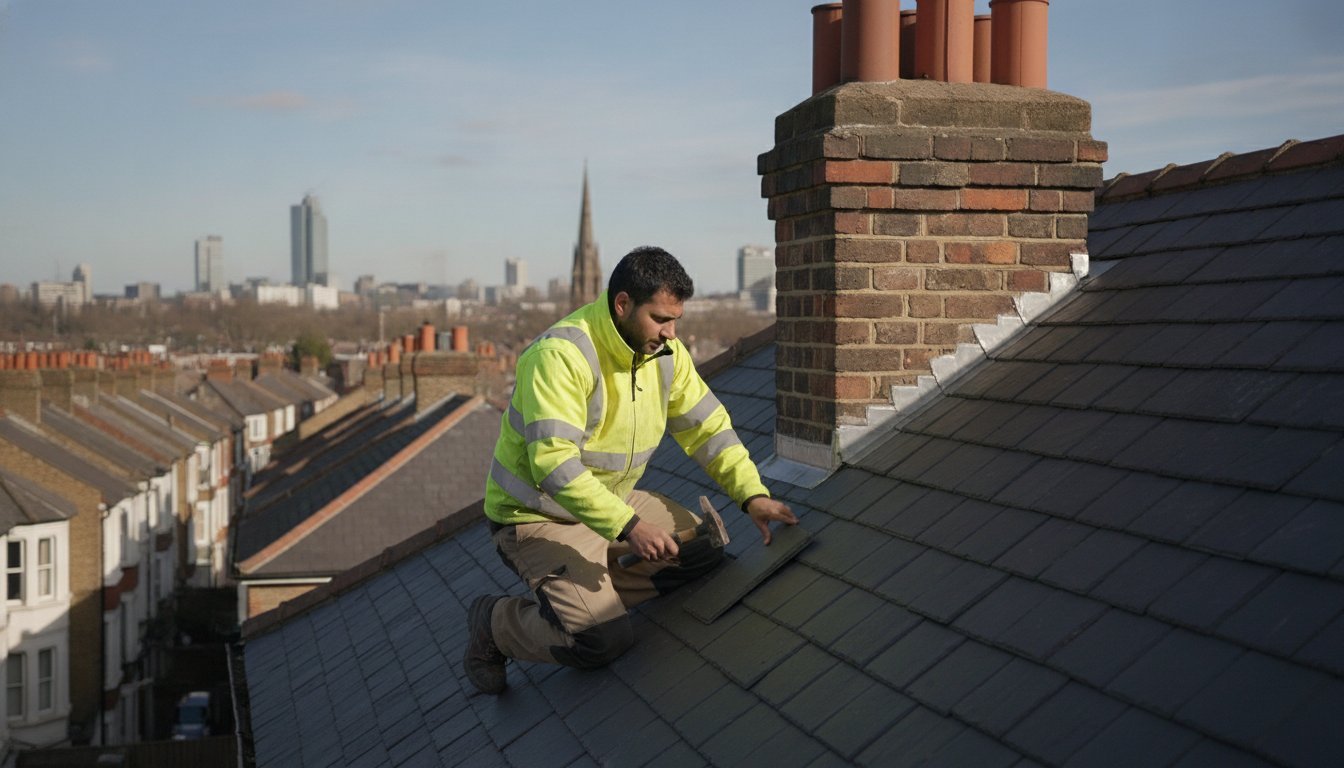
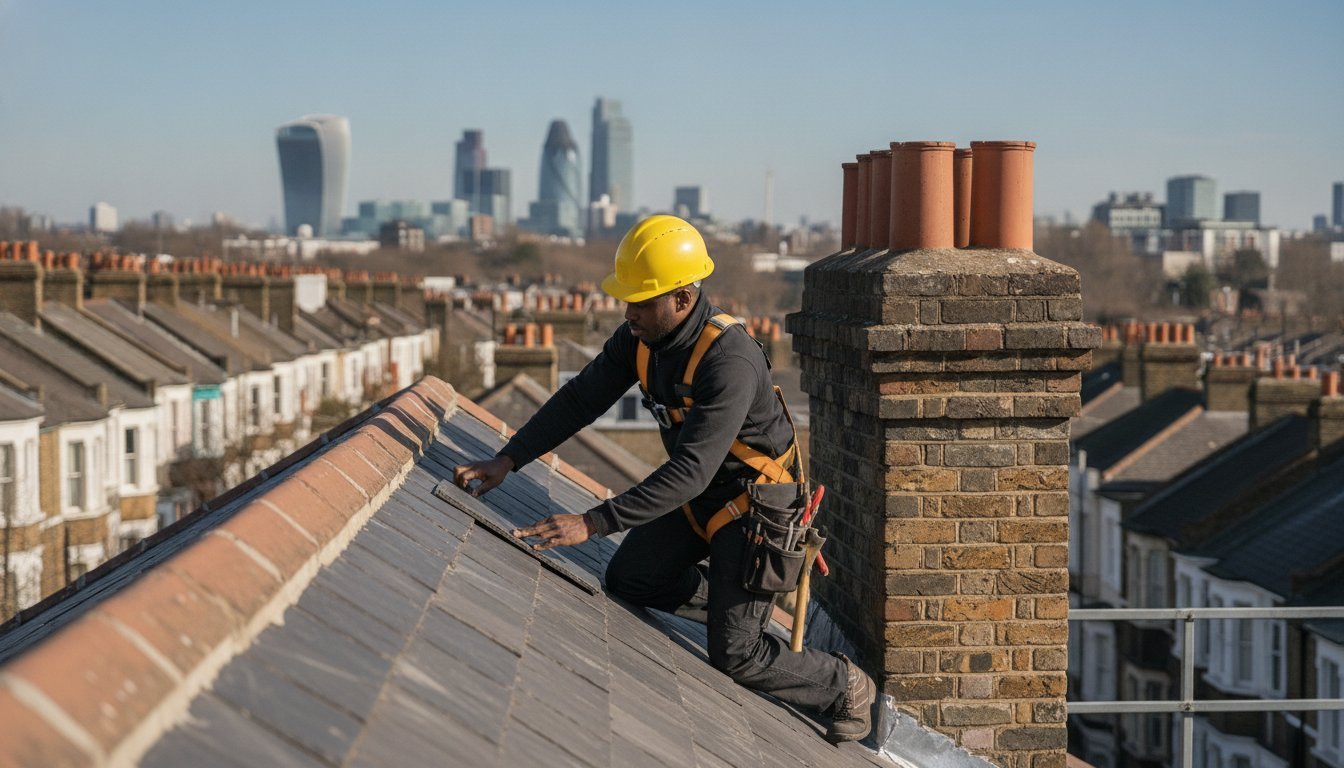
Targeted interventions work best when the damage is restricted to a single fractured rafter or a bowing purlin. We often employ a technique called “sistering,” where new, high-grade timbers are bolted alongside the original weakened ones. This method provides the necessary reinforcement without requiring the removal of your original heritage slates. It’s a precise, craftsman-led process that restores the roof’s profile whilst maintaining the property’s aesthetic integrity. For many seeking sagging roof repair Hackney, this represents a cost-effective way to secure the home’s future without the price tag of a full re-roof.
Signs You Need a Full Structural Replacement
There is a “point of no return” where individual repairs become a case of diminishing returns. A full structural replacement is usually required if wet or dry rot has colonised more than 30% of the roof structure. At this stage, the timber’s load-bearing capacity is fundamentally compromised. You should also consider a full replacement if severe rafter spread has begun to displace the external brickwork or if the ridge has dropped so significantly that the internal ceiling joists have pulled away from their seats. As a general rule of thumb, if the cumulative cost of structural repairs exceeds 50% of the cost of a full sagging roof repair Hackney replacement programme, investing in a new structure becomes the safer and more economical long-term choice.
The Structural Repair Process: How We Fix a Sagging Roof
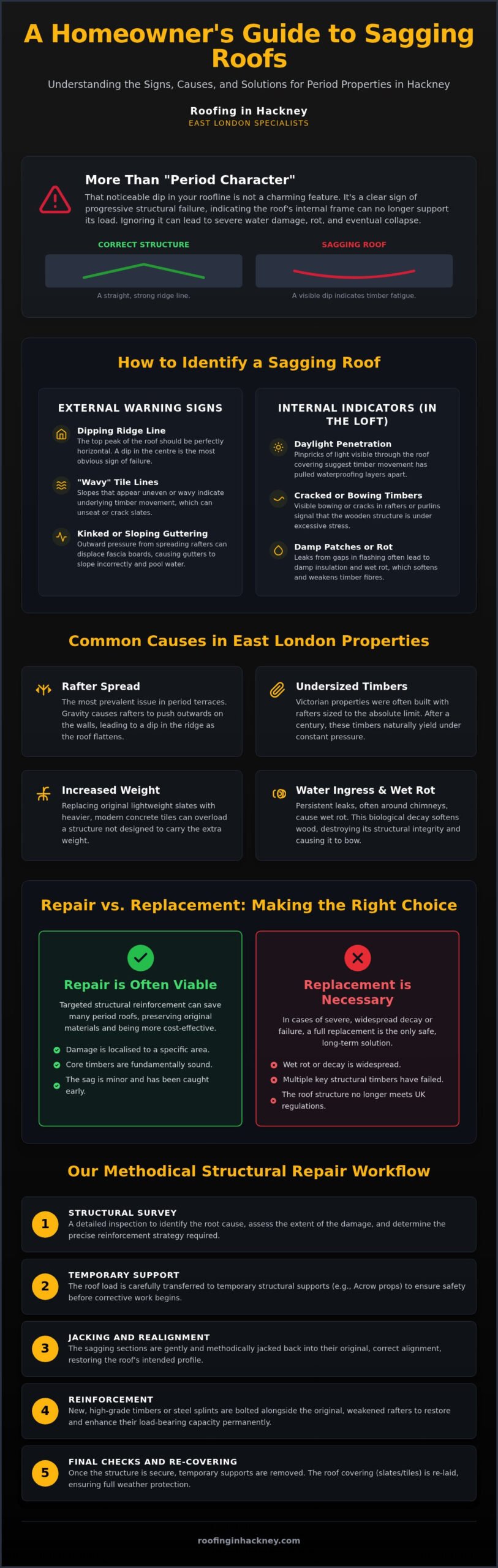
Restoring the structural integrity of a period property requires a methodical, phase-based approach that prioritises safety and precision. We don’t believe in quick fixes that merely hide the problem. Instead, our workflow focuses on addressing the mechanical failure of the timber frame. Every project begins with a comprehensive structural survey where we measure the exact degree of the sag and identify the primary failure points. This data allows us to calculate the necessary reinforcement and ensure the building remains stable throughout the intervention. For effective sagging roof repair Hackney homeowners should expect a process that moves from temporary stabilisation to permanent reinforcement.
Our standard workflow for correcting a dipping roofline typically follows these five essential stages:
- Comprehensive Structural Survey: Identifying whether the issue is rafter spread, purlin failure, or timber decay.
- Temporary Support and Jacking: We use hydraulic jacks to slowly and carefully lift the ridge and rafters back to their original horizontal positions.
- Timber Reinforcement: Bolting new timbers alongside the originals to restore load-bearing capacity.
- Installing Collar Ties and Purlin Braces: Organising new structural ties to prevent the rafters from pushing outwards again.
- Finishing and Waterproofing: Re-seating the slates and ensuring all chimney leadwork is perfectly watertight.
Technical Spotlight: Rafter Sistering
When we encounter rafters that have bowed or fractured, we often employ “sistering.” This involves bolting a new length of C24 graded timber alongside the existing weakened rafter. By using high-strength coach bolts and timber connectors, we create a “composite” beam that is significantly stronger than the original. This method is particularly favoured for Hackney period homes because it allows us to restore the roof’s strength without stripping the entire covering. It also preserves the internal loft height, which is a vital consideration for future conversions. We ensure the new timber has a solid, secure bearing on the wall plates to transfer the load correctly to the masonry.
Reinforcing the Purlins and Ridge
Stabilising a dipping ridge board requires more than just rafter work. We often install additional struts and props to transfer the roof’s weight directly to internal load-bearing walls. This reduces the span of the rafters and prevents future sagging. By using modern metal connectors and purpose-built braces, we can provide permanent stability that exceeds the original Victorian construction standards. If you’ve noticed your roofline beginning to dip, you can book a structural assessment to see if these reinforcement techniques are suitable for your property. Our goal is to ensure your sagging roof repair Hackney project provides a lifetime of security.
Choosing Hackney Structural Specialists for Your Roof Repair
Local knowledge is the dividing line between a temporary patch and a permanent structural solution. Hackney’s architectural landscape is dominated by Victorian and Edwardian terraces, many of which were built by developers who prioritised speed and volume during 19th-century building booms. This historical context means that sagging roof repair Hackney isn’t a one-size-fits-all task. It requires an intimate understanding of how these specific buildings move and age. A roofer without local experience might suggest a cosmetic fix, such as simply re-seating tiles or adding mortar, but these actions ignore the underlying timber fatigue. Over time, a “cheap” repair usually fails because it doesn’t address the mechanical cause of the dip, leading to even higher costs when the structural strain inevitably returns.
At Roofing in Hackney, we position ourselves as master craftsmen who specialise in the technical complexities of East London’s heritage housing. We believe in transparency and order. When you request an assessment, we don’t just look at the surface; we investigate the skeleton of your home. Our goal is to provide a clear, organised front that alleviates the stress of structural maintenance by presenting you with a logical path to resolution. We treat every property with the respect its history deserves, ensuring our interventions add long-term value to your investment.
Our Approach to Hackney Heritage Properties
Protecting the unique character of properties in Hackney and Dalston requires a blend of traditional craftsmanship and modern structural engineering. We’ve spent years studying the specific terrace configurations of the area, from the narrow footprints of Victorian rows to the more expansive Edwardian designs. This expertise allows us to anticipate common failure points before they become catastrophic. We don’t rush the process; instead, we move at a deliberate pace that mirrors a professional consultation. Amongst the sea of general contractors, we pride ourselves on being trusted local advisors who prioritise the long-term safety of your home over the convenience of a quick, temporary fix.
Next Steps: Securing Your Roofline
A sagging roof is a progressive issue that won’t stabilise on its own. The urgency of addressing these structural dips becomes clear during periods of extreme weather. A heavy snowfall or a high-wind storm adds significant live load to an already weakened frame, which can be the tipping point for a ceiling collapse. Our team provides a detailed report on your roof’s structural health, outlining exactly where the failure points lie and providing a transparent quote for the necessary reinforcement.
Investing in a professional sagging roof repair Hackney service now prevents the need for a far more expensive full replacement in the future. If you’ve noticed a dip in your ridge line or bowing in your slopes, don’t wait for the damage to accelerate. Contact our Hackney structural roofing team for a professional survey and secure the future of your home with expert, heritage-sensitive care.
Securing Your Hackney Home’s Structural Future
Addressing a dipping roofline is a matter of property preservation and long-term safety. We’ve explored how identifying early signs like wavy tile lines or internal timber fatigue can prevent a complete structural failure. For many homeowners, a targeted intervention using rafter sistering and reinforcement provides a permanent solution without the need for a total strip-down. As independent local contractors with over 30 years of experience, we specialise in the specific structural challenges of Victorian and Edwardian terrace properties.
Our team combines traditional craftsmanship with modern engineering to ensure your heritage slating and timber frame are restored to their former strength. Don’t leave your home’s stability to chance; expert sagging roof repair Hackney services ensure your property remains a safe, sound investment for decades to come. We’re committed to providing the technical mastery and transparency your project requires.
Book a Structural Roof Survey with Roofing in Hackney Today to receive a clear, professional assessment of your roof’s health. We look forward to helping you protect your home.
Frequently Asked Questions
Is a sagging roof an emergency that requires immediate repair?
A sagging roof is a serious structural concern that requires a professional assessment to determine the level of urgency. Whilst it might not collapse tomorrow, the structure is actively failing under its own weight. If you notice a sudden increase in the dip or internal cracks appearing in the loft ceilings, it becomes an immediate priority to prevent injury or significant property damage.
How much does it typically cost to fix a sagging roof in Hackney?
The cost for a sagging roof repair Hackney project depends on the degree of timber fatigue and the specific reinforcement method required. Factors such as the 50% increase in material prices reported in 2026 and the accessibility of the loft space influence the final quote. A professional survey is essential to provide an accurate estimate based on your property’s unique structural requirements.
Can I fix a sagging roof from the inside of the loft myself?
We strongly advise against attempting to fix a sagging roof yourself. Structural repairs involve the use of hydraulic jacks and the precise calculation of load distribution across the building’s footprint. Incorrectly placing a support or over-jacking a rafter can cause the roof to buckle or damage your external masonry. It’s a task that requires the technical proficiency of a master craftsman.
Will insurance cover the cost of repairing a sagging roof?
Standard buildings insurance policies don’t usually cover repairs for sagging caused by gradual deterioration, wear and tear, or poor original construction. Insurance typically only pays out for sudden, accidental damage like a fallen tree or a severe storm. It’s best to check your specific policy wording, but most structural timber fatigue is considered a maintenance issue that the homeowner must fund.
How long does a structural roof reinforcement project usually take?
A targeted structural reinforcement project typically takes between 3 and 7 working days to complete. This timeframe includes the initial stabilisation, the careful jacking of the rafters, and the installation of new high-grade timber supports. If a full replacement is required due to widespread rot, the process can extend to two weeks or more depending on the weather and the terrace size.
What happens if I ignore a sagging roof for another year?
Ignoring a dip allows the structural strain to worsen, which puts increasing pressure on your external walls and internal finishes. Over time, the timber fibres may eventually snap, leading to a much more expensive emergency replacement. Addressing the sagging roof repair Hackney homeowners need early often allows for a surgical repair that saves you thousands of pounds in secondary masonry and plasterwork.
Do I need planning permission for structural roof repairs in Hackney?
Planning permission isn’t usually required for internal structural reinforcement, but you must adhere to the Hackney Council Residential Extensions and Alterations SPD that became effective in January 2026. This document governs how alterations should respect local character. Regardless of planning, all structural timber work must be inspected by Building Control to ensure it meets the latest safety and stability standards for the borough.