Did you know that up to 25% of a home’s heat can escape through an uninsulated or poorly protected roof? If you are constantly adjusting the boiler whilst your upper rooms remain stubbornly chilly, you are likely experiencing the hidden costs of thermal inefficiency. Many residents in East London’s period properties face this exact challenge, struggling with high energy bills and the persistent threat of damp in their Victorian terraces.
Identifying the specific signs of poor roof insulation Hackney homeowners often overlook is the first step toward reclaiming your comfort and protecting your property’s structural integrity. It is not just about thin material; it is often a symptom of failing roof structures or outdated ventilation. By recognising these red flags early, you can restore your home’s warmth and ensure your property works towards the current 2026 target U-value of 0.16 W/m²K for renovations.
In this article, we’ll help you spot both the subtle and overt warning signs that your roof is leaking heat. We’ll examine why temperatures vary so much between floors and provide a clear overview of how to restore your Hackney property’s thermal efficiency for the long term.
Key Takeaways
- Understand how the ‘stack effect’ allows heat to rise and escape through large Victorian roof voids, significantly increasing your energy expenditure.
- Identify interior red flags like the ‘Igloo Effect’ and rapid cooling that indicate your living space is losing heat faster than your boiler can provide it.
- Learn to recognise the external signs of poor roof insulation Hackney homes exhibit, such as specific snow melt patterns and icicle formation at the eaves.
- Explore the critical differences between ‘Warm Roof’ and ‘Cold Roof’ systems to find the most effective solution for your property’s unique structural requirements.
- Discover how a professional roof survey can protect your home’s structural integrity by addressing damp issues alongside thermal upgrades.
Understanding the Impact of Inadequate Roof Insulation in Hackney
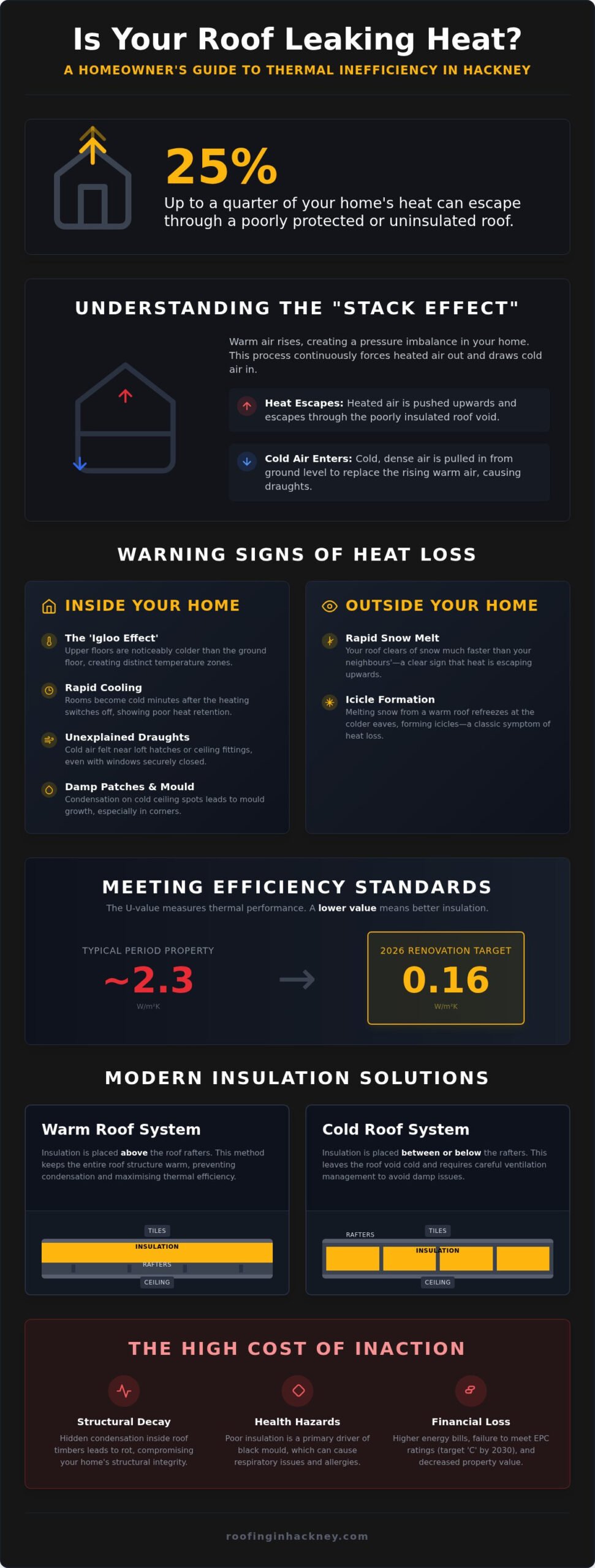
Roof insulation serves as the essential thermal barrier for any building. It’s specifically engineered to counteract the “stack effect,” a process where warm air rises and creates a pressure differential that pulls cold air in through the ground floor. Understanding Building insulation principles helps clarify why this barrier is the most critical component of your home’s energy strategy. Without it, you are essentially heating the East London skyline rather than your living room. Identifying the signs of poor roof insulation Hackney residents face is becoming increasingly urgent as energy costs remain high.
Hackney properties are unique due to their historical construction. The high ceilings and large roof voids found in local Victorian houses create massive volumes of air that are difficult to keep warm. Research confirms that up to 25% of heat is lost through uninsulated roofs in these types of buildings. By 2026, the target U-value for renovated roofs is 0.16 W/m²K, a standard that traditional, thin loft rolls simply cannot achieve. This means many older homes in the borough are currently operating far below modern efficiency expectations.
The Science of Heat Loss in Period Homes
Convection currents drive warm air toward your roof rafters with surprising force. A well-designed thermal envelope contains this air, maintaining a consistent temperature across all floors. In Hackney’s characteristic solid-wall terraces, thermal bridging occurs when heat escapes through structural elements like joists or brickwork, which bypasses the insulation and creates localised cold patches. This lack of a continuous thermal seal is why some rooms feel draughty even when the windows are tightly shut.
Health and Structural Risks of Neglect
Neglecting the signs of poor roof insulation Hackney properties often display can lead to interstitial condensation within the roof timbers. This hidden moisture can cause structural decay long before it becomes visible to the naked eye. Poor thermal performance is also a primary driver for black mould growth in bedroom corners, as warm, moist air settles on cold, uninsulated surfaces.
Beyond physical health, there is a financial imperative to act. Landlords must already meet a minimum EPC rating of ‘E’, and the government aims to raise this to ‘C’ by 2030 for all rental properties. Upgrading your insulation is a direct investment in your property’s future compliance and marketability. It ensures the building remains a safe, dry, and valuable asset for years to come.
Interior Red Flags: How Your Living Space Signals Heat Loss
Your daily experience inside your home often provides the most reliable evidence of thermal failure. One of the most telling signs of poor roof insulation Hackney residents report is a rapid temperature drop the moment the heating cycles off. In a well-insulated property, the structure should retain warmth for several hours. If your upper floors feel significantly colder within twenty minutes of the boiler shutting down, your roof is likely failing to trap rising heat. This often results in the “Igloo Effect,” where the ground floor remains comfortable whilst the top floor feels like an entirely different climate.
Unexplained draughts are another major indicator. Even with windows and doors firmly shut, you might feel a breeze near loft hatches or around recessed ceiling lights. These features often act as chimneys, allowing warm air to escape into the cold roof void whilst pulling chilly air down into your living space. Additionally, you should look for persistent damp patches on ceilings. Whilst these are sometimes caused by a direct leak, they are frequently “cold spots” where lack of insulation allows internal moisture to condense, leading to localised mould growth that can compromise your family’s health.
Analysing Your Energy Bills
Usage creep is a subtle but certain sign of declining insulation performance. If you find your boiler is running for longer periods just to maintain the same level of comfort you enjoyed in previous years, your thermal barrier is likely degrading. With 14.1% of Hackney households currently facing fuel poverty, managing these costs is more critical than ever. You should regularly compare your 2026 winter energy data against local averages for similar Victorian terraces. Checking your smart meter data for overnight spikes can also reveal how much energy your home wastes just to combat the heat loss occurring through the roof rafters. For those looking to improve their property’s efficiency, staying informed about UK government insulation schemes can provide a pathway to necessary upgrades.
The ‘Touch Test’ for Ceilings and Walls
A simple physical inspection can reveal much about your home’s hidden vulnerabilities. On a cold day, carefully touch the ceilings in your top-floor rooms. They should feel relatively neutral; if they are icy to the touch, there is a significant gap in your insulation. You might also notice “ghosting,” which appears as faint, dark lines on the ceiling. This happens when dust in the air sticks to cold spots directly beneath the roof joists. If you identify these patterns, it is often wise to consult a local roofing specialist for a detailed thermal imaging survey. This technology provides a precise map of heat escape, allowing for a targeted and cost-effective repair. If you are concerned about your home’s thermal performance, you might consider requesting a professional roof health check to identify exactly where your property is losing energy.
External Indicators: Spotting Insulation Failures from the Street
Whilst internal discomfort is a clear warning, some of the most definitive signs of poor roof insulation Hackney homeowners can identify are visible from the pavement. Your roof’s exterior acts as a visual map of its thermal performance, particularly during the colder months. When heat bypasses your insulation, it warms the underside of the roof covering, creating distinct patterns that are easy to spot if you know what to look for. Identifying these external signs of poor roof insulation Hackney properties exhibit allows for proactive maintenance before structural damage occurs.
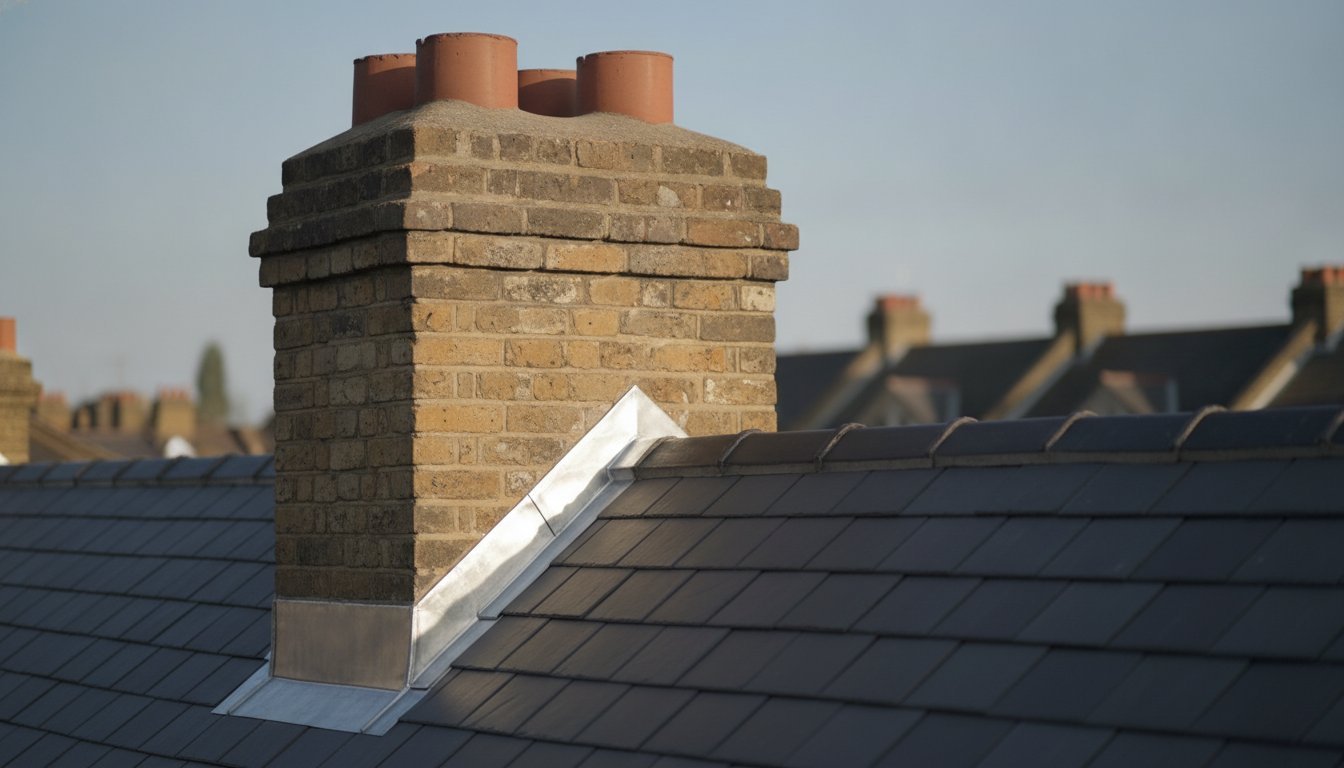
One common issue involves prematurely failing roof materials. When heat is trapped directly under slates due to poor ventilation and insulation placement, it can cause them to ‘cook’ or delaminate over time. Similarly, dampness around the chimney stack often points to failing leadwork. This moisture ingress does not just damage the masonry; it saturates the insulation below. Wet insulation loses its thermal properties almost entirely, creating a permanent bridge for heat to escape.
The Roof’s Winter Behaviour
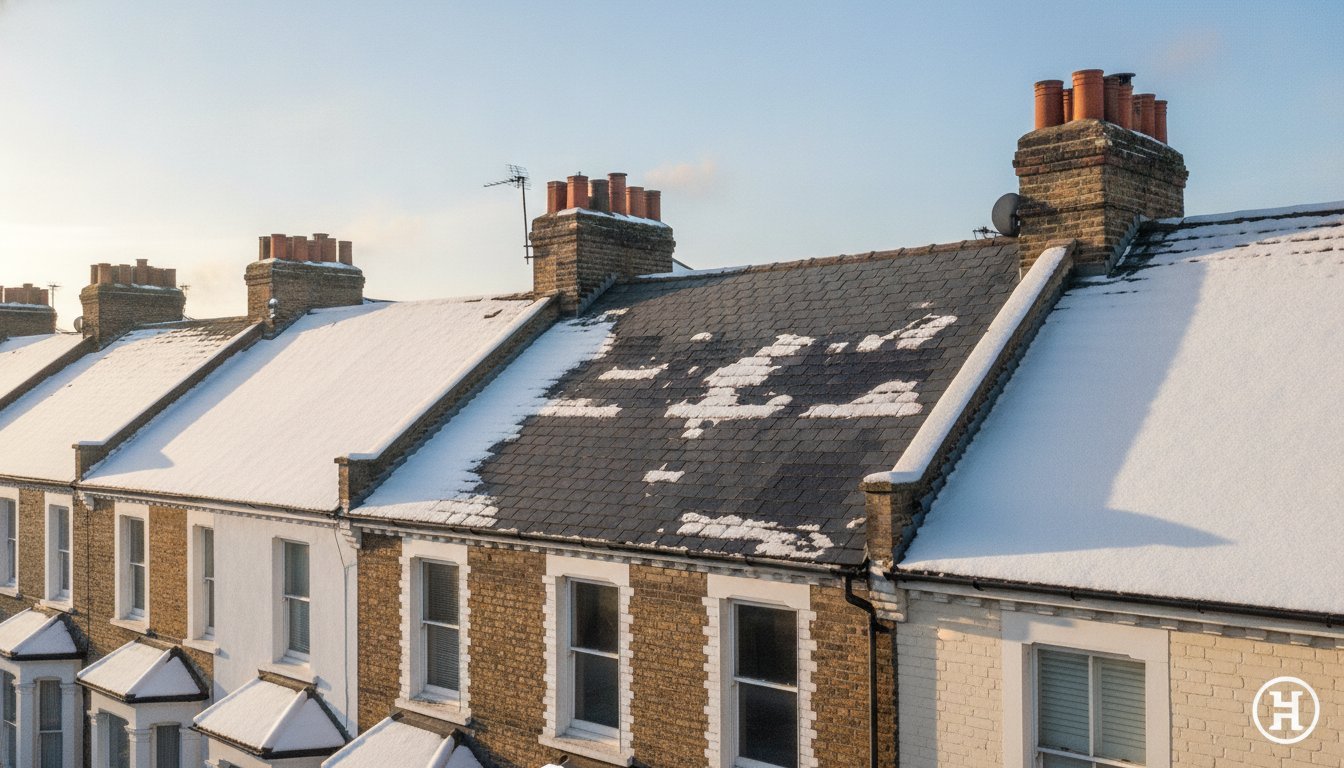
To assess your home’s efficiency, observe the roofline immediately after a frost or light snowfall. Look for hot spots. These are areas where snow has melted in specific patches, often around dormer windows or rooflights. If your neighbours’ roofs remain white whilst yours is damp and clear, you are suffering significant heat loss. You should also inspect the gutter line for icicles. These form when escaping heat melts snow on the roof, which then refreezes at the unheated eaves. This cycle indicates an imbalance that can lower your Energy Performance Certificate (EPC) rating and lead to gutter damage.
Structural Clues in Slate and Lead
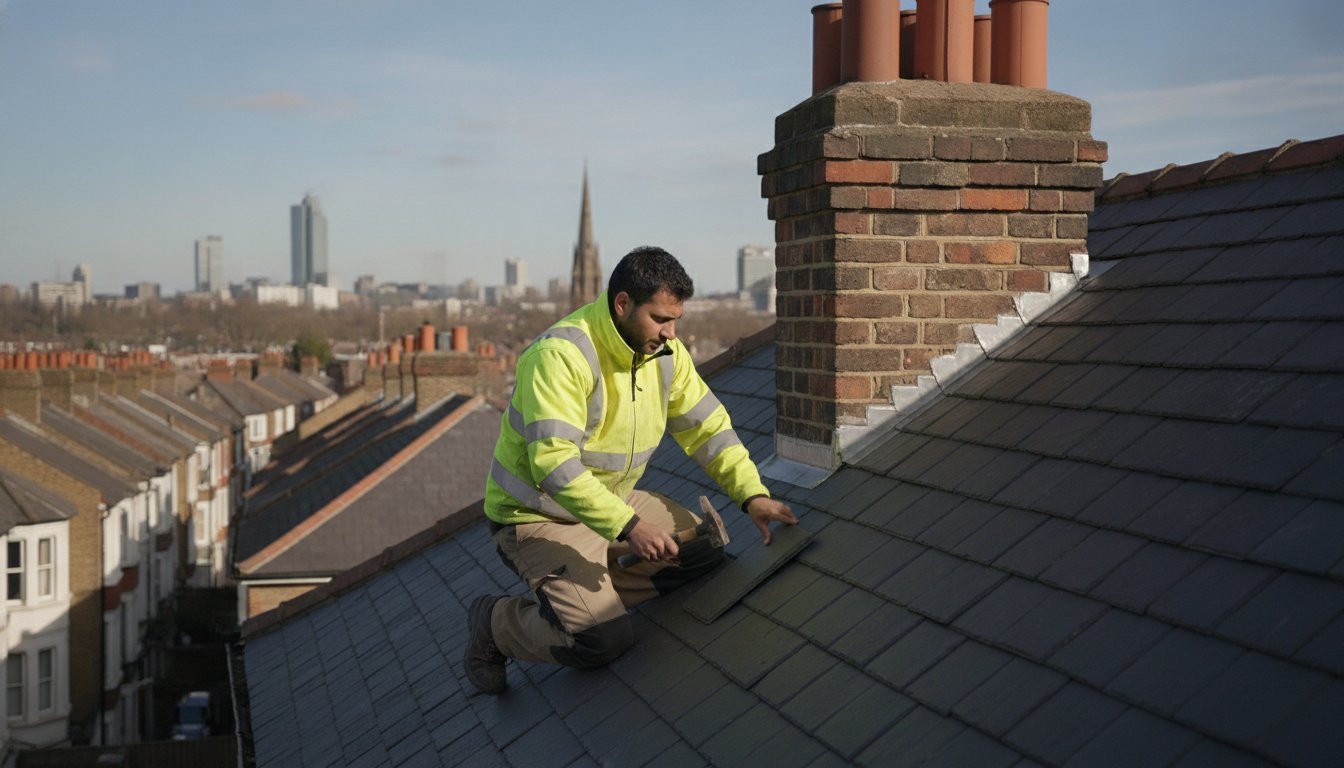
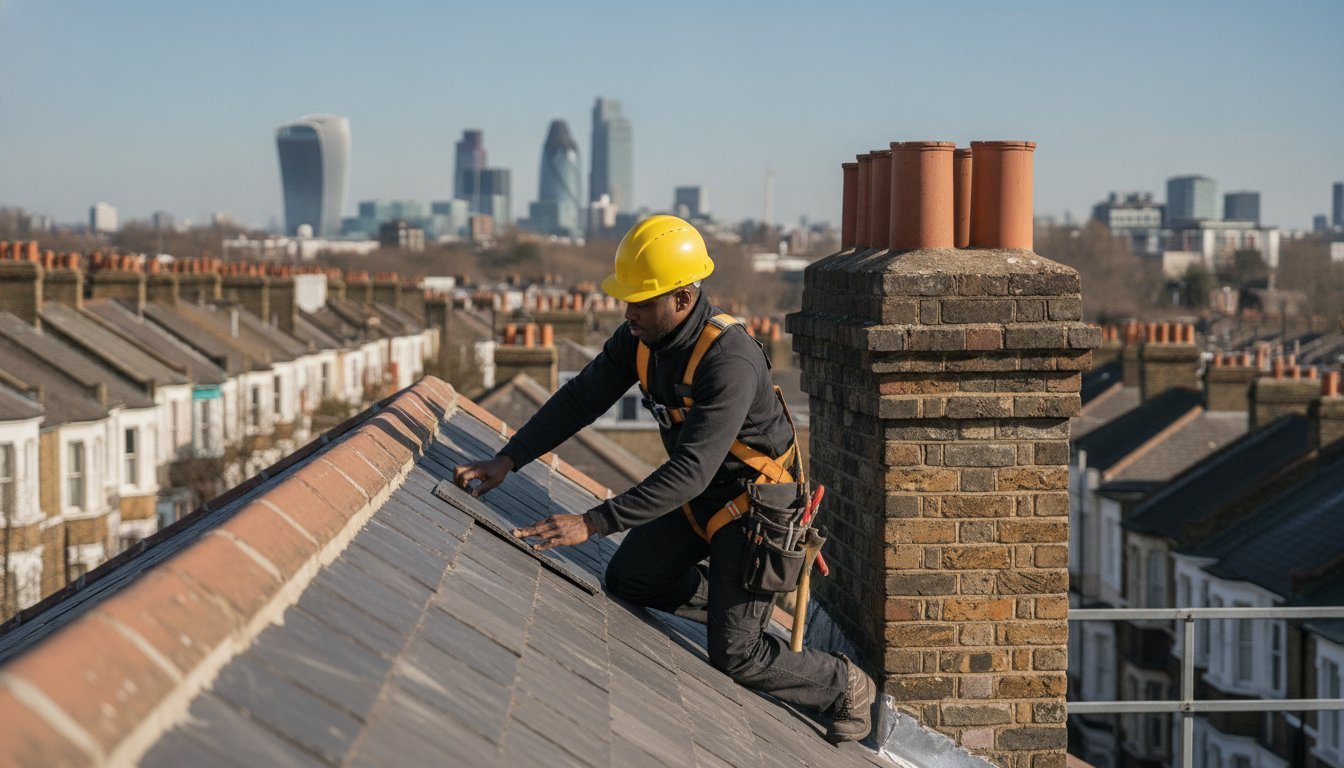
Structural defects and insulation failure are often inextricably linked. Slipped or broken slates allow moisture to penetrate the roof void, which quickly saturates mineral wool or glass fibre batts. Once wet, these materials lose their R-value, as water conducts heat far more effectively than air. The impact of failing lead valleys on the surrounding timber and insulation batts is equally severe, often leading to rot if left unaddressed. For those managing heritage properties, understanding the specific requirements of slate roofing in Hackney is essential for maintaining a dry thermal barrier. Treating insulation as part of a wider roof health check ensures that your thermal upgrades aren’t undermined by structural neglect.
Why Hackney’s Period Properties are Prone to Thermal Inefficiency
Hackney is renowned for its Victorian and Edwardian architecture, but these buildings were designed in an era when coal was cheap and thermal efficiency was not a priority. Most local heritage homes feature solid wall construction, which lacks the cavity insulation found in modern developments. This structural reality means that the roof becomes the primary point of heat regulation for the entire building. Understanding the historical context of these properties helps explain many of the signs of poor roof insulation Hackney owners encounter during the winter months.
The 19th-century building philosophy favoured a “Cold Roof” legacy. This approach prioritised high levels of ventilation to prevent timber rot, effectively treating the loft as an outdoor space. Whilst this protected the structure, it did nothing to retain warmth. Additionally, the parapet walls common in East London terraces often create thermal bridges. These shared structural elements can act as radiators, conducting heat from your living space directly to the cold external air. Many lofts also contain outdated materials from mid-20th-century renovations, such as degraded wood-fibre or potentially hazardous asbestos-era products, which provide negligible thermal resistance by modern standards.
Challenges of the Victorian Terrace
Insulating a traditional Hackney home requires a nuanced approach due to complex roof geometries. Narrow pitches and “butterfly” roofs, which dip in the centre, create restricted spaces where standard insulation cannot easily reach. When planning thermal roof insulation upgrades, you must balance modern performance with heritage aesthetics. Breathability is the most critical factor here. Using non-breathable materials against old brickwork can trap moisture, leading to the very rot the original “Cold Roof” design sought to avoid.
Commercial vs Residential Insulation Gaps
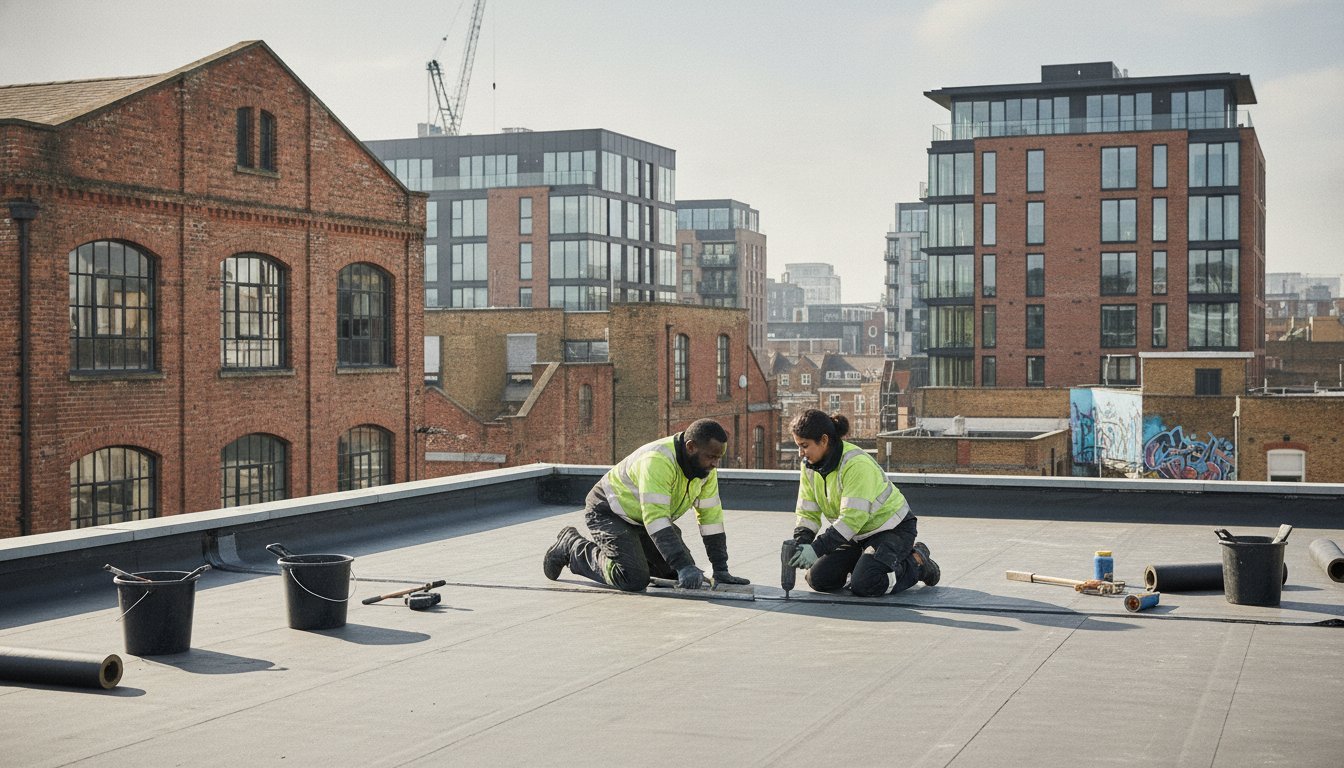
The borough’s industrial heritage has led to many converted warehouses that present unique thermal challenges. In commercial roofing Hackney projects, flat roof sections often lack adequate thermal breaks. Metal deck or concrete roofs in business premises can conduct heat away with alarming speed if not correctly specified. These large-scale structures require specialised systems that address the signs of poor roof insulation Hackney commercial tenants often report, such as excessive condensation on structural beams. If your property is struggling with inconsistent temperatures, you can book a professional insulation assessment to identify the best solution for your building’s specific architectural needs.
Professional Assessment: Restoring Thermal Performance and Comfort
Once you have identified the signs of poor roof insulation Hackney homeowners often observe, the next step is a formal technical evaluation. A simple loft check by a general surveyor might miss the nuances of East London’s complex roof structures. Whilst a quick visual inspection is a start, a comprehensive professional roof survey examines the entire system, including the leadwork, slate condition, and timber health. This methodical approach ensures that any insulation upgrade is built on a solid, dry foundation, preventing the need for costly remedial work in the future.
The Professional Survey Process
Modern assessments rely on precision technology like thermal imaging cameras. These tools allow specialists to pinpoint exact points of heat escape that are invisible to the naked eye, such as gaps in old mineral wool or thermal bridges at the eaves. Before adding new materials, it is vital to check for pests, existing damp, and the structural integrity of the joists. Adding high-performance insulation to a damp roof is a recipe for disaster; it traps moisture against the timber and accelerates structural rot by preventing the wood from breathing.
Modern Solutions for Hackney Homes
Choosing the right system depends on how you use your property. A ‘Cold Roof’ upgrade involves placing insulation on the loft floor, which is cost-effective for storage-only spaces. A ‘Warm Roof’ system places the thermal barrier between the rafters, keeping the entire loft space at a comfortable temperature. For those with East London extensions, integrating these upgrades with a flat roof installation Hackney project provides a seamless finish and superior energy retention.
High-performance PIR boards are often preferred over traditional mineral wool for their superior R-value and space-saving properties. However, ventilation remains the most critical factor in any installation. Sealing a roof too tightly without adequate airflow can lead to interstitial condensation and timber decay. In 2026, the ROI for these upgrades is faster than ever. With energy prices remaining volatile, the reduction in heating demand typically allows the system to pay for itself through lower utility bills within a few winter seasons. If you are ready to address the signs of poor roof insulation Hackney has highlighted in your home, Contact Roofing in Hackney for a professional thermal assessment today.
Securing Your Hackney Home’s Thermal Future
Addressing the signs of poor roof insulation Hackney homeowners face is more than a matter of seasonal comfort; it’s a vital step in maintaining the health of a heritage building. We have explored how internal draughts and external snow patterns signal significant heat loss, and why the traditional construction of East London properties requires a specialised approach to thermal upgrades. Whether you are managing a Victorian terrace or a commercial conversion, ensuring your roof meets modern performance standards is essential for long-term efficiency and structural protection.
Our team brings expert local knowledge of East London period properties to every project. As fully insured and highly rated local roofing specialists, we specialise in energy-efficient ‘Warm Roof’ conversions that respect your home’s architectural integrity whilst providing maximum thermal performance. Don’t let your heating budget escape through outdated materials or structural gaps. Book a Professional Roof Insulation Assessment in Hackney today to restore your home’s warmth and secure its value for years to come.
Frequently Asked Questions
Can poor roof insulation cause damp and mould in my Hackney home?
Yes, inadequate insulation is a primary cause of condensation-related damp and mould. When heat escapes through the roof, it leaves internal ceiling and wall surfaces cold. When warm, moist air from your daily activities hits these cold spots, it turns into water droplets, creating the damp environment where black mould thrives in bedroom corners and upper-floor cupboards.
How much money can I save on energy bills with better roof insulation?
You can achieve substantial savings because up to 25% of a home’s heat is lost through an uninsulated roof. Whilst exact figures depend on your heating habits, reducing this heat loss directly lowers the workload on your boiler. This is particularly important in Hackney, where 14.1% of households face fuel poverty and need to maximise every pound spent on energy.
What is the best insulation for a Victorian terrace roof in Hackney?
Breathable materials are essential for the traditional brickwork found in Hackney’s heritage homes. High-performance PIR boards are excellent for space-saving, whilst mineral wool remains a reliable choice for loft floors. The “best” option always depends on your specific roof structure and whether you require a warm or cold roof system to maintain structural integrity.
Is it better to insulate the loft floor or the roof rafters?
The choice depends entirely on how you intend to use your loft space. Insulating the floor, known as a ‘Cold Roof’, is the most cost-effective way to keep the living areas below warm if the loft is only for storage. Insulating the rafters, or a ‘Warm Roof’, is necessary if you want the loft itself to stay at a comfortable temperature for use as a room.
How do I know if my current roof insulation needs replacing?
Physical degradation is one of the most certain signs of poor roof insulation Hackney homeowners should look for. If your insulation is damp, compressed, or less than 270mm thick, it is no longer performing effectively. Outdated materials like old wood-fibre or mid-century rolls often lack the thermal resistance required to meet modern 2026 building standards.
Can I install roof insulation myself, or should I hire a professional Hackney roofer?
Whilst some loft floor insulation can be a DIY task, professional installation is strongly recommended to ensure compliance with building regulations. Specialists ensure that vital ventilation gaps are maintained. Incorrect DIY installation often leads to interstitial condensation, which can rot your roof timbers and lead to incredibly expensive structural repairs later on.
Will new insulation make my roof space too hot in the summer?
No, high-quality insulation actually helps keep your home cooler during the summer months. It acts as a thermal barrier that blocks solar heat from penetrating through the slates and into your living space. This regulation ensures a more consistent climate across all floors of your property throughout the entire year.
Does poor insulation affect the lifespan of my roof slates?
Yes, poor thermal regulation can lead to the premature failure of heritage roofing materials. When heat is allowed to build up directly beneath the slates, it can cause them to ‘cook’ or delaminate over time. Identifying the signs of poor roof insulation Hackney properties exhibit, such as uneven snow melt, can help you prevent this thermal stress from damaging your roof’s exterior.