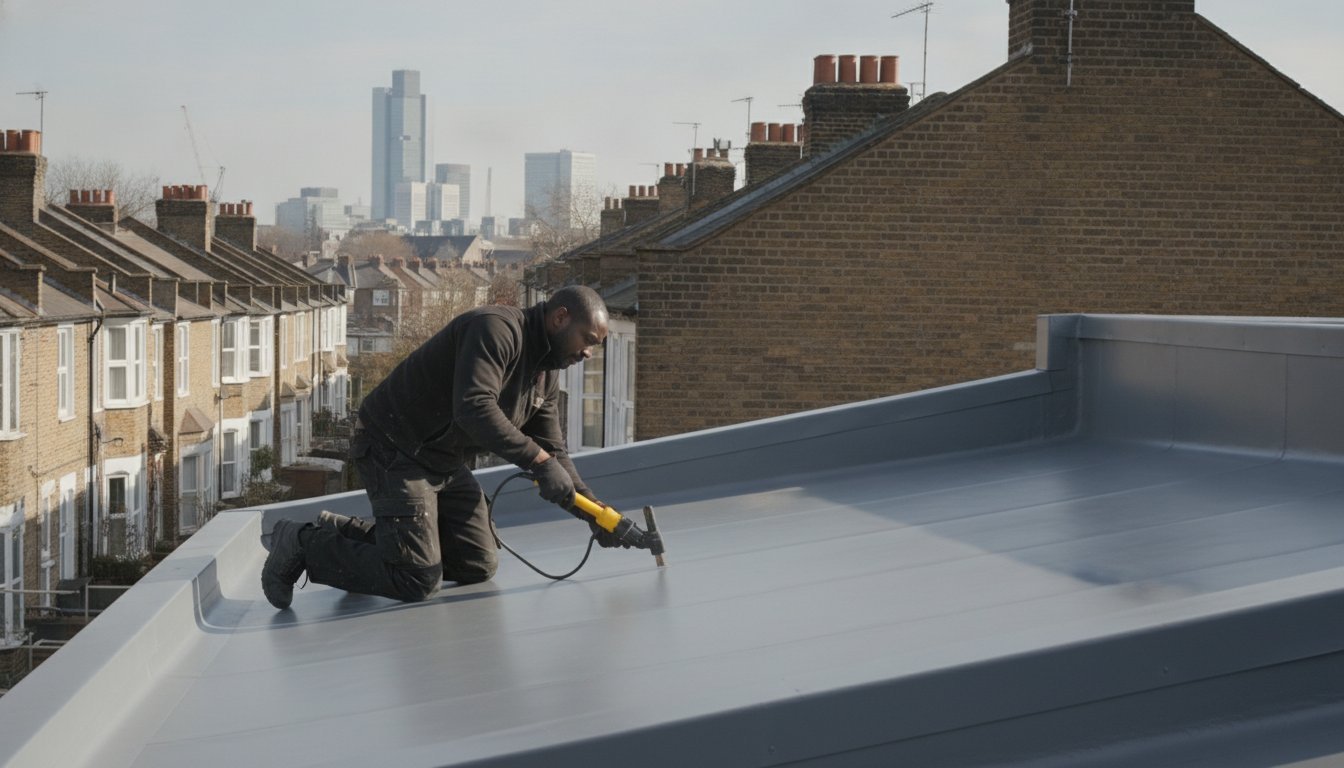
Why does a flat roof repair in Hackney often feel like a temporary patch rather than a permanent solution for your home? Many homeowners find themselves trapped in a cycle of recurring leaks and rising energy bills, even after paying for professional help. It’s a common frustration in East London, where the marriage of period masonry and modern roofing requires a specific level of technical proficiency to ensure a result that actually lasts.
We understand that you want more than a superficial fix; you require a structural investment that offers security and thermal efficiency. This definitive 2026 guide will show you how to identify failure points and organise your maintenance using master craftsman techniques. We’ll examine the latest BS 6229:2025 standards, the necessity of “warm roof” upgrades under Part L regulations, and how to choose materials that ensure your property remains dry whilst staying well-insulated for decades.
Key Takeaways
- Identify early signs of membrane fatigue and structural stress unique to East London’s architectural styles and weather patterns.
- Compare the longevity and performance of modern materials like EPDM and GRP to select the most cost-effective solution for your home.
- Apply the “Rule of 30” to decide whether a professional flat roof repair Hackney is the right choice or if a full replacement is required to meet current building regulations.
- Learn how modern leak detection technology and master craftsman techniques ensure a precise, durable fix that integrates seamlessly with existing masonry.
- Establish a bi-annual maintenance schedule to protect your investment and maintain the thermal efficiency of your property throughout the year.
Common Causes of Flat Roof Failure in Hackney Properties
Hackney’s architectural heritage brings character, but it also presents specific structural vulnerabilities. Most Victorian terraces in the area have undergone multiple rear extensions, often topped with flat roofs that must contend with the shifting foundations of London clay. When homeowners seek a flat roof repair Hackney, the root cause is frequently found in the way these older structures move and interact with the environment.
Seasonal shifts in East London play a significant role. The intense heat of recent summers causes traditional membranes to expand, whilst sudden winter downpours lead to rapid contraction. This cycle places immense stress on common flat roof construction materials, particularly those that have already exceeded their expected lifespan. In the borough’s leafier pockets, such as those near Victoria Park or London Fields, the accumulation of organic debris in gutters creates a damming effect. This trapped moisture accelerates the degradation of the protective mineral layer, leading to the eventual failure of the waterproofing system.
The Problem with Ageing Bitumen and Felt
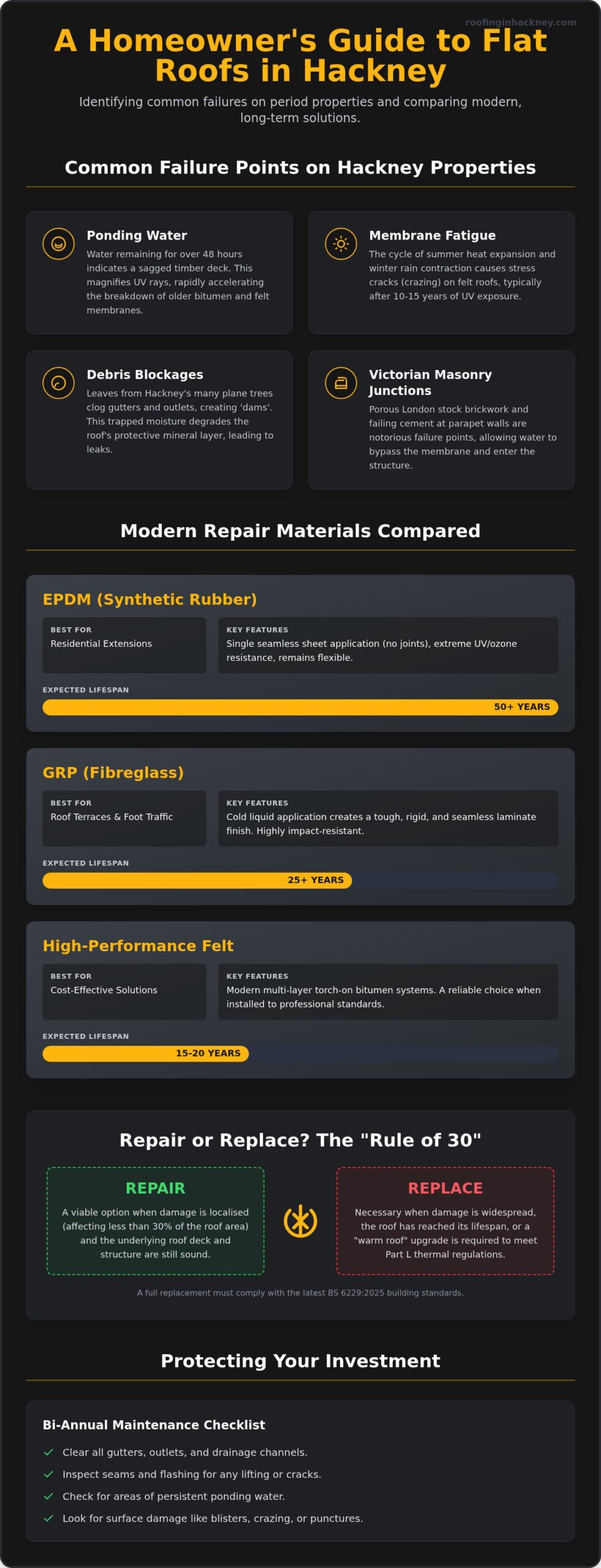
Ponding water is often the first visible indicator that a roof’s structural integrity is compromised. If water remains on the surface for more than 48 hours after rain, it suggests the underlying timber deck may have sagged. This standing water acts like a magnifying glass for UV rays, which speeds up the breakdown of the bitumen. Crazing refers to a network of fine cracks on the surface of a felt roof, typically occurring after ten to fifteen years of UV exposure as the oils in the bitumen evaporate. Once these cracks appear, moisture begins to seep into the substrate, leading to internal rot that remains hidden until a significant leak occurs.
Hackney-Specific Issues: Victorian Extensions and Parapet Walls
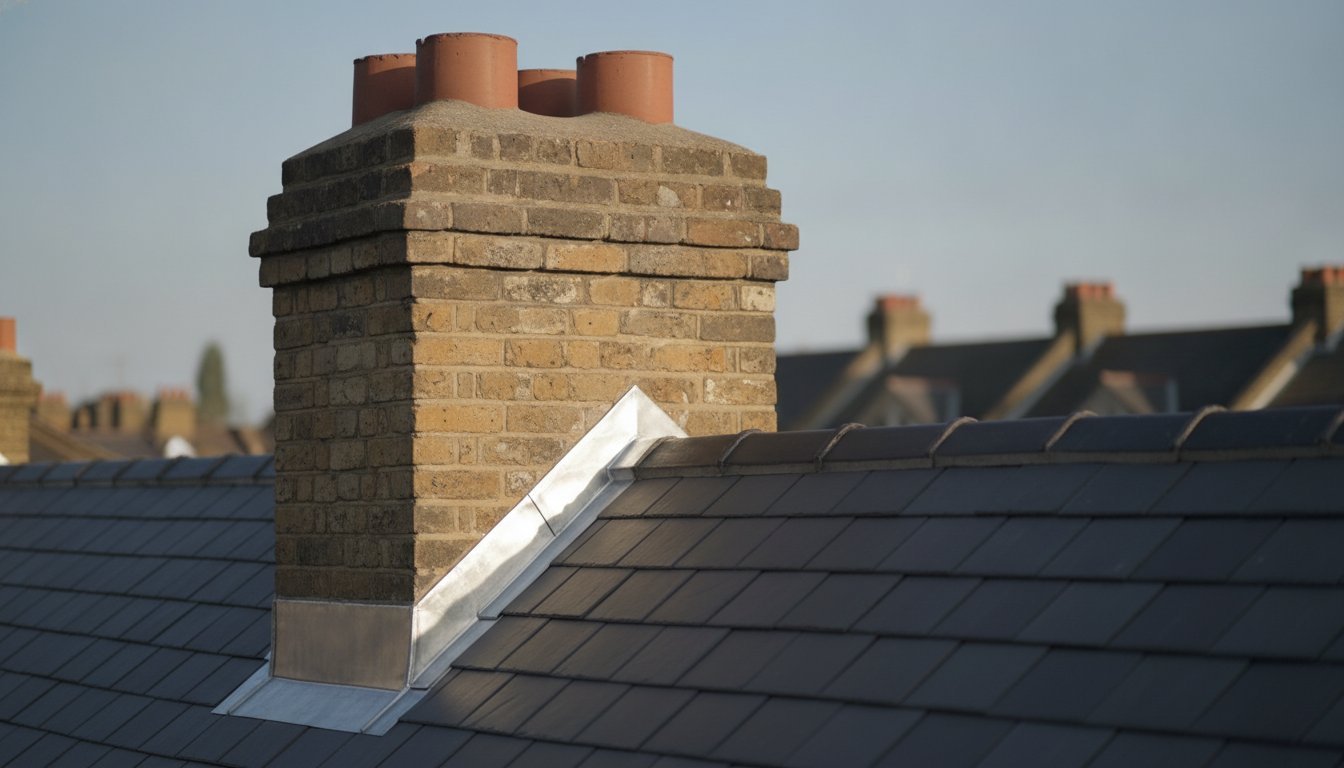
The junction where a flat roof meets traditional London stock brickwork is a notorious failure point. In many Hackney conversions, the parapet walls are finished with sand and cement haunching rather than professional leadwork. Over time, the porous nature of old brickwork allows water to bypass the roof membrane entirely. We often find that a flat roof repair Hackney requires more than just a new membrane; it necessitates the integration of high-quality lead flashing to create a watertight seal against the masonry. Additionally, internal drainage systems in older properties are frequently undersized for modern rainfall patterns. Debris from the borough’s many plane trees often clogs these narrow outlets, causing water to back up and find its way into the property’s timber joists.
Modern Repair Materials: EPDM, GRP, and High-Performance Felt
Selecting the correct material for a flat roof repair Hackney is no longer a matter of choosing the cheapest felt. Modern roofing technology has evolved to offer systems that prioritise thermal efficiency and extreme longevity. Whilst traditional multi-layer torch-on bitumen remains a viable, cost-effective option when installed to professional roofing standards, many homeowners are now opting for advanced synthetic membranes. These systems offer superior protection against the volatile London climate and the structural stresses common in East London’s period properties.
EPDM Rubber: The Durable Standard for 2026
Ethylene Propylene Diene Monomer, or EPDM, has become the preferred choice for residential extensions across the borough. Its primary advantage lies in its seamless application; large sheets can often cover an entire roof without a single joint. This eliminates seams, which are the most common failure points in traditional roofing. EPDM is a synthetic rubber membrane known for its exceptional resistance to ozone and UV radiation, often boasting a typical 50-year lifespan in the UK climate. Because it remains flexible across a wide temperature range, it doesn’t crack or “craze” like older bitumen systems. For those considering a complete upgrade, our guide on Modern Flat Roof Installation Hackney provides a deeper look at these high-performance systems.
GRP and Liquid Solutions for Complex Roofs
Glass Reinforced Polyester (GRP), commonly known as fibreglass, is the ideal selection for Hackney properties with roof terraces or balconies. It creates a completely rigid, impact-resistant surface that can withstand foot traffic and the weight of garden furniture without compromising the waterproof seal. Unlike rubber, GRP is applied as a cold liquid and reinforced with matting, resulting in a tough, laminate finish that looks incredibly neat against period masonry.
For roofs with complex geometries, such as those featuring multiple skylights or awkward chimney stacks, liquid-applied polyurethane membranes offer a versatile alternative. These coatings are fleece-reinforced and bond directly to almost any substrate, providing a seamless finish that integrates perfectly with traditional leadwork repairs at the edges. If you are unsure which system suits your specific property, you can speak with a master craftsman to arrange a technical assessment of your roof’s current condition. Our focus is always on providing a solution that balances long-term durability with the unique aesthetic requirements of your home.
Flat Roof Repair vs. Full Replacement: Making the Right Call
Deciding whether to commission a targeted flat roof repair Hackney or invest in a full replacement is a decision that impacts both your immediate budget and your home’s long-term energy performance. A master craftsman’s approach involves looking beyond the surface leak to assess the structural health of the entire roofing system. We often advise homeowners to apply the “Rule of 30” as a starting point. If the cost of professional repairs exceeds 30% of the total replacement value, the financial logic shifts towards a new installation, especially when you consider the added value of a long-term guarantee.
Current Building Regulations also dictate the scope of your project. Under the 2026 update to Part L, if you are repairing or replacing more than 25% of the roof area, you are legally required to upgrade the thermal insulation. This ensures the roof achieves a U-value of 0.16 W/m²K. Whilst this may increase the initial project cost, the reduction in energy bills and the improvement in home comfort often justify the investment. We always conduct a thorough survey of the underlying timber decking and joists; if the substrate is compromised by rot, a simple membrane patch will inevitably fail.
When a Professional Patch Repair is Sufficient
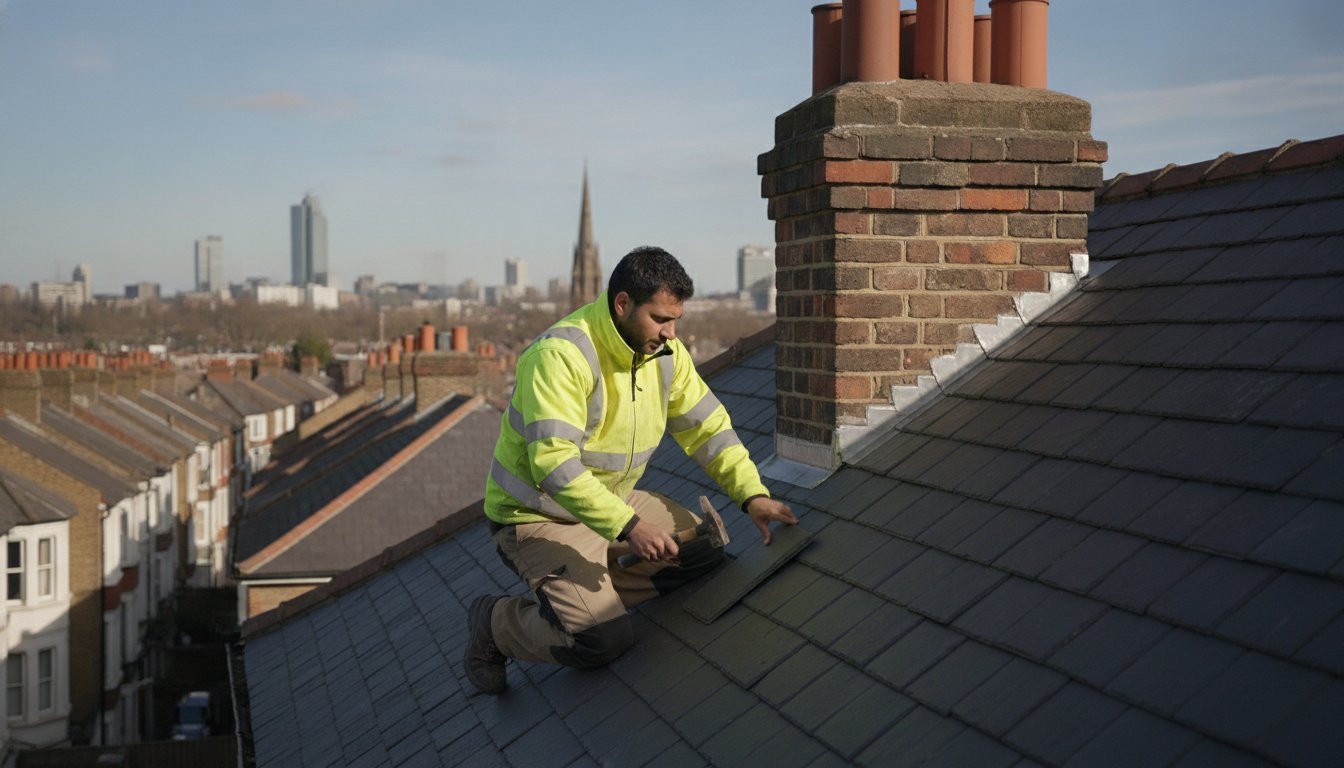
Localised repairs are often the most sensible route when the damage is isolated and the overall membrane remains in good condition. This typically occurs when falling debris from a neighbouring chimney or a slipped slate from a main roof causes a puncture. In these scenarios, a master craftsman can apply a high-performance liquid-applied overlay or a compatible membrane patch to restore the seal. These targeted interventions are effective for addressing minor edge failures or small splits in the bitumen. They serve as a reliable solution whilst you organise a longer-term maintenance plan for the property.
Signs That a Full Replacement is Non-Negotiable
Certain symptoms indicate that the roofing system has reached the end of its functional life. “Soggy roof syndrome” occurs when water penetrates the waterproof layer and saturates the insulation beneath. This trapped moisture cannot evaporate; instead, it creates a constant source of damp that rots the timber deck and destroys the roof’s thermal properties. If you notice significant internal damp patches or visible sagging in the ceiling, the structural integrity of the roof is likely compromised. In such cases, a Professional Roof Replacement Hackney is the only way to ensure the safety and longevity of your home. A full replacement allows us to install modern “warm roof” insulation and high-performance membranes that meet the rigorous 2026 standards.
The Professional Repair Process: What to Expect from a Hackney Specialist
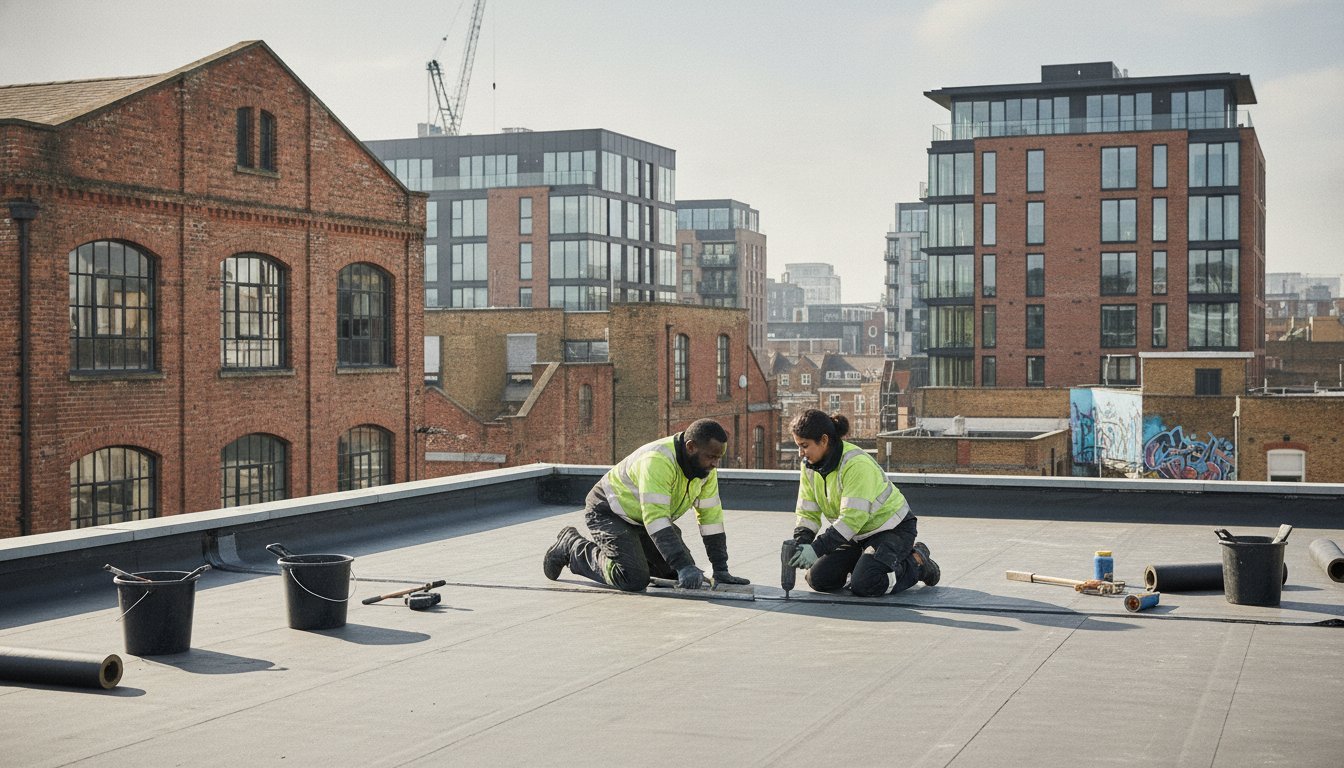
A professional flat roof repair Hackney begins with a methodical assessment that extends far beyond a simple visual inspection. Our approach is rooted in the “Master Craftsman” ethos, where every project is treated as a precise engineering task rather than a quick fix. We prioritise transparency and order, ensuring that you understand the technical requirements of the repair before any work commences on your property. This structured workflow is designed to eliminate the unpredictability often associated with roofing maintenance, providing a clear path from initial leak detection to a fully restored, durable finish.
Initial Assessment and Leak Detection
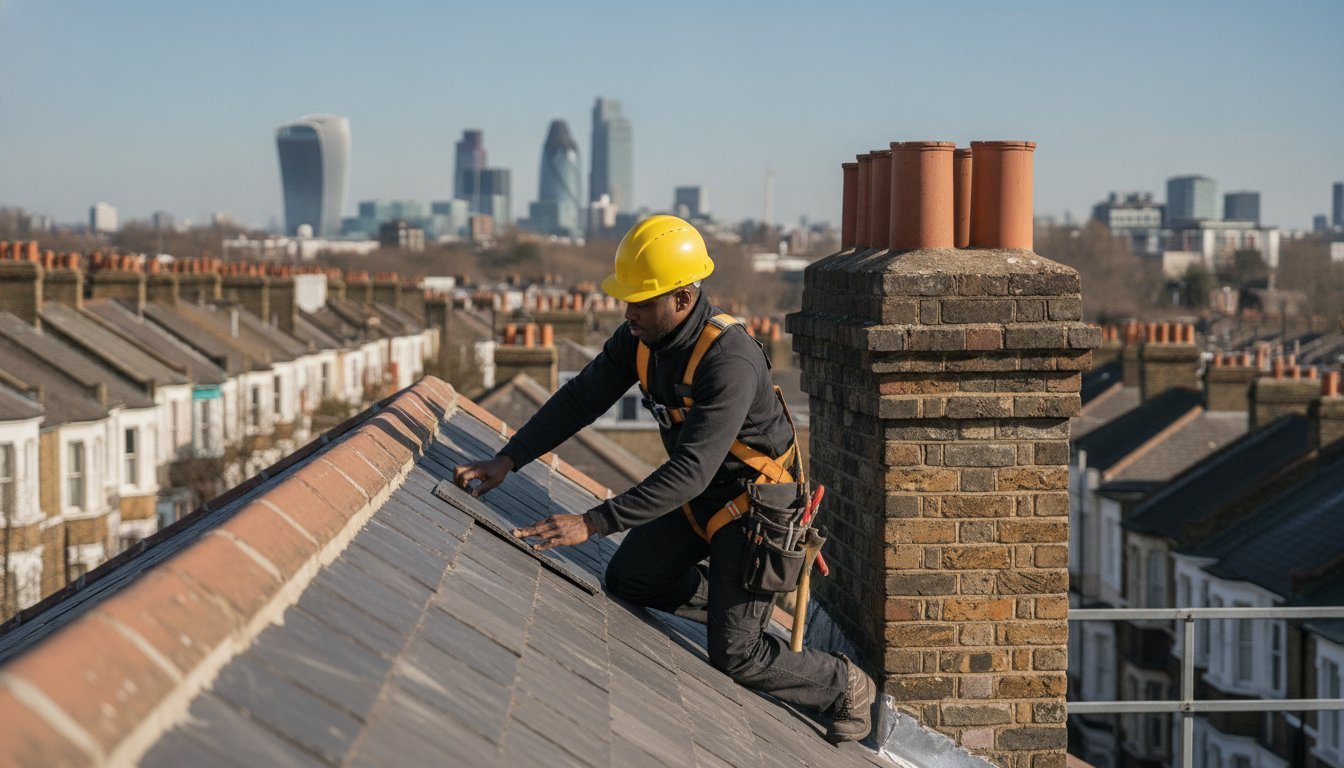
Visual inspections alone are rarely sufficient for modern flat roofs. Water often travels significant distances from the entry point before appearing as a damp patch on your ceiling. We utilise modern leak detection techniques to pinpoint the exact source of ingress, whether it’s a hairline split in the membrane or a failure in the peripheral structures. We pay particular attention to the integrity of chimney stacks and lead valleys, as these are frequent sites of moisture penetration in older Hackney terraces. Following the survey, we provide a detailed, transparent quote that outlines the specific materials and labour required, ensuring there are no hidden costs as the project progresses.
In the dense urban environment of East London, organising safe access is as critical as the repair itself. We coordinate all necessary scaffolding or ladder access whilst making every effort to minimise disruption to your Hackney neighbours. Once access is secured, the surface preparation phase begins. This is the most critical step for ensuring long-term adhesion. We remove all organic growth, debris, and loose mineral chippings to create a pristine substrate. Without this level of preparation, even the highest-quality modern membranes will eventually fail to bond correctly.
The Importance of Master Leadwork in Flat Roofing
One of the hallmarks of a specialist flat roof repair Hackney is the seamless integration of traditional leadwork. Many failures occur at the roof perimeters where the membrane meets the brickwork. We organise precision lead flashing to secure these edges, providing a watertight seal that modern adhesives alone cannot match. This combination of traditional lead and modern membranes creates an aesthetic harmony that is particularly important for heritage properties and conservation areas within the borough. By adhering to these high standards, we ensure your repair not only stops the leak but also preserves the architectural character and value of your home. To begin your project with a professional assessment, you can request a technical roof survey from our local team.
Ensuring Long-Term Durability: Maintenance and Professional Oversight
A successful flat roof repair Hackney represents a significant investment in your property’s structural health and thermal efficiency. To ensure the work reaches its maximum potential lifespan, a proactive approach to maintenance is essential. Whilst modern materials like EPDM and GRP are designed for extreme durability, the dense urban environment of East London presents unique challenges, from heavy leaf fall to the shifting foundations of period terraces. Establishing a consistent care routine is the most effective way to protect your home and avoid the stress of unexpected leaks.
We recommend a thorough bi-annual maintenance checklist, ideally performed in early spring and late autumn. This schedule allows you to prepare the roof for the winter rains and assess any stress caused by summer heatwaves. Your primary focus should be the drainage outlets. Blocked internal drains or gutters cause water to pond, which places unnecessary weight on the timber joists and accelerates the degradation of the membrane’s surface. When clearing these areas, always use a plastic scoop or your hands; never use sharp metal tools that could accidentally pierce the waterproofing layer.
Homeowner Maintenance Tips
Regularly removing moss and organic debris is vital for preventing water pooling. Debris often acts as a sponge, holding moisture against the membrane and encouraging further biological growth. After periods of extreme London heat, it’s wise to check for “blistering” or “bubbling” in older felt systems. These air pockets indicate that moisture is trapped within the layers and may soon lead to a breach. If you notice any changes in the surface texture or if water remains on the roof for more than 48 hours after rain, it’s time to call a specialist for a precautionary check-up. Early intervention is always more cost-effective than an emergency call-out during a storm.
The Value of Local Expertise
Choosing a Hackney-based contractor offers benefits that extend beyond technical proficiency. Our deep familiarity with the borough’s specific architectural preservation requirements ensures that every repair respects the heritage of your home whilst meeting modern standards. Because we are rooted in the local community, we provide faster response times and a level of accountability that national firms cannot match. Our commitment to quality is backed by the Roofing in Hackney guarantee, providing you with long-term peace of mind and the assurance that your property is protected by master craftsman standards.
Professional oversight is the final piece of the durability puzzle. A specialist survey can identify subtle signs of seam fatigue or leadwork movement that are invisible to the untrained eye. By catching these issues early, you save thousands in potential structural repairs and internal redecoration costs. Ready to secure your home? Contact our Hackney flat roof specialists today to organise a comprehensive technical assessment of your roofing system.
Securing Your Hackney Home for the Future
Navigating the complexities of flat roof repair Hackney requires a balance between respecting East London’s architectural heritage and embracing 2026 technical standards. By identifying early signs of fatigue and choosing high-performance materials like EPDM or GRP, you transform a simple maintenance task into a long-term structural investment. Whether you’re addressing a minor leak in a Victorian extension or planning a full “warm roof” upgrade to meet modern thermal requirements, the right approach prioritises durability over temporary fixes.
As a trusted local family-run business, we pride ourselves on being specialists in heritage leadwork and modern flat roofing. We ensure every project integrates seamlessly with your property’s existing masonry whilst providing the security of a professional guarantee. Don’t wait for the next storm to test your home’s defences. Request your free Hackney flat roof survey and quote today to benefit from master craftsman expertise. Protecting your property now ensures a leak-free, energy-efficient environment for years to come.
Frequently Asked Questions
How much does a flat roof repair cost in Hackney?
The cost of a flat roof repair Hackney varies significantly based on the chosen material, the extent of the damage, and the complexity of the access. Factors such as the condition of the underlying timber deck and the requirement for specialist leadwork integration will influence the final investment. A professional assessment ensures you receive a transparent, detailed quote tailored to the specific architectural requirements of your property.
How long does a flat roof repair typically last?
A professional repair’s lifespan depends largely on the materials used and the quality of the installation. Modern synthetic membranes like EPDM can last up to 50 years in the UK climate, whereas a traditional felt patch might only offer a five to ten-year solution. Utilising master craftsman techniques and high-performance materials ensures your repair remains durable and watertight for the long term.
Can you repair a flat roof in the rain?
Permanent flat roof repairs cannot be carried out during active rainfall because the substrate must be completely dry for adhesives and membranes to bond correctly. Whilst emergency temporary covers can be installed to prevent immediate water ingress, a specialist will always wait for a dry window to perform the final application. This prevents moisture from being trapped within the roof structure, which would otherwise lead to rot.
Do I need scaffolding for a flat roof repair in East London?
Scaffolding is often required for flat roof projects in East London to comply with health and safety regulations and to provide safe access to the working area. In Hackney’s narrow streets and terrace layouts, we organise the most efficient access solution possible to minimise disruption to your neighbours. For minor, single-storey repairs, tower scaffolds or safe ladder access might suffice, depending on a technical risk assessment.
Is it better to patch a flat roof or replace the whole thing?
It’s generally better to replace the roof if the repair cost exceeds 30% of the replacement value or if more than 25% of the area is damaged. Under the 2026 Building Regulations, significant repairs also trigger the requirement for insulation upgrades to meet modern thermal standards. Patching is a viable solution for isolated punctures, but widespread saturation of the insulation layer usually necessitates a full replacement.
Are flat roof repairs covered by home insurance in the UK?
Home insurance in the UK typically covers flat roof repairs caused by sudden, accidental events like storm damage or falling debris. However, insurance providers rarely cover leaks resulting from gradual wear and tear, poor previous installation, or a lack of regular maintenance. It’s important to check your specific policy wording, as many insurers require proof of professional inspections to validate a claim for structural damage.
How do I know if my flat roof is leaking or if it is just condensation?
Condensation often appears as uniform dampness across a ceiling during cold spells, whilst a leak typically produces a concentrated, brown-edged stain that worsens specifically after rain. If the dampness persists regardless of the weather, it may be condensation caused by poor ventilation within the roof void. A professional survey using modern leak detection technology can accurately differentiate between the two and identify the source of the moisture.
Can I carry out a DIY flat roof repair on my Hackney property?
DIY repairs are not recommended for flat roofs due to the technical precision required for watertight seams and the risk of voiding your home insurance. Professional contractors ensure compliance with the latest BS 6229:2025 standards and provide a formal guarantee that DIY work cannot match. Attempting a complex flat roof repair Hackney yourself can also lead to hidden structural damage if the integrity of the underlying timber deck isn’t correctly assessed.