That faint, tea-coloured stain on your Victorian ceiling isn’t just a cosmetic nuisance; it’s often the final warning of a structural failure that’s been months in the making. For many homeowners in East London, the primary anxiety isn’t just the damp itself, but the potential roof leak repair cost Hackney specialists might quote if the water has already compromised the timber rafters. It’s natural to feel a sense of dread when you spot a new mark on the plasterwork, especially when you’re caught between the confusion of internal condensation and the fear of a failing roof.
We believe that home maintenance should be grounded in clarity rather than guesswork. In 2026, protecting the unique character of Hackney’s period properties requires a methodical approach to spotting damage early. This guide provides a structured overview of ten critical warning signs, ranging from subtle leadwork fractures to overt masonry damp. You’ll gain the technical insight needed to conduct a safe self-inspection, helping you determine the urgency of repairs whilst ensuring your property remains a secure investment. By the end of this article, you’ll know exactly how to identify if your roof is the source of the problem before a minor drip turns into a major restoration.
Key Takeaways
- Recognise subtle internal indicators, such as tea-coloured ceiling stains and bubbling paintwork, before they escalate into significant structural damp.
- Identify external faults specific to East London properties, including slipped natural slates and the common issue of “nail sickness” in older Victorian roofs.
- Understand how factors like material selection and scaffolding logistics for terraced streets determine the total roof leak repair cost Hackney residents can expect in 2026.
- Discover why parapet walls and chimney stacks are primary ingress points for water in Hackney’s period homes and how to monitor their condition.
- Learn the methodical steps for conducting a safe self-inspection and the specific criteria for transitioning to a professional technical roof survey.
Spotting Early Signs of Roof Water Damage Inside Your Property
Water ingress often manifests internally long before a tile falls into the street. Identifying these signs of roof water damage early is the most effective way to manage the eventual roof leak repair cost Hackney homeowners will face. When moisture penetrates the external envelope, it rarely follows a straight path; instead, it tracks along structural timbers, often appearing several feet away from the actual source of the leak. As we move through 2026, the prevalence of these issues in East London’s ageing housing stock remains a primary concern for local residents.
Ceiling Stains and Discolouration Patterns
The most common indicator is a persistent yellow or brown ring on the ceiling. An active leak typically feels damp to the touch or appears glossy, whilst a historic, dried-out stain will be matte and brittle. It’s a mistake to assume the hole is directly above the mark. Water frequently travels down the slope of a rafter before dripping onto the plasterboard. If you notice staining concentrated near an external wall, it usually suggests a failure in the guttering system or the lead flashing where the roof meets the masonry. Unlike a plumbing leak, which is often constant, roof-related dampness typically fluctuates with the weather, intensifying after heavy rainfall.
Wall Dampness and Plaster Integrity
In Hackney’s Victorian terraces, moisture often presents as bubbling paintwork or peeling wallpaper on upper-floor walls. Look closely for efflorescence, which is a white, salty deposit left behind when water evaporates from brickwork. This is a clear sign of penetrating damp from the roof rather than rising damp from the ground. If the plaster feels soft or crumbles when pressed, the internal structural integrity is already failing. Distinguishing between these issues is vital, as a misdiagnosis can lead to unnecessary expenses and a higher roof leak repair cost Hackney contractors might charge for remedial work that doesn’t fix the root cause.
Beyond visual cues, your senses can detect hidden damage. A heavy, musty odour in the loft or upper bedrooms often indicates that the mineral wool insulation is saturated. Wet insulation loses its thermal properties and becomes a breeding ground for mould. Most critically, if you observe any sagging in the plasterboard, treat it as an emergency. Water can pool on top of the ceiling until the weight causes a sudden, catastrophic collapse. If you suspect your ceiling is at risk of failure, you should contact us for an urgent assessment before the damage worsens.
Exterior Warning Signs: Identifying Faulty Slates and Leadwork
Identifying external defects from ground level is a vital skill for any homeowner looking to manage the long-term roof leak repair cost Hackney properties often incur. Whilst internal stains signal an existing problem, external inspections can reveal vulnerabilities before the first drop of water enters the building. In Hackney’s dense residential streets, Victorian terraces present specific challenges, particularly regarding the longevity of original materials. As we move through 2026, many of these heritage roofs are reaching a point where maintenance is no longer optional.
Slate and Tile Degradation
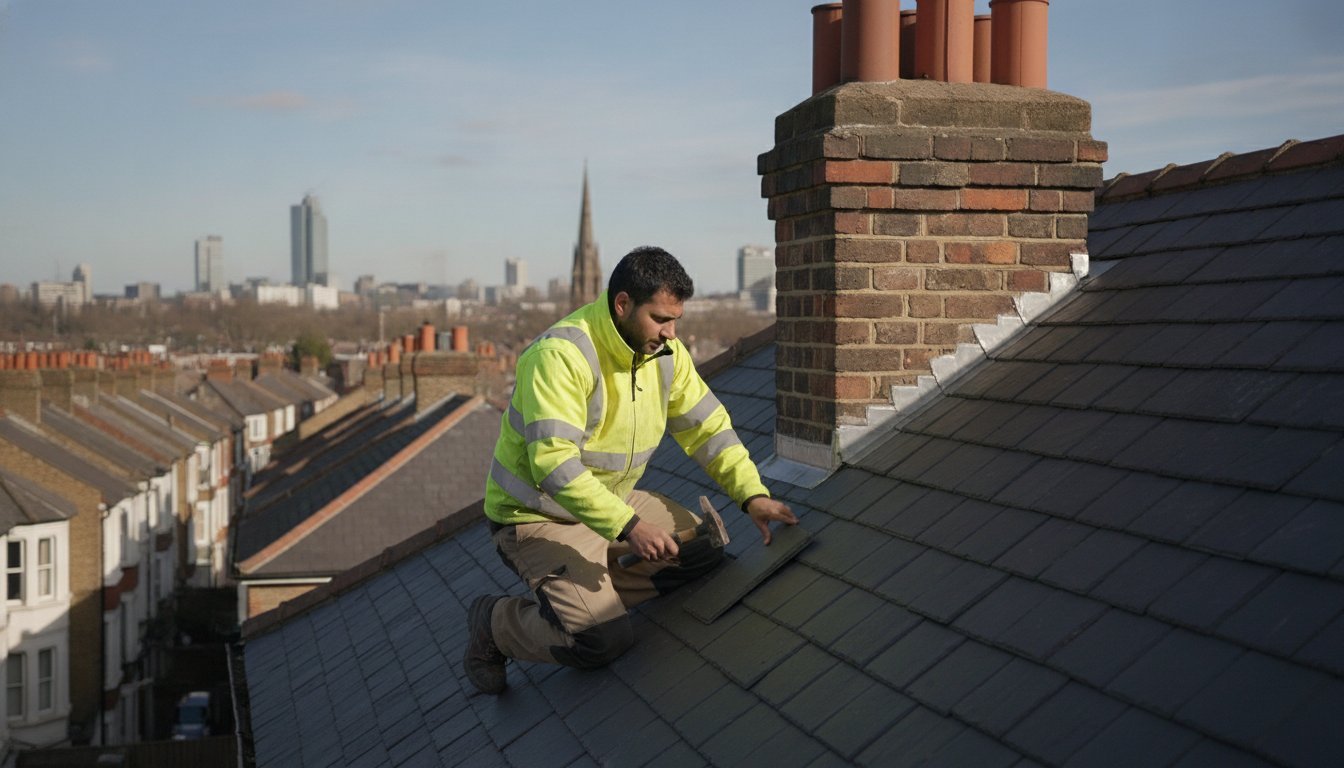
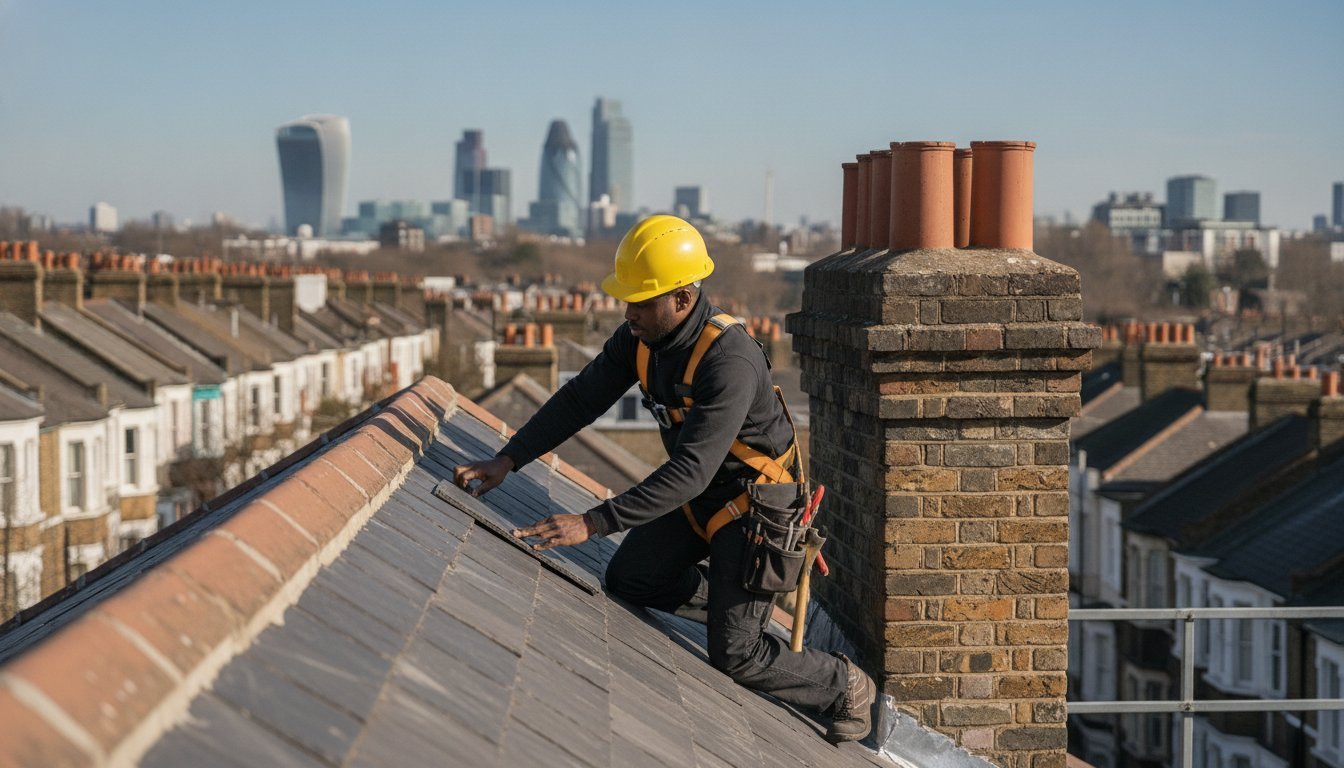
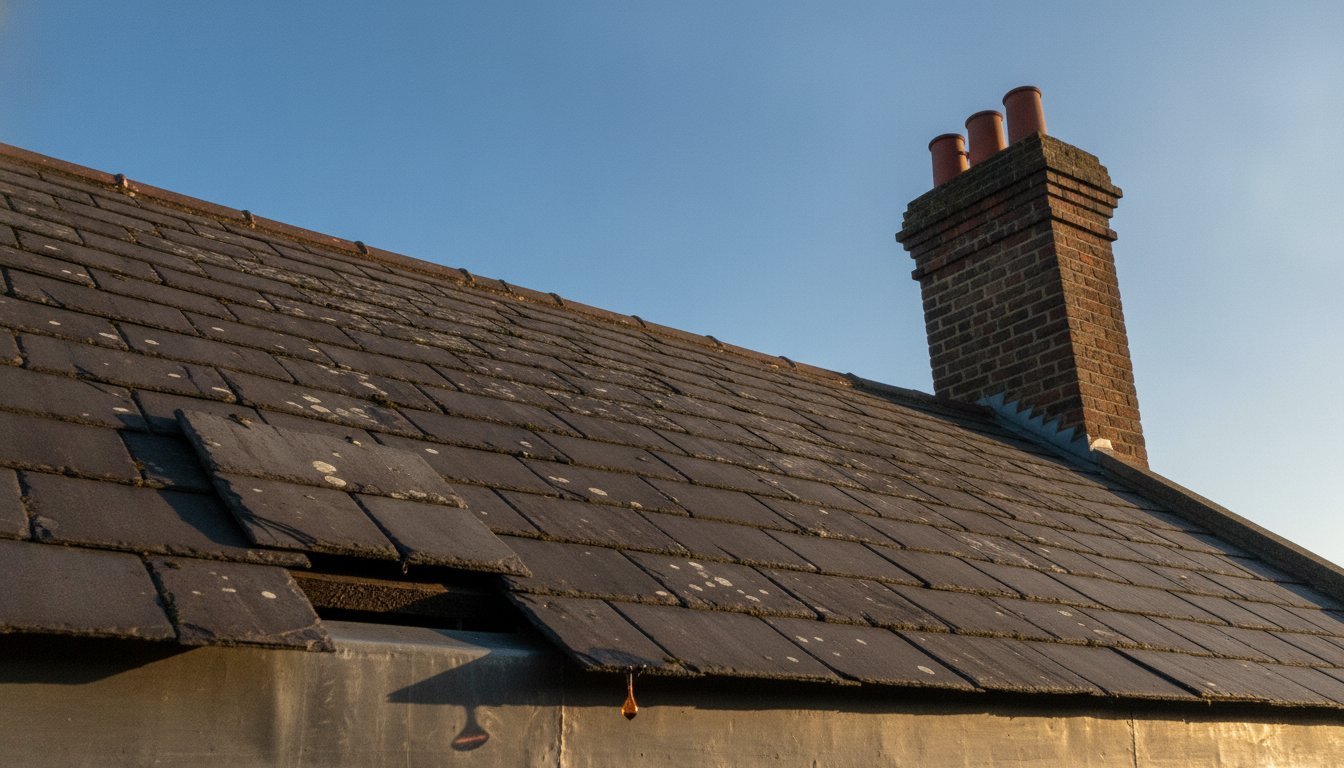
Natural slate is incredibly durable, but it isn’t immortal. You should look for “slipped” slates that have slid out of alignment, often leaving a visible gap in the uniform pattern. This is frequently caused by “nail sickness,” a condition where the original iron nails holding the slates in place have corroded away over a century of service. When slates begin to delaminate, they peel in thin layers, absorbing moisture and becoming significantly heavier. This extra weight puts unnecessary strain on the timber structure below. For a deeper dive into preserving these heritage materials, see our guide to Mastering Slate Roofing in Hackney.
Leadwork and Flashing Failures
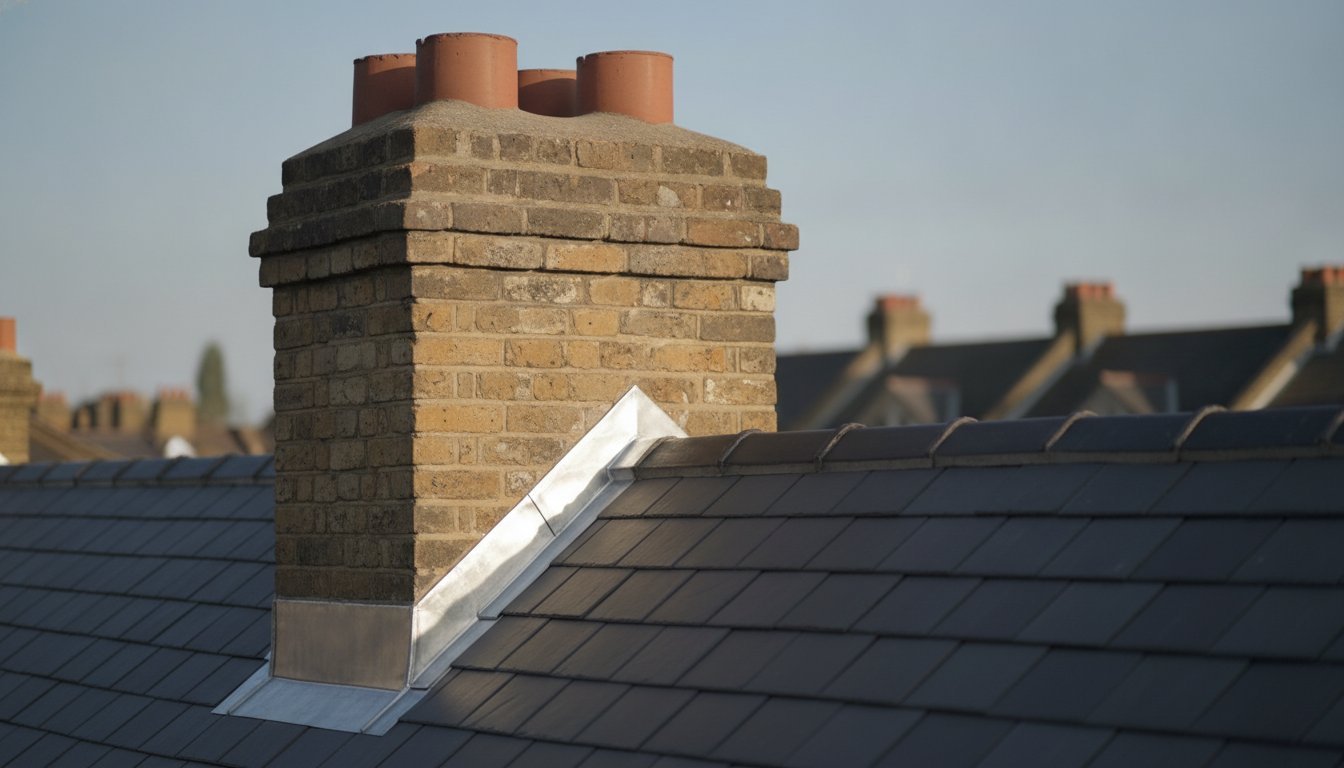
Lead is the unsung hero of a period roof, yet it’s often the first component to fail. Because lead is a malleable metal, it expands and contracts with the East London temperature shifts. Over several decades, this thermal movement causes “fatigue splits,” which are small cracks that allow water to seep into the roof joins. You should pay close attention to the stepped flashing around chimney stacks and the lead valleys where two roof slopes meet. If the lead looks buckled or has visible horizontal cracks, it’s no longer providing a watertight seal. These failures are subtle but are a primary cause of penetrating damp in older buildings.
Finally, check your guttering for more than just leaves. Finding a collection of slate granules or chunks of mortar in the downpipes is a clear sign that your roof coverings or chimney repointing are actively degrading. Spotting these issues early allows for targeted maintenance, which significantly reduces the total roof leak repair cost Hackney homeowners have to budget for. If you’ve noticed debris in your gutters or seen slates on the pavement, it might be time to request a professional assessment to secure your home’s exterior.
Roof Leak Repair Cost Hackney: What Influences the 2026 Price?
Determining the roof leak repair cost Hackney residents will pay in 2026 requires looking beyond generic national averages. Whilst a minor tile replacement in a rural area might be straightforward, the architectural density and heritage requirements of East London introduce unique variables. Professional leadwork and slate restoration are investments in longevity that prevent the cyclical expense of cheap, temporary patches. Understanding the components of a professional quote helps you distinguish between a quick fix and a lasting structural solution.
Material and Labour Cost Drivers
The choice of material creates the most significant variance in your final invoice. Replacing a single slipped Welsh slate is a relatively minor task, but repairing a failed lead valley requires a specialist master craftsman and more extensive labour. In 2026, the logistics of sourcing high-grade materials and the rising cost of skilled London labour mean that heritage-appropriate repairs carry a premium. Using modern concrete tiles on a Victorian terrace often devalues the property and can lead to structural weight issues, making natural slate the more cost-effective choice for long-term value. Specialist leadwork, whilst requiring a higher initial investment, provides a watertight seal that can last for decades longer than modern synthetic alternatives.
The Hidden Costs of Secondary Damage
A leak left unaddressed quickly migrates from a roofing issue to a structural one. When water penetrates the roof envelope, it often saturates the mineral wool insulation. Once this material becomes sodden, it loses its ability to trap heat and can rarely be dried out effectively, necessitating a full replacement. This is an ideal time to consider Thermal Roof Insulation Upgrades to improve your home’s energy efficiency whilst the roof is being accessed. Replacing damp insulation prevents mould growth and protects your internal air quality.
Beyond insulation, prolonged moisture exposure leads to dry rot in the timber rafters. If the structural integrity of the roof’s frame is compromised, the repair shifts from a simple patch to a complex timber restoration. In Hackney’s narrow terraced streets, the cost of scaffolding and the necessary local authority permits for pavement access also play a role. These logistical factors mean that early intervention is the only reliable way to keep the roof leak repair cost Hackney homeowners face from escalating into five-figure sums. We recommend addressing even minor damp patches immediately to avoid these compounding expenses.

Common Water Ingress Points in Hackney’s Victorian and Period Homes
Hackney’s Victorian terraces are architectural gems, but their design includes inherent vulnerabilities that modern buildings often avoid. Parapet walls and hidden valleys are notorious for trapping moisture if they aren’t maintained to high standards. When these features are neglected, the eventual roof leak repair cost Hackney residents deal with increases because the masonry itself begins to fail. Victorian brickwork is particularly porous; once it becomes saturated, it absorbs water through capillary action, pulling dampness deep into the internal plaster. This process can continue for weeks after the rain has stopped.
Parapet Walls and Coping Stones
These walls sit at the very edge of the roofline and are exposed to the elements from three sides. When the mortar joints between coping stones fail, water seeps into the core of the wall. It’s essential that coping stones are properly bedded and feature clear drip grooves on their underside. Without these grooves, rainwater runs directly down the building face, causing unsightly staining and brickwork erosion. We frequently find that failed parapet pointing is the primary cause of damp in upper-floor bedrooms across East London.
Chimney Stacks and Lead Soakers
Chimneys remain a primary ingress point for many period properties. You should look for spalling bricks, where the face of the brick has crumbled away due to freeze-thaw cycles. If a chimney pot is cracked or the mortar flaunching is loose, water travels straight down the flue. We often find that failed lead soakers, which are the hidden metal sheets tucked under the slates, are the culprit for damp patches in the loft. Professional repointing and leadwork restoration are the only ways to secure these complex structures for the long term.
Many period homes in Hackney also feature “V” shaped valleys between pitched sections. These are often undersized for the intense rainfall levels we’re seeing in 2026. Debris accumulates in these narrow channels, causing water to overtop the lead lining and pour directly into the ceiling void. Addressing these specific ingress points early is the most effective way to limit the roof leak repair cost Hackney homeowners eventually face whilst protecting the structural integrity of the property. If you’ve spotted damp near your chimney or along the roofline, you can book a professional chimney and leadwork survey to prevent further ingress.
How to Organise a Professional Roof Survey and Prevent Further Damage
Taking a proactive approach to roof maintenance is the most effective way to control the long-term roof leak repair cost Hackney homeowners face. A safe ground-level inspection should be your first step. Use a pair of binoculars to scan the roofline for the slipped slates or fractured leadwork described in previous sections. Inside the property, use a high-powered torch to examine the loft space, specifically looking for damp rafters or light shining through the roof covering. If you spot these issues, document the damage immediately with clear photographs of both the external fault and the internal impact, as this evidence is vital for any potential insurance claims.
Whilst a visual check provides a useful starting point, you should move from a DIY inspection to a professional technical survey as soon as a defect is confirmed. Accessing a roof without specialist equipment is dangerous and can inadvertently cause further damage to fragile period slates. Modern surveys often utilise high-resolution drones or secure ladder access to provide a comprehensive view of the structure. Acting at this stage is essential to avoid the significantly higher expense of a full roof replacement in Hackney, which becomes necessary once the underlying timber frame begins to rot.
When to Call a Hackney Roofing Specialist
We recommend a 48-hour rule for any active ingress. If water is dripping into your living space, the damage to your ceilings and insulation is accelerating every hour. Minor drips or damp patches found during dry weather can be managed through scheduled maintenance, but they still require professional attention. You should avoid temporary “quick patches” using bitumen or silicone sealants; these materials often trap moisture against the timber and lead to more complex failures. During a consultation with Roofing in Hackney, you can expect a methodical assessment that prioritises long-term structural integrity over superficial fixes.
Preventative Maintenance for 2026
Establishing an annual maintenance cycle is the best defence against the unpredictable East London weather. Every autumn, ensure your gutters are cleared of debris and your lead valleys are inspected for blockages. This simple task prevents water from backing up under the slates during heavy winter downpours. By identifying small cracks in the mortar or minor lead fatigue early, you ensure the roof leak repair cost Hackney contractors quote remains manageable. To secure your property against the elements, we invite you to arrange a professional roof survey. This methodical check-up provides the peace of mind that your home’s most critical structural investment remains watertight and secure.
Securing the Structural Future of Your Hackney Home
Identifying the subtle indicators of water ingress is the first step toward preserving the unique heritage of East London properties. By recognising the difference between active leaks and historic stains, and monitoring the condition of your leadwork and parapet walls, you can prevent minor issues from escalating into major structural failures. In 2026, early intervention remains the most effective way to manage the total roof leak repair cost Hackney homeowners encounter, ensuring that your investment is protected through technical proficiency rather than temporary patches.
As highly-rated East London roofing contractors with over 20 years of experience, we are heritage leadwork and slate roofing experts. Our team provides the methodical expertise required to maintain the architectural integrity of period homes whilst implementing modern standards of durability. We invite you to Book a Professional Roof Survey in Hackney to secure your property for the seasons ahead. Protecting your home starts with a clear understanding of its condition, and we’re here to provide that expert clarity.
Frequently Asked Questions
Is a small brown spot on my ceiling an emergency?
A small brown spot indicates that water has already penetrated your roof’s external envelope and saturated the insulation. Whilst it may look minor, it represents an active ingress point that could lead to ceiling collapse or electrical hazards. You should treat this as an urgent matter to prevent the damage from spreading. Addressing the issue now is the most effective way to keep the eventual roof leak repair cost Hackney specialists quote at a manageable level.
Can I fix a roof leak from the inside of my loft?
Fixing a leak from the inside is a temporary measure that often does more harm than good. Smearing sealant on a damp rafter simply traps moisture against the wood, which accelerates timber rot. A permanent solution requires identifying the external source, such as a fractured lead valley or a slipped slate. Professional repairs must be carried out from the outside to ensure the roof’s primary weather-tight seal is fully restored.
How long does it take for a roof leak to cause structural damage?
Structural issues like wet rot can begin to develop within just a few weeks of persistent moisture exposure. If left for several months, the timber rafters can lose their load-bearing capacity, potentially leading to a sagging roofline. Beyond the timber, water can also damage your home’s electrical wiring and masonry. Early intervention is vital to protect your property’s structural integrity and avoid the significant expense of a full roof replacement.
Does my building insurance cover roof leak repair cost Hackney?
Most building insurance policies cover damage caused by sudden events, such as a storm blowing off slates. However, they typically exclude repairs resulting from general wear and tear or a lack of maintenance. If your leak is caused by “nail sickness” or ageing leadwork, you’ll likely have to cover the roof leak repair cost Hackney contractors charge yourself. Always review your policy’s “trace and access” clause to see if investigation costs are covered.
Why does my roof only leak during heavy rain and wind?
Wind-driven rain can force water into gaps that are normally sheltered, such as under-laps in slates or failed mortar joints on a chimney stack. During heavy downpours, the sheer volume of water can also overwhelm narrow lead valleys or blocked gutters. This causes water to back up and overtop the protective layers of your roof. These “occasional” leaks are still serious and indicate that your roof’s secondary defences are failing.
What is the difference between condensation and a roof leak?
Condensation typically appears as black mould or damp patches in the corners of a room and is caused by poor loft ventilation. A roof leak usually creates a distinct brown or yellow tea-coloured stain that grows larger after a rainstorm. If the dampness persists regardless of the weather, it’s often a ventilation issue. A professional survey can provide a definitive diagnosis by checking the external condition of your slates and leadwork.
How much does it cost to repair water damage in Hackney?
The total price depends on how long the leak has been active and whether structural timbers or insulation need replacing. In Hackney, the logistical challenge of erecting scaffolding on narrow terraced streets can also influence the final bill. It’s always more cost-effective to repair the external source of the leak before the internal damage requires a full restoration. Prompt action prevents a minor drip from escalating into a complex and expensive structural project.
Are Victorian slate roofs more prone to water damage?
Victorian roofs aren’t inherently faulty, but many in East London are now reaching the end of their natural lifespan. The original iron nails often corrode, a condition known as “nail sickness,” which causes slates to slip out of position. Additionally, the original lead flashings may have developed fatigue cracks after a century of thermal movement. These heritage roofs require specialist knowledge in traditional slate roofing and leadwork to maintain their watertight integrity for the future.