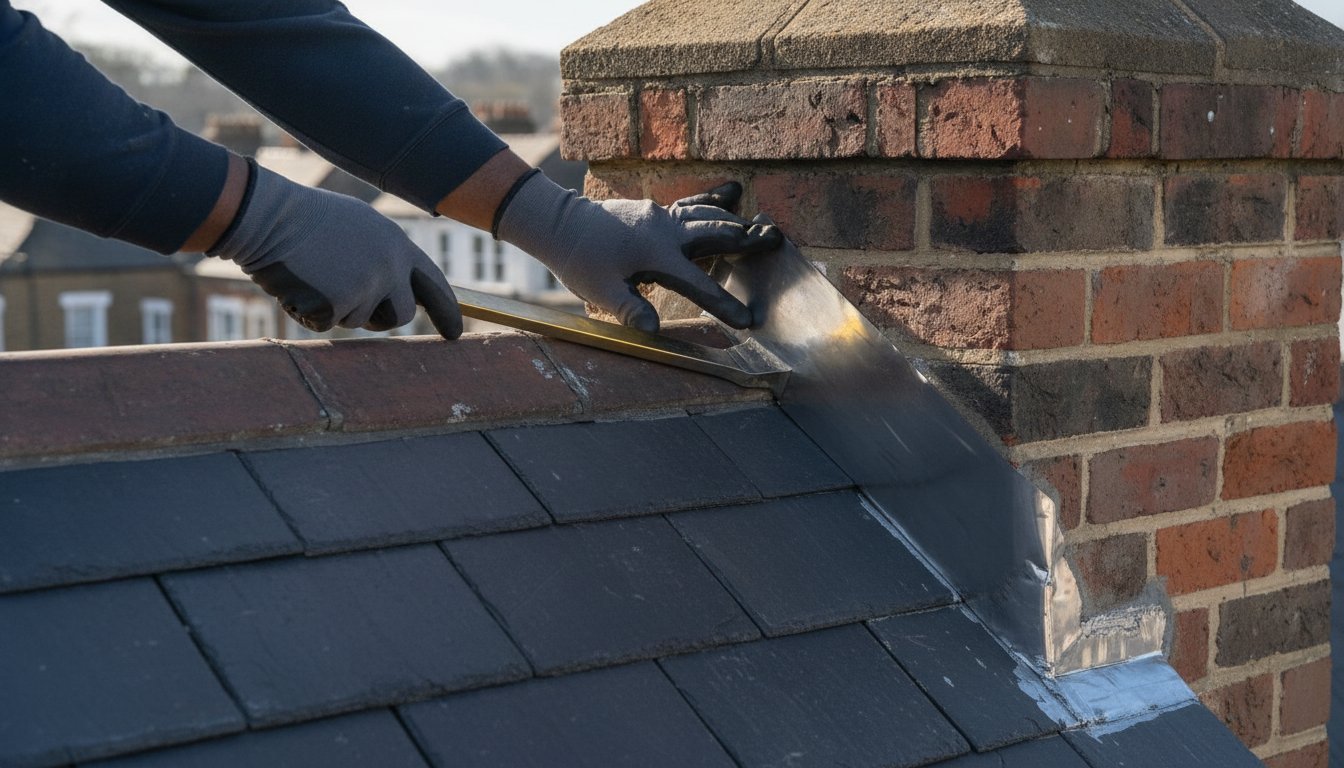
Most homeowners view lead flashing as a static, indestructible shield; however, in the historic terraces of East London, it’s actually a dynamic seal that must expand and contract with the shifting British weather. You’ve likely noticed that persistent damp patch near your chimney or where the extension meets the main wall, even after trying a sealant fix that promised a permanent solution. It’s frustrating to see recurring moisture despite your best efforts, but the reality is that expert lead flashing repair in Hackney requires a deep understanding of traditional materials and thermal movement.
We understand that you want a leak-free home without the fear of spiralling costs or incompetent workmanship. This article provides the clarity you need to distinguish between a simple patch repair and a necessary full replacement, ensuring you don’t overpay for heritage roof maintenance. We’ll examine the technical standards of leadwork, how to spot early warning signs of fatigue, and what to look for when choosing a reliable local specialist to safeguard your property’s long-term integrity. By focusing on craftsmanship over quick fixes, you can protect your investment and maintain the character of your Hackney home for decades to come.
Key Takeaways
- Understand why lead remains the most durable and effective material for preserving the structural integrity of Hackney’s Victorian and Georgian homes.
- Learn to spot the critical signs of lead fatigue, such as surface cracking and failing mortar joints, before they result in expensive internal water damage.
- Discover the hidden risks of using ‘quick-fix’ sealants and how these temporary measures can actually accelerate timber rot within your roof’s structure.
- Gain a clear overview of the professional lead flashing repair in Hackney process, including the importance of using the correct Lead Code for maximum longevity.
- Identify the essential qualities of a specialist leadworker to ensure your repairs meet modern British Standards whilst respecting heritage aesthetics.
Understanding Lead Flashing: The Critical Seal for Hackney Roofs
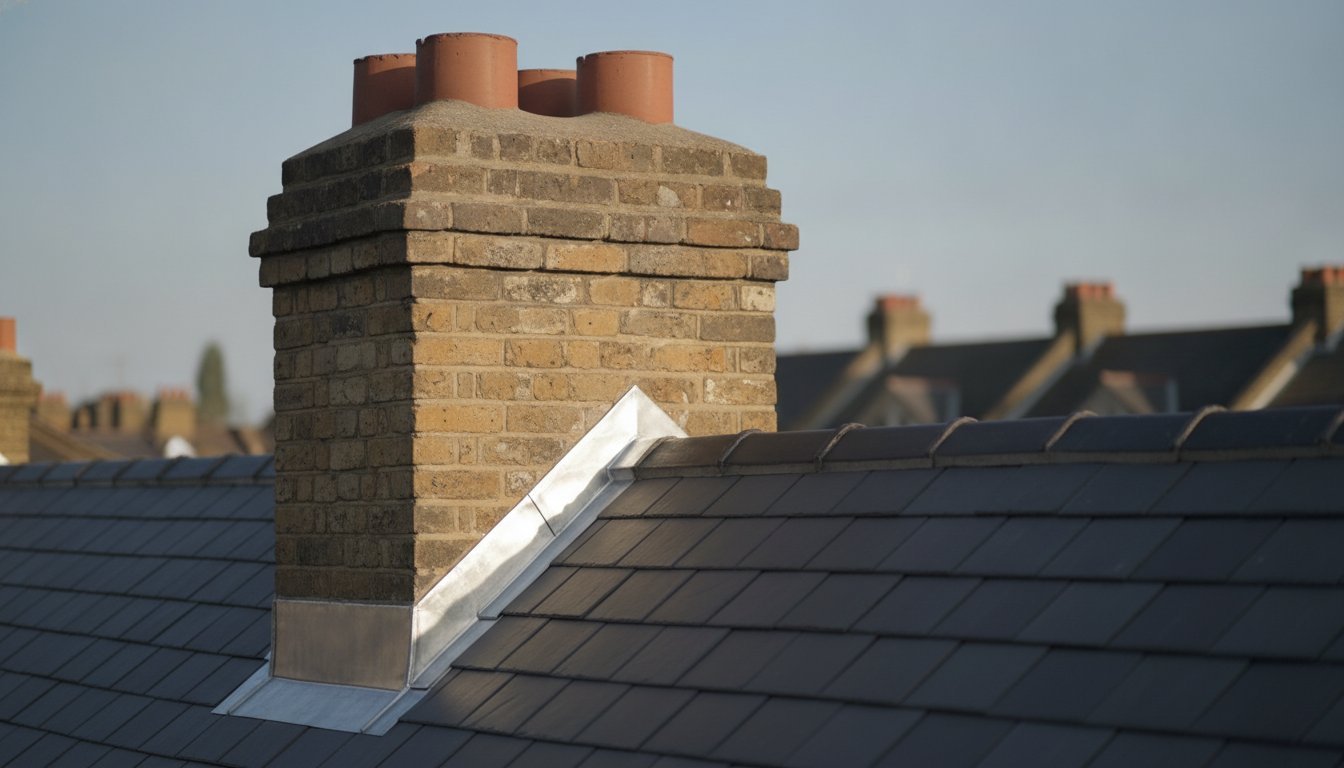
Lead flashing is the flexible waterproof bridge that spans the critical junction between roof tiles and masonry brickwork. In the context of Understanding Lead Flashing, it’s essential to recognise its role as a versatile barrier that prevents moisture from penetrating the most vulnerable parts of a building’s exterior. Lead flashing serves as the primary defence against water ingress at roof junctions. Without this precisely fitted component, water would easily seep into the gaps around chimney stacks, parapet walls, and roof valleys. By channelling rainwater away from these intersections and onto the main roof surface, leadwork protects the internal ceilings and structural timbers from the devastating effects of damp and rot.
Why Hackney Properties Rely on Expert Leadwork
The architectural landscape of Hackney, particularly across the E8 and E9 postcodes, is defined by its stunning Victorian and Georgian terraces. These period properties often feature complex rooflines with multiple intersections that demand a high degree of technical expertise. Lead is the preferred material for these buildings because of its exceptional durability; when installed correctly, it can last for over a century. It provides a level of reliability that modern synthetic alternatives simply cannot match, whilst preserving the historical aesthetic required in Hackney’s many conservation areas. Older London brickwork is also prone to subtle settlement over time. Lead’s natural malleability allows it to remain watertight even as a building shifts, making it an indispensable component for maintaining the structural integrity of East London’s heritage housing stock.
The Science of Thermal Movement in Lead
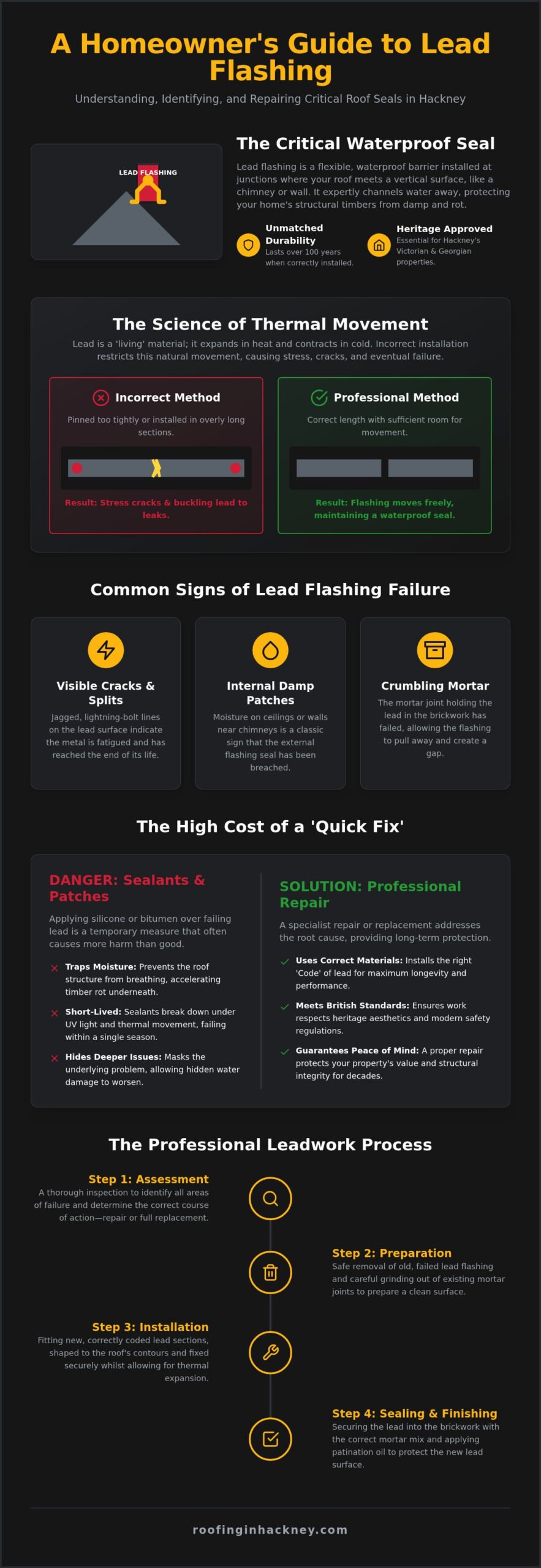
A common reason for seeking lead flashing repair in Hackney is the failure to account for thermal movement. Lead is a “living” material that expands and contracts significantly with East London’s seasonal temperature fluctuations. On a hot summer day, a single length of lead can grow by several millimetres, then shrink back as the temperature drops overnight. If the flashing is pinned too tightly or installed in lengths that are too long, this movement is restricted. This constraint causes the metal to buckle or develop fatigue cracks, eventually leading to deep splits that allow water to bypass the seal entirely. Professional repairs ensure there is sufficient ‘breathing room’ within the joints and fixings, allowing the lead to move freely without compromising its waterproof properties. This technical precision is what separates a Master Craftsman’s work from a temporary patch job that will likely fail within a single season.
Common Signs You Need Lead Flashing Repair in Hackney
Spotting issues early is the key to preventing structural decay. A thorough lead flashing repair in Hackney starts with a visual assessment of the roof’s most exposed points. One of the most obvious indicators is the appearance of visible cracks or splits across the lead surface. These often look like small, jagged lightning bolts and are usually a sign that the metal has reached the end of its natural lifespan. Another frequent culprit is the deterioration of the ‘raggle’. This is the groove cut into the brickwork where the lead is tucked and secured. When mortar in this joint becomes loose or falls out entirely, the flashing can pull away, leaving a direct path for rainwater to enter the cavity.
Don’t ignore the interior of your home. Damp patches on ceilings or walls that sit adjacent to chimney stacks or parapets are almost always linked to failing leadwork. These patches might only appear after heavy driving rain, making them easy to dismiss as a one-off. However, persistent moisture will eventually lead to timber rot and plaster failure. If you notice a fine white powder on the surface of the lead, this is lead carbonate. This oxidation indicates that the material is thinning and losing its protective qualities. Because handling these materials requires specific safe leadwork practices, it’s vital to seek professional guidance rather than attempting a DIY inspection.
Identifying Early Warning Signs from the Ground
You don’t always need a ladder to spot trouble. Using a pair of binoculars allows you to inspect chimney stacks for ‘sagging’ or lead that has visibly slipped from its fixings. Check the exterior brickwork below roof valleys for dark staining or moss growth; these are tell-tale signs of a slow, consistent leak. On a bright day, head into your loft or attic space. If you can see points of daylight where the roof meets the wall, your flashing is no longer providing a watertight seal. If you’ve spotted any of these issues, you can request a professional inspection to assess the extent of the damage.
The Hidden Danger of ‘Lead Fatigue’
Lead fatigue is a silent threat that develops over decades of thermal cycling. As the metal expands and contracts, it eventually begins to crystallise and become brittle. Whilst large splits are easy to see, tiny pinholes can be far more dangerous. These microscopic gaps allow moisture to be drawn into the roof structure via capillary action, often causing significant rot before any visible damp appears inside the property. Lead fatigue is an inevitable result of age that requires specialist intervention to ensure the replacement material is correctly specified for the building’s needs.
The Cost of Neglect: Why ‘Quick Fix’ Sealants Often Fail
It’s understandable why many homeowners are tempted by a quick fix when they first discover a leak. Products like mastic, bitumen-based waterproof tape, or ‘flashband’ are readily available at local DIY stores and offer the illusion of an immediate, low-cost solution. However, these materials are fundamentally incompatible with the long-term mechanics of a period roof. Whilst they might stop the water for a few weeks, they often create a ‘mastic trap’ where moisture is sealed behind the lead against the timber rafters. This trapped humidity accelerates timber rot in the roof’s structural skeleton, often hidden from view until the damage is extensive.
Chemical incompatibility is another significant risk that is rarely discussed. Certain common sealants contain acetic acid, which can react with the lead sheet to cause accelerated corrosion. Rather than protecting the metal, these substances eat away at it from the inside out. When you consider that a simple tube of sealant might cost very little, it’s a false economy. Masking a failing joint in this way can transform a routine maintenance task into a major structural project. A £50 ‘quick fix’ can easily lead to a £5,000 structural repair whilst the true extent of the water ingress remains ignored behind the scenes. Adhering to Lead Sheet Training Academy standards is the only way to ensure a repair is both safe and durable.
Professional Lead Welding vs. Patching
The most effective method for a permanent repair is lead burning, a specialised form of welding that fuses two pieces of lead together. This creates a seamless, homogenous bond that is just as strong as the original sheet. In contrast, adhesive patches only provide a temporary surface barrier. Because lead expands and contracts so much, these patches often lose their grip and begin to peel away during high winds or temperature shifts. If you want to avoid the cycle of recurring leaks, you should contact our Hackney leadwork specialists for a permanent, welded solution that respects the traditional construction of your home.
The Impact on Property Value and Insurance
Poor quality ‘bodge’ repairs can have a serious impact on the value of a period property. During a homebuyer’s survey, an experienced surveyor will immediately spot the tell-tale signs of bitumen tape or messy mastic around a chimney stack. This often signals to a potential buyer that the property hasn’t been maintained to a high standard, leading to price renegotiations. Furthermore, insurance companies are increasingly stringent. If they determine that a leak was caused by a poorly maintained or inappropriately patched roof, they may reject your claim for internal damage. Maintaining the authentic heritage look required for Hackney’s Victorian terraces isn’t just about aesthetics; it’s about protecting your financial investment and ensuring your insurance coverage remains valid.
The Professional Leadwork Repair Process: What to Expect
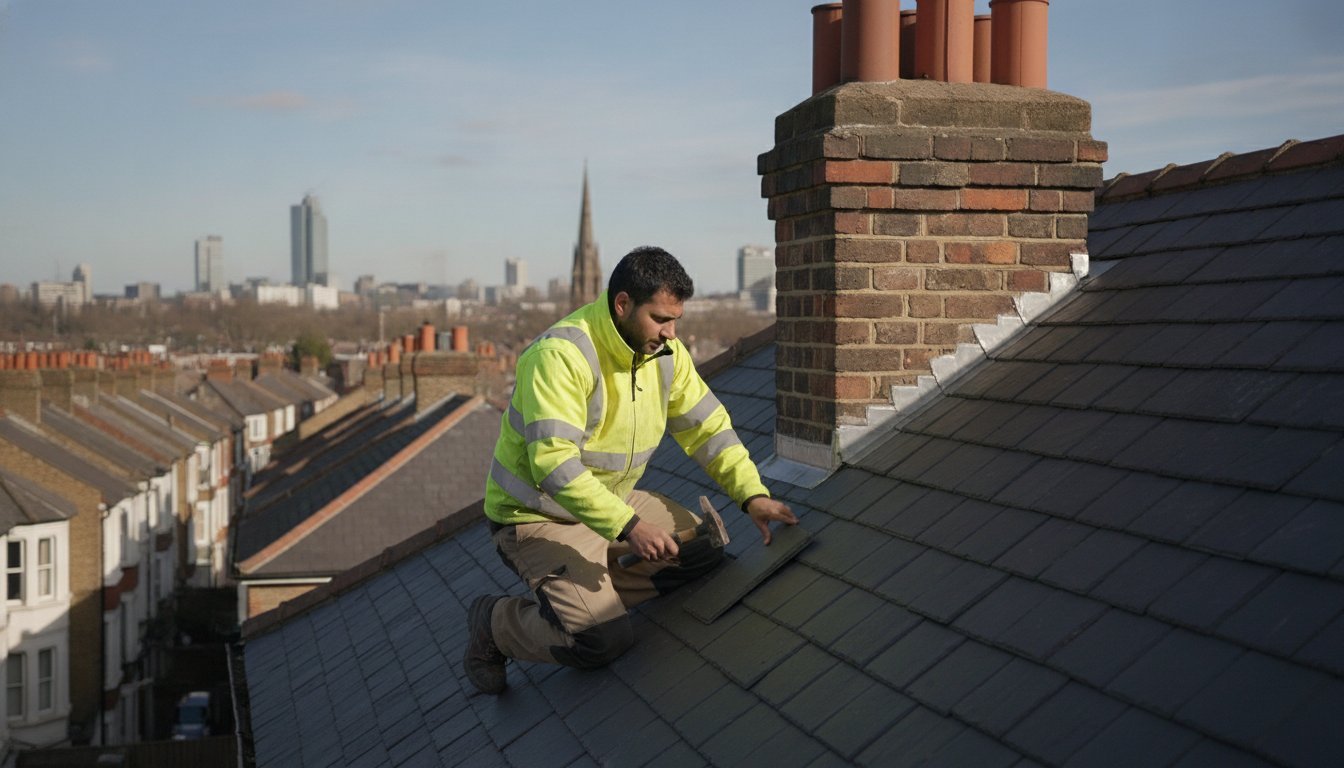
A professional lead flashing repair in Hackney is a methodical undertaking that prioritises long-term durability over temporary convenience. Our workflow is designed to address the root cause of water ingress whilst respecting the traditional construction methods used in East London’s period properties. The process begins with a thorough inspection of the existing junctions. We carefully remove failed mortar and strip away any sections of lead that have succumbed to fatigue or improper previous repairs. This stage is crucial as it allows us to inspect the underlying masonry and timber for any signs of hidden decay that may have developed whilst the leak was active.
Once the area is prepared, the repair follows a structured sequence of precision steps:
- Material Selection: We identify the correct thickness of lead required for the specific application to ensure it can withstand thermal movement.
- Precision Shaping: Using traditional ‘bossing’ techniques, we manually shape the lead sheet to follow the unique contours of your roof and brickwork. For more complex geometries, lead welding is employed to create a seamless, waterproof bond.
- Mechanical Fixing: The new flashing is securely tucked into the raggle using lead wedges. This provides a far more stable anchor than plastic or timber alternatives.
- Specialist Pointing: Finally, the joint is repointed using a specialist sand and cement mix or a dedicated lead sealant that remains flexible over time.
If your roof is showing signs of wear, you can book a professional leadwork assessment to ensure these technical steps are followed correctly.
Understanding Lead Codes: 3, 4, or 5?
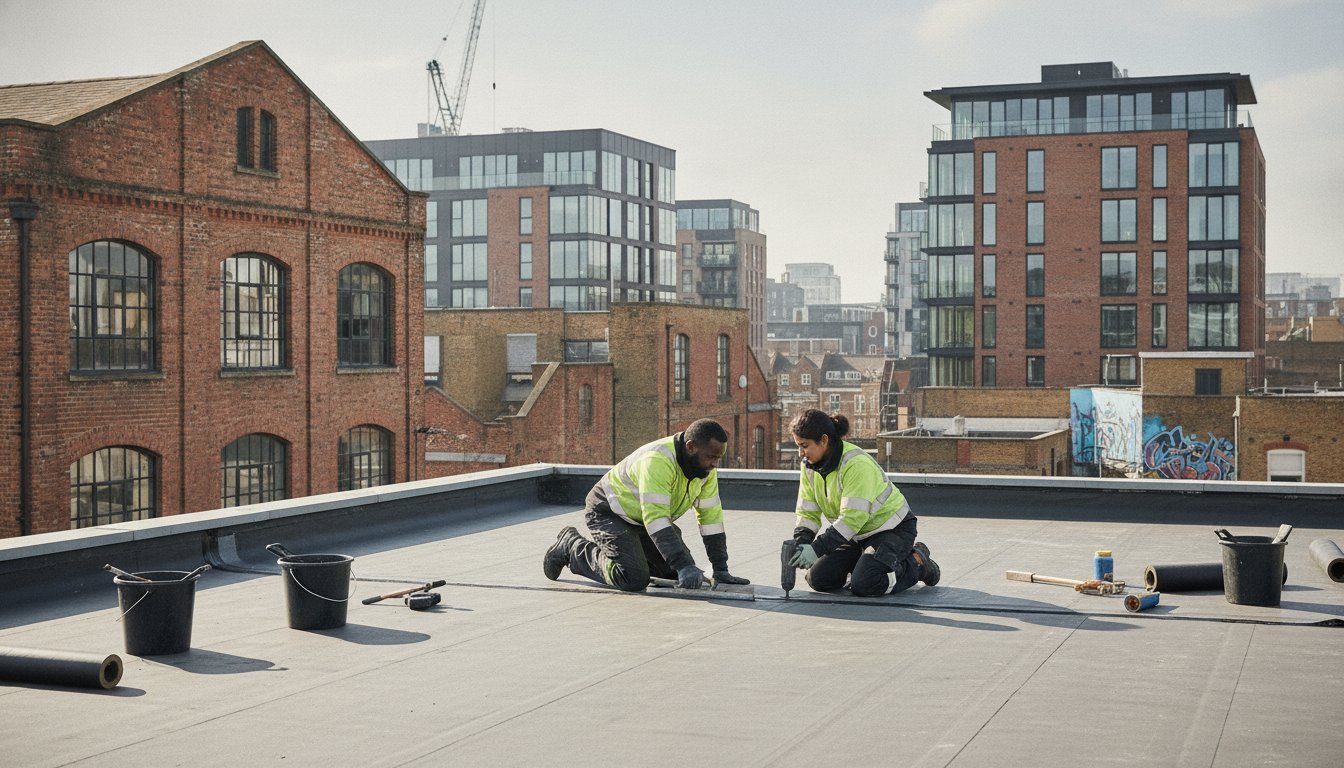
The thickness of lead is measured in ‘Codes’, and selecting the wrong one is a common mistake in amateur repairs. For most residential flashing tasks in Hackney, Code 4 is the industry standard. It provides the ideal balance between malleability and resistance to thermal fatigue. When we work on larger roof valleys or flat roof sections, we often specify heavier Code 5 or Code 6 lead. These thicker sheets offer greater protection in areas where water volume is higher. We only use milled lead that is BS EN 12588 certified. This certification ensures the material has a consistent thickness and the necessary metallurgical properties to last for 100 years or more.
Finishing with Patination Oil
A hallmark of a master craftsman is the application of patination oil immediately after the repair is completed. When new lead is exposed to the elements, it reacts with moisture and carbon dioxide to form a white surface coating called lead carbonate. Without treatment, this white powder can wash off and cause unsightly permanent staining on your roof tiles and brickwork. Patination oil provides a protective seal that allows the lead to age gracefully into its characteristic dull grey finish. This simple but vital step prevents oxidation and extends the life of the repair by several decades, ensuring your property remains protected and visually pristine.
Choosing a Leadwork Specialist in Hackney for Lasting Protection
Selecting the right tradesperson is the most critical step in ensuring the longevity of your roof. Whilst many general roofers can install basic tiles, a specialist leadworker possesses the technical proficiency required for complex ‘bossing’ and lead welding. In the historic streets of East London, where Victorian and Georgian architecture is prevalent, this distinction is vital. A specialist understands that lead isn’t just a covering but a precision-engineered component of the building’s envelope. This expertise is particularly important when performing a lead flashing repair in Hackney, as it ensures the work complies with local conservation standards and building regulations designed to preserve the area’s unique heritage.
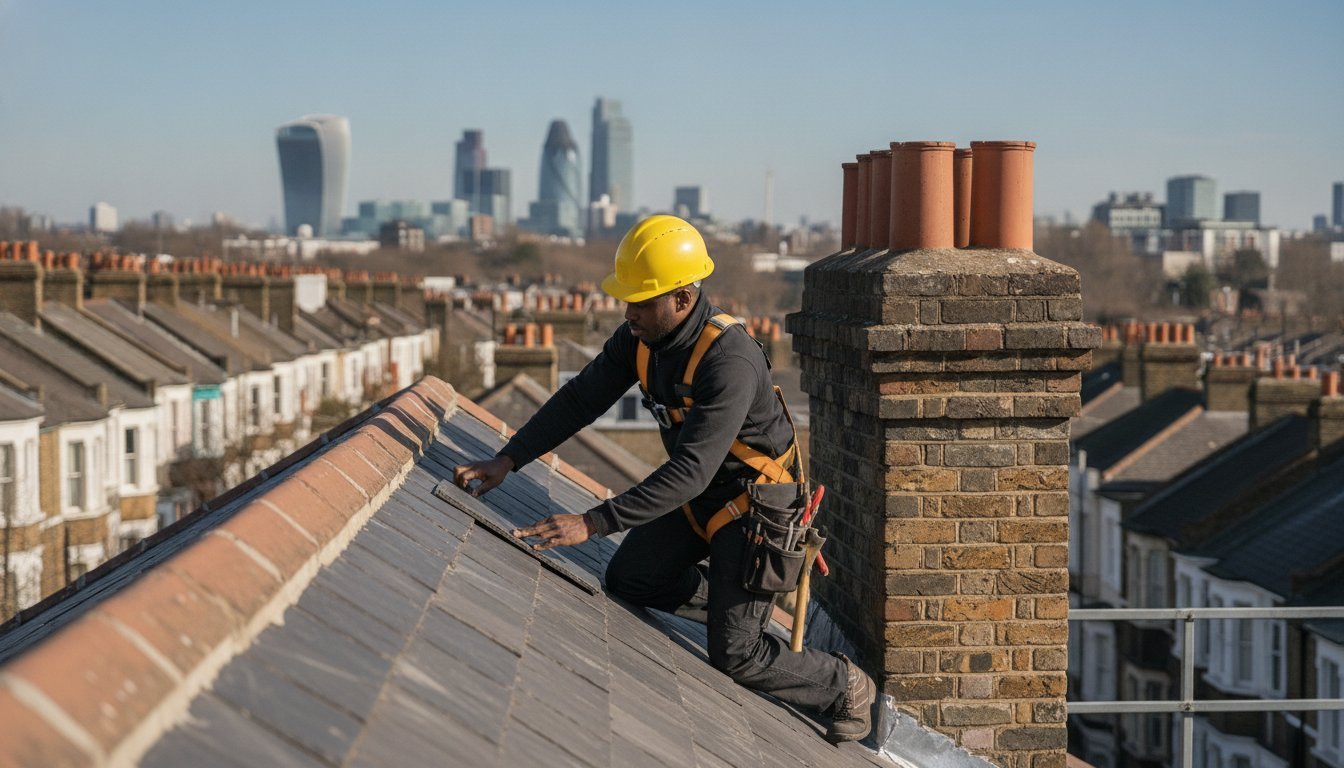
Comprehensive roof health requires an integrated approach. Leadwork doesn’t exist in isolation; it works in tandem with other structural elements. For instance, correctly specified flashing is essential for the success of slate roofing Hackney projects, where the intersection of natural stone and masonry must remain perfectly watertight. Similarly, the stability of your stack depends on professional chimney repairs Hackney, ensuring that the lead aprons and step flashings are correctly bedded into the brickwork to prevent water from saturating the internal chimney breast. By addressing these components as a unified system, you avoid the common pitfalls of ‘quick-fix’ repairs that fail to account for the building’s overall structural movement.
Why Roofing in Hackney is Your Trusted Local Partner
We pride ourselves on being more than just contractors; we are masters of our craft who are deeply invested in the local community. Our approach combines traditional techniques with modern durability standards to provide results that last for generations. We believe in transparency, which is why we provide methodical project management and detailed, clear quoting for every home we service. This organized workflow ensures that you feel supported from the initial consultation through to the final inspection. You can learn more about our team and our commitment to excellence on our dedicated about page.
Get a Professional Assessment Today
Early intervention is always the most cost-effective way to manage your roof’s health. A small crack in a lead valley or a slipped apron can be resolved quickly before it necessitates a full structural repair. We have extensive experience surveying and diagnosing leadwork failure across E8, E5, and N16, providing residents with peace of mind through expert analysis. Our local knowledge allows us to identify common failure points specific to Hackney’s terrace architecture. Don’t wait for the next heavy downpour to test your roof’s integrity. Request your lead flashing inspection in Hackney today and ensure your property remains a dry, secure investment.
Securing Your Hackney Home for the Next Century
Protecting a period property requires more than just stopping a leak; it involves preserving the architectural legacy of East London through technical precision. As explored, the effectiveness of your roof depends on the lead’s ability to expand and contract with the seasons. Relying on temporary sealants only masks deeper structural issues, making specialist intervention the only reliable path to long-term security.
When you invest in professional lead flashing repair Hackney, you ensure that your home remains watertight whilst maintaining its heritage character. Our team of fully insured local Hackney contractors brings technical expertise in Victorian terrace leadwork, focusing on expert lead welding and heritage restoration to provide a permanent solution. By prioritising quality craftsmanship over low-cost patches, you safeguard both your property’s value and its structural integrity for decades to come.
Don’t let a minor split turn into a major restoration project. Take the first step towards a leak-free home by booking an assessment with our master craftsmen.
Request a Professional Lead Flashing Inspection in Hackney
Frequently Asked Questions
How much does lead flashing repair cost in Hackney?
Total costs for leadwork depend on the linear meterage, the specific Lead Code required, and whether scaffolding is necessary for safe access. London labour rates typically reflect the higher operational costs in the capital. Instead of looking for a flat rate, it’s better to request a site-specific survey. A professional assessment ensures the quote covers the correct material thickness and addresses any hidden masonry damage during a lead flashing repair in Hackney.
Can I repair a split in lead flashing myself?
DIY repair of lead flashing is strongly discouraged due to the specialist skills and safety risks involved. Working at height on Hackney’s steep Victorian terraces requires professional fall-protection equipment. Additionally, common DIY fixes like bitumen tape or mastic often trap moisture, leading to internal rot. A specialist uses lead burning to create a permanent, watertight bond that accommodates the metal’s natural thermal movement. Safety and durability should always be the priority.
How long should professional lead flashing last on a Hackney roof?
When installed correctly using milled lead that meets BS EN 12588 standards, lead flashing can last for over 100 years. Its longevity is a primary reason it remains the preferred material for period properties across East London. However, this lifespan depends on the use of correct Lead Codes and appropriate fixings. Regular inspections are recommended to ensure that mortar joints haven’t failed and that the metal hasn’t suffered from physical impact.
What is the difference between lead flashing and lead valleys?
Lead flashing refers to the protective strips used at junctions between a roof and a wall or chimney. In contrast, lead valleys are the internal gutters where two sloping roof sections meet at an angle. Valleys typically require a thicker Lead Code, such as Code 5 or 6, because they channel a much higher volume of rainwater. Both components are essential for maintaining a leak-free home and require precision installation to prevent water ingress.
Is it better to repair or replace old lead flashing?
The decision depends on the extent of the lead fatigue and the general condition of the metal. If the lead is thinning or has multiple splits from decades of thermal cycling, a full replacement is usually the most cost-effective long-term solution. Minor damage or loose mortar joints can often be addressed with a targeted lead flashing repair in Hackney. A professional survey will determine if the material still has the structural integrity to be salvaged.
Do I need scaffolding for a lead flashing repair in Hackney?
Scaffolding is often necessary to ensure safe access and compliance with health and safety regulations. Whilst some low-level repairs can be managed from ladders, work on chimney stacks or high parapet walls usually requires a stable platform. Scaffolding allows the specialist to perform precision tasks like lead welding and repointing safely. This investment ensures the work is completed to a high standard without compromising the safety of the contractors or the public.
Can lead flashing be recycled if it needs replacing?
Yes, lead is one of the most recycled building materials in the world and has a very high salvage value. When we replace old flashing on a Hackney property, the scrap metal is sent to a specialist processor to be reformed into new lead sheets. This makes it an environmentally sustainable choice for heritage roofing. The recycling process uses significantly less energy than refining lead from raw ore, reducing the overall environmental impact of your project.
Why is my lead flashing turning white?
The white powder is lead carbonate, which forms when new or untreated lead reacts with moisture and carbon dioxide. If left untreated, this powder can wash off and cause permanent white staining on your roof tiles or brickwork. Professional installers apply patination oil immediately after a repair to prevent this oxidation. This protective coating allows the metal to develop its characteristic dull grey patina naturally over time without causing unsightly staining to the rest of the roof.