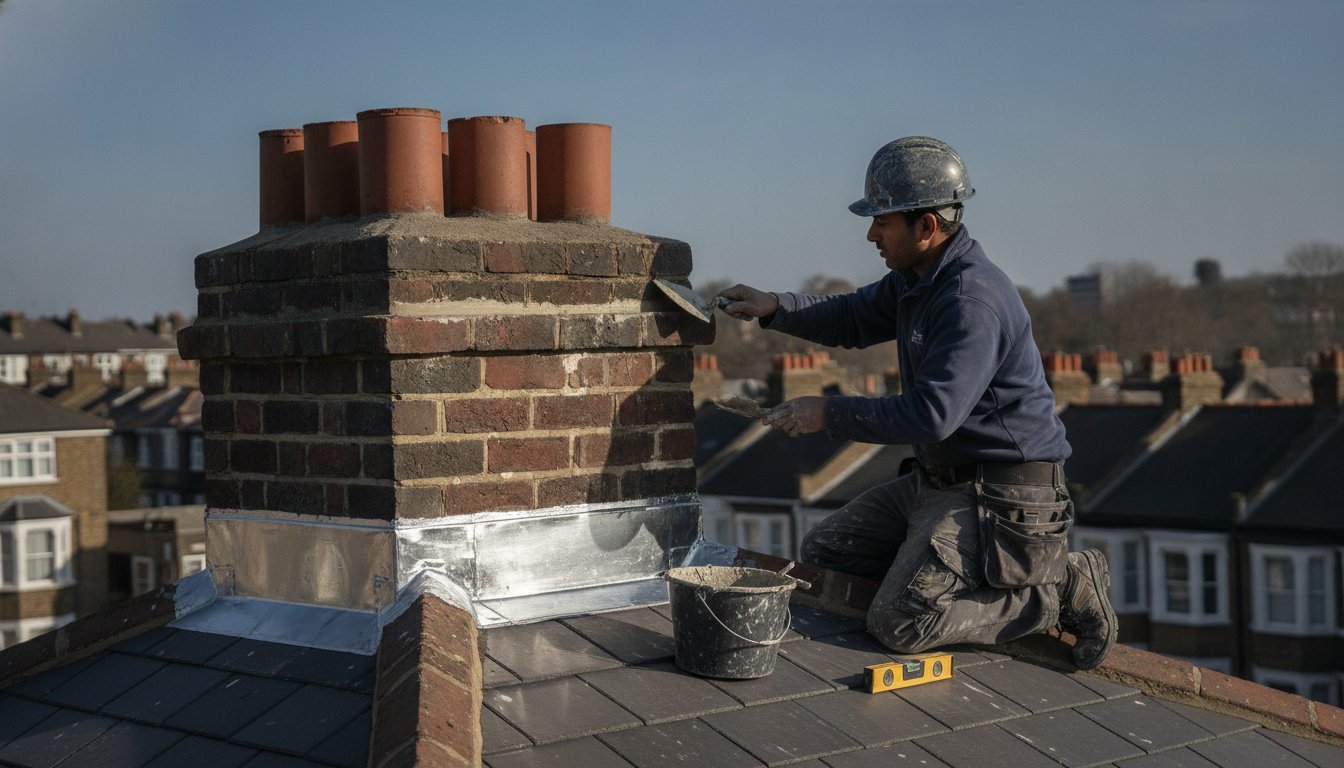
When you look up at the weathered brickwork of your roofline, do you see a sturdy piece of East London heritage or a structural liability waiting for the next gale? For many homeowners, the sight of a crumbling stack or a persistent damp patch on the upstairs ceiling brings a specific kind of anxiety. Finding a specialist who understands the delicate balance of traditional lime mortar and precision leadwork is often the first hurdle in securing professional chimney repair in Hackney.
We understand that maintaining a period property in a high-density urban environment requires more than just a quick fix; it demands a respect for the original streetscape and a deep knowledge of local conservation standards. You deserve a home that remains watertight and structurally sound without the constant fear of falling masonry. This guide provides a clear roadmap for identifying early warning signs, understanding the technical requirements of restoration, and maintaining your chimney to modern safety standards.
We will examine the essential role of traditional materials in preserving structural integrity, explain how to navigate Hackney’s borough-wide smoke control regulations, and provide a transparent breakdown of the methodical processes involved in a professional restoration project.
Key Takeaways
- Learn to identify the early warning signs of chimney failure, such as internal damp patches on upper floors or crumbling masonry found in your gutters.
- Understand the technical necessity of using traditional lime mortar and precision leadwork for durable chimney repair in Hackney properties.
- Discover the criteria used to decide between structural restoration and removal, balancing heritage character with long-term safety and property value.
- Gain a clear understanding of the professional repair workflow, from modern drone inspections to the installation of specialist scaffolding on narrow streets.
- See how using premium materials like natural slate and milled lead prevents water ingress and protects the structural integrity of your home.
Common Chimney Defects in Hackney: Identifying Early Warning Signs
Hackney’s skyline is defined by its diverse mix of Victorian terraces and modern developments, each presenting unique challenges for roof maintenance. Identifying defects early is the most effective way to manage the costs of chimney repair in Hackney before a minor leak becomes a structural emergency. Often, the first sign of trouble isn’t visible from the ground but manifests as damp patches on interior chimney breasts or upper-floor ceilings whilst it rains. These stains indicate that water has bypassed the external defences of the stack.
Property owners should regularly check for the following physical indicators of failure:
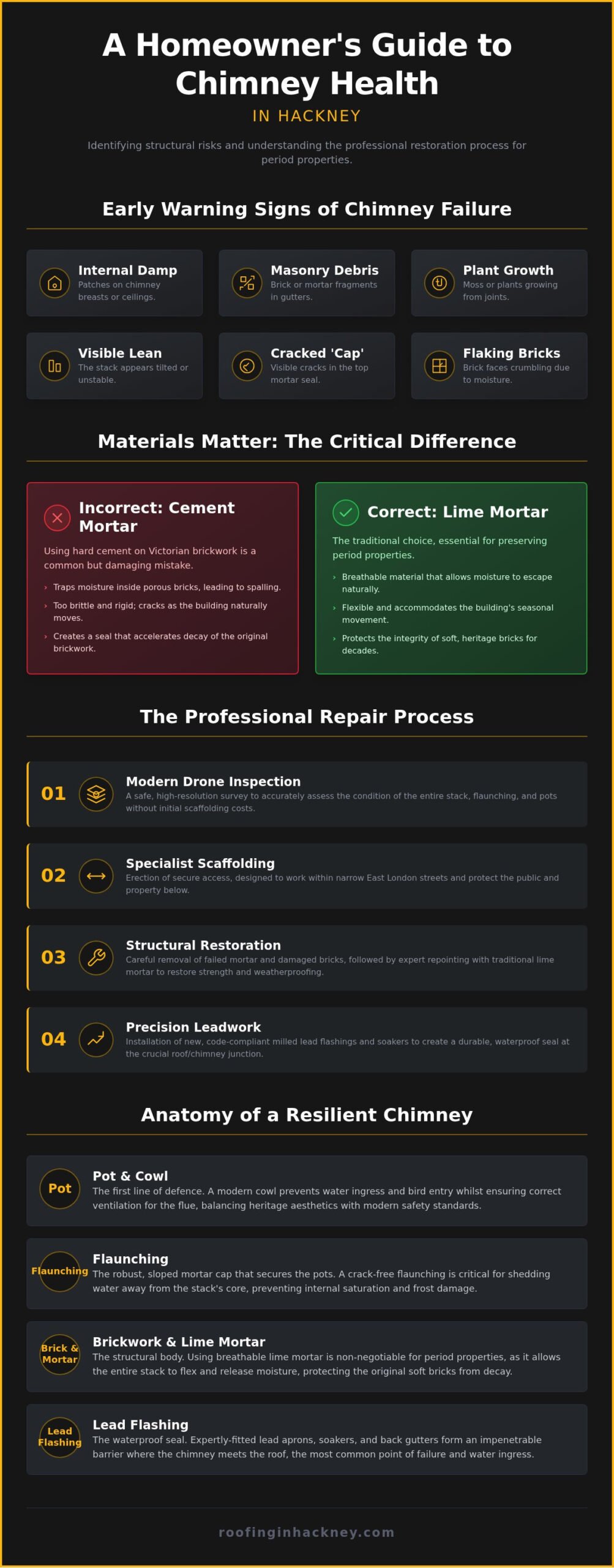
- Debris on the pavement: Finding fragments of red brick or sandy mortar in your gutters or on the street suggests the stack is “shedding” its outer layer.
- Vegetation growth: Plants like buddleia or thick moss growing amongst the brickwork are clear signs of deep moisture ingress. Roots physically push bricks apart, accelerating mortar failure.
- The visible lean: A stack that appears out of alignment when viewed from across the street is a significant safety concern, especially in high-density areas like Dalston or Stoke Newington.
- Cracked flaunching: The mortar “cap” at the top of the chimney that holds the pots in place often cracks over time, allowing water to pour directly into the flue.
The Impact of East London Pollution and Weather
Historical urban pollution has left a lasting legacy on the masonry of East London. Sulphur dioxide from old coal fires reacted with the calcium carbonate in traditional lime mortar, gradually weakening its structural bond over many decades. Modern traffic pollution continues to affect these porous materials. Understanding the Anatomy of a Chimney reveals how these external forces target specific joints and transitions. Freeze-thaw cycles further exacerbate the issue; water enters small fissures, expands as it turns to ice, and causes the brick faces to flake away, a process known as spalling. Hackney’s narrow streets can also create wind-tunnel effects that put immense lateral pressure on tall, exposed stacks.
Victorian Terrace Challenges: Shared Stacks and V-Roofs
One of the most complex aspects of chimney repair in Hackney involves shared stacks. In a typical Victorian terrace, a single chimney structure often serves two neighbouring properties. If one side is neglected, it can lead to water ingress that affects both homes, making communication with neighbours essential. We frequently identify failures in the “V” gutters or lead valleys where two roof pitches meet at a shared stack. If the leadwork in these junctions is over 60 years old, it’s likely reached the end of its service life. If you’ve noticed any of these issues, you can contact us to arrange a professional survey of your roofline.
The Anatomy of a Hackney Chimney: Materials and Craftsmanship
Understanding the technical components of a chimney stack is vital for any homeowner considering chimney repair in Hackney. A stack is not merely a pillar of bricks; it’s an integrated system of masonry, lead, and ceramic components that must work in unison to remain watertight. Every element, from the base flashing to the ceramic pot, serves a specific functional purpose in protecting the structural integrity of your property.
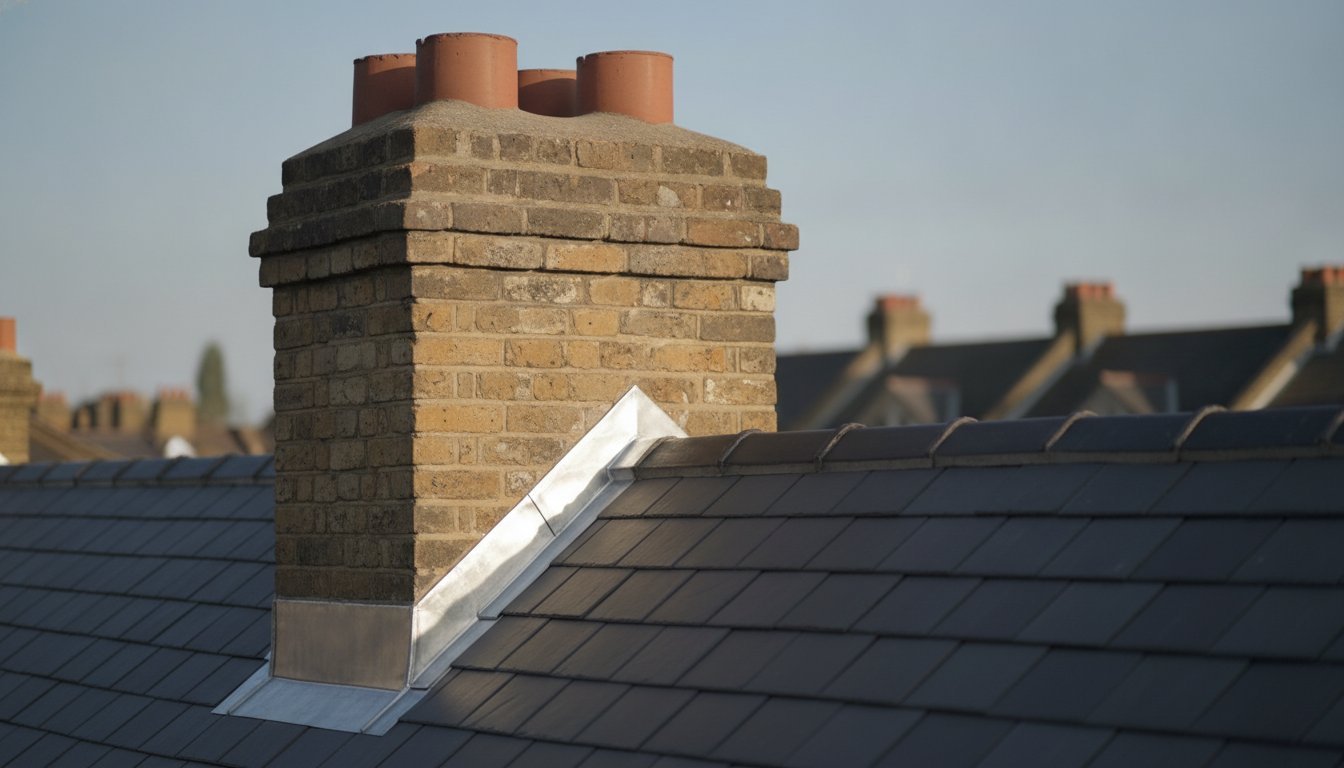
The flaunching is the sloped mortar cap at the very top of the stack. Its role is to secure the chimney pots and shed rainwater away from the flue. If this mortar bed cracks, water enters the core of the chimney, leading to internal dampness. The pots themselves, whilst iconic to East London’s heritage, now often require modern cowls to prevent bird entry and manage ventilation. Choosing the right cowl is essential for balancing historical aesthetics with modern performance standards.
Traditional Masonry and Lime Mortar Repointing
Victorian London was built using bricks that are significantly softer and more porous than modern equivalents. A frequent error in local maintenance is the use of hard, cement-based mortar for repointing. Cement is too brittle for heritage brickwork; it doesn’t flex with the building and traps moisture within the bricks themselves. This often leads to spalling, where the face of the brick shatters during a frost. A professional restoration involves raking out the failed joints to a consistent depth and applying a colour-matched lime mortar mix. This allows the masonry to breathe and maintains the aesthetic harmony of Hackney’s conservation areas.
The Critical Role of Leadwork
Lead is the primary defence against water ingress at the junction where the chimney meets the roof tiles or slates. Because chimneys and roof structures move at different rates, a rigid seal would simply crack and fail. Lead flashing is the essential flexible barrier that prevents water penetrating the roof structure at vertical junctions. We often find that leaks are caused by cracked lead aprons, loose step flashing, or failed back gutters that have become blocked with debris. Precision leadwork is the only long-term solution for waterproofing these vulnerable abutments. If you are concerned about the condition of your roofline, you can request a technical assessment to identify potential failure points before they cause internal damage.
Chimney Repair vs. Removal: Making the Right Choice for Your Roof
Deciding whether to invest in professional chimney repair in Hackney or to remove the stack entirely is a significant decision for any homeowner. Whilst removal might seem like a permanent solution to persistent leaks, it’s often a complex process that carries hidden structural and aesthetic costs. Every project should be evaluated based on the stack’s current stability and the long-term goals for the property. A chimney that’s simply neglected can often be restored to its former glory with the right technical approach.
If a chimney is leaning significantly or the masonry has degraded into dust, the structural integrity may be compromised beyond simple repointing. However, removal is rarely a simple task. It requires internal structural support, such as gallows brackets, to ensure the remaining chimney breast inside the house remains safe. Retaining the stack also future-proofs the home. Even if you don’t use the fireplace currently, a functional flue provides natural ventilation and keeps the option open for modern, DEFRA-approved appliances. This is particularly relevant given Hackney’s borough-wide smoke control orders that came into force in December 2025.
When Restoration is the Superior Option
For the majority of period properties in East London, restoration is the preferred route. Preserving the original silhouette of a Victorian or Edwardian terrace maintains the building’s character and market value. A well-executed repair prevents the internal disruption that comes with structural removal, which often involves cutting into ceilings and reinforcing party walls. When we perform a restoration, we ensure the stack integrates perfectly with the existing roofline. This is particularly important when combined with other heritage work, such as Mastering Slate Roofing in Hackney, to create a cohesive and watertight finish.
Conservation Area Considerations in Hackney
Hackney contains 29 distinct conservation areas, from the grand houses of De Beauvoir to the Victorian terraces near Victoria Park. In these zones, the external appearance of a property is strictly protected. Removing a chimney stack often requires formal planning permission because it fundamentally alters the streetscape. The local authority typically demands that repairs use matching materials, such as specific lime mortar textures or reclaimed London Stock bricks. We act as a trusted local advisor to help you navigate these rules, ensuring that any chimney repair in Hackney meets both structural requirements and heritage standards. Choosing restoration over removal avoids the risk of local authority enforcement whilst honouring the architectural history of your neighbourhood.
The Chimney Repair Process: A Professional Approach
Transparency is the cornerstone of a successful restoration. When you commission chimney repair in Hackney, you should expect a methodical progression that ensures both safety and longevity. We begin with a comprehensive site survey, often utilising drone technology to capture high-definition imagery of the stack’s crown and flaunching without the initial need for ladders. This allows us to identify hairline fractures or failed leadwork that aren’t visible from the street level. By documenting the exact state of the masonry, we can provide a clear, evidence-based plan for the work ahead.
Once the scope is defined, we move to the logistical phase. Hackney’s dense urban layout requires careful planning for safe access. We manage the installation of specialised scaffolding, ensuring minimal disruption to narrow pavements and neighbouring properties. The restoration then proceeds through a structured workflow:
- Preparation: We carefully rake out failed mortar joints to a consistent depth and remove degraded lead aprons or cracked flaunching.
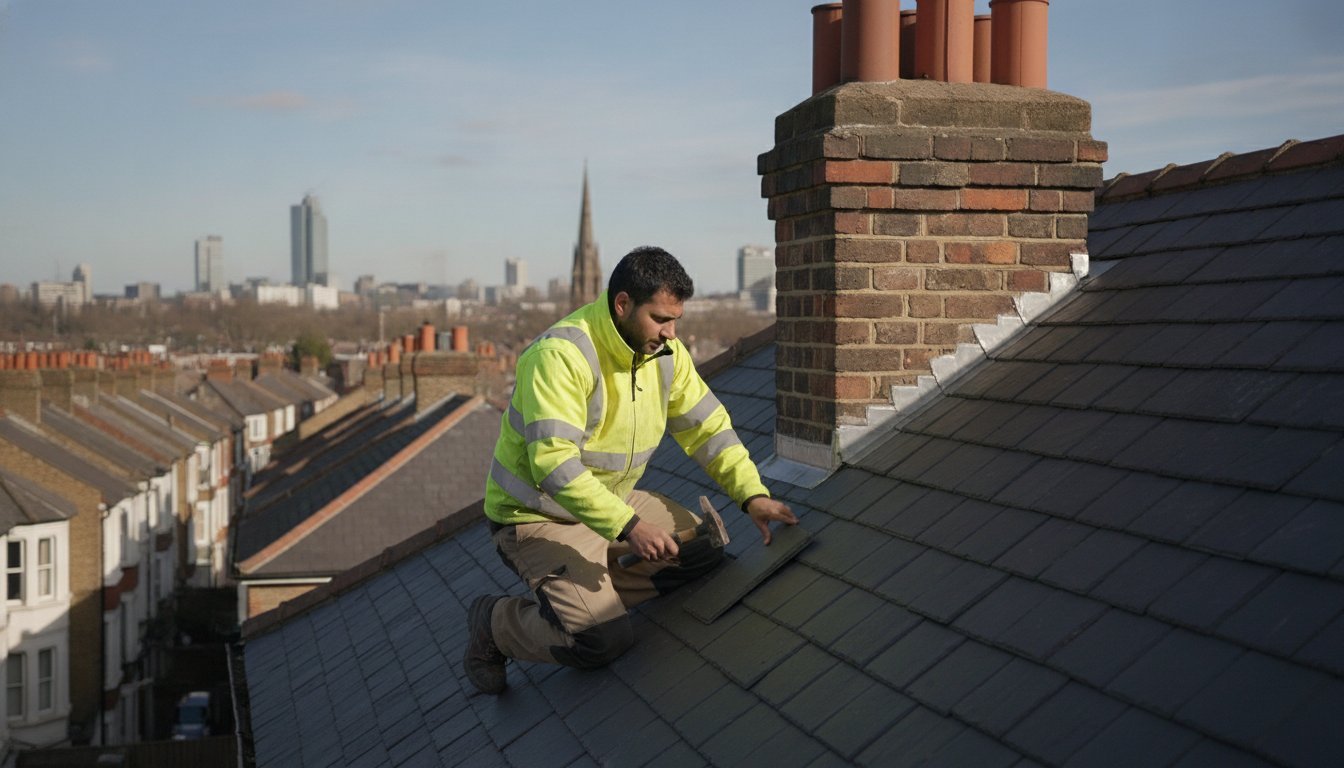
- Restoration: Our craftsmen execute precision repointing using colour-matched lime mixes and install high-grade milled lead to ensure a watertight seal at the roof junction.
- Securing: We reset chimney pots and apply a fresh, weather-proof bed of mortar to the chimney crown.
- Final Inspection: A rigorous check ensures every junction is sealed before we clear all debris from the site and strike the scaffolding.
Safety and Logistics in East London
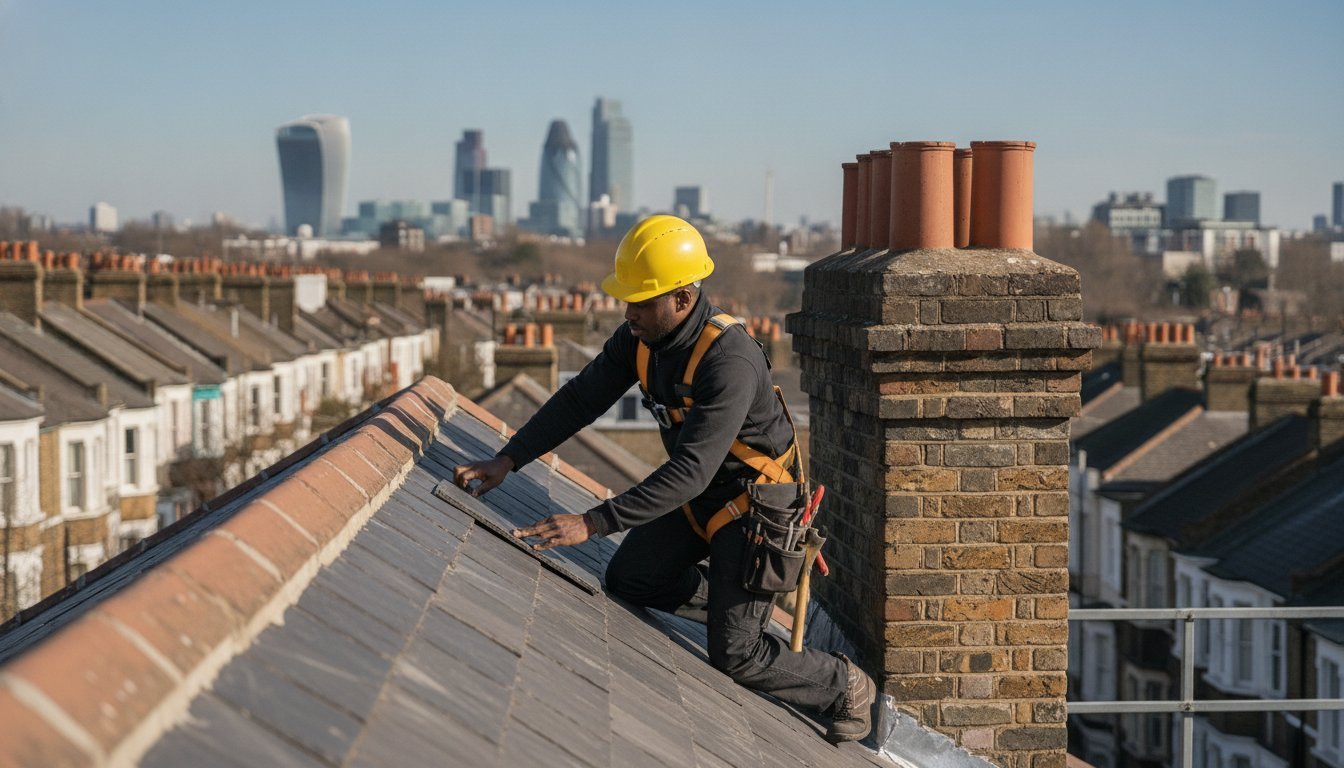
Working in high-density areas like East London demands strict adherence to modern Health and Safety Executive (HSE) standards. We handle the complexities of obtaining scaffolding permits and pavement licences from the London Borough of Hackney, protecting public walkways throughout the project. Our team takes specific measures to shield neighbouring roofs from falling masonry, providing a secure environment for both residents and pedestrians whilst the structural work is underway.
Integrating Thermal Insulation and Ventilation
A chimney restoration provides a strategic opportunity to improve your home’s energy efficiency. Whilst the scaffolding is in place, it’s the ideal time to consider Thermal Roof Insulation Upgrades. We also install breathable chimney cowls that prevent rain and birds from entering the flue whilst maintaining the essential airflow needed to prevent internal condensation. This dual approach protects your structural investment whilst enhancing indoor comfort. If you suspect your chimney requires professional attention, you can book a technical survey with our team to discuss your specific requirements.
Specialist Chimney Restoration with Roofing in Hackney
At Roofing in Hackney, we view every project as a vital contribution to the preservation of East London’s unique architectural heritage. Our commitment to the borough goes beyond simple maintenance. We focus on restoring the structural integrity of every stack whilst honouring the original craftsmanship of the build. By choosing a methodical approach that prioritises long-term durability over quick, superficial fixes, we ensure your home remains protected for decades to come.
Quality is dictated by the materials we select. We use only premium components, ranging from natural slate to high-grade milled lead. These materials are chosen for their ability to withstand the specific environmental pressures of London, including the pollution and freeze-thaw cycles discussed in previous sections. Our technical proficiency allows us to integrate these materials seamlessly into your existing roofline, providing a finish that is both aesthetically harmonious and technically superior.
Why Choose a Local Hackney Specialist?
Local knowledge is indispensable when dealing with the diverse building stock of East London. We possess a deep familiarity with the Victorian and Edwardian terraces that define the neighbourhoods of E2, E5, E8, and E9. This regional focus means we already understand the common structural failures and damp patterns specific to these property types. Because we are based locally, we can offer a rapid response for essential maintenance and have built a reputation grounded in local trust and accountability. You can learn more about our commitment to quality and craftsmanship on our About Us page.
Request Your Professional Chimney Inspection
Securing an expert assessment is the first step towards a watertight home. We provide a transparent, no-obligation quote for every chimney repair in Hackney, ensuring you have a clear understanding of the costs and technical requirements involved. During our initial consultation, we conduct a thorough site survey to evaluate the condition of your masonry, leadwork, and flaunching. This assessment provides the data needed to develop a precise restoration plan tailored to your property’s specific needs. To begin the process and ensure your roofline is structurally sound, you can Request a Professional Pitched Roof Inspection in Hackney. Our team will guide you through the findings and provide a methodical roadmap for your chimney’s restoration.
Securing Your Home’s Heritage and Future
Maintaining a chimney stack is a fundamental requirement for the structural health of your property. By identifying early warning signs like crumbling mortar or damp patches, you can address issues before they necessitate a full stack rebuild. Choosing restoration over removal preserves the character of our local streets and ensures your home remains adaptable for future ventilation needs. Professional chimney repair in Hackney requires a blend of traditional masonry techniques and modern weatherproofing standards to be truly effective.
As specialists in Victorian masonry and leadwork, we provide the technical expertise required to navigate the complexities of East London’s building stock. Our team acts as trusted local Hackney contractors, offering comprehensive 2026 structural surveys that utilise modern technology to ensure every repair is built to last. Whether you’re dealing with a minor leak or require a full heritage restoration, we are here to support your property’s long-term value. You can Request a Professional Chimney Restoration Quote today to secure your roofline against the elements. We look forward to helping you protect your home.
Frequently Asked Questions
How much does a typical chimney repair cost in Hackney?
Costs vary significantly based on the scope of work and the materials required for the project. A minor repointing job on a single stack differs greatly from a full restoration involving new leadwork and brick replacement. Factors such as the height of the chimney and the complexity of access also influence the final quote. We recommend a technical survey to provide an accurate estimate tailored to your property’s specific structural needs.
Do I need scaffolding for a chimney stack repointing job?
Scaffolding is almost always necessary for chimney work to ensure the safety of the craftsmen and the public. In high-density areas like Hackney, secure access is a legal requirement under Health and Safety Executive (HSE) standards. Whilst minor inspections can sometimes be performed via ladders or drone technology, the physical process of raking out mortar and repointing requires a stable platform to maintain precision and structural integrity.
Can a leaking chimney cause damp inside my house?
Yes, a leaking chimney is a primary cause of internal dampness on upper floors and chimney breasts. Water often enters through cracked flaunching, failed lead flashing, or porous, degraded mortar joints. Once moisture penetrates the masonry, it can travel down the flue or through the brickwork, leading to salt staining, peeling wallpaper, and timber rot. Professional chimney repair in Hackney effectively seals these entry points to protect your interior.
Is it cheaper to remove a chimney or repair it?
Repairing a chimney is often more cost-effective in the long term than total removal. Whilst removal eliminates future maintenance, it requires significant internal structural work, including the installation of gallows brackets to support the remaining breast. Removal also requires planning permission in conservation areas and may reduce the resale value of a period home. Restoration preserves the architectural silhouette whilst avoiding the invasive structural changes associated with taking a stack down.
Do I need planning permission for chimney repairs in a Hackney conservation area?
Standard repairs and maintenance usually don’t require planning permission, provided you use materials that match the original appearance. However, if you intend to remove the stack or significantly alter its height or shape within one of Hackney’s 29 conservation areas, you must consult the local planning authority. We recommend verifying specific requirements for lime mortar colour and texture to ensure your project complies with local heritage preservation standards.
How long does a chimney restoration project usually take?
A typical restoration project generally takes between three to five working days, depending on the weather and the stack’s condition. This timeframe includes the setup of safe access, the removal of failed materials, and the application of new lime mortar and leadwork. Larger shared stacks or projects requiring extensive brick replacement may take longer. We provide a clear schedule during the initial consultation to ensure minimal disruption to your daily routine.
Can you match the original bricks on my Victorian chimney stack?
We specialise in sourcing reclaimed London Stock bricks and other period-appropriate materials to ensure a seamless match. Maintaining the aesthetic harmony of a Victorian terrace is a priority for any chimney repair in Hackney. We also use colour-matched lime mortar to replicate the original texture and finish of your masonry. This attention to detail ensures the repair is structurally sound whilst remaining virtually indistinguishable from the rest of the streetscape.
What is the best time of year to organise chimney maintenance in London?
Spring and autumn are the ideal seasons for chimney maintenance in London. These periods offer milder temperatures that allow lime mortar to cure correctly without the risk of frost or extreme heat. Organising repairs before the winter months ensures your home is watertight and ready for the heating season. We monitor local weather forecasts closely to choose the most stable conditions for masonry work, ensuring the longevity of the finished restoration.