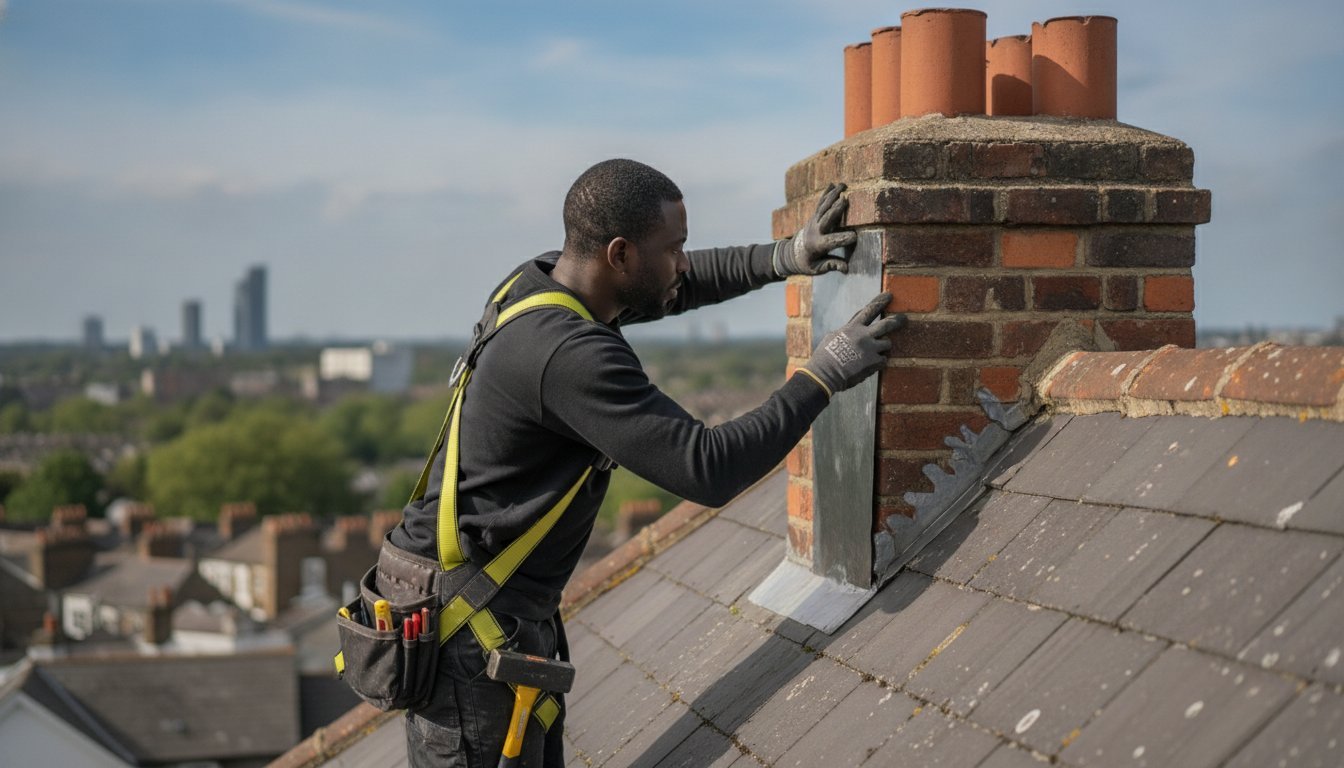
That small damp patch on your bedroom ceiling isn’t just a cosmetic annoyance; it’s often the first warning sign that your Hackney terrace’s most vulnerable joint has failed. You likely already know that ignoring a leak only leads to crumbling plasterwork and costly structural damp, yet finding a specialist who treats traditional leadwork with the respect it deserves can feel like a frustrating search for a needle in a haystack. Many homeowners are tired of “quick-fix” sealants that fail after a single London winter, leaving the property’s structural integrity at risk.
This guide will show you how to secure a permanent, weather-tight seal through professional chimney flashing repair Hackney residents can trust to protect their homes for decades. We’ll provide expert advice on whether your chimney requires a targeted patch or a full replacement, whilst ensuring your property’s period aesthetic is meticulously preserved. By understanding the technical standards of leadwork and the importance of British Standard materials, you can move from a point of worry to a point of long-term resolution for your home’s exterior.
Key Takeaways
- Learn how to identify the early warning signs of flashing failure, such as damp patches on chimney breasts, before they lead to costly interior plaster damage.
- Discover why traditional leadwork is the only permanent solution for chimney flashing repair Hackney period properties require to remain weather-tight for decades.
- Understand the technical differences between temporary “quick-fix” sealants and the 80-100 year lifespan offered by professional lead installation.
- Gain insight into the specialist process of raking out mortar joints to create a secure, recessed “chase” that prevents future water ingress.
- Navigate the specific requirements for Hackney’s conservation areas to ensure your chimney repairs preserve the heritage and value of your Victorian home.
Understanding Chimney Flashing and Its Role in Hackney Roofs
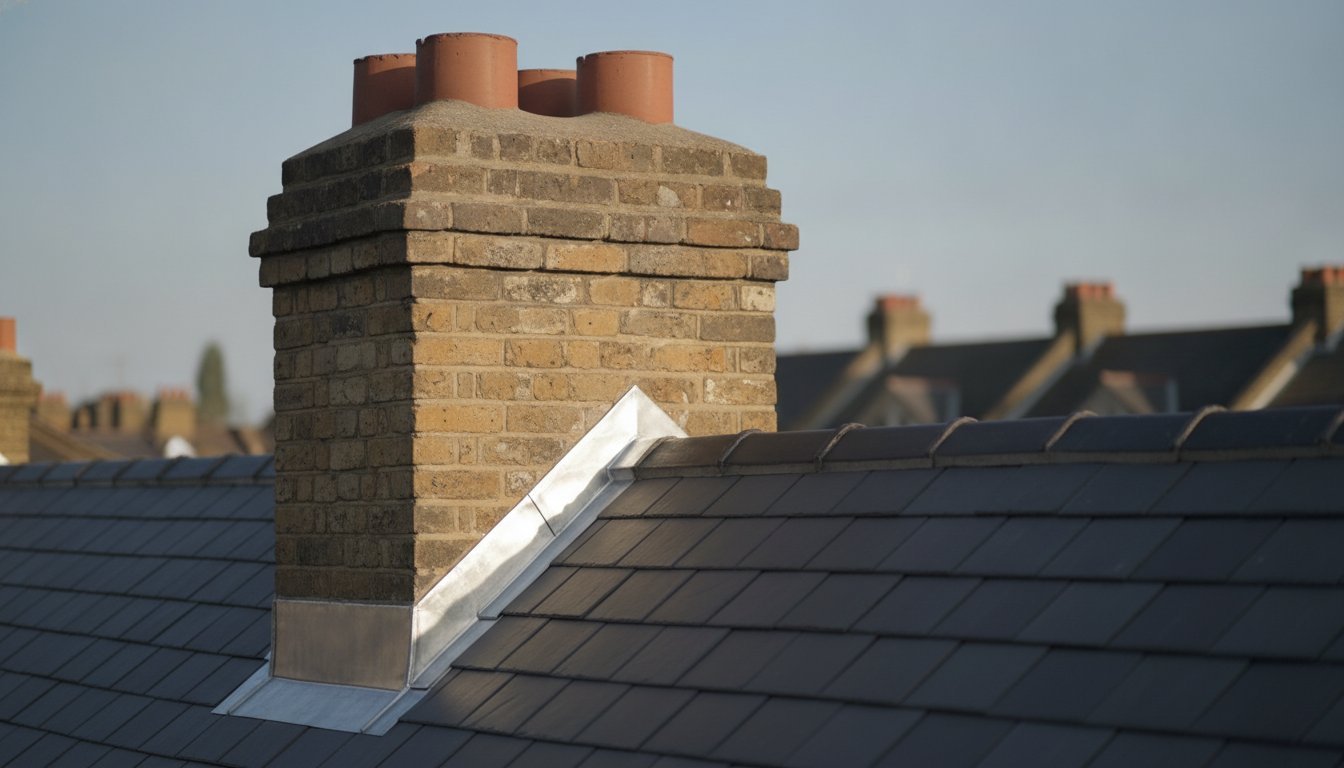
In the context of building construction, Flashing (weatherproofing) refers to thin pieces of impervious material installed to prevent water from passing into a structure from a joint. For a Hackney home, this is the critical barrier between your roof tiles and the vertical brickwork of the chimney stack. Without this seal, water would simply run down the side of the masonry and straight into your attic space. Whilst modern builds use various materials, the Victorian terraces that define our local skyline rely almost exclusively on lead to manage this transition.
Traditional lead is the preferred choice for chimney flashing repair Hackney properties require. It’s malleable enough to be dressed over irregular tiles but heavy enough to resist wind lift. During heavy East London downpours, the flashing acts as a drainage system, directing hundreds of litres of water away from the chimney base and into the guttering. While GRP (Glass Reinforced Polyester) or lead-free alternatives are options for newer roofs, they often lack the heritage look and century-long durability that lead provides to period architecture.
The Components of a Professional Flashing System
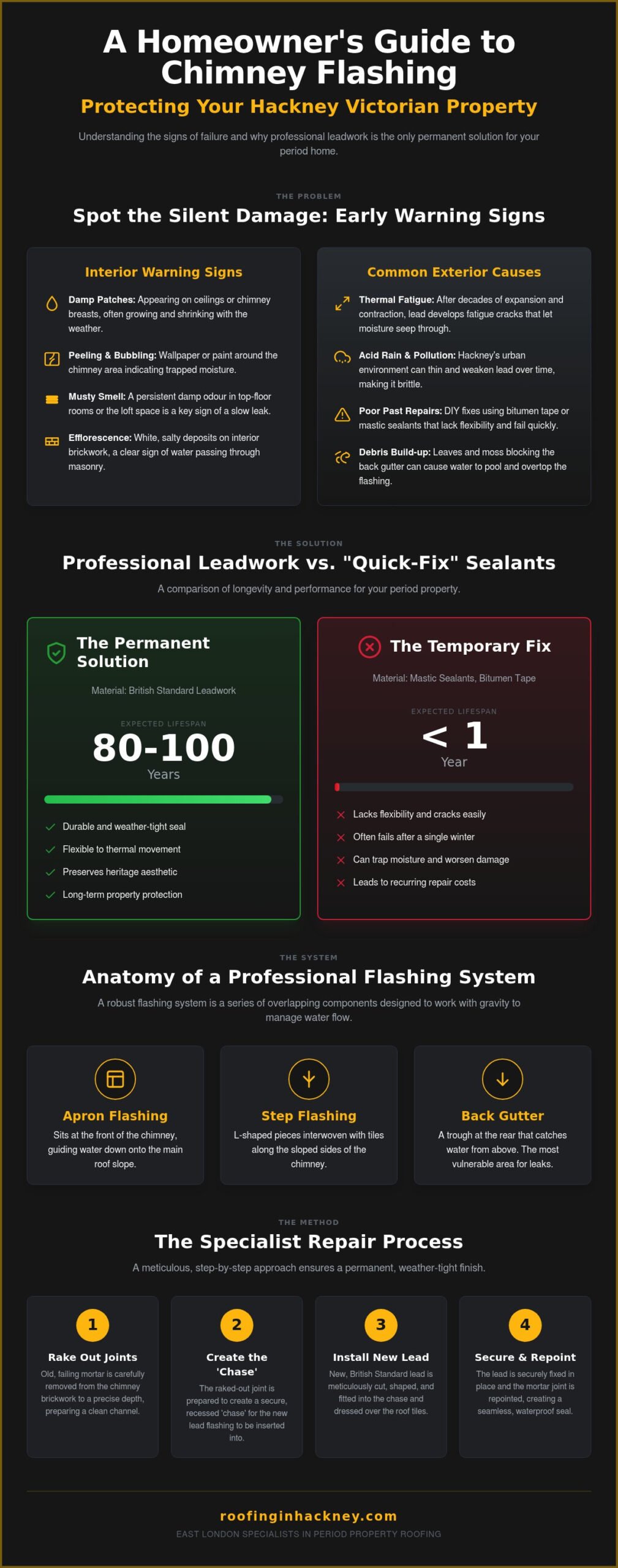
A robust system isn’t a single piece of metal but a series of overlapping components designed to work with gravity. If one element fails, the entire system is compromised. Our team at Roofing in Hackney focuses on three primary elements:
- Step flashing: These are individual L-shaped pieces of lead tucked into the mortar joints and layered between every roof slate or tile along the sloped sides of the stack.
- Apron flashing: This sits at the front of the chimney, draped over the tiles to catch water running down the face of the stack and guide it onto the main roof slope.
- Back gutters: Positioned at the rear of the chimney, these collect water coming down the roof slope. This is the most vulnerable spot because it’s often hidden from view and prone to debris build-up that can cause water to “pool” and overtop the metal.
Why Flashing Fails: Common Culprits in East London
Hackney’s chimneys endure unique environmental pressures. Decades of exposure to urban pollution and acid rain can thin the lead over time, making it brittle. The primary cause of failure, however, is thermal fatigue. Metal expands in the summer heat and contracts during cold winter nights; after eighty years of this cycle, the lead eventually develops “fatigue cracks” that let moisture seep through.
Poor previous maintenance is another major issue. We often see DIY attempts using “flashband” (sticky bitumen tape) or mastic sealants. These products are temporary fixes at best. They lack the flexibility to cope with the natural movement of a heavy Victorian chimney, leading to a recurring need for professional chimney flashing repair Hackney specialists must then rectify to ensure a permanent, weather-tight finish.
Signs Your Hackney Property Needs Chimney Flashing Repair
Identifying a leak early is the difference between a minor repair and a major structural restoration. In Hackney’s Victorian terraces, the chimney stack is often the primary entry point for water ingress. While many homeowners assume damp is caused by porous bricks, it’s frequently a failure in the leadwork junction. These leaks often start with a subtle “drip-drip” effect; moisture seeps through a hairline crack in the lead or a gap in the mortar during heavy rain, then dries out before it becomes obvious. This cycle eventually saturates the masonry, leading to the need for chimney flashing repair Hackney residents often discover too late.
Interior Warning Signs You Should Not Ignore
The most common indicator is the appearance of damp patches on upstairs ceilings or chimney breasts. Unlike a burst pipe, these patches often grow and shrink depending on the weather. You might notice peeling wallpaper or bubbling paint around the chimney area, which suggests that moisture is trapped behind the surface. In many cases, a musty smell in the loft space or top-floor bedrooms is the first sign of a persistent, slow-moving leak.
Look closely at the interior brickwork for efflorescence. These are white, salty deposits that appear when water moves through masonry and evaporates, leaving minerals behind. This is a clear sign that the external weatherproofing has failed. Following Historic England’s guidance on lead roofs, maintaining the integrity of these junctions is vital for preserving the fabric of heritage buildings. If you’ve spotted these issues, it’s wise to request a professional inspection before the damp spreads further.
External Inspection: What to Look for from Ground Level
You don’t always need a ladder to spot trouble. A simple visual check from the street with a pair of binoculars can reveal significant issues. Pay close attention to the “steps” of the leadwork. If the lead looks like it’s lifting or curling away from the brickwork, the seal is broken. You should also look for “stepped” lead that has pulled completely out of the mortar joints, leaving a visible gap where rain can enter.
Another tell-tale sign is the presence of debris in your gutters. If you find small fragments of grey metal or chunks of old mortar at the base of your downpipes, it’s likely your flashing is deteriorating. Check the condition of the pointing around the flashing too. If the mortar is crumbling or missing, the lead is no longer securely fixed. Catching these external signs early allows for a targeted chimney flashing repair Hackney specialists can perform before interior damage occurs. Taking action now prevents the accelerated decay of your roof timbers and interior plasterwork.
Leadwork vs. Sealants: Why Quality Materials Matter
When you’re faced with a leak, the temptation to use a “quick-fix” sealant is understandable. However, for a chimney flashing repair Hackney homeowners expect to last, these temporary measures are a false economy. Traditional lead has remained the gold standard for centuries because it’s engineered to withstand the British weather. Whilst a tube of mastic or a roll of bitumen tape might cost very little upfront, these materials lack the durability required for Hackney’s heritage roofs. A professional lead installation can protect a property for 80 to 100 years, whereas most sealants begin to degrade and peel within just 24 months.
The aesthetic importance of leadwork shouldn’t be underestimated either. In many of Hackney’s conservation areas, using the correct traditional materials isn’t just a matter of choice; it’s often a requirement to preserve the architectural integrity of the street. Lead provides a clean, professional finish that complements Victorian masonry, adding value to the property whilst ensuring it remains completely weather-tight against the most persistent East London rain.
The Problem with Modern Patch Repairs
Modern sealants and “flashband” (sticky bitumen tape) often do more harm than good. These products aren’t breathable and can trap moisture against the porous Victorian brickwork, which accelerates masonry decay and timber rot. They’re designed as emergency measures to get you through a single storm, not as permanent solutions. When the time eventually comes for a proper chimney flashing repair Hackney specialists must perform, removing layers of old, hardened mastic is a labour-intensive process that can damage the underlying bricks. This adds unnecessary cost to what should have been a straightforward maintenance task.
The Benefits of Professional Leadwork
Traditional leadwork offers superior flexibility, allowing the metal to expand and contract with your house as temperatures change without cracking. This is vital for the heavy masonry stacks found in East London. Lead is also one of the most sustainable materials in the building industry, as it’s almost 100% recyclable. To ensure long-term performance and safety, we adhere to the standards outlined in UK Building Regulations (Approved Document J), which governs the installation and maintenance of chimneys and flues.
Code 4 lead is the industry standard for domestic flashing because it provides the perfect balance of weight and malleability for a permanent, weather-tight fit. By investing in high-quality leadwork, you’re choosing a material that moves with the structure rather than fighting against it. If you’re interested in how we combine these traditional skills with modern standards, you can learn more about our approach on our about us page. This commitment to craftsmanship ensures that your roof remains a dry, secure asset for decades to come.
The Specialist Process for Chimney Flashing Repair
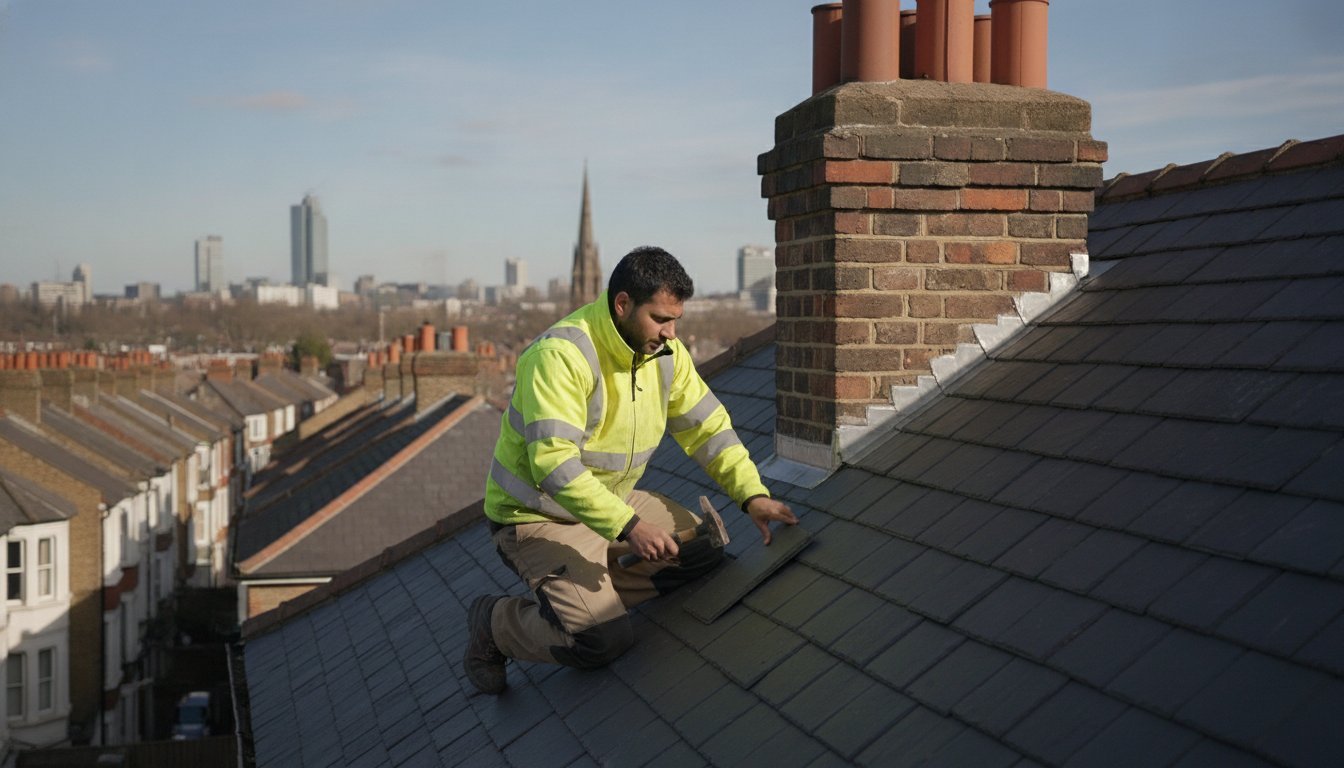
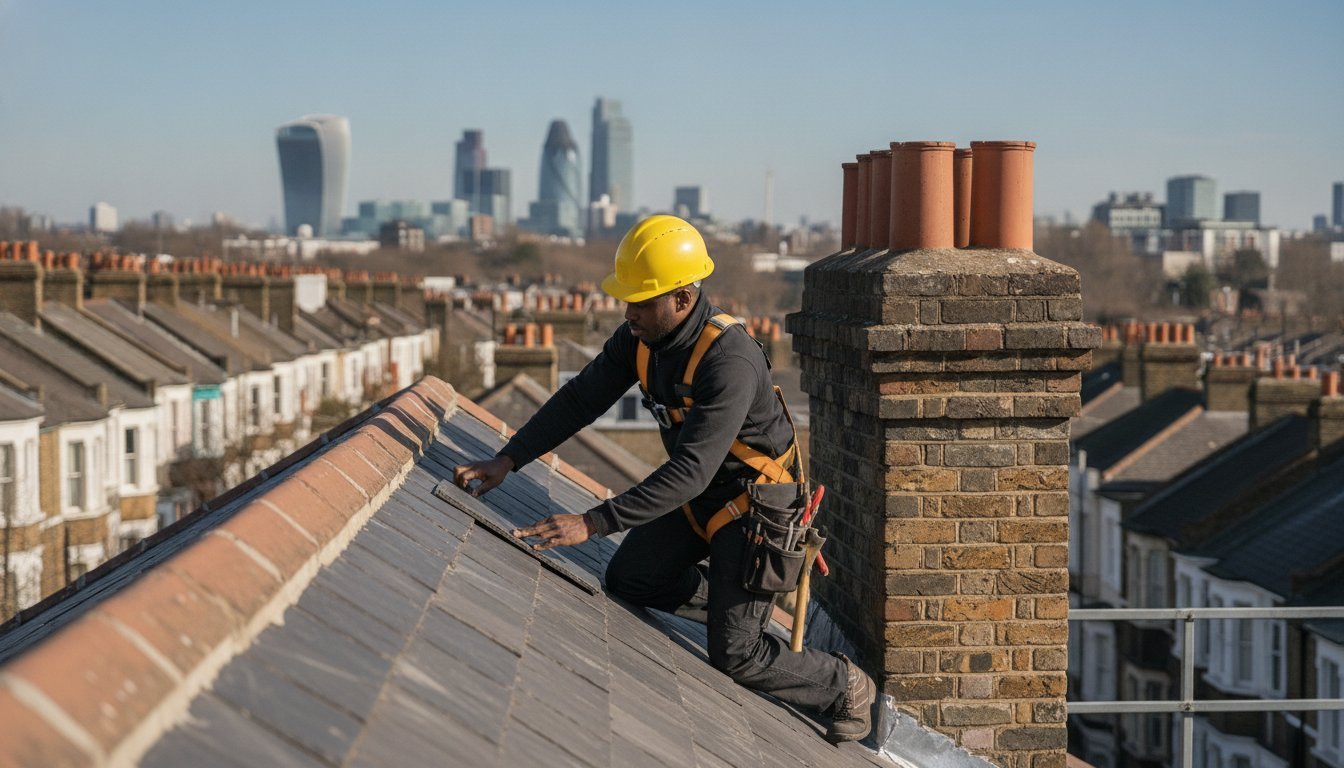
Executing a permanent chimney flashing repair Hackney homeowners can rely on requires a methodical, master-craftsman approach. The process begins with establishing safe access to the roofline, followed by the complete removal of all failed materials, including old lead, cracked mortar, and temporary sealants. A critical part of this preparation is raking out the mortar joints to a depth of approximately 25mm. This creates a clean, recessed “chase” where the new lead will be physically tucked into the masonry, ensuring a mechanical bond that no superficial sealant can match.
A key differentiator in our service is the specific selection of materials. Whilst many general builders use thinner alternatives, we specify lead according to British Standards for longevity. Code 4 lead is our preferred choice for domestic flashings due to its durability and malleability. For more exposed Hackney rooftops or larger chimney stacks, we may recommend Code 5 lead, which offers a higher resistance to thermal fatigue and wind lift, ensuring your investment remains weather-tight for many decades.
Step-by-Step: How We Restore Your Flashing
- Step 1: Removal and Inspection. We strip away the old flashing to reveal the underlying roof timbers. This allows us to inspect for any damp-induced rot or structural issues that must be addressed before the new lead is laid.
- Step 2: Drainage Foundation. We install the back gutter and the front apron first. These components are shaped to ensure that water is directed away from the chimney stack and onto the main roof slope or into the guttering system.
- Step 3: Fitting and Wedging. The side “step” flashings are then fitted. Each piece is individually shaped and secured into the brickwork chase using lead wedges. This “wedging” process is vital; it holds the metal firmly in place whilst allowing for the natural expansion and contraction of the building.
Specialist Leadwork Techniques
The art of shaping lead is known as “bossing”. This involves using specialised hand tools to work the metal into complex shapes without thinning or tearing it. For particularly intricate Victorian chimney profiles, we may use lead welding to create seamless, watertight joins at corners. Once the installation is complete, we apply patination oil to the surface. This prevents the initial white carbonate staining that can occur after rain, maintaining the clean, grey aesthetic of the leadwork. You can learn more about our expert leadwork services and our commitment to traditional craftsmanship.
Finally, the raked-out joints are repointed using a high-quality sand and cement mix or a specialist lead sheet sealant, depending on the specific requirements of the masonry. This final seal ensures the entire system is weather-proof. If you suspect your chimney is failing, we recommend you contact us for a professional assessment to prevent further water ingress into your home.
Choosing a Local Hackney Specialist for Your Chimney
Hackney’s architectural landscape is defined by its Victorian and Edwardian terraces, each presenting unique challenges for roof maintenance. Choosing a specialist for chimney flashing repair Hackney properties require means finding a partner who understands the specific porosity of old London stock bricks and the structural nuances of shared chimney stacks. A local expert recognises that what works for a modern suburban semi-detached house won’t necessarily suffice for a heritage building in East London. We pride ourselves on this regional expertise, ensuring that every repair is tailored to the specific masonry and roof pitch of your home.
Many parts of the borough fall within conservation areas, where preserving the original character is a legal priority. Using inferior modern substitutes for lead can lead to issues with local planning authorities and may even decrease your home’s value. We ensure that all leadwork meets both heritage standards and modern performance requirements, providing you with a solution that is both legally compliant and structurally sound. This approach protects the building’s aesthetic whilst delivering a weather-tight seal that stands up to the dampest winters.
Beyond preventing leaks, a well-maintained chimney junction contributes to your home’s energy efficiency. Saturated masonry acts as a thermal bridge, pulling heat out of your living spaces and into the damp brickwork. By ensuring a permanent seal through professional chimney flashing repair Hackney specialists provide, you keep the building fabric dry. This helps maintain the thermal performance of your home, reducing the energy required to keep your top-floor bedrooms warm.
Working with Roofing in Hackney
At Roofing in Hackney, we combine the values of a master craftsman with the transparency of a modern service provider. We know that scaffolding and access are often significant concerns for homeowners; therefore, our quoting process is entirely transparent, covering all access requirements and material costs from the outset. We don’t believe in hidden fees or “quick-fix” solutions that fail after one season. For those with broader restoration projects, you can read our guide to slate roofing for period homes to see how we integrate specialist leadwork with traditional tiling.
Next Steps for Your Property
Proactive maintenance is always more cost-effective than reactive repair. A small leak in the flashing can quickly escalate into a requirement for new interior plasterwork or structural timber treatment, costs that can easily run into thousands of pounds if left unaddressed. Arranging a professional inspection is the first step toward securing your home against the elements and avoiding these avoidable expenses.
If you’ve noticed any of the warning signs mentioned earlier, such as damp patches or lifting lead, it’s time to act. Contact our Hackney chimney specialists today to arrange a consultation. We’ll provide a clear, expert-led assessment and a plan to restore your chimney’s integrity, ensuring your property remains a dry and secure asset for decades to come.
Securing Your Period Home for the Decades Ahead
Safeguarding a Victorian or Edwardian property requires a commitment to quality that matches the original builders’ standards. We’ve explored how identifying early warning signs, such as interior damp patches or lifting lead, allows for timely intervention before structural damage takes hold. By choosing traditional Code 4 lead over temporary sealants, you ensure your roof remains weather-tight whilst respecting the heritage of East London’s unique architecture.
As a fully insured local business with deep expertise in Victorian property restoration, we understand the technical demands of period masonry. Our specialist leadwork contractors focus on providing permanent solutions rather than quick fixes. Investing in professional chimney flashing repair Hackney homeowners can trust protects both your property’s aesthetic and its long-term structural integrity. Taking action today prevents the accelerated decay of roof timbers and interior plasterwork.
Ready to protect your investment? Book your professional chimney inspection in Hackney today to ensure your home is fully prepared for the seasons ahead. We are here to provide the expert guidance and craftsmanship your period property deserves.
Frequently Asked Questions
How much does chimney flashing repair cost in Hackney?
The cost of a repair depends on the complexity of the chimney stack and whether scaffolding is required for safe access. Factors such as the chimney’s size and the specific lead code chosen for the project will also influence the final investment. We provide transparent, itemised quotes following a site visit to ensure you have a clear understanding of the necessary work without any hidden fees.
How long does it take to replace chimney flashing?
A standard chimney flashing replacement typically takes between one and two days to complete. This timeframe includes the removal of old materials, raking out the mortar joints, and the precision installation of the new leadwork. Whilst more complex stacks or projects requiring extensive masonry restoration may take longer, we always prioritise a swift, methodical process to minimise your property’s exposure to the elements.
Can I repair chimney flashing myself using sealant?
Sealants are not a permanent solution and often trap moisture against the brickwork, leading to accelerated masonry decay. Whilst they may offer a temporary stop-gap during a storm, they lack the flexibility to cope with a Victorian chimney’s natural movement. For a long-term chimney flashing repair Hackney homeowners should always opt for traditional leadwork installed by a specialist to avoid recurring leaks.
Is lead flashing still the best material for Hackney homes?
Lead remains the gold standard for period properties due to its century-long lifespan and superior malleability. It’s the only material that reliably accommodates the thermal expansion and contraction common in historic London masonry. Modern alternatives exist, but they rarely match the aesthetic requirements of Hackney’s conservation areas or the proven durability that high-quality Code 4 lead provides to heritage roofs.
Do I need scaffolding for a chimney flashing repair?
Scaffolding is almost always necessary to ensure safe working conditions and a professional, high-quality finish. Working from ladders is rarely safe or practical for complex leadwork where precision is vital. A secure platform allows our master craftsmen to rake out joints and boss the lead correctly, ensuring a weather-tight seal that meets all modern health and safety regulations.
Will my home insurance cover chimney flashing leaks?
Most home insurance policies cover damage caused by sudden, accidental leaks but often exclude repairs necessitated by gradual wear and tear. If your flashing has failed due to age or lack of maintenance, the repair cost is typically the homeowner’s responsibility. It’s sensible to check your specific policy wording regarding “gradual deterioration” before assuming the costs will be covered by your insurer.
What is the difference between repointing and flashing repair?
Repointing involves renewing the mortar joints between the bricks of the chimney stack, whilst flashing repair focuses on the waterproof metal seal at the roof junction. Both are often performed together, as the lead must be securely “wedged” and pointed into the masonry to be effective. If the mortar around your chimney is crumbling, it’s highly likely the flashing seal has also been compromised.
How often should I have my chimney flashing inspected?
You should have your chimney flashing inspected at least once every three to five years to identify early fatigue cracks or loose mortar. Regular checks allow for the detection of minor issues before they lead to interior damp and costly plasterwork repairs. Expert chimney flashing repair Hackney residents rely on often starts with these routine assessments to ensure the property remains structurally sound through every season.