That persistent damp patch on your Victorian ceiling isn’t just an eyesore; it’s often the first sign that your home’s “invisible shield” has finally succumbed to the elements. You’ve likely spent years admiring the intricate masonry and sash windows of your property, only to find yourself worried about a botched repair or a roofer who doesn’t understand the nuances of heritage leadwork. Finding a specialist for roof leadwork repair Hackney homeowners can rely on is about more than just stopping a leak. It’s about preserving the structural DNA of East London’s architectural history whilst ensuring your investment remains watertight for decades.
In this guide, you’ll discover how expert leadwork repairs protect period properties from water ingress whilst respecting their historic architectural integrity. We’ll provide a clear, methodical overview of the technical requirements for a professional repair, from understanding traditional bossing techniques to navigating the 2026 HSE updates regarding lead exposure. By the end, you’ll have the knowledge needed to identify high-quality craftsmanship and find a local specialist with the heritage experience your home deserves.
Key Takeaways
- Understand why lead remains the premier choice for protecting Hackney’s period architecture and where common points of water ingress typically occur.
- Discover how the physics of thermal movement affects your roof and why selecting the correct Lead Code is essential for a durable roof leadwork repair Hackney homeowners need.
- Explore the methodical, step-by-step process of professional lead restoration, from the initial site survey to the careful removal of perished materials.
- Learn how to distinguish between general roofers and heritage specialists by understanding technical requirements like patination oil and BS 6915 standards.
The Essential Role of Leadwork in Hackney’s Period Architecture
Lead has served as the definitive material for weatherproofing Hackney’s historic skyline for over two centuries. Its popularity amongst Georgian and Victorian builders wasn’t accidental. Lead’s unique malleability allows it to be dressed around complex architectural features that modern alternatives simply cannot match. From the grand townhouses near London Fields to the dense terraces of Homerton, lead provides the critical seal at roof junctions. You’ll find it in Flashing (weatherproofing), deep valley gutters, and dormer window surrounds. Beyond its utilitarian purpose, lead maintains the aesthetic continuity of these heritage buildings.
Expert roof leadwork repair Hackney residents require often stems from the intense environmental pressures of an urban setting. Hackney’s urban heat island effect means roofs face rapid temperature shifts. This causes the metal to expand and contract frequently. Over time, this cycle leads to “thermal fatigue.” Pollution from heavy traffic can also react with the metal if it wasn’t treated with patination oil, leading to unsightly staining and premature degradation. Without a professional seal, these atmospheric factors quickly turn a minor vulnerability into a major structural issue.
Identifying Leadwork Failure in Local Properties
Knowing when to call for a specialist is vital. You might notice a white powdery substance on the surface. This is basic oxidation and usually isn’t a cause for alarm. However, deep structural cracks or “crazing” indicate that the lead has reached the end of its functional life. If the lead feels “bouncy” or shows visible ripples, it’s a sign of poor initial installation. This usually happens when sheets are fixed too tightly or are cut too long, preventing natural movement. Never accept mastic or silicone as a solution for Hackney roof leaks. These temporary patches trap moisture against the substrate, which eventually causes the underlying timber to rot.
Why Hackney Parapet Walls Require Specialist Lead Attention
East London’s terrace architecture is distinct for its prominent parapet walls. These features rely heavily on lead cappings and secret gutters to prevent water from soaking into the brickwork. When these components fail, water ingress quickly manifests as damp patches in upper-floor bedrooms or damaged cornices. At Roofing in Hackney, our team understands the unique vulnerabilities of these local structures. You can learn more about our commitment to heritage standards on our About Us page. Precision leadwork on a parapet isn’t just about stopping a leak; it’s about ensuring the masonry remains dry and the building’s historic character stays intact.
Understanding Lead Codes and the Science of Thermal Movement
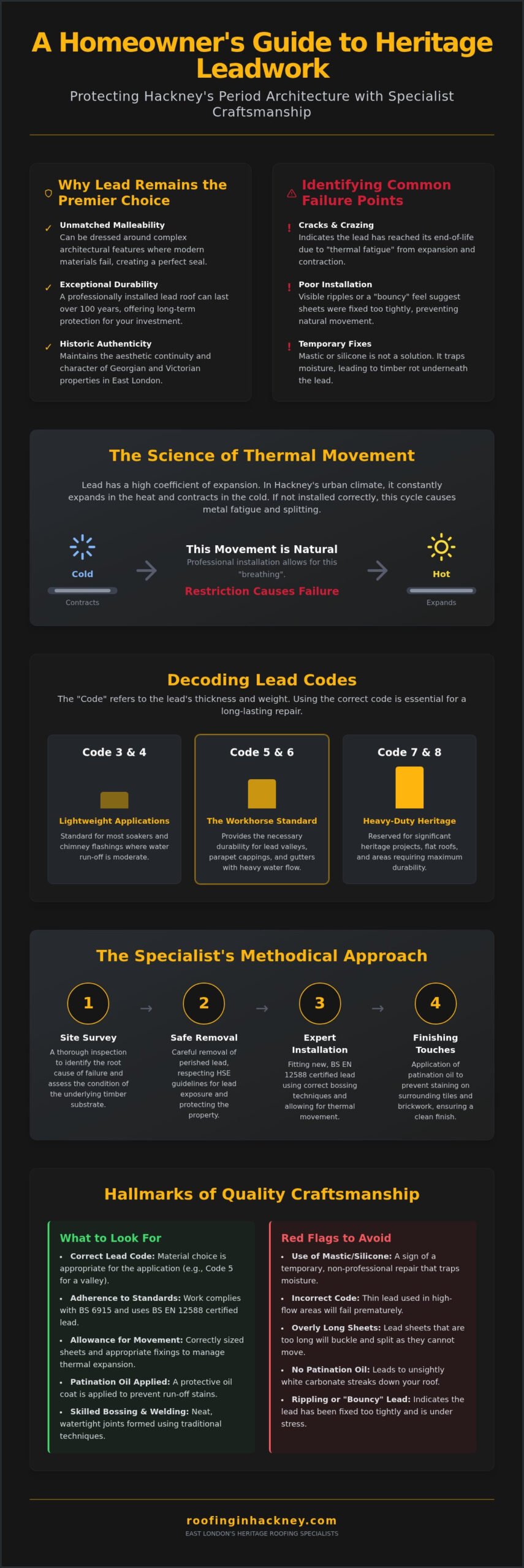
Lead is often described as the gold standard of roofing materials, but its longevity depends entirely on understanding its physical properties. Unlike slate or tile, lead has a high coefficient of expansion. It moves significantly as temperatures fluctuate. In an urban setting like Hackney, where roof surfaces can reach high temperatures in summer and drop below freezing in winter, this movement is constant. If a roof leadwork repair Hackney project doesn’t account for this, the metal will eventually buckle or split. This phenomenon, known as thermal fatigue, occurs when the metal is restricted and cannot breathe.
To ensure a repair lasts for the intended 60 to 100 years, we strictly adhere to Historic England’s guidance on material specification. This includes using BS EN 12588-certified milled lead. This certification ensures the lead has a consistent thickness and grain structure, which is vital for predictable thermal behaviour. Using inferior, non-certified lead often results in premature failure, as the metal may have thin spots that are vulnerable to stress.
Decoding Lead Codes: Which is Right for Your Repair?
Selecting the wrong code is a common mistake made by non-specialists. The “Code” of lead refers to its weight and thickness per square metre. Using a code that’s too thin for a large area will lead to rapid degradation.
- Code 3 and 4: These are thinner sheets designed for lightweight applications. Code 3 is typically used for lead soakers, while Code 4 is the standard for most chimney flashings and apron pieces.
- Code 5 and 6: These are the workhorses for Hackney’s period homes. They provide the necessary durability for lead valleys, parapet gutters, and tapered gutters where water flow is heavy.
- Code 7 and 8: Reserved for heavy-duty heritage projects. These thick sheets are essential for lead flat roofs or large-scale dormer tops where maximum protection is required.
Thermal Expansion: The Invisible Enemy of Roof Leadwork
The London sun can be surprisingly harsh on East London’s rooftops. When lead sheets are cut too large, they have nowhere to go when they expand. This leads to “cockling” or ripples, which eventually turn into cracks. A professional roof leadwork repair Hackney specialist will always limit the length of individual lead pieces. For example, a Code 5 gutter should generally not exceed 2.25 metres in a single piece.
We use expansion joints, often called “drips” or “steps,” to join these shorter lengths together. This design allows each section to move independently whilst remaining completely watertight. Fixings are also strategically organised; we use copper or stainless steel nails at the top of a sheet to hang it, while leaving the bottom free to slide. If you’re concerned about visible cracks in your leadwork, you can speak with our technical team for a detailed assessment.
Common Leadwork Repair Scenarios: Flashing, Valleys, and Gutters
Identifying the specific point of failure is the first step in any professional roof leadwork repair Hackney residents often require. While lead is exceptionally durable, it’s most vulnerable at the junctions where different building materials meet. These areas, such as where a chimney stack pierces the roof line or where two roof pitches form a valley, bear the brunt of London’s weather. Precision in these high-stress zones is what separates a long-term heritage restoration from a temporary patch.
Chimney Stack Flashing and Repointing
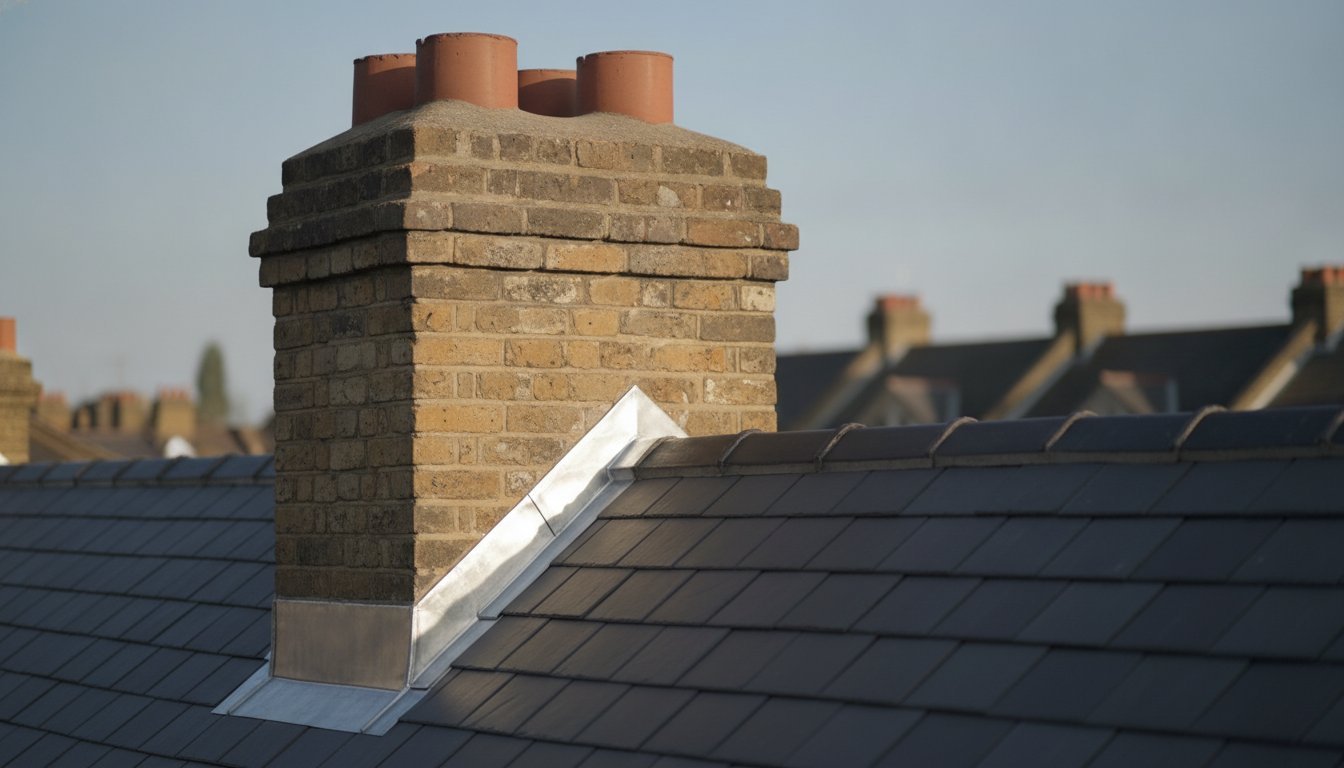
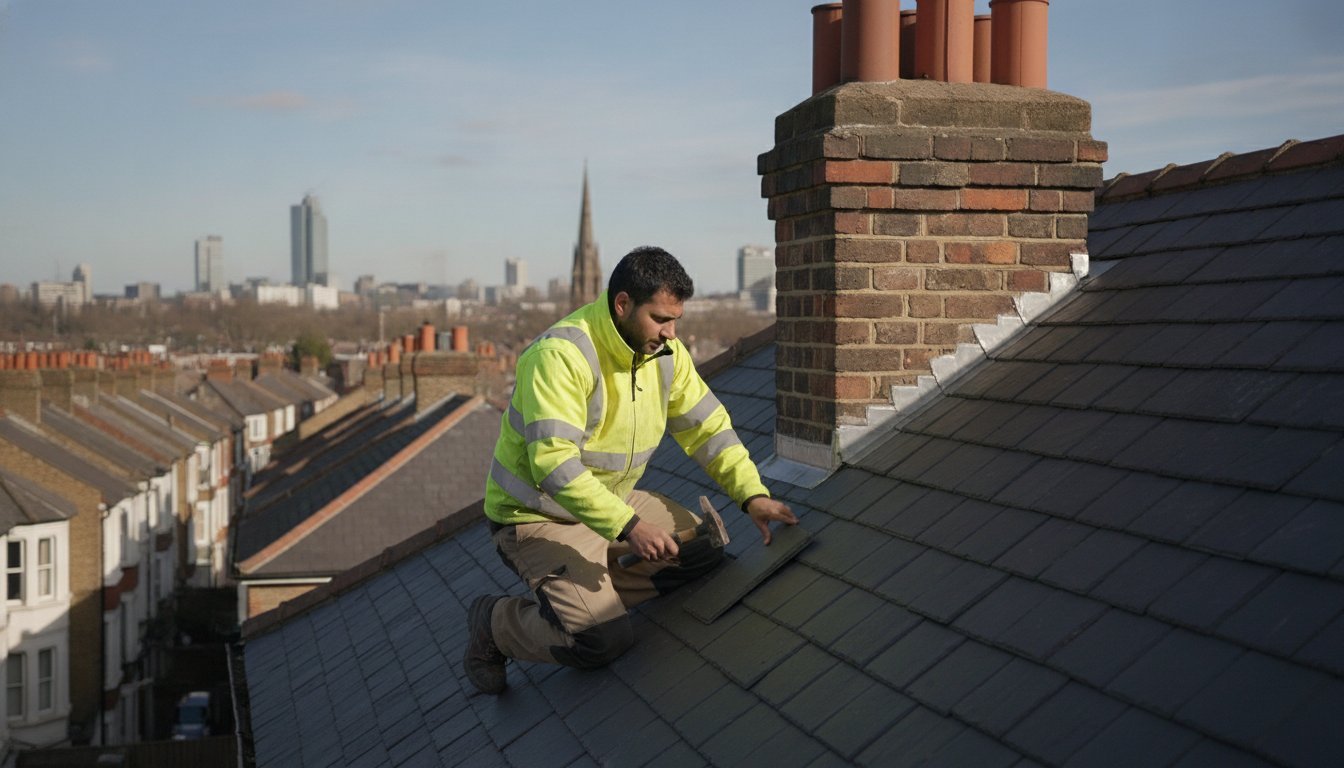
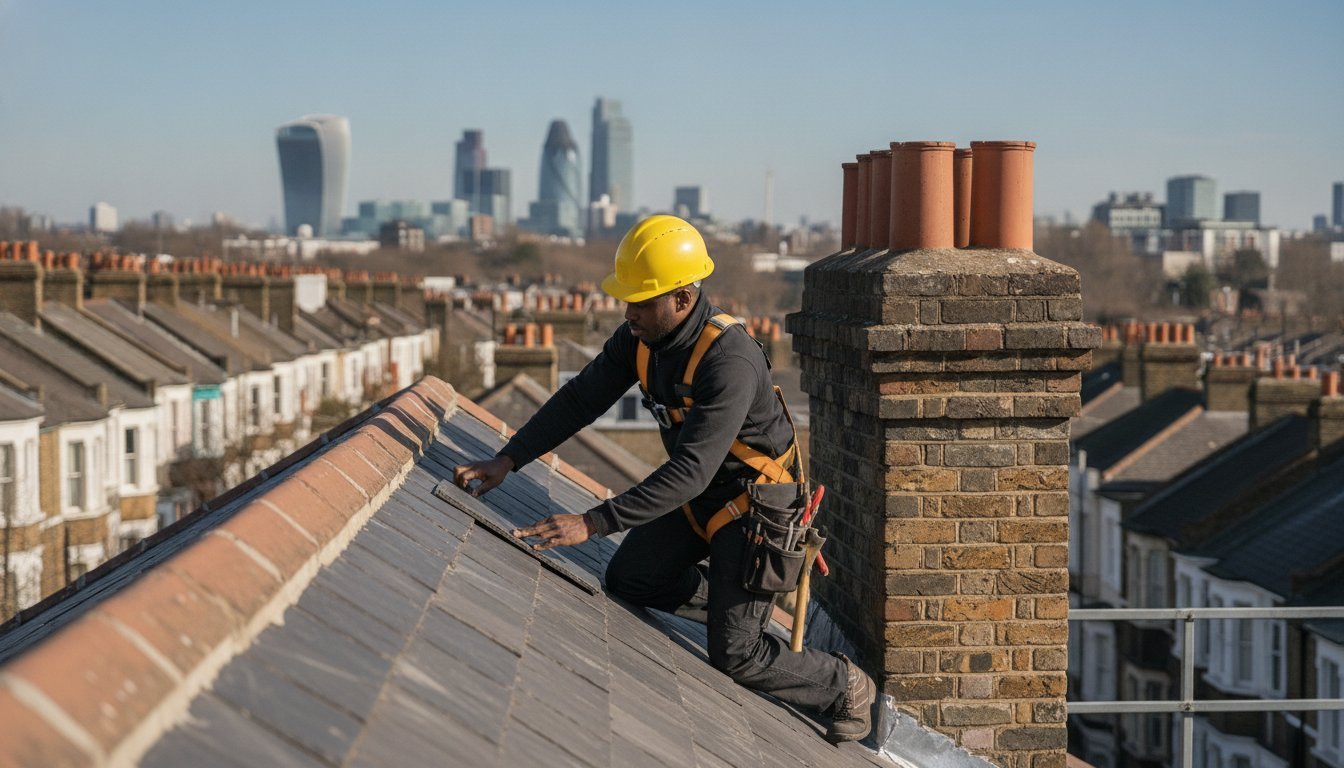
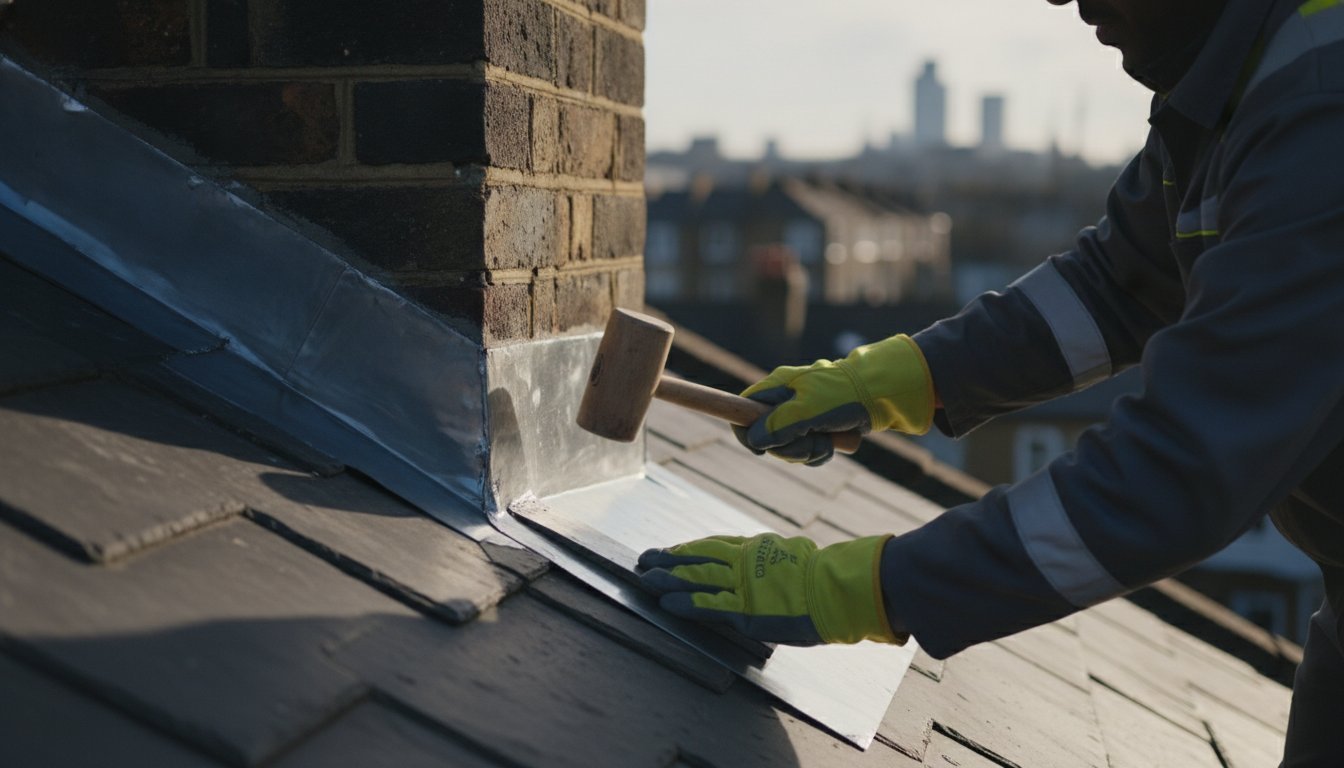
The chimney is a frequent source of water ingress. In Hackney’s Victorian terraces, the junction between the brick stack and the slate roof relies on stepped flashings. These are individual pieces of lead cut to follow the mortar lines of the masonry. A common mistake is using a single, long strip of lead, which eventually buckles. We ensure each step is deeply chased into the brickwork and secured with lead wedges. There is a vital synergy between leadwork and lime mortar repointing; using modern cement can trap moisture and cause the lead to corrode from the underside. This integrated approach to masonry and lead is further detailed in our guide to Mastering Slate Roofing in Hackney.
Restoring Lead Valleys and Gullies
Lead valleys are the large “V” shaped channels that direct water away from roof pitches. If you notice damp patches along the internal line of a roof join, the valley is likely the culprit. Many heritage valleys in East London are undersized for modern rainfall patterns or lack proper timber support. Over time, the weight of the water and the movement of the building cause the lead to sag and pool. Adhering to Lead Sheet Training Academy guidelines ensures that replacement valleys have the correct “girth” and are supported by a smooth, ventilated timber substrate to prevent condensation-related rot.
Once the technical installation is complete, applying patination oil is an integral part of any roof leadwork repair Hackney project. This specialist coating prevents the initial white carbonate from forming on new lead. It ensures the metal develops a beautiful, even grey patina whilst protecting it from unsightly run-off staining on the surrounding slates or brickwork. This attention to detail is particularly important for visible features like dormer tops and bay window coverings, where the aesthetic finish is just as important as the watertight seal.
The Professional Repair Process: A Methodical Approach
Executing a successful roof leadwork repair Hackney project requires a structured workflow that prioritises longevity over speed. Unlike modern synthetic materials that rely on adhesives, leadwork is a mechanical system that must be engineered to withstand the elements. Our approach follows a rigorous five-step sequence designed to restore the structural integrity of your roof whilst preserving its heritage character. This methodical progression ensures that every repair we perform meets the highest standards of the craft.
- Step 1: Detailed Site Survey. We begin by identifying the root cause of the water ingress. This involves checking for hidden splits, thinning metal, or failed timber substrates that might be causing the lead to shift.
- Step 2: Careful Removal. Perished lead is removed with precision. We use specialist tools to ensure that surrounding slates or tiles remain undamaged, avoiding unnecessary costs for additional materials.
- Step 3: Precision Fabrication. New lead components are shaped using traditional bossing or modern welding techniques. Each piece is custom-fit to the specific dimensions of your chimney, valley, or parapet.
- Step 4: Secure Installation. We fix the lead using copper nails and stainless steel clips. These materials are chosen because they do not react with the lead, preventing the galvanic corrosion often seen in amateur repairs.
- Step 5: Patination Oil Application. The final step is a coating of patination oil. This prevents the initial white carbonate from staining your roof and ensures the metal develops its protective grey patina evenly.
Lead Welding vs. Traditional Bossing
The choice between bossing and welding depends on the complexity of the architectural feature. Bossing involves manually “working” the lead with a wooden dresser to stretch it into shape. This is ideal for simple flashings but can lead to thinning if the metal is pushed too far. For complex corners or deep gullies, we often employ lead welding to fuse separate sheets together. Lead welding is a specialist skill that requires specific certification to ensure the fused joints are as strong as the parent metal. This technique allows us to create seamless, watertight barriers in even the most challenging Hackney roof configurations.
Compliance with LSA Standards
Adhering to Lead Sheet Association (LSA) standards is the only way to guarantee a repair lifespan of 60 years or more. A critical part of this compliance is the use of high-quality geotextile underlays. These underlays allow the lead to slide during thermal movement and prevent moisture from being trapped against the underside of the metal, which is a leading cause of premature failure. If you suspect your leadwork is reaching the end of its life, you can request a specialist site survey to receive a clear, technical assessment of your roof’s condition.
Choosing a Specialist Leadwork Contractor in Hackney
Selecting a partner for the roof leadwork repair Hackney properties require is a decision that impacts your home’s integrity for the next century. Whilst many general roofing contractors offer lead services, there’s a fundamental difference between a roofer who “does” lead and a master craftsman who specialises in it. Leadwork is a distinct trade requiring specific tools, fabrication skills, and a deep understanding of metallurgy. A generalist might rely on sealant or mastic to hide poor joints, but a specialist uses mechanical fixings and precise welding to ensure a permanent, watertight seal.
When interviewing potential contractors, your questions should focus on technical proficiency and long-term value. Ask specifically about their adherence to BS 6915 standards and which Lead Code they recommend for different sections of your roof. A professional will explain why a specific weight is necessary for a valley gutter whilst a lighter code suffices for a chimney apron. They should also confirm the use of patination oil as a standard practice, not an optional extra. Professional leadwork is a significant investment; done correctly, it eliminates the need for recurring maintenance and protects the underlying timber structure from rot.
Local Expertise for East London Heritage Projects
Hackney’s architectural landscape is a complex mix of Victorian terraces and Georgian townhouses, many of which are located within strict conservation areas. Navigating the requirements of local planning authorities requires a contractor who understands the nuances of East London heritage. We pride ourselves on being a trusted local advisor, combining traditional bossing techniques with modern efficiency to preserve the historic character of your property. If you’re concerned about the state of your flashings, contact our Hackney leadwork specialists for a professional assessment.
Requesting a Leadwork Repair Quote
A transparent, professional roofing estimate should be comprehensive and detailed. It shouldn’t just say “fix lead.” It must include specific line items for material specifications, the removal of old lead, and the preparation of the timber substrate. A specialist quote will also highlight the inclusion of a workmanship guarantee, providing you with the security that the heritage repair is built to last. To secure the roof leadwork repair Hackney homes deserve, please Contact Us for a free consultation. We focus on providing a methodical, expert-led service that respects both your building’s history and your investment.
Protecting Your Hackney Heritage for the Next Century
Investing in a professional roof leadwork repair Hackney project is about more than just stopping a leak; it’s about ensuring the long-term structural health of your period home. We’ve explored how understanding Lead Codes and the science of thermal movement prevents premature failure. We’ve also highlighted why methodical installation, from precision bossing to the application of patination oil, is essential for a watertight finish that respects historic architectural integrity.
As specialists in Hackney heritage properties, we pride ourselves on delivering LSA-compliant leadwork techniques that stand the test of time. Our expertise ensures seamless chimney and slate roof integration, protecting your property against the unique environmental pressures of East London. By choosing a partner who values craftsmanship over quick fixes, you’re securing your building’s future value whilst maintaining its aesthetic charm.
Secure your Hackney home with expert leadwork repairs—contact us today. Our team is ready to help you preserve the character and safety of your home with reliable, expert-led solutions that you can depend on for decades to come.
Frequently Asked Questions
How long does leadwork typically last on a Hackney roof?
Lead is remarkably durable and can easily last between 60 and 100 years when installed correctly by a specialist. Its longevity depends on the thickness of the metal. Skill in allowing for thermal movement is also vital. In Hackney’s historic terraces, original leadwork often lasts over a century. However, poor installation or using the wrong Lead Code can significantly reduce this lifespan. Quality materials are essential for long-term protection.
Can I use sealant or tape to repair a split in my lead flashing?
You should avoid using bitumastic tape or silicone sealants for anything other than an emergency temporary fix. Lead expands and contracts significantly with temperature changes. These “quick fixes” cannot flex with the metal. They quickly pull away, allowing water to enter. A professional roof leadwork repair Hackney homeowners can trust involves either lead welding the split or replacing the section entirely. This methodical approach ensures the repair remains watertight for decades.
Why is my new lead flashing turning white and streaky?
This white, powdery substance is basic lead carbonate, which forms when new lead reacts with water and carbon dioxide. Whilst it doesn’t usually damage the metal, the resulting streaks can permanently stain your roof slates or brickwork. To prevent this, we always apply patination oil immediately after installation. This specialist coating provides a temporary protective barrier. It allows the lead to develop its characteristic grey, protective patina in a controlled, even manner.
What is the average cost of leadwork repair in London?
The cost of leadwork depends on the complexity of the detailing, the Lead Code required, and the current market price of the raw material. Factors such as site access and the condition of the underlying roof structure also influence the total investment. A professional estimate should always break down these components clearly. We recommend a detailed site survey to provide a transparent and accurate quote that reflects the specific requirements of your heritage property.
Is leadwork repair covered by a standard roof maintenance check?
A standard roof maintenance check should always include a visual inspection of all lead components, but actual repairs are typically quoted as a separate service. During an inspection, we look for signs of thermal fatigue, such as cracking or ripples. We also check that lead wedges remain secure in the masonry. Identifying these issues early allows for minor interventions before they develop into major leaks that require a full roof leadwork repair Hackney service.
What are Lead Codes and why do they matter for my roof?
Lead Codes refer to the thickness and weight of the lead sheet per square metre. For example, Code 4 is the standard for chimney flashings, whilst Code 5 or 6 is necessary for larger areas like valleys or parapet gutters. Using a code that is too thin for the application leads to premature cracking and failure. Selecting the correct code is a fundamental part of ensuring your roof remains watertight and durable for its intended lifespan.
How do I know if my chimney leadwork is failing?
Look for damp patches on the ceilings of rooms directly below the chimney stack. You might also notice that the lead has pulled away from the brickwork. Crumbled mortar pointing around the flashing is another sign. On the roof itself, visible splits or “cockling” in the metal are clear indicators of failure. If you spot these signs, seek a professional assessment. This prevents water from damaging the internal timber structure and causing rot.
Do I need planning permission for leadwork repairs in a Hackney conservation area?
Generally, like-for-like repairs to leadwork do not require formal planning permission, even within Hackney’s conservation areas. These works are typically considered permitted development as they maintain the building’s original appearance. However, if you are planning to change the design or materials significantly, it’s wise to check with Hackney Council’s planning department first. Using traditional materials like milled lead usually satisfies heritage requirements and helps preserve the architectural integrity of our local historic buildings.