Could your garage roof be the one part of your Hackney home you never have to think about again? Most local homeowners are understandably weary of the “felt roof cycle,” where recurring leaks and moss growth lead to constant anxiety every time the British weather turns. If you’ve spent years patching up an ageing structure, you’ll know that temporary fixes often cost more in the long run than a professional replacement.
Investing in a fibreglass garage roof Hackney residents can rely on means moving away from these seasonal headaches toward a permanent, leak-proof solution. We understand the unique architectural demands of East London and the importance of meeting the updated January 2026 Hackney planning standards for residential alterations. This guide will show you how GRP technology provides a seamless, modern aesthetic that protects your property for 30 years or more.
We’ll examine the technical benefits of fibreglass over traditional materials, clarify the latest building regulations regarding material alterations, and outline the essential steps to ensuring your installation adds genuine, long-term value to your home.
Key Takeaways
- Understand why GRP (Glass Reinforced Plastic) is the premier seamless, cold-applied solution for creating a leak-proof fibreglass garage roof Hackney homeowners can depend on for decades.
- Discover the structural advantages of impact-resistant GRP over traditional felt, particularly for garages situated near overhanging trees or exposed to London’s temperature fluctuations.
- Learn about the professional installation process, including the importance of a structural site survey and the use of high-quality OSB3 tongue-and-groove decking for a stable foundation.
- Explore how to maximise your property value by integrating thermal insulation upgrades, such as “Warm Roof” systems, during your garage roof replacement.
- Navigate the latest 2026 Hackney planning requirements and building regulations to ensure your new flat roof installation is fully compliant and professionally certified.
Why Fibreglass (GRP) is the Gold Standard for Hackney Garage Roofs
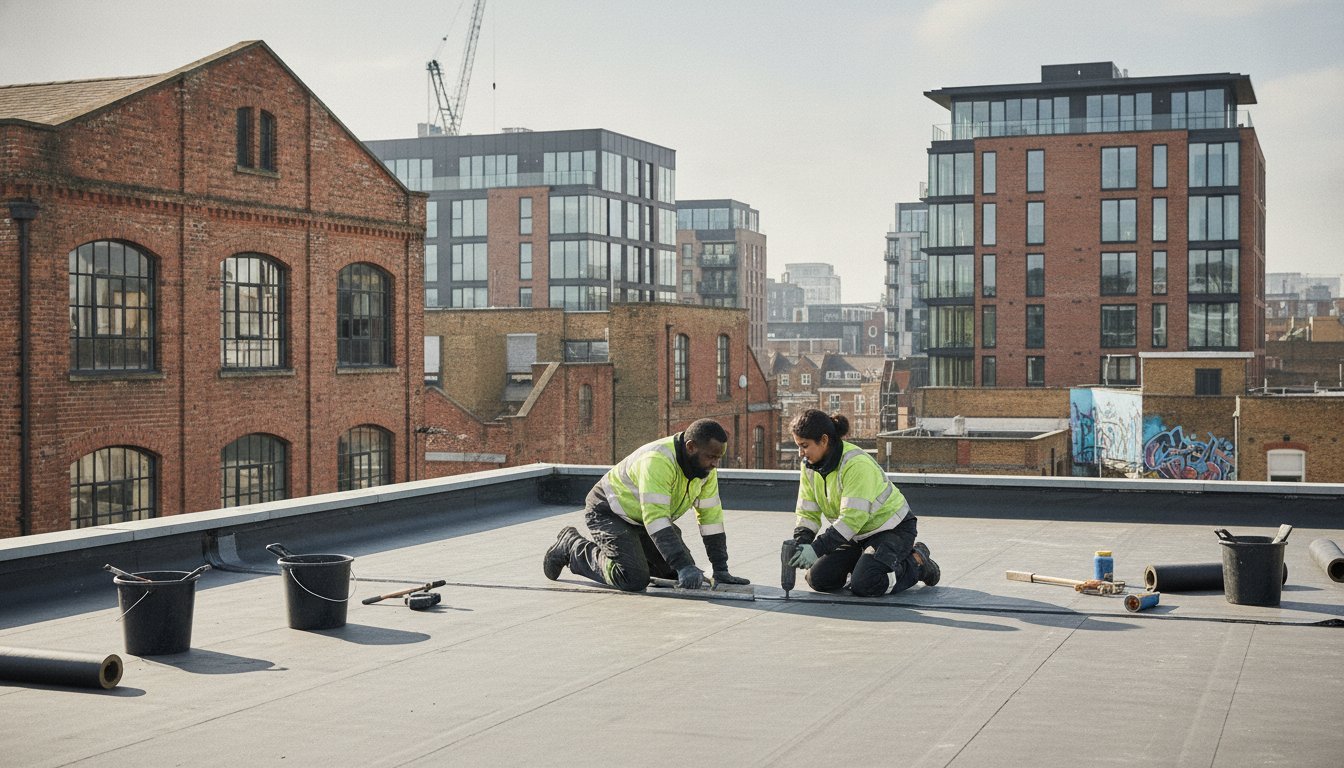
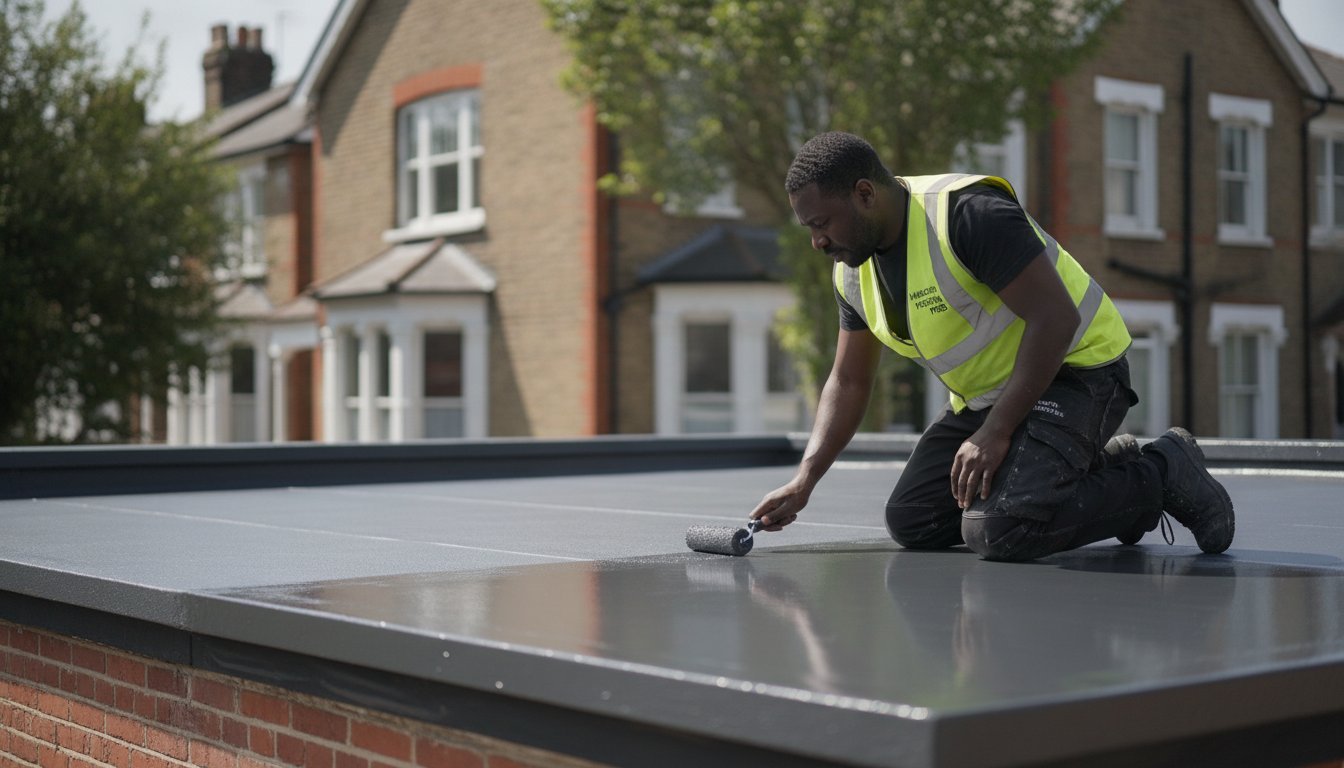
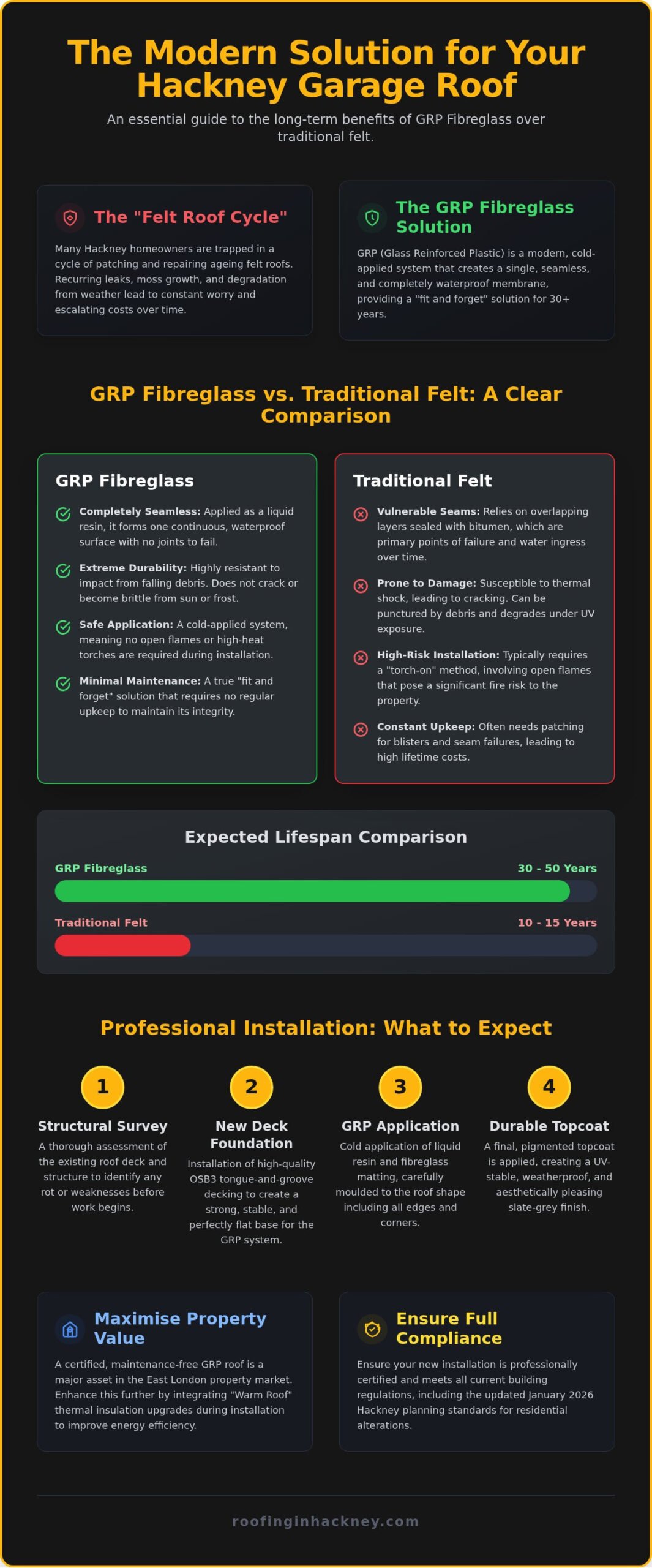
Choosing a Glass-reinforced plastic (GRP) roof for your outbuilding is a decision rooted in technical superiority. GRP, or Glass Reinforced Plastic, is a composite material created by strengthening plastic with fine glass fibres. Unlike traditional methods that require high-heat torches, this is a cold-applied system. It’s laid as a liquid resin over a structural deck, forming a single, seamless membrane across the entire surface. For a fibreglass garage roof Hackney homeowners can rely on, this lack of seams is the primary defence against water ingress. There are no joints to fail and no laps for water to seep under, creating a completely watertight envelope.
Traditional bitumen-based felt often struggles with London’s urban microclimate. The intense temperature fluctuations cause the material to expand and contract rapidly, leading to thermal shock and eventual cracking. Modern fibreglass systems are UV stable and remarkably flexible, meaning they don’t degrade under the sun’s rays or become brittle during a hard frost. The visual appeal of GRP is another significant factor. Modern Hackney renovations often favour a minimalist, clean aesthetic. The smooth, slate-grey finish of a fibreglass roof complements both Victorian brickwork and contemporary extensions. It’s a neat, professional look that instantly elevates the appearance of a tired garage.
Common Garage Roof Failures in East London
Many garages in the borough suffer from ponding, where water gathers in heavy pools on the surface. Older timber decks often sag over time, creating depressions that traditional felt cannot handle. As the water sits, it accelerates the degradation of bitumen-based materials. Hackney’s urban environment adds another layer of stress. Airborne pollutants and particulates from heavy traffic can chemically react with older roofing materials, causing them to become brittle and prone to hairline fractures. These slow, undetected leaks eventually reach the structural timbers, leading to costly rot that compromises the entire building’s integrity.
The Longevity Factor: 30+ Years of Protection
The life expectancy of a professionally installed GRP system is significantly higher than its competitors. Whilst a standard three-layer felt roof might offer 10 to 15 years of service, a fibreglass garage roof Hackney specialists install typically lasts between 30 and 50 years. It’s a fit and forget solution that removes the need for constant maintenance or patch repairs. Beyond the peace of mind, this longevity translates into tangible property value. In a fast-moving East London property market, a certified, maintenance-free roof is a major asset that reassures potential buyers about the building’s structural health and reduces their future maintenance liabilities.
Comparing GRP to Traditional Felt and EPDM in Hackney
When evaluating a new fibreglass garage roof Hackney residents often weigh the initial outlay against long-term reliability. Whilst traditional torch-on felt remains the most budget-friendly option at first glance, its shorter lifespan often leads to higher lifetime costs. GRP (Glass Reinforced Plastic) provides a superior cost-to-value ratio because it effectively eliminates the need for replacement for nearly four decades. This durability is particularly vital in Hackney, where garages are often situated near overhanging trees or in dense urban pockets.
Impact resistance is a standout feature of fibreglass. Unlike EPDM rubber, which can be punctured by falling branches or sharp debris, GRP is incredibly tough. It’s a rigid, structural material that handles physical stress without compromising its integrity. Crucially, because GRP is applied as a liquid, it creates a single, continuous surface. This removes the joints and seams that are the primary point of failure in felt and rubber systems. When planning these works, it’s essential to consider building regulations approval, as any significant change to a roof covering must meet current standards for safety and performance.
Fibreglass vs. Felt: Why the Extra Investment Pays Off
Over a 20-year period, a felt roof typically requires at least one full replacement or several significant repairs to manage blistering and seam failures. These maintenance costs quickly surpass the initial price difference of a GRP system. Safety is another factor. Felt installation involves “hot works” with open flames, which presents a fire risk in tight residential spaces. In contrast, GRP is cold-applied, making it safer for both the property and the installers. GRP is uniquely suited to Hackney’s high-density mews because its cold-application process eliminates the fire hazards associated with using gas torches in confined urban environments.
EPDM Rubber vs. GRP Fibreglass
Whilst EPDM rubber is a modern and effective material, it often lacks the “finished” architectural look that GRP provides. Fibreglass offers a clean, uniform surface that feels like a permanent part of the building’s structure rather than a loose covering. For homeowners considering future use, GRP is the better choice for roofs that might eventually serve as balconies or terraces, as its rigid nature supports foot traffic far better than flexible rubber. If damage does occur, GRP is also simpler to repair invisibly, maintaining both its strength and aesthetic appeal. If you’re unsure which material best suits your specific property, you can speak with our local advisors for a tailored recommendation.
The Professional Installation Process: What Hackney Homeowners Should Expect
A successful installation of a fibreglass garage roof Hackney residents can trust begins long before the resin is mixed. Our process starts with a rigorous structural assessment. We evaluate the load-bearing capacity of existing joists to ensure they can support the new GRP system. If the survey reveals moisture damage or structural sagging, these issues are addressed before any new materials are laid. Once the old, failing felt or bitumen is stripped away, we install fresh OSB3 tongue-and-groove decking. This specific grade of timber is engineered for flat roofing, providing a moisture-resistant and stable foundation that prevents the “bouncing” often felt on inferior structures.
The core of the “Master Craftsman” approach lies in the laminating stage. We apply a high-performance base resin followed by a layer of chopped strand glass fibre matting. This combination is consolidated using specialised rollers to eliminate air bubbles, creating a single, impenetrable membrane. As noted by industry bodies like Composites UK, the precision of this chemical bond is what defines the material’s longevity. To finish, we apply a cross-linked pigmented topcoat. This layer provides the final waterproofing seal and essential UV stability, ensuring the roof doesn’t become brittle or lose its colour under the sun.
Navigating Hackney’s Unique Logistics
Operating in East London requires more than just technical skill; it demands careful logistical planning. Many Hackney properties are situated in tight Victorian mews or narrow residential streets where skip placement is a challenge. We manage this by coordinating precise waste removal schedules and “wait-and-load” services to keep thoroughfares clear. Disruption to neighbours is a primary concern in high-density areas, so we maintain a clean site and work within strict social hours. If you’re concerned about access or specific site constraints, you can book a local site survey to discuss a tailored plan for your property.
Weather Windows and Installation Timing
GRP is a temperature-sensitive material that requires a dry window for the chemical reaction to cure correctly. Our team monitors local Hackney forecasts to identify the optimal time for installation, avoiding periods of high humidity or rainfall that could compromise the resin’s bond. We prioritise a “dry-in” phase, where the old roof is removed and the new deck is secured and waterproofed in a single session. This protects your garage contents and prevents moisture from entering the building’s structure during the transition. It’s a methodical pace that ensures quality isn’t sacrificed for speed.
Maximising Value: Insulation and Thermal Upgrades
Replacing an ageing structure with a new fibreglass garage roof Hackney homeowners find is the most opportune moment to address thermal performance. Most older garages in East London were built with little regard for heat retention, leading to damp environments that are unsuitable for anything other than basic storage. By integrating high-quality insulation during the GRP installation process, you transform a cold outbuilding into a functional extension of your home. This is particularly relevant for the growing number of Hackney residents converting garages into climate-controlled home offices, workshops, or private gyms.
There are two primary methods for these upgrades: “Warm Roof” and “Cold Roof” systems. A warm roof placement involves fixing rigid insulation boards directly on top of the structural timber deck, with the GRP membrane applied over the insulation. This method keeps the entire roof structure at the same temperature as the interior, effectively eliminating condensation risks. Conversely, a cold roof system places insulation between the joists. Whilst effective, this requires a ventilated void to prevent moisture build-up. For a detailed breakdown of these technologies, you should consult our Thermal Roof Insulation Upgrades guide.
Energy Efficiency and Building Regulations
Compliance with Building Regulations Part L is a legal requirement if you are replacing more than 25% of your garage roof area. As of July 2026, the standard requires a U-value of 0.18 W/m²K or better for renovated flat roofs. Meeting these standards does more than just satisfy Hackney Building Control; it significantly reduces dampness and protects stored items from seasonal temperature swings. For garages attached to the main house, professional insulation provides a vital thermal barrier that prevents heat from escaping through shared walls, leading to measurable savings on your annual energy bills.
Maintenance Tips for Your New Fibreglass Roof
One of the most significant benefits of GRP is its “fit and forget” nature. Unlike felt, which requires periodic checking for blisters or EPDM which can attract moss in shaded areas, fibreglass is remarkably resilient. To keep the topcoat looking new, a simple annual clear-out of leaf litter and debris from the gutters is usually sufficient. We recommend a visual inspection of the perimeter trims after heavy East London storms to ensure no debris has caused superficial scratching. Because the system is seamless and chemically bonded, it won’t peel or crack, making it virtually maintenance-free for its entire 30-year lifespan. If you’re ready to upgrade your garage’s performance and protection, you can request a professional assessment from our local team.
Roofing in Hackney: Your Local GRP Garage Roof Specialists
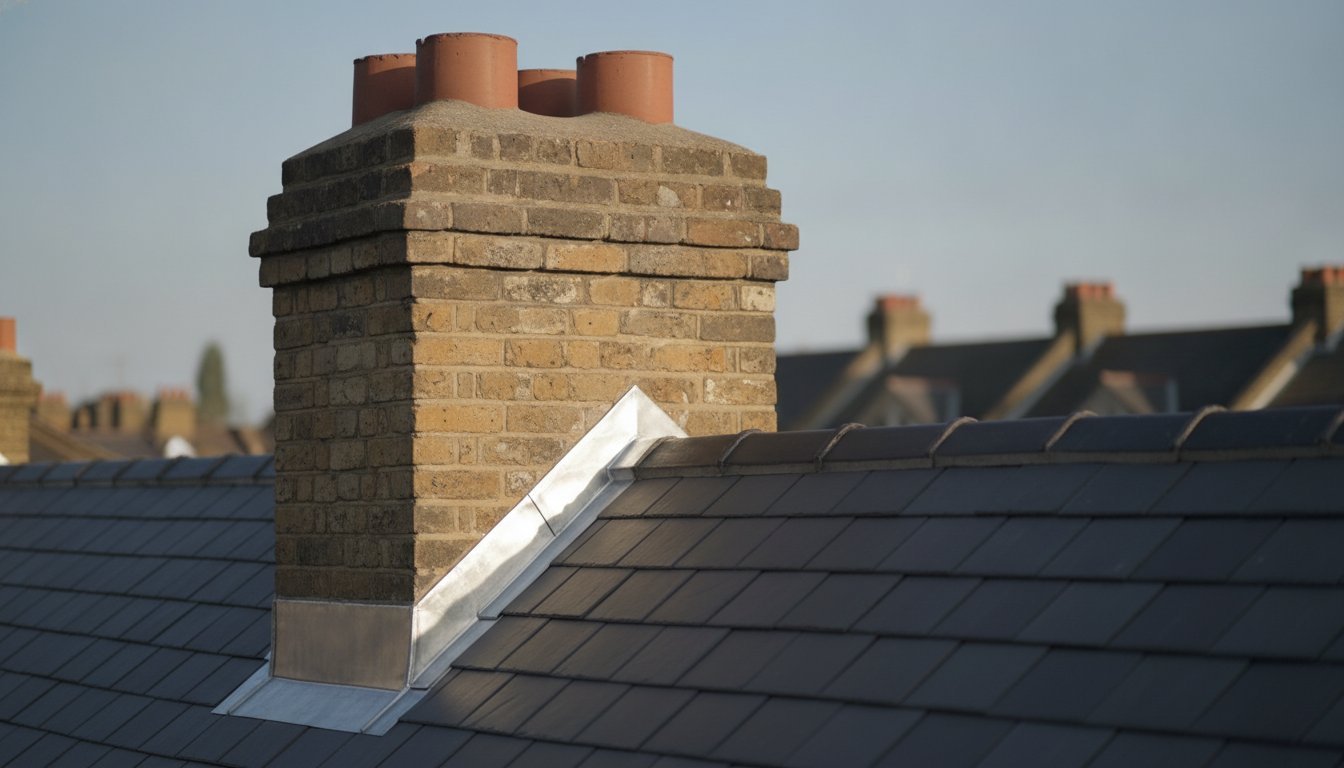
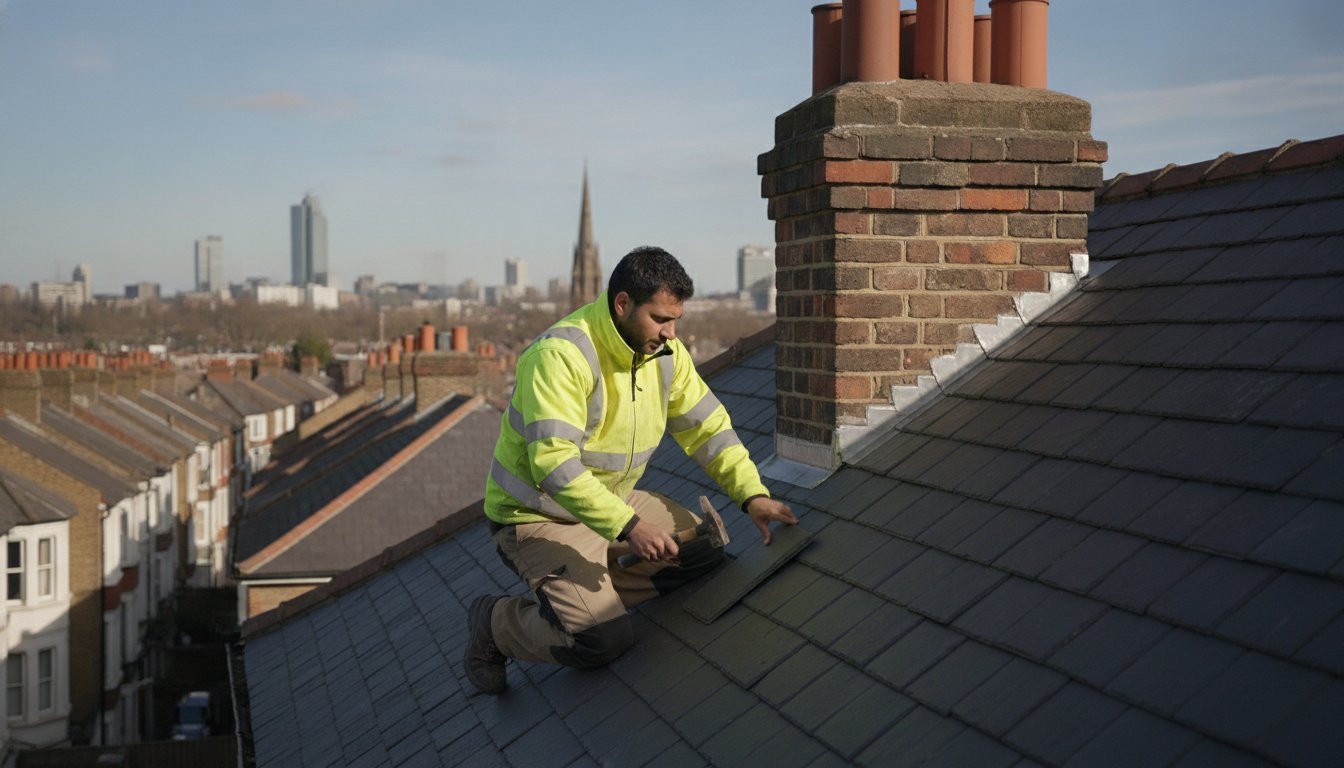
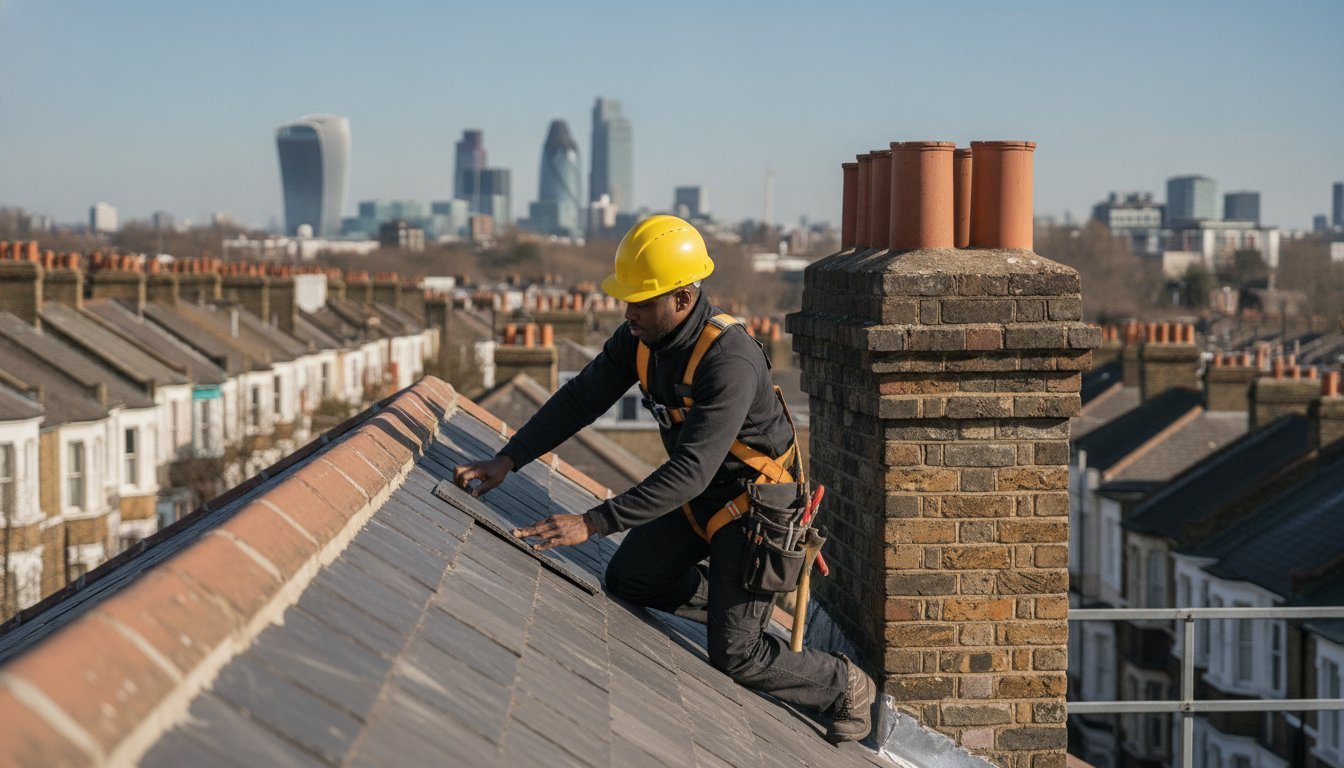
Our approach to every fibreglass garage roof Hackney project is rooted in a deep respect for the borough’s architectural character. Whether your garage is a standalone structure or part of a Victorian terrace mews, we ensure that the modern GRP application harmonises with the existing building fabric. This commitment to craftsmanship extends beyond flat roofing. We often integrate expert leadwork and chimney repair services to ensure that every junction of your property remains watertight. By choosing a specialist who understands the interplay between traditional masonry and contemporary membranes, you secure a finish that’s both technically sound and aesthetically appropriate. You can view our previous work and learn more about our standards on our About Us page.
Technical proficiency is only half the battle. Reliability and local presence are equally vital when making a significant investment in your home. As a Master Craftsman, we take pride in the order and transparency of our workflows. We don’t believe in high-pressure tactics; instead, we provide clear, expert-led advice that focuses on the long-term health of your garage. This grounded approach helps alleviate the stress typically associated with major maintenance, giving you a predictable and professional experience from the initial survey to the final inspection.
Why a Local Hackney Specialist Matters
Working with a local contractor provides a level of accountability that national firms simply cannot match. We have an intimate understanding of the Residential extensions and alterations supplementary planning document (SPD) implemented by Hackney Council in January 2026. This local knowledge is vital for navigating the nuances of conservation areas and permitted development rights. Our proximity to East London also means we offer rapid response times for initial site surveys and any subsequent support you might need. For a broader look at the modern systems and materials we provide, explore our Flat Roof Installation Hackney guide.
Start Your Garage Transformation Today
It’s tempting to opt for a quick patch-up when a leak appears, but these temporary fixes often mask deeper structural rot. Investing in a professional GRP installation is a move toward long-term security and property value. Our process for requesting a no-obligation quote is straightforward and transparent. We’ll provide a clear, methodical breakdown of the work required, from decking replacement to the final UV-resistant topcoat. Don’t let a failing roof compromise your garage’s potential. Get a professional quote for your fibreglass garage roof today and experience the peace of mind that comes with a master-crafted, leak-proof solution.
Secure Your Hackney Garage with a Permanent Roofing Solution
Transitioning from a leaking felt roof to a modern GRP system is more than a simple repair; it’s a strategic investment in your property’s structural health. By choosing a fibreglass garage roof Hackney homeowners can finally end the cycle of temporary fixes and enjoy a maintenance-free surface for up to 50 years. This upgrade provides the perfect window to enhance thermal performance, ensuring your outbuilding meets the latest 2026 standards and remains a functional part of your home throughout the seasons.
Our team of fully insured local master craftsmen understands the specific demands of Hackney’s Victorian mews and modern estates. We provide comprehensive guarantees on every installation, ensuring your investment is backed by technical precision and local accountability. We’re here to provide the expert guidance you need for a successful project.
Request Your Expert GRP Garage Roof Survey in Hackney
We look forward to helping you create a dry, efficient, and durable space that adds genuine value to your property.
Frequently Asked Questions
How long does a fibreglass garage roof last in the UK climate?
A professionally installed GRP system typically lasts between 25 and 40 years in the UK climate. Unlike traditional materials that degrade under UV exposure, fibreglass remains stable and waterproof for decades. Its rigid, seamless construction resists the thermal expansion and contraction that often causes cracks in older roofing systems. This longevity makes it one of the most durable options for any residential outbuilding.
Is a fibreglass roof noisy when it rains on a garage?
Fibreglass roofs aren’t significantly noisier than other flat roof materials when it rains. Because the GRP membrane is chemically bonded to a solid timber deck, there’s very little vibration to create a “drumming” effect. If your garage is used as a living space or office, installing a “warm roof” insulation system will further dampen sound whilst improving thermal efficiency.
Can I walk on my fibreglass garage roof?
Yes, you can safely walk on a fibreglass garage roof Hackney specialists have installed. The material is inherently strong and structural, designed to handle occasional foot traffic for maintenance or window cleaning. If you intend to use the roof frequently, such as for a balcony or terrace, we can apply a specific non-slip mineral finish to the topcoat to ensure safety and prevent wear.
How much does a fibreglass garage roof cost in Hackney?
The total cost of a new roof depends on the structural condition of your existing garage and the specific materials chosen. Factors such as the removal of old bitumen, the installation of new OSB3 decking, and the addition of thermal insulation will influence the final investment. We recommend a professional site survey to provide an accurate, fixed-price quote based on your garage’s unique dimensions and requirements.
Do I need planning permission to change my garage roof to fibreglass?
Most garage roof replacements in Hackney fall under Permitted Development rights and don’t require formal planning permission. However, if your property is within one of the borough’s 29 conservation areas or subject to an Article 4 Direction, restrictions may apply. You must notify Building Control if you’re replacing more than 25% of the roof area to ensure the work meets current safety and insulation standards.
How long does it take to install a GRP roof on a standard single garage?
A standard single garage roof usually takes between one and two days to complete. This timeframe includes stripping the old materials, preparing the timber deck, and applying the resin and topcoat. We prioritise a “dry-in” approach, ensuring the structure is made watertight within the first day to protect your belongings from the unpredictable London weather.
Can a fibreglass roof be repaired if it gets damaged?
Fibreglass is one of the few roofing materials that can be repaired almost invisibly if it sustains physical damage. Because the resin forms a chemical bond, new layers of GRP can be laminated directly onto the existing surface. This creates a permanent, structural patch that is just as strong and waterproof as the original membrane, rather than a temporary fix that might fail later.
Is fibreglass better than felt for a flat garage roof?
GRP is widely considered superior to traditional felt due to its seamless nature and extended service life. Whilst felt is applied in layers with seams that can eventually fail, fibreglass creates a single, continuous envelope across the entire roof. It’s also more resistant to moss growth and urban pollutants, making it a more reliable choice for Hackney’s dense residential environment.