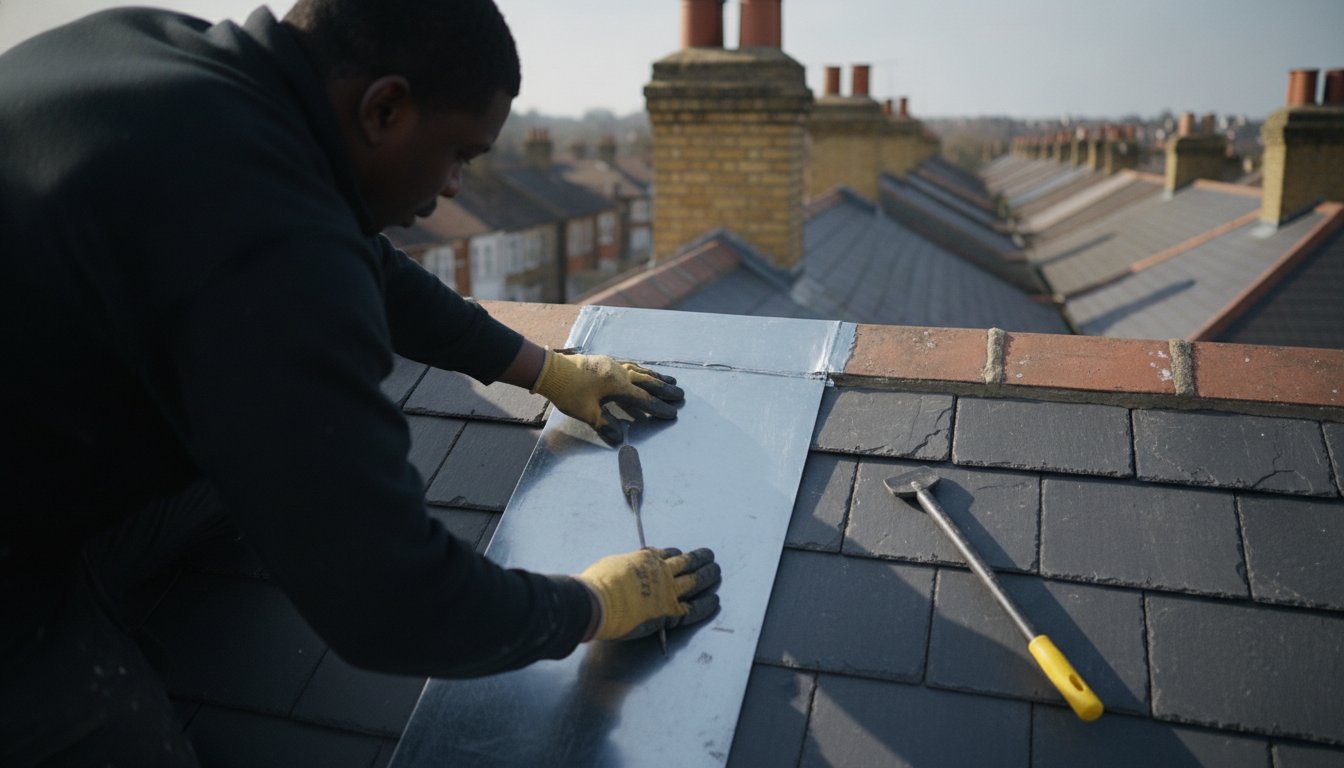
Did you know that over 80% of Hackney’s residential buildings are more than 100 years old, making them uniquely vulnerable to the failure of original leadwork? If you’ve discovered damp patches on your bedroom ceiling, you’re likely feeling the stress of managing a period home’s upkeep. It’s a common anxiety for local homeowners who want to protect their investment but fear the complexity of heritage restoration or the risk of a botched job.
This case study explores how professional lead valley repair Hackney services protect these historic structures from water ingress whilst maintaining their architectural integrity. You’ll learn how to identify the signs of failing lead and understand the technical standards required for a lasting, leak-free solution. We will also examine how the 2026 Hackney Supplementary Planning Documents influence modern restoration projects, ensuring your home remains both weather-tight and compliant with local conservation standards. By the end of this guide, you’ll have the clarity needed to commission leadwork that respects the history of your Victorian or Edwardian property.
Key Takeaways
- Understand why lead valleys are the critical drainage point for Victorian terraces and how thermal expansion causes aged metal to split.
- Discover why professional lead valley repair Hackney specialists prioritise Code 4 or 5 lead to ensure long-term durability and compliance with BS EN 12588 standards.
- Learn to spot the early indicators of lead failure, including white oxidisation and slipped slates, to prevent costly internal damp damage.
- Recognise why modern sealants and “liquid rubber” patches are temporary fixes that often exacerbate the structural issues of heritage roofs.
- Gain insight into the technical requirements of bossing and welding to ensure your roof restoration respects the unique architectural character of East London.
The Role of Lead Valleys in Hackney’s Period Architecture
In the dense Victorian terraces of East London, the roof is more than just a simple cover; it’s a complex drainage system designed for longevity. A lead valley is the internal gutter where two roof slopes meet. You’ll find these most commonly on the “butterfly” roofs that define the local skyline. These valleys act as the primary drainage channel, funneling immense volumes of water during heavy East London downpours. Without a functioning valley, water has no clear path to the external guttering, which leads inevitably to internal damage.
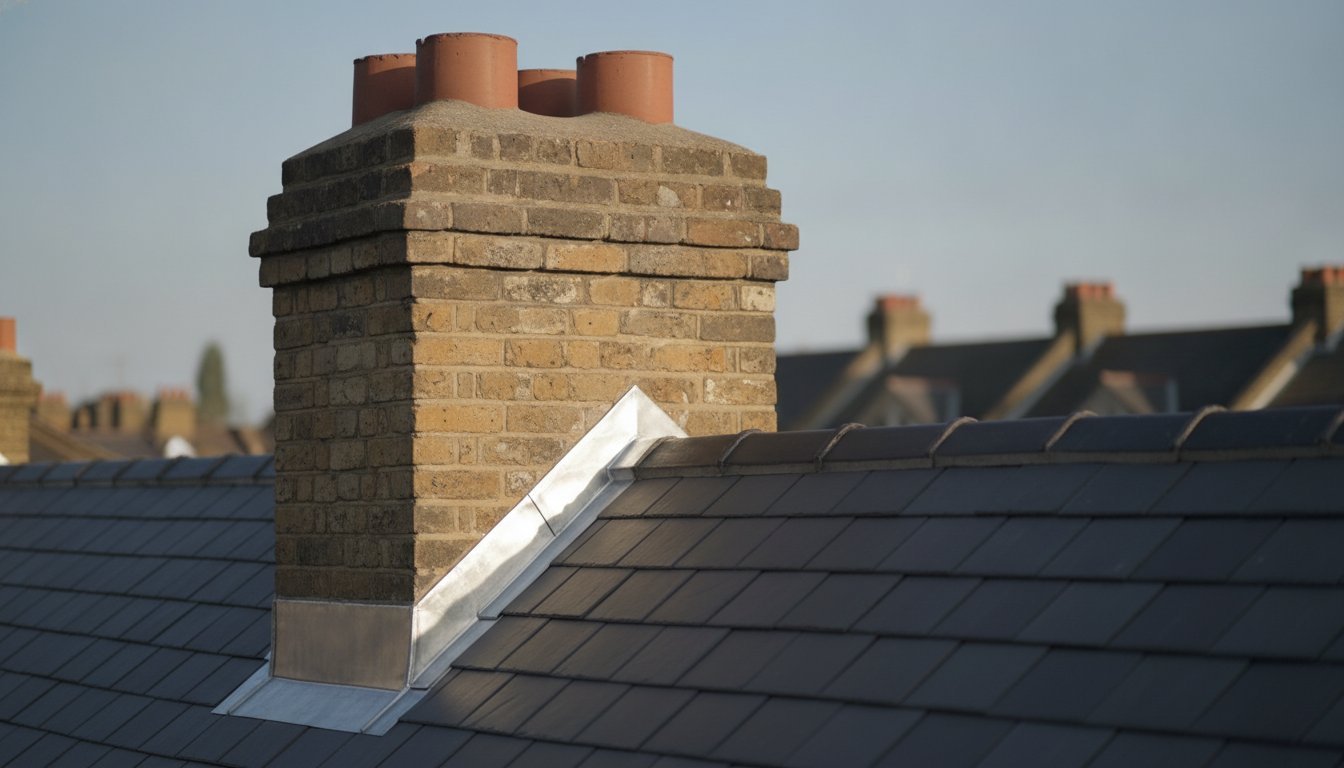
Lead remains the gold standard for this specific application. Its unique ability to be “bossed”, or hand-shaped, allows it to follow the intricate contours of a heritage roof whilst remaining entirely watertight. This flexibility is essential for the Flashing (weatherproofing) required at the tricky parapet junctions found throughout the E5 and E8 postcodes. When executed by a specialist in lead valley repair Hackney, this traditional material provides a lifespan that modern alternatives simply cannot match. It is a precision craft that balances technical performance with the aesthetic requirements of Hackney’s conservation areas.
Why Lead Valleys Fail: Common Causes of Leakage
Lead is incredibly durable, but it isn’t immortal. The primary culprit for failure is thermal fatigue. Because lead is a dense metal, it expands and contracts significantly as the London sun warms and cools the roof. Over decades, this constant movement causes the metal to “fatigue” and eventually split. Hackney’s older foundations often experience subtle shifts too. While a few millimetres of movement might seem minor, it’s often enough to tear aged lead sheets that have lost their pliability. You might also notice a “white powder” on the underside of old lead. This is lead carbonate, a sign of slow corrosion caused by trapped moisture and poor ventilation within the roof structure.
The Vulnerability of Victorian Terrace Junctions
Victorian terrace junctions are notoriously narrow. This design makes them highly prone to blockages from fallen leaves or nesting debris. When a valley becomes blocked, water backs up and overflows directly into the roof space. Homeowners often attempt a quick fix with “liquid rubber” or bitumen patches. These materials don’t share the same thermal expansion properties as lead, meaning they’ll pull away within months. Failing mortar at the valley edges also allows water to seep behind the lead, rotting the timber boards beneath. For a permanent solution, you can contact us to discuss a full technical assessment of your heritage leadwork. A simple patch is rarely a long-term fix for the structural integrity of a period home.
Technical Standards for Lead Valley Repair and Replacement
High-quality leadwork isn’t just about the metal; it’s about the engineering behind the installation. For a successful lead valley repair Hackney project, we strictly follow the Lead Sheet Association (LSA) guidelines. These standards ensure that the lead can cope with the mechanical stresses of the British climate for decades. At Roofing in Hackney, we treat every valley restoration as a structural investment. This process begins with a thorough inspection of the timber substrate. If the valley boards are damp-damaged or uneven, the new lead will eventually fail due to stress points. Ensuring a smooth, sound timber base is the first step in any professional heritage repair.
Choosing the Correct Lead Code (Thickness)
Selecting the right thickness, or “code”, is vital for longevity. While Code 3 is suitable for very light flashings, it’s far too thin for valleys. We typically specify BS EN 12588-certified milled sheet lead in Code 4 or Code 5. Code 4 is often the standard for smaller valleys, providing a balance between flexibility and weight. However, Code 5 is recommended for larger Hackney properties where the valley carries a high volume of water or is exposed to significant sunlight. The thicker the lead, the better its resistance to thermal fatigue. Using the wrong code leads to premature splitting, a common issue we see when non-specialists handle period roof repairs.
Wood Rolls and Drip Details
Physics dictates that lead must be allowed to move. If a lead sheet is too long, it will buckle and crack under thermal expansion. This is why we install “drips” in longer valleys. These are essentially small steps in the timber substrate that allow us to overlap shorter sections of lead, creating a watertight joint that accommodates movement. Timber “rolls” are another critical component. These rounded wooden strips allow the lead to be shaped over a joint, providing a secure seal whilst allowing the metal to expand and contract without restriction.
We also pay close attention to “tingle” placement. These are small strips of lead or copper that hold the main sheets in place. If they aren’t positioned correctly, the lead can slip over time, exposing the timber beneath to rot. If you’re concerned about the state of your roof’s drainage, you can request a technical survey to ensure your leadwork meets these essential heritage standards.
Case Study: Restoring a Perished Lead Valley on a Hackney Victorian Terrace
In early 2026, we were called to a mid-terrace Victorian property in the E9 postcode. The homeowner had been struggling with persistent damp patches on the master bedroom ceiling for nearly a year. Despite hiring local handymen to apply multiple layers of “liquid rubber” and bitumen patches, the ingress returned with every significant rainfall. This is a classic scenario where a temporary fix fails to address the underlying structural failure of the metalwork. Our objective was clear: a comprehensive lead valley repair Hackney restoration that would provide a permanent, maintenance-free solution for the next fifty years.
The Initial Inspection and Fault Finding
Upon accessing the roof, the cause of the failure was immediately apparent. The original lead had developed “star cracks”, which are small, radiating fractures caused by decades of restricted thermal movement. Because the lead hadn’t been installed with appropriate joints, it had buckled and split under the London sun. We also discovered that the long-term seepage had rotted the valley boards beneath the metal, creating a soft, unstable substrate. Our team carefully inspected the adjacent slate roofing in Hackney to ensure that no water had tracked sideways into the main rafters. It’s vital to check these junctions, as a failing valley often compromises the surrounding slates.
The Step-by-Step Restoration Process
The project required a methodical three-day workflow to ensure every detail met heritage standards. We didn’t rush the preparation, as the longevity of leadwork depends entirely on the quality of the timber beneath it.
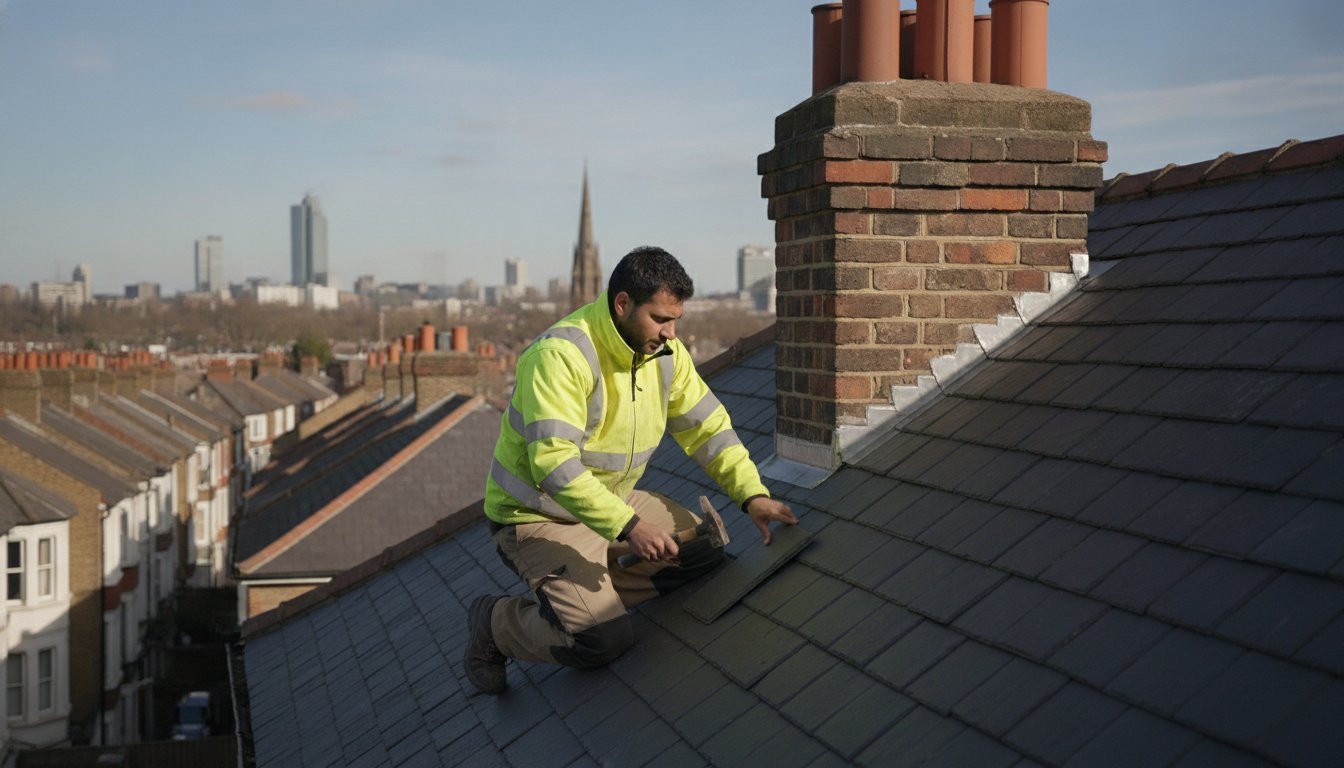
- We began by carefully removing three courses of slates on either side of the valley. This exposed the full width of the failed lead and the decayed timber work.
- All rotten valley boards were replaced with treated timber, creating a flat and secure base for the new installation.
- We installed new Code 5 milled lead sheets. To manage thermal expansion, we limited each piece’s length and ensured a minimum 150mm overlap at every joint.
- The slates were then re-instated with copper nails, and a high-grade lead mastic was applied to the junctions to provide a secondary line of defence against wind-driven rain.
By the end of the third day, the property was entirely weather-tight. The master bedroom remained dry throughout the subsequent spring storms, proving that traditional techniques are always superior to modern coatings. This project highlights why a specialist lead valley repair Hackney approach is essential for preserving the structural health of East London’s period homes.
Warning Signs: Identifying Lead Valley Failure Before Internal Damage Occurs
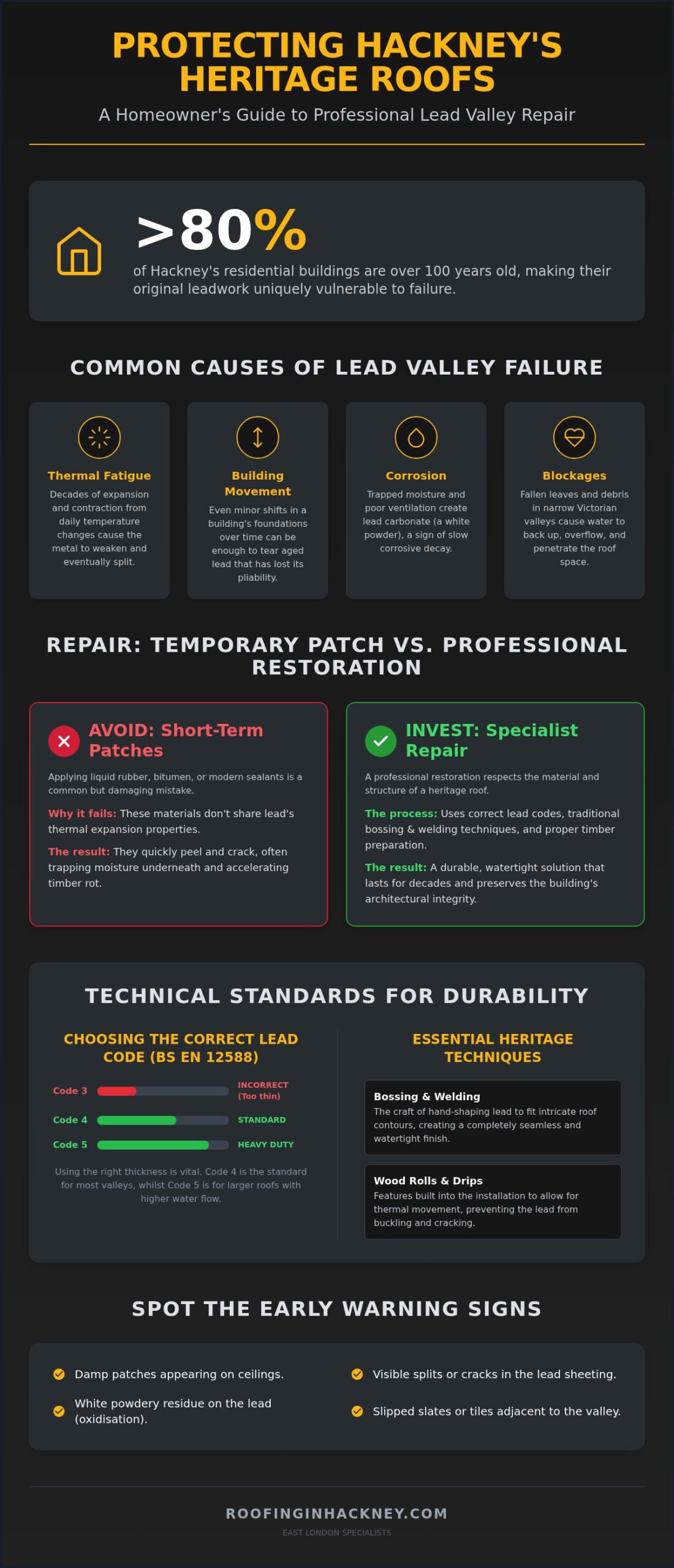
Homeowners in East London often remain unaware of roofing issues until a damp patch manifests on a bedroom ceiling. By then, the damage to internal plasterwork and insulation is already done. Taking a proactive approach by identifying early warning signs can significantly reduce the cost of a lead valley repair Hackney. A simple visual check from the street is often enough to spot the first red flags. Look specifically for “white streaking” on the slates. This is lead carbonate, a byproduct of oxidisation that indicates the metal is reaching the end of its functional life. If you see this white powder washing down the roof, the lead is becoming thin and brittle.
External Visual Indicators
Pay close attention to the physical shape of the metalwork during your inspection. If the lead sheets appear to be “lifting” or buckling at the edges, it’s a clear sign that restricted thermal movement has caused the metal to warp. You should also look for visible cracks in the “sole”, which is the flat bottom of the valley where water volume is highest. Even a hairline fracture in this area allows significant water ingress during a downpour. Debris buildup is another common issue in Hackney’s leafy neighbourhoods. Silt and moss trap moisture and organic acids against the lead surface, which can lead to “pitting” or small holes. If the valley looks clogged with growth, it’s likely that water is already backing up under the slates.
Internal Damp and Structural Risks
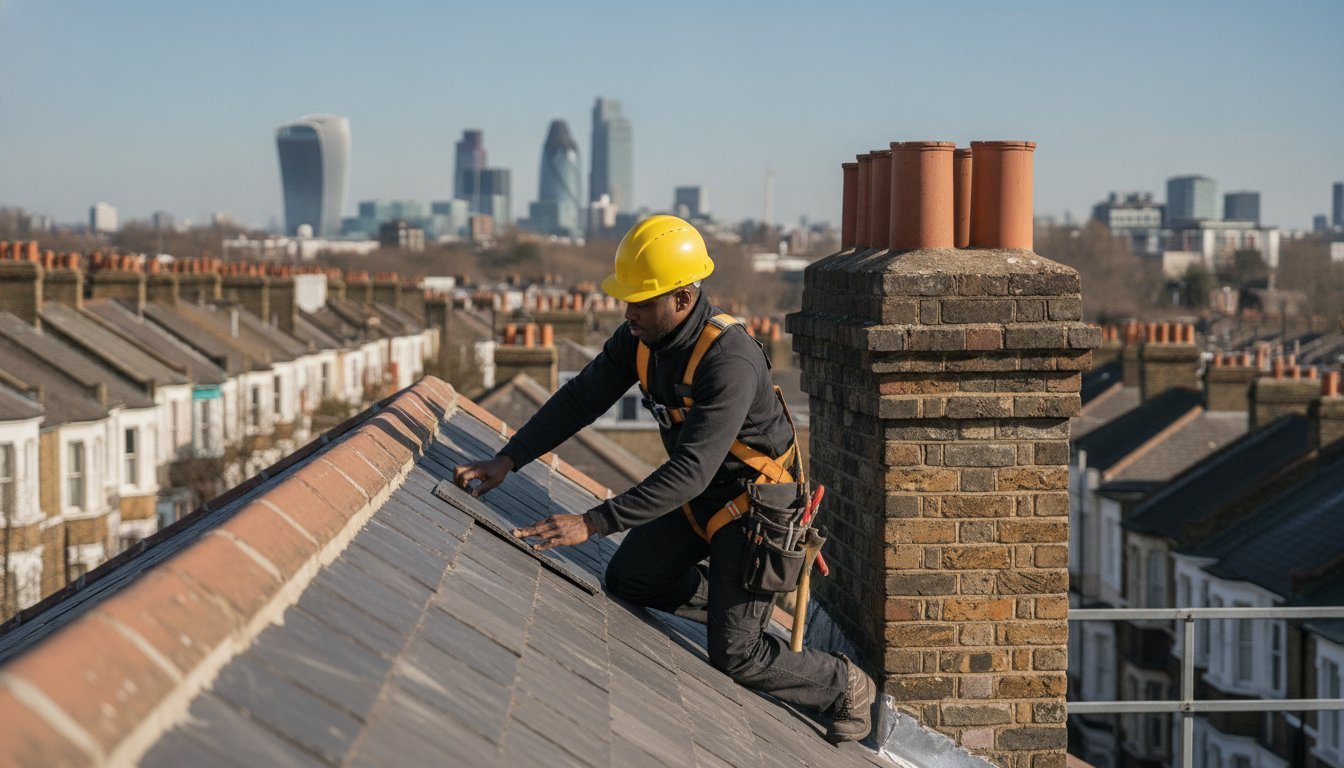
Inside the property, the first signs of failure often appear as staining on chimney breasts or at the very top of bedroom walls. These patches might only appear during heavy, wind-driven rain, making them easy to dismiss as a one-off event. However, this intermittent moisture is enough to trigger dry rot in the roof timbers if the valley leak is left unaddressed. Whilst external signs are helpful, internal moisture is a definitive call to action. Saturated masonry can also lead to broader issues, such as the need for chimney stack repointing, as water enters the mortar joints from above and weakens the structure. If you notice a persistent musty smell in your loft space, it’s a strong indicator that your insulation is damp and requires immediate attention.
Identifying these faults early is the best way to avoid a full-scale roofing emergency. If you’ve spotted any of these warning signs on your period property, contact our specialist team for a leadwork assessment to ensure your home remains dry and protected for the long term.
Why Specialist Leadwork Requires a Heritage Approach in East London
Restoring a period property in East London requires more than general building knowledge; it demands a deep understanding of traditional materials. There’s a significant difference between a general roofer and a specialist leadworker. While many contractors can lay a tile or clear a gutter, a leadworker understands the metallurgical properties of the metal. A correctly executed lead valley repair Hackney project isn’t just a temporary patch; it’s a structural upgrade designed to last over 60 years. This long-term return on investment is only achievable when the craftsman respects the physics of the metal rather than fighting against it with incompatible materials.
Modern sealants, bitumen tapes, and flashbands are often the “enemy” of traditional lead valleys. These products are frequently marketed as quick fixes, but they trap moisture and prevent the lead from breathing. Because they don’t share the same expansion rate as lead, they eventually peel away, often taking the surface of the metal with them. At Roofing in Hackney, we reject these shortcuts in favour of bossing and welding techniques that have protected London’s architecture for centuries. Our goal is to preserve the aesthetic value and structural health of your home using methods that stand the test of time.
Avoiding Quick Fixes and “Solar Cowboys”
We often encounter homeowners who’ve been let down by low-cost quotes that rely on “quick-fix” methods. A common mistake is the use of Code 3 lead for valleys to save on material costs. This metal is far too thin for the high water volumes found in Hackney’s butterfly roofs and will split within a few seasons. Another primary cause of failure is “over-fixing”. If a lead sheet is secured with too many nails, it’s pinned in place and cannot expand. This restriction is what leads to the buckling and star-cracks we’ve highlighted in previous sections. We also ensure every project is finished with patination oil. This prevents the unsightly white carbonate staining that can wash down and ruin the appearance of your slates or brickwork.
Our Commitment to Hackney’s Heritage
Maintaining the historic streetscapes of E5, E8, and E9 is a responsibility we take seriously. Our valley restorations are designed to work in harmony with other critical roof elements, often working in harmony with expert lead flashing repair to create a unified, watertight seal across the entire structure. We believe in transparency and order throughout the restoration process. To give you peace of mind, we provide detailed photographic evidence of all hidden leadwork and timber repairs before the slates are re-instated. You’ll have a permanent record of the craftsmanship protecting your property, ensuring its heritage value is maintained for the next generation of Hackney residents.
Securing Your Hackney Heritage Home for the Decades Ahead
Protecting a period property requires a commitment to traditional materials and technical precision. We’ve explored how identifying early warning signs, such as white streaking or slipped slates, can prevent the structural damage associated with valley failure. By adhering to BS EN 12588 standards and using the correct lead codes, you ensure your roof remains weather-tight whilst respecting the historic fabric of East London. A well-executed restoration doesn’t just stop a leak; it preserves the value of your investment for generations.
Investing in a professional lead valley repair Hackney service isn’t just a maintenance task; it’s a long-term safeguard for your home’s integrity. As trusted local Hackney contractors, we specialise in Victorian and Edwardian roof restorations that combine technical mastery with a customer-centric approach. Our team focuses on BS EN 12588 heritage leadwork that balances technical excellence with aesthetic harmony. Don’t wait for the next heavy downpour to test your roof’s defences. You can contact Roofing in Hackney for a professional lead valley inspection to ensure your property remains dry and secure. We’re here to help you protect the character of your home with craftsmanship you can depend on.
Frequently Asked Questions
How much does a lead valley repair cost in Hackney?
The total investment for a valley restoration is determined by the length of the lead run, the current state of the timber boards, and the height of the building. Accessibility is a major factor, as taller Victorian terraces often require more extensive scaffolding. Because we use BS EN 12588-certified lead, material costs also fluctuate based on the required thickness. A technical survey is the only way to provide a fixed, professional quote for your property.
Can I use a liquid waterproof coating to fix a leaking lead valley?
Liquid waterproof coatings are only temporary patches and aren’t recommended for permanent heritage repairs. These materials don’t share the same thermal expansion properties as lead, meaning they’ll eventually pull away and crack as the metal moves in the sun. For a lasting solution, the only effective method is to replace the failed metalwork using traditional lead bossing and welding techniques that accommodate natural movement without compromising the seal.
How long should a new lead valley last on a Victorian house?
A new lead valley should last between 60 and 100 years if installed according to Lead Sheet Association standards. This exceptional lifespan is only possible when the project uses the correct lead code and incorporates expansion joints like drips to manage thermal movement. Selecting a specialist for your lead valley repair Hackney ensures the installation follows these traditional methods, providing long-term security that modern alternatives simply cannot match.
What lead code is best for a standard roof valley?
Code 4 or Code 5 milled lead is the industry standard for most residential roof valleys in Hackney. Code 4 provides sufficient durability for shorter runs, whilst Code 5 is preferred for longer valleys or exposed areas where greater resistance to thermal movement is required. Using thinner Code 3 lead is a common mistake that leads to premature splitting and should be avoided in all valley applications to ensure longevity.
Do I need scaffolding for a lead valley repair in Hackney?
Scaffolding is almost always required for valley repairs to ensure the safety of the craftsmen and the protection of your property. Working on the internal junctions of a roof requires stable, secure access that ladders cannot provide. This setup also allows for the careful removal and storage of slates, which is essential for maintaining the architectural integrity of Victorian and Edwardian terrace roofs during the restoration process.
Will insurance cover the cost of my lead valley restoration?
Most standard home insurance policies don’t cover repairs caused by gradual wear and tear or lack of maintenance. However, you might be covered if the damage was caused by a specific event, such as a storm or a fallen tree. It’s advisable to check your policy wording or speak with your provider, though most homeowners find that proactive leadwork restoration is an out-of-pocket investment in the long-term preservation of their home.
What is the difference between a lead valley and lead flashing?
A lead valley is a primary drainage channel located where two roof slopes meet, whereas lead flashing is a weatherproofing strip used at junctions like chimney stacks or parapet walls. Valleys carry a much higher volume of water and require thicker lead and more complex jointing to manage the flow. Both elements are critical for a watertight roof, but they serve different structural roles in heritage drainage systems across East London.
Can lead valleys be repaired in the winter or during rain?
Leadwork can be undertaken throughout the year, provided the working area remains dry during the critical installation phases. We use professional weatherproofing covers to protect your home’s interior whilst the old lead is removed and the timber substrate is prepared. A specialist in lead valley repair Hackney will carefully time the work around local weather patterns to ensure a high-quality finish, even during the wetter winter months.