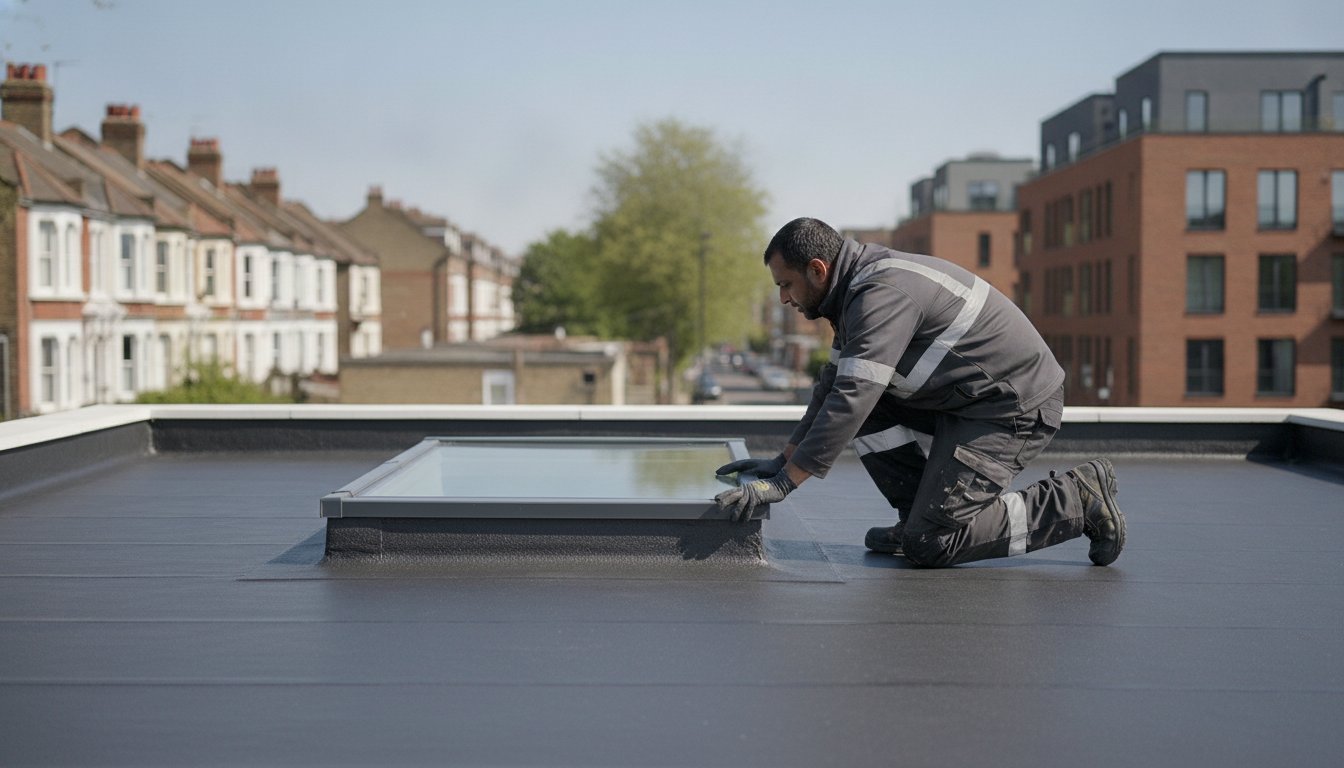
In Hackney, a flat roof is no longer just a functional lid for your home; it is a critical component of your property’s thermal envelope and heritage value. If you are struggling with recurring leaks or rising heating costs, investing in professional flat roof waterproofing Hackney residents can trust is the first step toward long-term structural security. We understand the frustration of patching up an aging felt roof whilst watching your energy bills climb because of inadequate insulation and the unique urban constraints of East London properties.
This guide will show you how to achieve a 100% watertight finish with a robust guarantee, ensuring your home meets the latest BS 6229:2025 design standards and Part L thermal requirements. You will discover the most durable waterproofing systems currently available, how to navigate Hackney’s specific planning constraints, and what to expect during a professional installation. By the end, you will have the clarity needed to choose a solution that offers both immediate protection and lasting value for your investment.
Key Takeaways
- Understand the specific environmental factors in East London, from pigeon debris to urban pollution, that necessitate the robust flat roof waterproofing Hackney properties require for longevity.
- Compare the performance of modern membranes like EPDM rubber and GRP fibreglass to determine which system best suits your property, whether it is a simple extension or a high-traffic balcony.
- Learn the critical differences between warm and cold roof configurations to ensure your renovation meets current UK Building Regulations and significantly improves your home’s thermal efficiency.
- Discover why a professional site survey and core sample test are non-negotiable steps for identifying hidden damp and ensuring a completely watertight installation.
- Identify the essential criteria for selecting a local roofing specialist who understands Hackney’s unique building stock and provides transparent, comprehensive project specifications.
Why Flat Roof Waterproofing is Essential for Hackney Properties
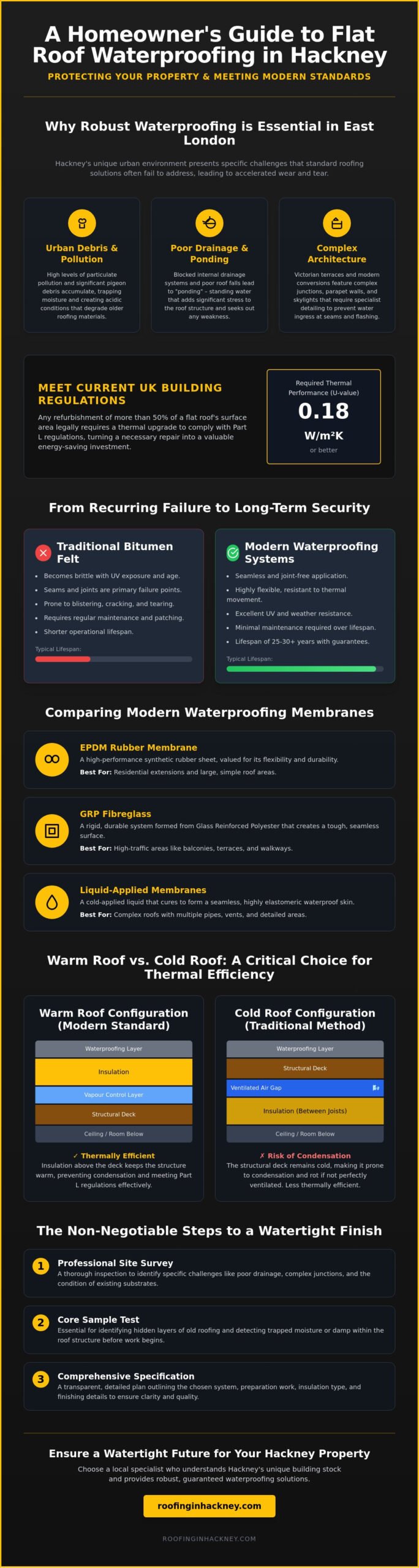
Hackney’s architectural landscape is a unique blend of heritage and industry, placing distinct pressures on residential and commercial roofs. Effective flat roof waterproofing Hackney homeowners invest in must account for more than just rain. The borough’s dense urban environment introduces high levels of particulate pollution and significant pigeon debris. These factors can accelerate the degradation of traditional materials. When organic matter accumulates, it traps moisture and creates acidic conditions that eat away at older surfaces. Standing water, or “ponding,” is a frequent consequence of these blockages. This leads to structural stress that eventually compromises the interior of your property.
Victorian terrace extensions, common in areas like Victoria Park, often feature complex junctions where the new roof meets original brickwork. These require precise detailing to prevent water ingress. In contrast, modern Shoreditch warehouse conversions often involve larger, uninterrupted roof spans. These require high-performance membranes capable of handling thermal expansion. Neglecting these specific needs leads to more than just a damp patch on the ceiling. Structural timber rot and persistent internal damp can devalue a property. Remedial work often costs far more than a proactive upgrade.
It is also a matter of legal compliance. Under current UK Building Regulations, specifically Part L, any renovation involving more than 50% of a roof’s surface area necessitates an upgrade to the thermal insulation. Achieving a U-value of 0.18 W/m²K is now a standard requirement for refurbished flat roofs. This turns a waterproofing project into an opportunity for significant energy savings and improved comfort. If you are unsure of your current roof’s condition, you can contact us for expert guidance on local standards.
Common Failure Points in Older Hackney Roofs
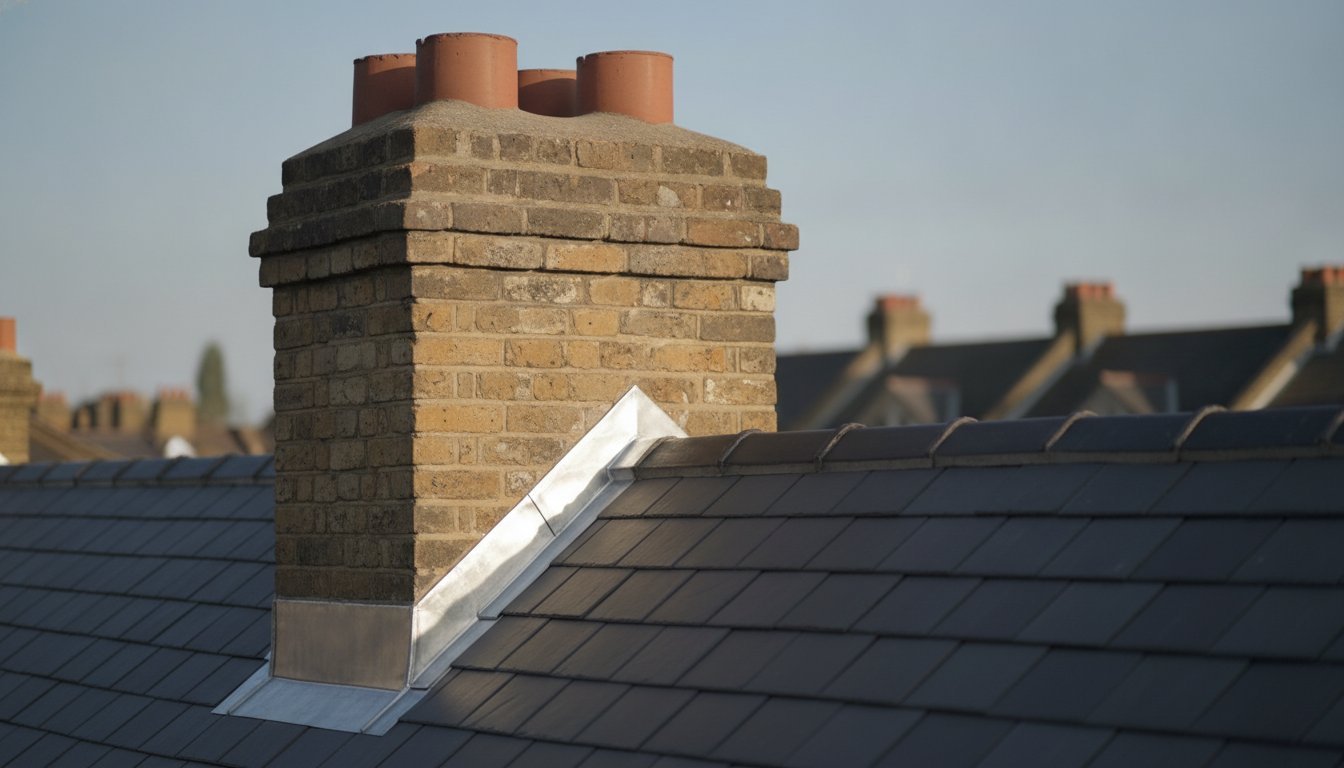
Most issues we encounter in the borough stem from the natural expiration of traditional bitumen felt. This material becomes brittle after years of UV exposure and the rapid temperature swings typical of London’s climate. We also frequently see blocked internal drainage systems. This is a common design quirk in many local flat roofs that forces water to sit against parapet walls. Failed lead flashing around chimney stacks and parapets remains another primary entry point for moisture in older building stock.
The Benefits of a Modern Waterproofing System
Transitioning to Modern Waterproofing Systems offers a level of security that older felt simply cannot match. These solutions provide a seamless application, effectively removing the joints and seams where most leaks begin. It’s the most reliable way to achieve the long-term flat roof waterproofing Hackney buildings require to withstand the elements.
- Longevity: Modern membranes often boast lifespans exceeding 25 to 30 years with minimal maintenance.
- Safety: High-performance systems meet the Class BROOF(t4) fire resistance standards required by current safety legislation.
- Efficiency: Integrated insulation components help stabilise internal temperatures, reducing the strain on your heating system.
Comparing Modern Waterproofing Systems for London Homes
Choosing the correct material for flat roof waterproofing Hackney homes requires a nuanced understanding of how different membranes interact with local architecture. Whilst traditional felt was once the only option, modern technology has introduced systems that offer superior longevity and performance. Ethylene Propylene Diene Monomer (EPDM) is a high-performance synthetic rubber membrane that has become a staple for residential extensions. It is highly flexible and resistant to UV degradation, making it a reliable choice for the variable London climate. For properties that require a more robust surface, Glass Reinforced Polyester (GRP), commonly known as fibreglass, provides a rigid and impact-resistant finish. This is particularly effective for roofs that double as balconies or terraces.
In more complex scenarios, such as the industrial conversions found in Shoreditch, liquid-applied membranes are often considered the gold standard. These systems are applied as a cold liquid that cures into a completely seamless, elastomeric skin. For those who prefer a more traditional aesthetic but want modern durability, Reinforced Bituminous Membranes (RBM) represent the high-performance evolution of felt. These multi-layer systems use polyester or glass reinforcements to provide exceptional strength and puncture resistance. When Choosing a Local Specialist, it is essential to ensure they have the technical expertise to install these specific materials to manufacturer standards.
EPDM vs. GRP: Which is Right for Your Extension?
The choice between EPDM and GRP often comes down to the intended use of the roof. EPDM is prized for its flexibility; it moves with the building as temperatures fluctuate, preventing the cracks that often plague older roofs. GRP is entirely rigid, offering a rock-hard finish that can be finished with a non-slip topcoat. In terms of installation, EPDM is typically faster and quieter because it involves no heavy machinery or noisy grinding. This makes it an excellent choice for quiet residential streets where minimising disruption is a priority.
The Rise of Liquid Waterproofing in Hackney
Liquid systems have gained popularity because they excel at sealing “penetrations” like skylights, vents, and drainage outlets. Because the material is brushed or rolled on, it creates a perfect seal around even the most awkward shapes. A significant advantage in tight urban spaces is that liquid waterproofing is “cold-applied.” This eliminates the fire risks associated with gas torches and “hot works” on-site. These systems are also easy to maintain; they can often be overcoated in the future to extend their lifespan without the need for a full strip-out. If you are unsure which system suits your specific property, you can request a technical assessment from our expert team.
Warm Roof vs. Cold Roof: Thermal Considerations for Waterproofing
When planning flat roof waterproofing Hackney properties, the most significant technical decision you’ll face is the thermal configuration of the system. A warm roof design is now considered the modern standard for residential extensions and refurbishments. In this setup, high-performance insulation boards are placed directly above the structural deck, capped by the waterproofing membrane. This keeps the entire structure of the building at a consistent internal temperature, preventing the deck from becoming a “cold bridge.” The Liquid Roofing and Waterproofing Association (LRWA) emphasises that this design is often the most reliable way to ensure long-term performance and compliance with current standards.
Hackney’s Victorian terrace stock presents unique challenges for this approach. Adding the required thickness of insulation to meet Part L Building Regulations, which mandates a U-value of 0.18 W/m²K for renovations, can raise the height of the roof significantly. This often necessitates raising the lead flashing or extending the height of parapet walls. Whilst this involves more structural work, it’s the preferred method for achieving maximum thermal efficiency without compromising internal ceiling heights. If your property has strict height restrictions, you can speak with our technical team to discuss how we manage these heritage constraints.
A cold roof, by contrast, places the insulation between the ceiling joists. This leaves the structural deck and the void above the insulation cold. Whilst this keeps the external roof profile lower, it requires a mandatory 50mm ventilated air gap between the insulation and the deck. Without this ventilation, moisture can’t escape, leading to timber decay over time. In many London terraces where cross-ventilation is difficult to achieve, cold roofs are increasingly being phased out in favour of more robust warm roof systems.
Energy Efficiency and SAP Ratings
Upgrading your insulation during a re-waterproofing project is one of the most effective ways to improve your home’s SAP rating. Industry estimates suggest that a properly insulated warm roof can reduce heat loss through the roof by a significant margin, potentially lowering heating bills by up to 25% for uninsulated properties. We use high-density PIR (polyisocyanurate) insulation boards that provide exceptional thermal resistance whilst remaining relatively thin. This was recently demonstrated in a Victorian kitchen extension project where we successfully balanced modern thermal requirements with the existing roofline.
Condensation Control and Roof Longevity
The “silent killer” of any flat roof isn’t the rain from above, but the moisture from within. Interstitial condensation occurs when warm, moist air from inside the house rises and hits the cold underside of the roof deck. We prevent this by integrating a high-performance vapour control layer (VCL) into the waterproofing stack. This layer is sealed at all junctions to ensure that no internal moisture can penetrate the insulation. By controlling this vapour drive, we protect the structural integrity of your joists and extend the lifespan of the entire waterproofing system.
The Professional Waterproofing Process: A Step-by-Step Guide
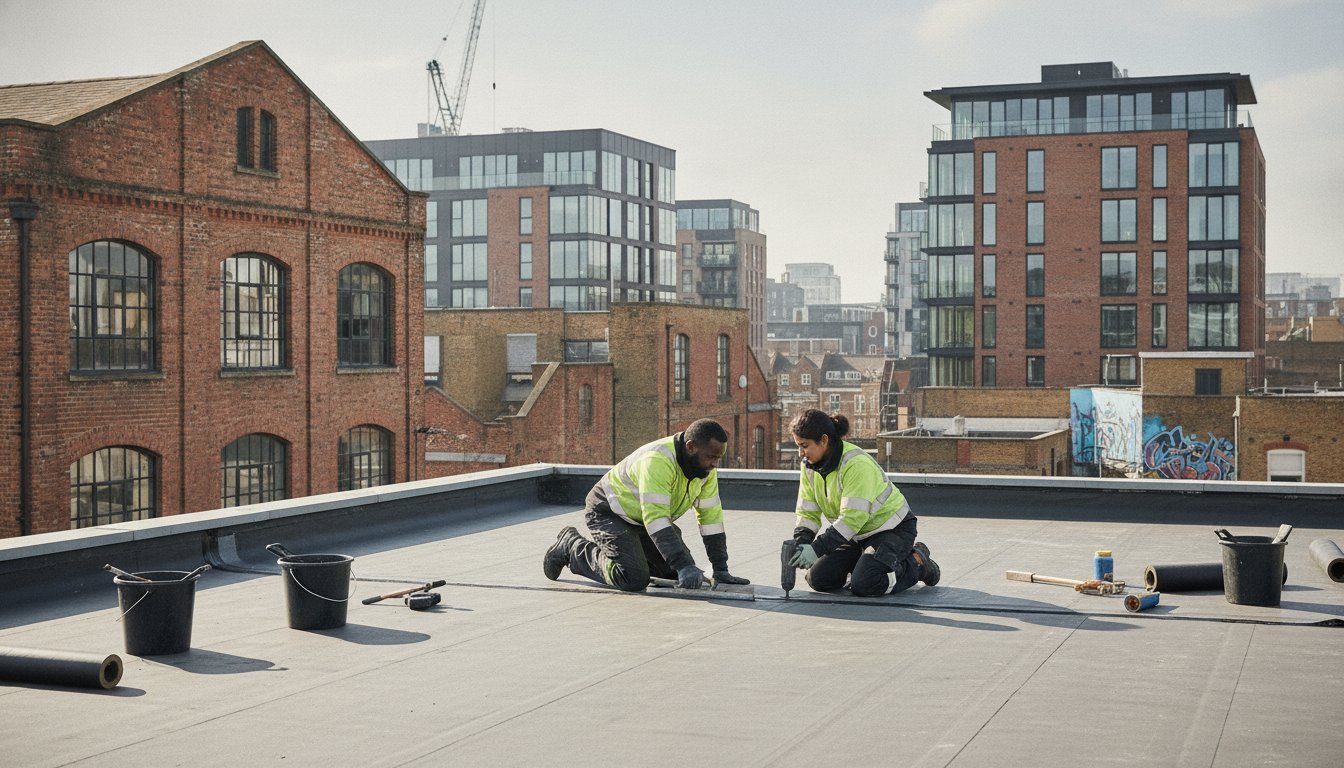
A durable installation is the result of a rigorous, multi-stage process that prioritises structural integrity over speed. We begin every project with a comprehensive site survey and a core sample test. This diagnostic step allows us to assess the condition of the hidden layers and check for entrapped moisture. For flat roof waterproofing Hackney residents can depend on, this assessment is essential to ensure we aren’t simply sealing in existing rot that could compromise the new system from below.
The removal phase involves the careful stripping of failed materials. We take particular care to identify and safely dispose of hazardous substances often found in older bitumen systems. Once the structure is exposed, we conduct a thorough assessment of the timber deck. Any compromised OSB or plywood is replaced with high-grade, moisture-resistant alternatives to provide a perfectly stable substrate for the new membrane. If your roof is showing signs of failure, book a professional site survey today to receive a detailed technical assessment of your property.
Preparation and Deck Assessment
The “fall” of the roof is a critical technical requirement for longevity. To comply with the updated BS 6229:2025 standards, a minimum finished fall of 1:80 must be achieved to ensure efficient drainage and prevent standing water. If the original structure is too flat, we install tapered insulation or timber firrings to create the necessary slope. Managing logistics in Hackney’s narrow streets is another key part of our service. We organise all necessary scaffolding and skip permits, ensuring minimal disruption to your neighbours whilst maintaining a safe working environment.
Detailing: The Secret to a Leak-Free Roof
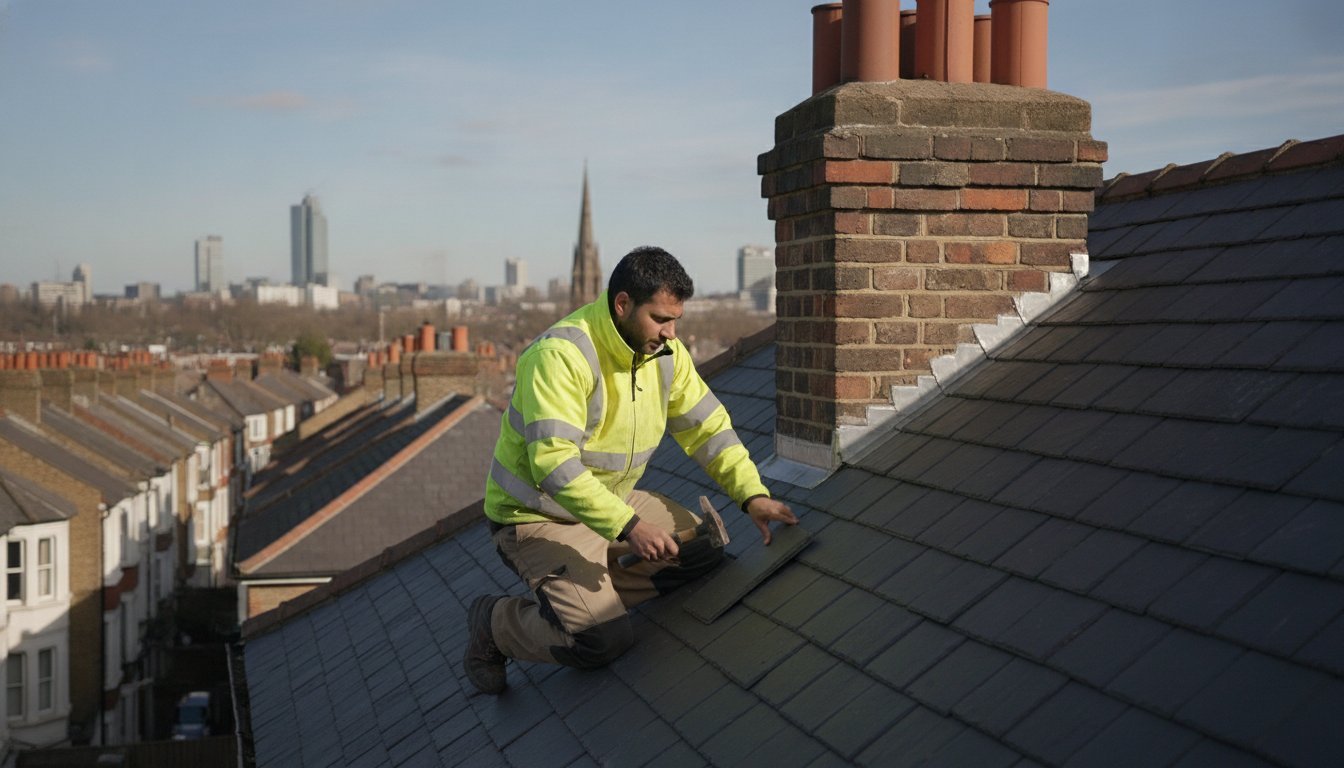
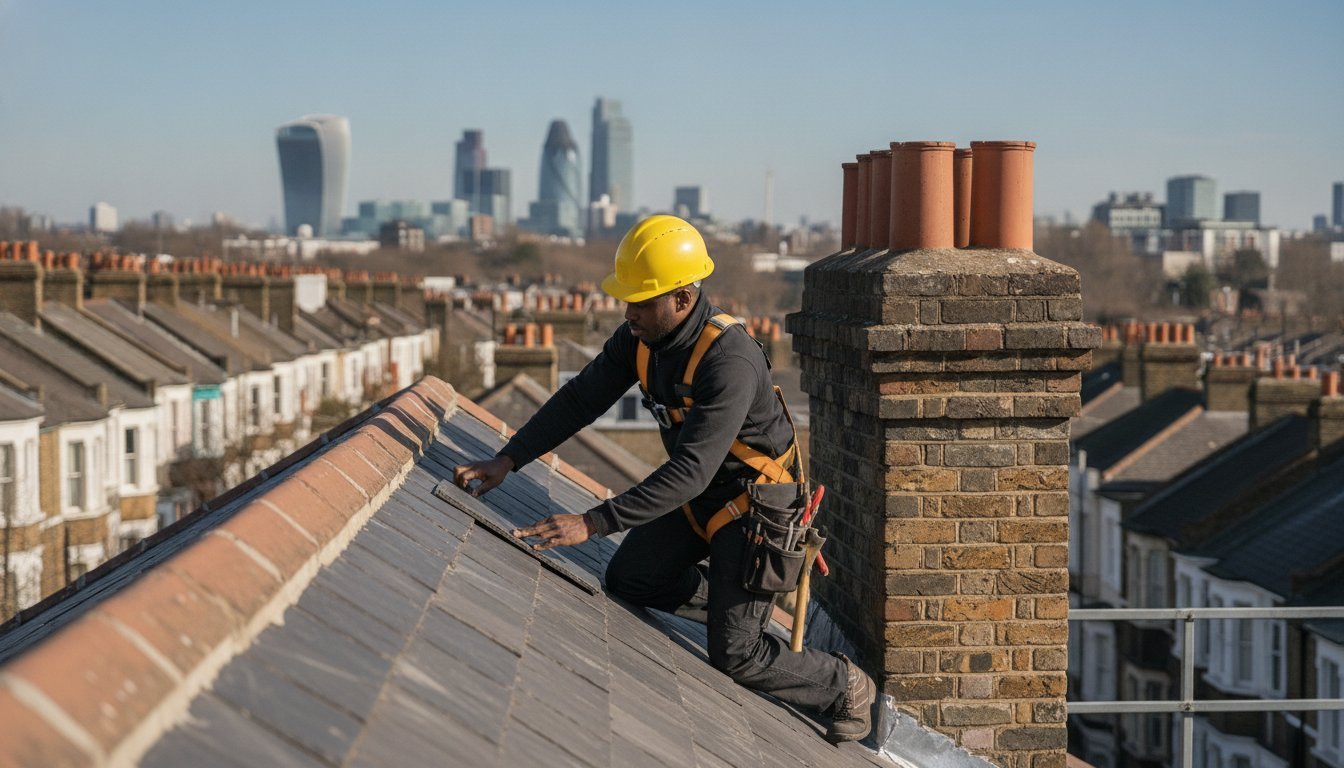
Precision detailing around edges and penetrations is what separates a master craftsman’s work from a standard job. We perform expert leadwork repairs around chimney stacks and parapet wall junctions, using traditional methods that respect the heritage of Hackney building stock. High-quality GRP or metal edge trims are mechanically fixed to prevent wind uplift during severe weather. If you’re installing roof lanterns or skylights, these are integrated into the waterproofing stack with reinforced detailing to ensure a permanent, watertight seal. Following a final quality inspection, we issue long-term insurance-backed guarantees for your peace of mind.
Choosing a Local Specialist for Your Hackney Waterproofing Project
Selecting the right partner for flat roof waterproofing Hackney projects involves more than just comparing bottom-line figures. Hackney’s diverse building stock, ranging from sensitive conservation areas to high-density modern developments, requires a contractor who understands local architectural nuances. A specialist familiar with the borough will recognise the specific challenges of Victorian brickwork junctions or the structural requirements of Shoreditch industrial conversions. This local expertise ensures that the chosen waterproofing system is compatible with the existing substrate and any heritage constraints that may apply to your street.
A professional quote should be transparent and comprehensive. It must include detailed material specifications, clear provisions for waste removal, and a defined timeline for the works. In the narrow streets of East London, logistics are often a major hurdle. A local specialist will already have established relationships for scaffolding and skip permits, ensuring the project moves forward without administrative delays. You should also verify that your contractor holds appropriate industry accreditations and carries robust public liability insurance. These credentials serve as a benchmark for technical proficiency and professional conduct.
Understanding Guarantees and Warranties
It’s vital to distinguish between a workmanship guarantee and a manufacturer’s warranty. A workmanship guarantee covers the quality of the installation itself, whilst a manufacturer’s warranty protects against defects in the roofing membrane. For a significant structural investment, you should look for systems that offer 10, 20, or even 25-year protection. These terms provide long-term peace of mind, ensuring your property remains watertight for decades. At Roofing in Hackney, we structure our project protection to reflect the high standards of our craftsmanship and the durability of the modern materials we use.
Working with Roofing in Hackney
We pride ourselves on being a trusted local advisor, combining traditional roofing skills with the latest waterproofing technology. Our team understands that a roofing project can be intrusive, so we prioritise methodical project management to minimise disruption for you and your neighbours. We handle everything from the initial site survey to the final quality inspection with calm efficiency. If you are concerned about the integrity of your current roof or wish to upgrade your home’s thermal performance, contact us today for a professional flat roof assessment. We will provide a clear, expert-led plan to secure your property against the elements for the long term.
Securing Your Home with Long-Term Waterproofing Solutions
A high-performance flat roof is an essential investment that protects both the structural integrity and the thermal efficiency of your property. By choosing modern materials like EPDM or liquid-applied membranes and opting for a warm roof configuration, you ensure your home meets the latest building standards whilst significantly reducing energy waste. The success of any flat roof waterproofing Hackney project relies on this combination of advanced technology and a deep understanding of local architectural heritage.
Our local, Hackney-based team brings extensive experience in managing the specific requirements of Victorian and heritage properties. We don’t just apply a membrane; we provide a comprehensive service that includes expert leadwork and chimney repairs to ensure every junction is secure. With numerous 5-star reviews from your neighbours, we pride ourselves on delivering a professional, transparent service that stands the test of time—much like how international hosts rely on Airbnb cleaning services Dubai to maintain excellence in their properties. Don’t wait for the next heavy downpour to discover a weakness in your roof deck.
Book your free flat roof survey with Hackney’s waterproofing specialists today and take the first step toward a drier, more efficient home. We look forward to helping you protect your investment with craftsmanship you can trust.
Frequently Asked Questions
How long does a new flat roof waterproofing system last?
A professionally installed modern system typically lasts between 25 and 30 years. The exact lifespan depends on the material chosen and the level of maintenance provided over time. Synthetic membranes like EPDM and GRP are specifically engineered to resist UV degradation and the temperature fluctuations common in the London climate, ensuring they remain flexible and watertight for decades.
Do I need planning permission for flat roof waterproofing in Hackney?
Most straightforward replacements don’t require formal planning permission as they fall under permitted development. However, Hackney contains 35 conservation areas and several Article 4 directions that may restrict these rights. If you’re significantly changing the roof’s appearance or height to accommodate new insulation, it’s essential to check the Hackney planning portal or consult with a specialist before starting work.
Can you waterproof a flat roof in the winter?
Yes, installation can proceed during the winter months, provided the conditions are dry. We monitor dew points and substrate moisture levels closely to ensure the membrane bonds correctly. Whilst some systems have specific temperature thresholds, many modern liquid-applied coatings and EPDM membranes can be safely installed in colder weather by an experienced team.
What is the best material for a flat roof balcony?
GRP fibreglass is generally considered the superior choice for balconies and terraces due to its exceptional rigidity. It creates a hard-wearing, seamless surface that can withstand frequent foot traffic and the weight of garden furniture. We often apply a specific non-slip topcoat to these areas to ensure the surface remains safe to use even when wet.
How do I know if my flat roof needs a repair or a full replacement?
Small, isolated leaks can often be addressed with a targeted repair if the rest of the membrane is in good condition. However, if you notice widespread cracking, significant ponding water, or dampness in the structural deck, a full replacement is usually the most cost-effective long-term solution. We use core samples to identify hidden moisture that might necessitate a complete strip-out. For a detailed breakdown of when repairs are no longer sufficient, our guide on flat roof replacement London costs and repair vs. replacement options provides a comprehensive comparison of your choices.
Whether the water source is a failing roof or an internal burst pipe, rapid intervention is essential; for instance, 24/7 emergency providers like miami305plumbing.com demonstrate the high level of responsiveness required to protect a property from significant water damage.
Is liquid waterproofing better than felt for a London home?
Liquid systems offer a seamless finish that is particularly effective for the complex rooflines and numerous chimney junctions found in Hackney. They also eliminate the fire risks associated with the “hot works” required for traditional felt. Whilst modern reinforced bitumen membranes are highly durable, liquid options are often favoured for their ability to seal awkward shapes and penetrations with absolute precision.
How much does flat roof waterproofing cost in Hackney?
The total investment for flat roof waterproofing Hackney properties depends on several variables, including the roof’s surface area and the choice of membrane. Other factors that influence the final quote include the condition of the existing structural deck and whether you’re upgrading to a warm roof system to meet current thermal regulations. We provide detailed, transparent specifications for every project. If you are weighing up the full financial picture, our in-depth resource on flat roof replacement London pricing and material comparisons will help you understand the complete range of costs involved.
Can I install insulation at the same time as the waterproofing?
Installing insulation alongside your new waterproofing is highly recommended and often a legal requirement under Part L of the Building Regulations. By placing high-performance insulation boards above the structural deck, you create a “warm roof” that significantly improves energy efficiency. This is the most practical time to upgrade your home’s thermal performance whilst the roof structure is already being refurbished.