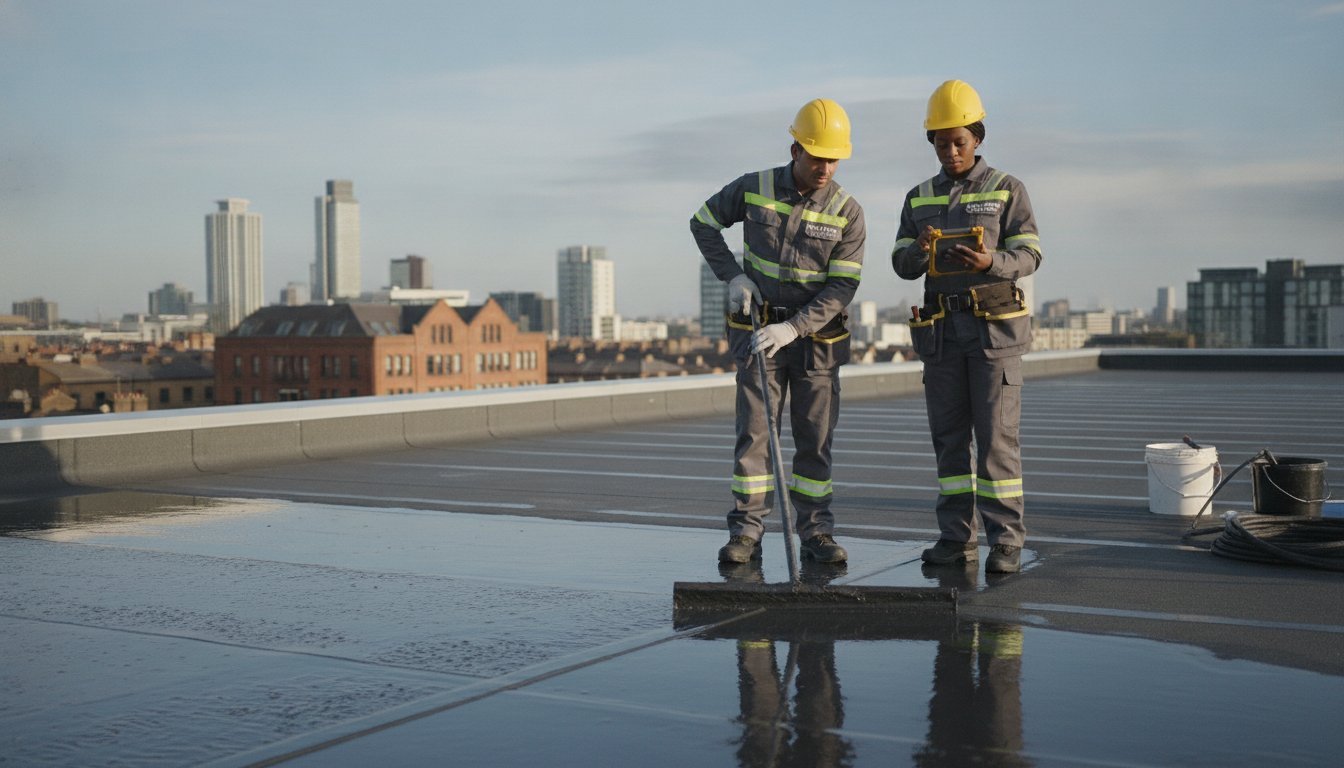
Is your building’s roof a managed asset or a ticking liability waiting for the next East London downpour? For many property managers, the first sign of trouble isn’t just a damp patch on the ceiling; it’s the sudden realisation that a minor leak could trigger mandatory thermal upgrades under the latest Part L building regulations. We understand that the prospect of commercial flat roof repair Hackney can be daunting, especially when you’re balancing the need for a watertight seal against the threat of operational downtime and fluctuating material costs.
This professional guide will show you how to identify structural weaknesses early and choose the most cost-effective repair strategies to maximise your roof’s longevity. You’ll discover how modern liquid coatings and “cool roofing” technologies can extend the life of your asset by over a decade whilst ensuring full compliance with the 2026 Building Safety Act. We will walk you through the essential steps of a professional repair process, from drone-assisted inspections to navigating the 25% replacement threshold that mandates insulation improvements, ensuring your business remains protected, efficient, and fully operational.
Key Takeaways
- Learn why non-destructive electronic leak detection is more reliable than visual inspections for identifying hidden structural vulnerabilities in commercial properties.
- Evaluate the long-term cost-benefits of modern liquid coatings versus traditional patching to ensure your investment extends your roof’s lifespan by over a decade.
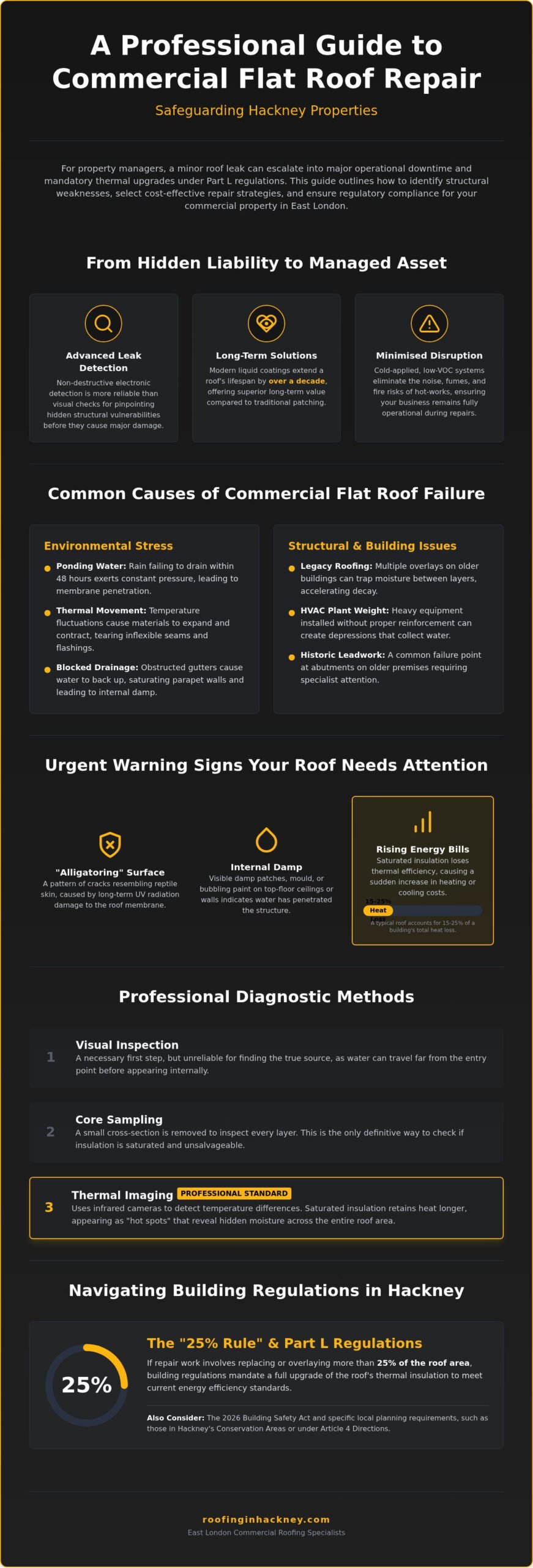
- Understand how to navigate the 2026 Building Regulations for commercial flat roof repair Hackney, specifically regarding mandatory thermal insulation upgrades when replacing over 25% of a roof area.
- Discover how to minimise operational disruption by selecting low-VOC, cold-applied systems that eliminate the noise and odours typically associated with traditional hot-works.
- Gain insights into managing Hackney’s specific planning requirements, including compliance with local Conservation Area standards and Article 4 Directions.
Common Causes of Commercial Flat Roof Failure in Hackney
Hackney’s architectural landscape is a unique blend of heritage and innovation. From the sprawling Victorian industrial hubs of Homerton and Wick to the high-density office blocks of E8, the local building stock presents varied challenges for property maintenance. A foundational step in safeguarding these assets is understanding flat roof construction and how East London’s environment accelerates wear. One of the most persistent issues we encounter is “ponding water.” When rain fails to drain within 48 hours, the standing water exerts constant pressure on the membrane, eventually seeping into the structural deck.
Thermal movement also plays a critical role in roof degradation. Hackney’s commercial buildings endure significant temperature fluctuations between chilly nights and intense solar radiation. This causes roofing materials to expand and contract repeatedly. If the seams or flashings lack sufficient flexibility, they eventually tear or pull away from the substrate. This stress is often most visible around parapet walls and drainage points, where blocked guttering can cause water to back up and saturate the brickwork, leading to internal damp issues.
The Challenge of Converted Industrial Spaces
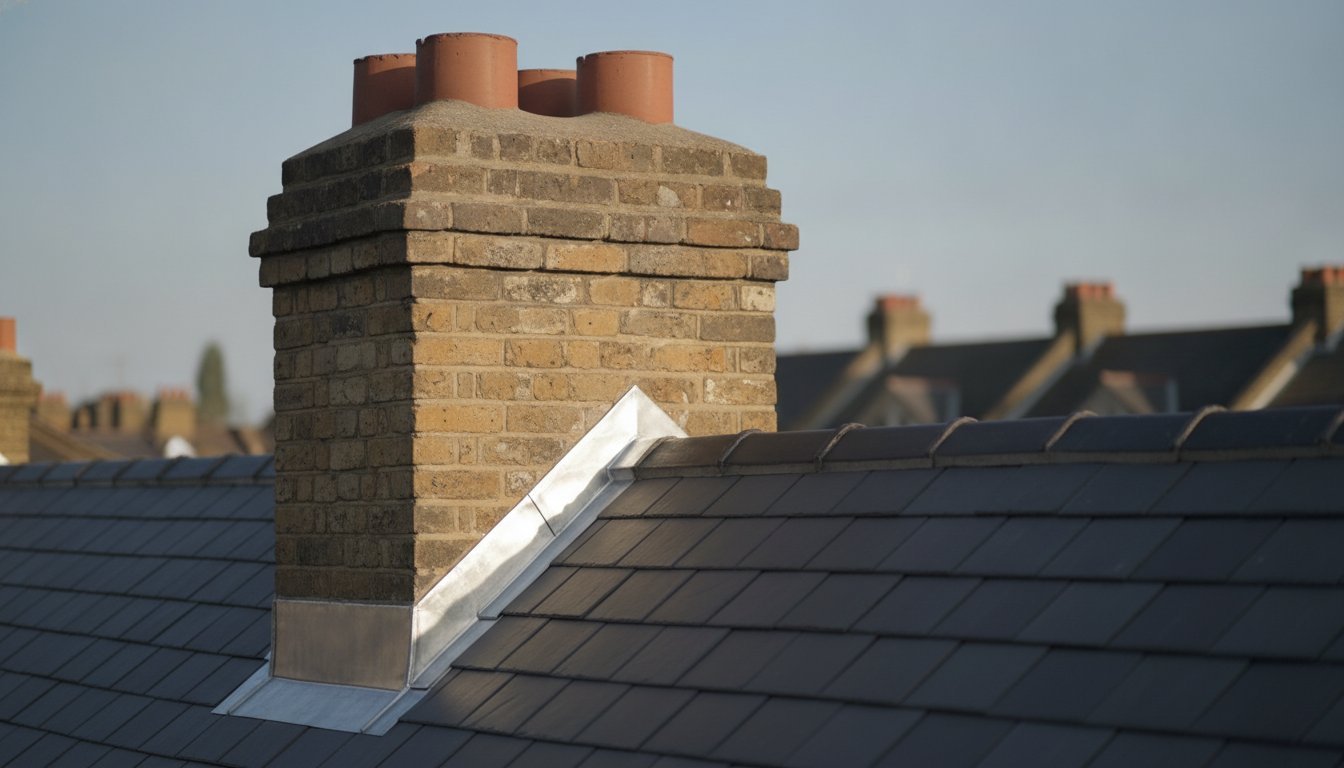
Many local businesses operate within converted warehouses that were never originally intended for modern office use. These structures often feature “legacy” roofing, where multiple layers of modern felt or EPDM have been applied over original bitumen. This creates a heavy, multi-layered system that can trap moisture between the plies. These older buildings may also struggle with the weight of modern HVAC plant machinery. When heavy equipment is installed without proper structural reinforcement, it creates depressions in the roof surface that invite leaks. Historic leadwork at the abutments of these older premises is another common failure point, requiring specialist attention to maintain a watertight seal.
Signs Your Business Roof Needs Urgent Attention
Identifying the need for commercial flat roof repair Hackney before a total failure occurs is vital for cost control. You should look for “alligatoring,” which is a pattern of small cracks resembling reptile skin caused by long-term UV damage. Internally, look for bubbling paint or damp patches on top-floor ceilings. A less obvious sign is a sudden increase in energy bills. Because a roof typically accounts for 15-25% of a building’s heat loss, saturated insulation will significantly reduce your property’s thermal efficiency. If you spot these signs, it’s best to contact us for a professional assessment before the damage spreads to your internal equipment or inventory.
Diagnostic Methods: Identifying the Source of the Leak
A visual inspection might show a damp patch, but on a commercial flat roof, the entry point is rarely directly above the leak. Water often tracks along the structural deck or through the insulation before appearing inside. For a reliable commercial flat roof repair Hackney, we move beyond surface-level observations. We must determine if the system is a “warm roof,” where insulation is above the deck, or a “cold roof,” where insulation is below. This distinction is vital because moisture trapped in a warm roof can rot the deck from the outside in, often without being visible from the ground.
Core sampling is a definitive diagnostic tool. By removing a small, circular cross-section of the roof, we can inspect every layer, from the waterproofing membrane to the structural deck. This allows us to verify if the underlying insulation is salvageable or if it has become a saturated sponge. If the insulation is dry, a cost-effective overlay or patch may be possible. If it’s saturated, a more extensive intervention is required to prevent structural decay and maintain the integrity of your premises.
Professional Roof Surveys in East London
We employ thermal imaging cameras to detect temperature variances across the roof surface. Saturated insulation retains heat longer than dry areas, appearing as “hot spots” on our scans long after the sun has set. We also pay close attention to upstands and flashing, which are the most common failure points in East London’s varied building stock. A professional survey provides a data-driven roadmap for repair, ensuring you don’t over-spend on a full replacement when a targeted restoration would suffice. If you suspect your roof is failing, you can book a technical survey to get an accurate diagnosis.
The Importance of Integrity Testing
Integrity testing is the final step in ensuring a successful commercial flat roof repair Hackney. For single-ply membranes, vacuum testing is an essential integrity check. We use a specialised vacuum box to create a seal over seams and joins; any bubbles indicate a breach in the waterproofing layer. Dye testing remains a reliable method for complex drainage systems, where we use non-staining fluorescent dyes to trace water flow through internal outlets. These methods are particularly effective at uncovering hidden leaks around:
- HVAC units and heavy plant machinery mounts
- Skylights and roof lanterns
- Parapet wall junctions and coping stones
- Internal rainwater outlets and scuppers
Comparing Commercial Repair Solutions: Patching vs. Liquid Coatings
Once you’ve identified a breach through integrity testing, the next decision is whether to patch the specific failure or apply a comprehensive overlay. For many businesses, commercial flat roof repair Hackney involves weighing immediate costs against long-term asset value. A patch repair is often an effective emergency measure for isolated punctures or minor mechanical damage. However, if the membrane shows signs of widespread UV degradation, a full liquid overlay is frequently the most cost-effective commercial choice. This approach avoids the massive disruption of a total tear-off whilst providing a seamless barrier that can extend the roof’s life by up to 20 years.
Your choice of repair significantly impacts your building insurance and future warranties. Insurers typically prefer documented, comprehensive repairs over multiple localised patches. A professional liquid coating or a new single-ply overlay often qualifies for a fresh long-term warranty. This not only protects your capital investment but also maintains the property’s market value for future tenants or buyers. Choosing a strategic repair over a temporary fix ensures your business remains protected against the unpredictable East London weather.
Liquid Plastic and Cold-Applied Membranes
Cold-applied liquid systems have become the gold standard for occupied Hackney office blocks and retail units. Because they require no “hot works” such as gas torches, they eliminate the fire risk during installation. These modern polymers are applied as a liquid that cures into a seamless, high-performance membrane. This is particularly advantageous for the complex roof shapes found in East London’s converted industrial spaces. These systems offer exceptional UV resistance and flexibility, ensuring they don’t crack under the thermal stresses mentioned earlier. They are a quiet, low-odour solution for busy commercial environments.
Reinforced Bitumen and Single-Ply Options
For heavy-duty warehouse roofs in areas like Homerton, traditional high-performance reinforced bitumen remains a robust choice. Modern felt systems are significantly more durable than their predecessors, often featuring polyester reinforcement for superior puncture resistance. Alternatively, single-ply membranes like EPDM offer a rapid, lightweight solution for repairs. EPDM is particularly favoured for its longevity and ease of installation on large, clear spans. Whilst the cost-per-square-metre varies based on the specific Hackney building type, single-ply systems often provide the fastest turnaround for businesses needing to restore water-tightness with minimal downtime.
The Repair Process: Minimising Disruption to Your Hackney Business
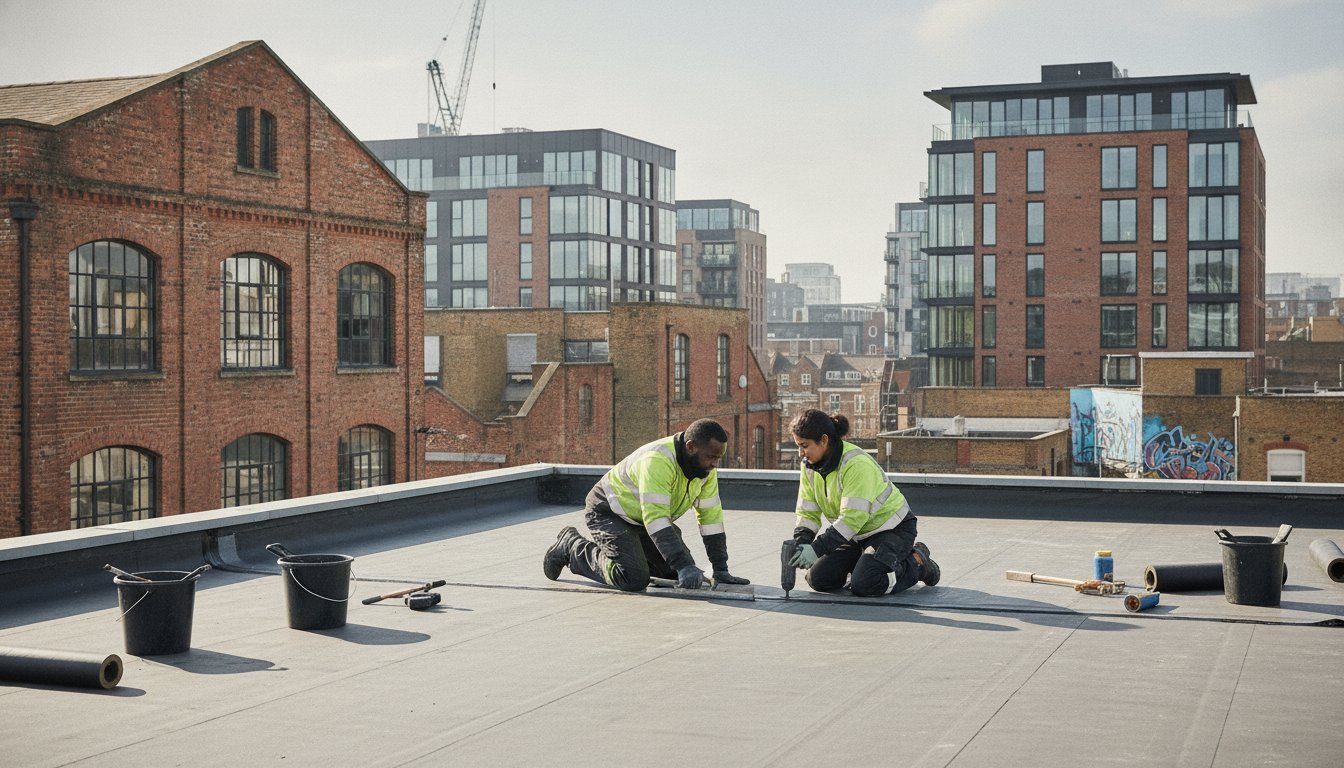
Maintaining business continuity is a primary concern during any commercial flat roof repair Hackney. We understand that retail units on Kingsland Road or creative studios in Shoreditch can’t simply halt operations. To mitigate this, we coordinate scheduling to avoid peak business hours or sensitive client visits. By utilising low-VOC, cold-applied systems, we eliminate the pungent odours and fire risks associated with traditional bitumen boilers; this allows your staff to work comfortably whilst the project progresses.
Logistics in East London require a meticulous approach, particularly regarding waste management. The narrow, congested streets of Hackney often make skip placement a challenge. We manage all necessary permits for roadside skips or utilise “wait and load” services to ensure the site remains clear without obstructing local traffic. Every project adheres strictly to Health and Safety Executive (HSE) regulations, with comprehensive risk assessments tailored to the specific height and access constraints of your building.
A Step-by-Step Commercial Repair Workflow
We follow a structured methodology to ensure every commercial flat roof repair Hackney is completed to the highest standard:
- Preparation: We begin by thoroughly cleaning the existing substrate to ensure maximum adhesion. Any loose debris or degraded material is removed, and a high-performance primer is applied.
- Application: Our team focuses on the most vulnerable areas first, reinforcing all joints, seams, and penetrations like vents or skylights with specialist tapes or fleeces before the main membrane is applied.
- Final Inspection: Before sign-off, a rigorous integrity check is performed to guarantee a watertight finish that meets our high standards of craftsmanship.
Protecting Tenants and Staff During Works
Clear communication is essential for multi-tenanted commercial buildings. We provide detailed timelines and establish safe access routes to ensure staff and visitors are never put at risk. Temporary weather protection is used throughout the process to prevent water ingress if the weather turns during the repair. You can contact us to discuss a bespoke repair schedule for your premises. If you need a contractor who understands the logistical nuances of East London, get in touch for a site assessment.
Why Choose a Hackney Specialist for Your Commercial Roof
Selecting a contractor for your business premises requires more than just a comparison of quotes. Hackney’s architectural landscape is governed by complex planning layers, including numerous Conservation Areas and Article 4 Directions that restrict certain material changes. A local specialist understands these nuances, ensuring that your commercial flat roof repair Hackney complies with local authority standards without compromising the building’s historical character. This local insight is particularly valuable for the converted warehouses and industrial units common in E8 and N16, where modern waterproofing must be integrated into aged structural frames.
Local accountability also translates to rapid emergency response and a genuine investment in the borough’s building stock. Unlike national firms, a Hackney-based team is familiar with the logistical constraints of East London, from navigating the Ultra Low Emission Zone (ULEZ) to managing site access in congested secondary roads. We provide the security of insurance-backed guarantees, ensuring that your structural investment is protected long after the project is signed off. This grounded approach instils a sense of security, knowing that your roofing partner is just a few streets away if future maintenance is required.
Beyond the Repair: Long-Term Asset Management
A strategic approach to roofing involves transitioning from reactive fixes to proactive asset management. We recommend annual maintenance programmes designed to identify minor issues, such as debris accumulation in internal outlets or early signs of UV degradation, before they escalate into costly leaks. This methodical oversight is the most effective way to maximise the lifespan of your roof membrane. During the repair process, we also look for opportunities to improve your building’s energy efficiency. You can learn more about thermal roof insulation upgrades and how they help Hackney businesses meet the latest 2026 energy performance standards whilst reducing long-term overheads.
The Roofing in Hackney Professional Standard
Our commitment to master craftsmanship is reflected in our choice of high-performance materials and our methodical installation workflows. We pride ourselves on technical proficiency, whether we are installing a seamless liquid coating or a heavy-duty reinforced bitumen system. We support local businesses by providing durable, transparent solutions that prioritise the longevity of the asset over short-term patches. This expert-led approach ensures that your premises remains watertight and operationally efficient. Discover our commercial roofing services to see how our specialist team can support your property maintenance strategy with clarity and precision.
Securing Your Business Premises for the Future
Managing a commercial property in East London requires a proactive approach to maintenance that balances immediate fixes with long-term asset value. We’ve explored how identifying the root cause of a leak through precise diagnostic methods is the only way to avoid redundant spending. Whether you opt for a targeted patch or a comprehensive liquid overlay, your choice should always prioritise durability and compliance with the latest thermal regulations. Entrusting your commercial flat roof repair Hackney to a team that understands local Conservation Areas and logistical challenges ensures that your business remains protected without unnecessary operational downtime.
Our specialist commercial roofing team combines deep local Hackney expertise with the latest technical standards to deliver results that last. Every repair we perform comes with the security of insurance-backed guarantees, providing you with long-term peace of mind. Taking action today prevents minor vulnerabilities from becoming structural liabilities. It’s the most effective way to safeguard your staff, your inventory, and your capital investment.
Request a Professional Commercial Roof Survey in Hackney to secure your building’s future. We look forward to helping you protect your commercial investment with the craftsmanship it deserves.
Frequently Asked Questions
How much does commercial flat roof repair cost in Hackney?
Costs for a commercial flat roof repair Hackney depend on the damage extent and the chosen material. Factors such as roof height, ease of access in congested East London streets, and the condition of the structural deck influence the final quote. A professional survey is the only way to determine an accurate investment, as it identifies whether a simple patch or a comprehensive liquid overlay is required for your specific premises.
Can you repair a leaking commercial flat roof whilst the business is open?
Yes, repairs can be completed whilst your business remains open. We utilise low-VOC, cold-applied membranes that eliminate the fire risks and pungent odours of traditional bitumen boilers. Our team organises work schedules to avoid peak business hours, ensuring your staff and clients aren’t disrupted. This methodical approach allows you to maintain your daily operations whilst we secure your building’s waterproofing and long-term structural integrity.
How long will a professional flat roof repair last?
A professional repair can last between 10 and 20 years, depending on the chosen system. Whilst a localised patch provides an immediate fix, a full liquid overlay or a new single-ply membrane often comes with a long-term warranty. The durability of any repair is significantly enhanced by an annual maintenance programme, which prevents minor debris or blocked drainage from causing premature failure in the future.
Do I need planning permission for commercial roof repairs in Hackney?
Most commercial roof repairs don’t require planning permission if they don’t alter the building’s height or overall appearance. However, many Hackney premises are situated within Conservation Areas or are subject to Article 4 Directions. These local regulations can restrict the use of certain materials or finishes. We recommend verifying requirements with the local council if you are changing the roof’s colour or structural profile significantly.
What is the best material for a commercial flat roof repair?
Liquid-applied membranes are often the superior choice for Hackney’s complex commercial roofs because they create a seamless, flexible barrier. For larger warehouse spans, EPDM or reinforced bitumen systems offer excellent durability and puncture resistance. The ideal material is one that balances your budget with the specific structural needs of the property, ensuring long-term UV resistance and thermal stability against East London’s varied weather conditions.
Can you add insulation during a flat roof repair?
You can and often must add insulation during a repair. Current 2026 Building Regulations mandate a thermal upgrade if more than 25% of the roof area is being replaced. This is an ideal time to improve your premises’ energy efficiency, as modern insulation can reduce heat loss by up to 25%. It’s a strategic move that lowers energy bills whilst ensuring your building meets modern compliance standards.
Is it better to repair or replace a commercial flat roof?
Repairing is better if the underlying structure and insulation remain dry and functional. A liquid overlay is a cost-effective way to restore a roof without a disruptive tear-off. However, if core sampling reveals saturated insulation or a rotting deck, a replacement is the only way to guarantee structural integrity. We provide a clear diagnostic report to help you choose the most valuable long-term solution for your building.
How do I know if my commercial roof leak is an emergency?
A leak is an emergency if water ingress occurs near electrical points, heavy machinery, or structural supports. Visible sagging in the ceiling or large volumes of internal water indicate that the roof’s integrity is compromised. If you spot these signs, you should act immediately to protect your inventory and ensure the safety of everyone inside the building. Prompt action prevents a manageable leak from becoming a total failure.