A damp patch on your ceiling rarely starts exactly where you think it does; in the complex Victorian terraces of East London, water often travels several metres along internal timbers from its true entry point. Relying on a generic handyman can lead to expensive, surface-level fixes that fail to address the underlying structural issue. Securing a professional roof leak inspection Hackney homeowners can trust requires a master craftsman’s eye for period architecture, ensuring that every slipped slate or perished lead flashing is identified before it causes hidden rot.
It’s understandable to feel anxious about the potential for escalating costs or the fear that a simple leak is masking a larger problem. You deserve a definitive diagnosis and a transparent, professional repair quote that provides genuine peace of mind. This guide explains how to identify and resolve leaks using expert-led techniques tailored to the unique requirements of Hackney properties. We’ll walk you through the methodical inspection process, from chimney repointing to slate maintenance, so you can be certain your home remains completely watertight throughout the seasons.
Key Takeaways
- Understand how Hackney’s unique Victorian architecture, including butterfly roofs and parapet walls, requires a specialised approach to identify water ingress.
- Learn to recognise common failure points in traditional Welsh slate and lead flashing that frequently affect period properties across E8 and E5.
- Discover the value of a professional roof leak inspection Hackney specialists provide by assessing the whole roof system rather than just surface-level symptoms.
- Follow a methodical two-step inspection process that combines internal moisture mapping with external structural surveys of chimneys and leadwork.
- Gain the knowledge to prioritise repairs effectively by distinguishing between urgent structural risks and long-term advisory maintenance.
Why Professional Roof Leak Inspection in Hackney is Critical
A professional roof leak inspection in Hackney is far more than a cursory glance at a damp patch on the ceiling. It is a comprehensive structural assessment designed to identify the precise point of water ingress, evaluate material fatigue, and pinpoint drainage failures. In the historic streets of E8 and E5, this process requires an intimate understanding of period architecture. Unlike modern builds, Hackney’s Victorian terraces often feature butterfly roofs and complex parapet walls that can hide moisture for months before a visible stain appears.
Early detection is the only way to prevent internal ceiling collapse and the silent spread of timber rot. A master craftsman understands that a surface-level visual check from the ground is insufficient. A proper survey adheres to high roofing material standards, assessing the integrity of slates and leadwork that may have served the property for over a century. By identifying these issues early, you avoid the disruptive and expensive repairs that follow long-term water damage.
The High Cost of Delaying a Leak Survey
Delaying a survey is often a false economy. A small, persistent drip can quickly transition into a major structural crisis. When water reaches Victorian floor joists, it creates the perfect environment for dry rot, a fungus that can compromise the very stability of your home. Beyond structural integrity, damp conditions significantly impact property values and can harm tenant health. Patching a leak without a full roof leak inspection Hackney specialists provide often results in recurring costs, as the root cause remains unaddressed. It’s vital to resolve the source of the moisture to protect your investment.
Hackney’s Weather Patterns and Roof Stress
Hackney’s specific microclimate places unique stress on traditional roofing materials. High levels of urban pollution can accelerate the degradation of lead and slate, whilst seasonal shifts bring predictable risks. Autumn leaf fall frequently blocks internal valley gutters, causing water to back up under the roofline. During winter, the freeze-thaw cycle expands cracks in ageing mortar and masonry. Some leaks only manifest during the intense downpours common in East London, where the volume of water overwhelms old drainage systems. Identifying these “hidden” failures requires a methodical approach that accounts for local weather behaviour. If you’re concerned about a recurring issue, you can contact us to discuss a professional assessment.
Common Culprits: Where Roof Leaks Hide in Hackney Homes
Hackney’s residential landscape is defined by its historic Victorian and Edwardian housing stock. Identifying where water enters these buildings requires a deep understanding of the specific materials used during their construction. During a roof leak inspection Hackney specialists often find that “mysterious” damp isn’t mysterious at all; it’s usually a predictable failure of a traditional component that has reached the end of its natural lifespan.
Slate and Tile Failures on Period Terraces
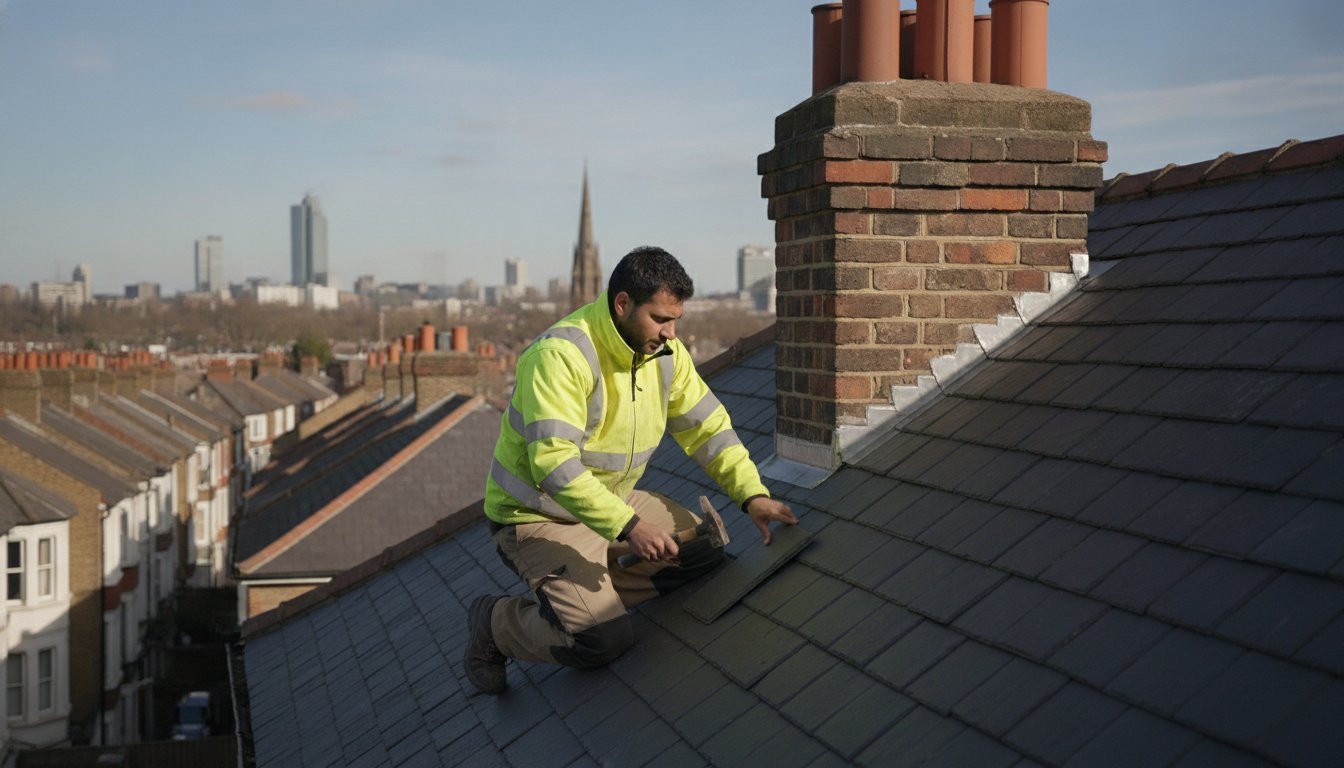
The majority of period homes in E8 and E5 are covered with traditional Welsh slate. Whilst these materials are remarkably durable, they are susceptible to a condition known as “nail sickness”. This occurs when the original iron nails used to secure the slates corrode over several decades, eventually snapping and allowing slates to slip out of position. Once a slate is displaced, the underlying timber battens and sarking felt are exposed to direct rainfall.
You should also look for signs of delamination, where the slate begins to flake and split into thin layers. This is a clear indicator that the stone is becoming porous and needs professional attention. It is vital to avoid the use of “flash-band” or bitumen-backed tapes as a permanent solution. These products are temporary measures that often trap moisture against the roof structure, accelerating timber rot rather than preventing it. For a lasting resolution, it’s better to request a professional assessment of your slate’s integrity.
Leadwork and Chimney Stack Integrity
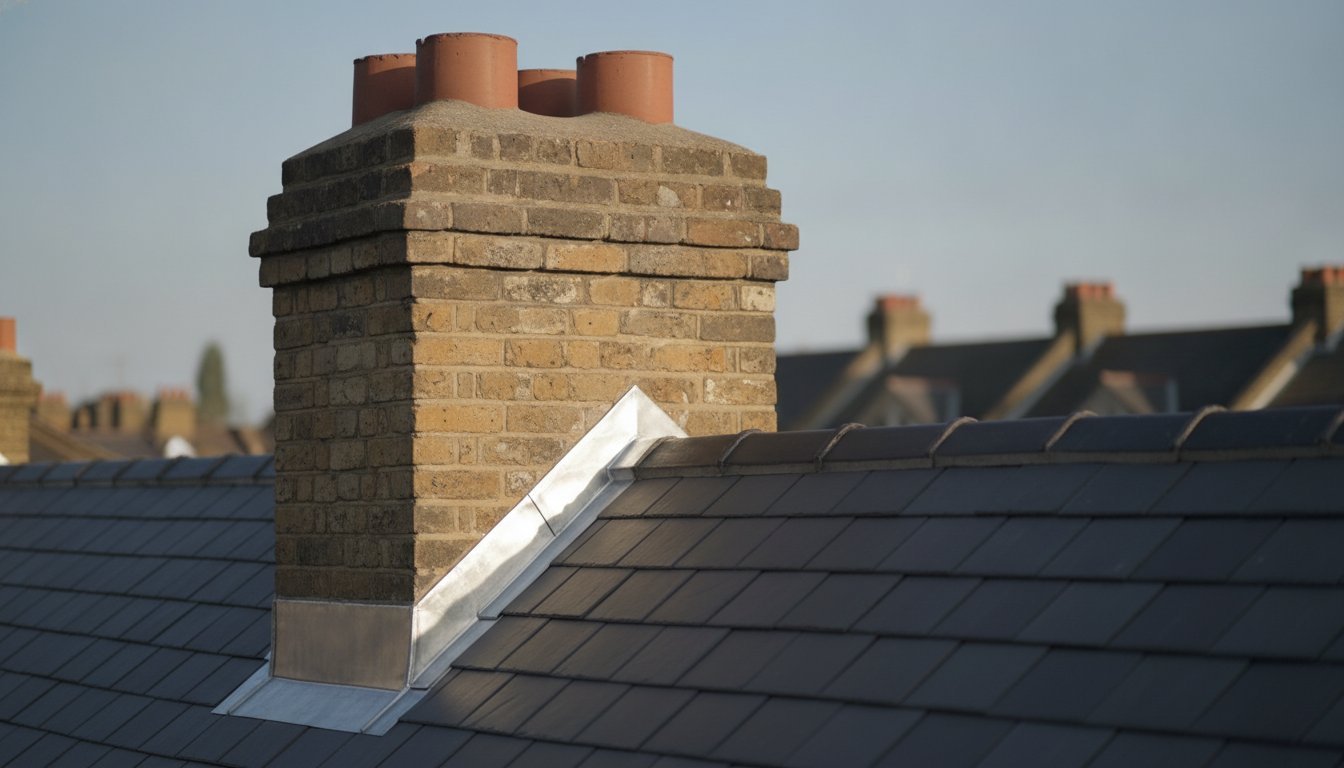
Chimney stacks are the primary source of leaks in Hackney terraces. Because they are exposed to the elements on all sides, the mortar repointing eventually perishes, allowing water to track down through the masonry and into the rooms below. This often manifests as damp patches on chimney breasts in bedrooms or living areas. The leadwork surrounding the stack is equally critical. Professional inspections focus on three key areas:
- Lead Valleys: These channels carry significant volumes of water and can develop hairline cracks due to thermal expansion and contraction.
- Soakers and Flashings: These lead components create the watertight seal between the slates and the brickwork of the chimney. If they are improperly installed or have perished, water will bypass the roof covering entirely.
- Chimney Pots and Cappings: Perished mortar at the very top of the stack can allow water to enter the flue itself.
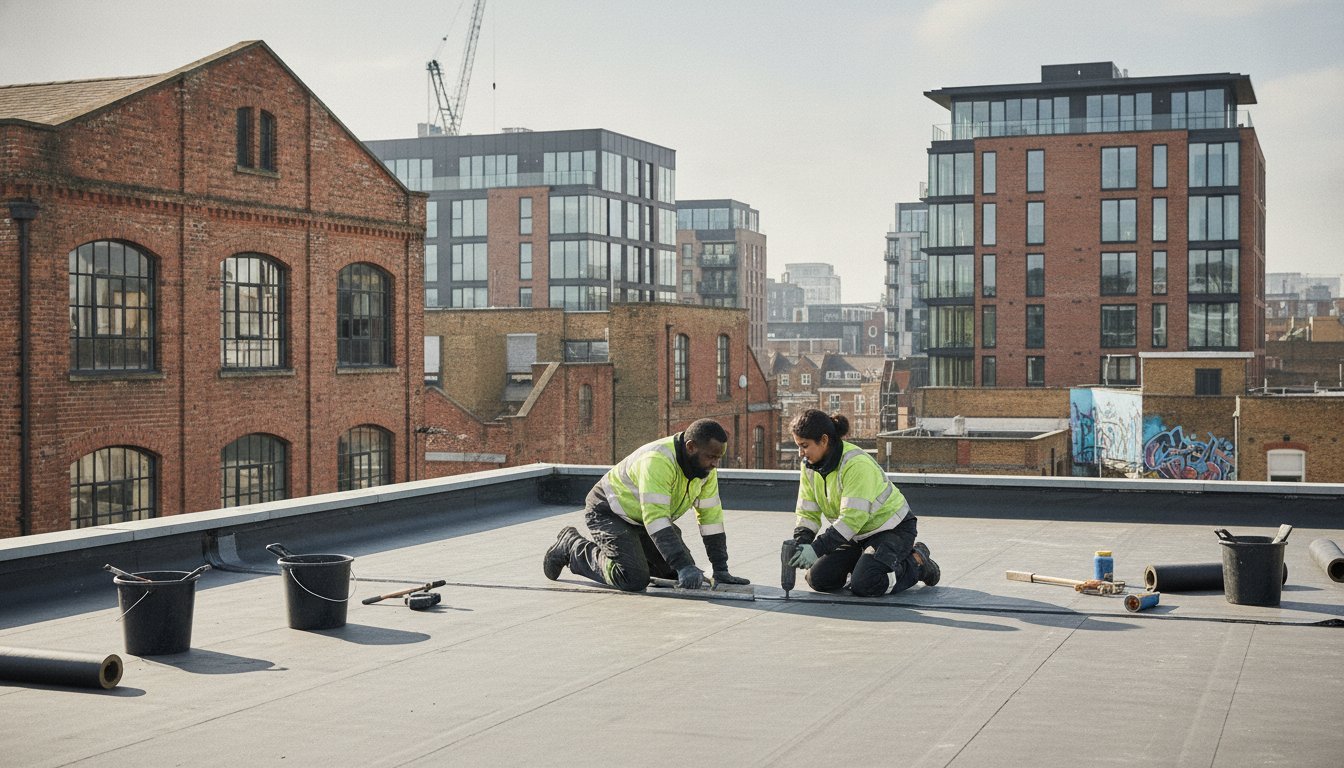
Flat roof sections, often found on rear extensions or behind parapet walls, present their own challenges. Older bitumen felt systems are prone to fatigue and “alligatoring”, where the surface cracks under UV exposure. Whilst modern GRP or EPDM systems offer superior longevity, their performance relies entirely on the precision of the installation and the integrity of the underlying deck. A thorough roof leak inspection Hackney survey will distinguish between simple surface fatigue and deeper structural issues in these flat roof systems.
Professional Inspection vs. DIY Spotting: The Specialist Advantage
Attempting to diagnose a leak from the pavement with a pair of binoculars is rarely effective. Whilst you might spot a conspicuously slipped slate, this surface observation fails to account for the complex way water travels. Capillary action can draw moisture upwards or sideways along internal timbers, meaning the damp patch in your bedroom might be metres away from the actual entry point. A professional roof leak inspection Hackney requires physical access and a technical understanding of how different materials interact.
Our Master Craftsman approach treats your property as a complete “roof system”. We don’t just look for the hole; we assess the integrity of the entire structure. This methodical survey identifies “future leaks”—areas where leadwork is thinning or mortar is beginning to perish—before water ever enters the building. By catching these vulnerabilities early, you avoid the stress of emergency repairs during a winter storm.
Advanced Tools Used by Hackney Specialists
Specialists utilise a suite of diagnostic equipment that goes far beyond the capabilities of a general handyman. These tools provide a transparent, data-driven view of your roof’s health:
- Thermal Imaging Cameras: These are essential for detecting moisture trapped beneath flat roof membranes. They identify temperature variances that indicate water pooling, even when the surface appears intact.
- Moisture Probes: These devices allow us to quantify the extent of structural saturation, helping us distinguish between a fresh leak and historic damp.
- Drone Surveys: For inaccessible butterfly roofs or high Victorian pitches, drones provide high-resolution imagery. This allows for a comprehensive survey of chimney stacks and valleys without the immediate cost of scaffolding.
When to Call a Roofer Instead of a General Leak Detector
It’s common for homeowners to first call a plumber or a generic leak detection firm. However, these professionals often misdiagnose roofing issues as internal pipe bursts or condensation. A general detector might find the “where,” but they lack the technical expertise to explain the “why” or provide a permanent structural solution.
The value of a specialist lies in their ability to bridge the gap between diagnosis and resolution. When you learn more about our specialist roofing team, you’ll see why technical proficiency in leadwork and traditional slate is vital. A specialist roofer can identify a perished chimney soaker and immediately understand the specific repair required to restore the building’s envelope. This integrated approach ensures that your roof leak inspection Hackney results in a definitive fix rather than a temporary patch.
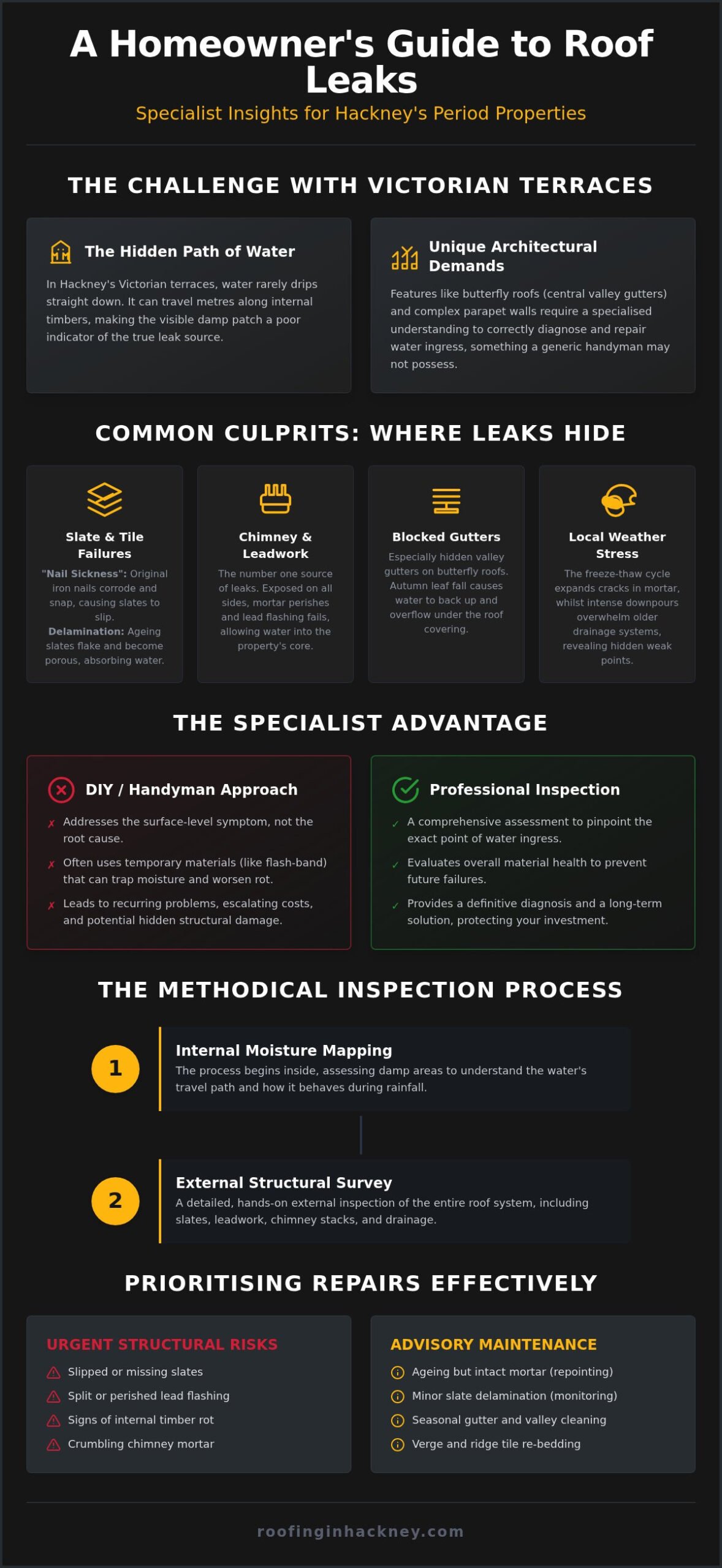
The Roof Leak Inspection Process: What to Expect
A professional roof leak inspection Hackney property owners commission follows a structured, multi-stage workflow. This methodical approach ensures that no detail is overlooked and that the source of water ingress is confirmed with technical evidence rather than guesswork. By following a logical progression from the interior to the exterior, we provide a definitive diagnosis of your roof’s health.
Internal Evidence Gathering
The process begins inside the property, where we map damp patterns to understand the water’s path. We analyse brown staining on plasterwork and peeling wallpaper on upper floors, whilst checking lofts for the “musty” odours that signal long-term timber saturation. A simple but effective check involves turning off the lights in the attic to look for daylight through the rafters; this is a definitive sign of slipped or missing slates that require immediate attention.
We also pay close attention to the underside of lead valleys and secret gutters. Here, we look for white salt deposits or tiny pinholes that indicate the metal has reached its fatigue point. This internal phase is vital for measuring moisture levels and quantifying the extent of structural saturation before we ever step onto the roof surface.
External Structural Assessment
Once the internal clues are gathered, we move to the exterior. In Hackney’s narrow alleys and terraced rows, we pay close attention to the condition of guttering and downpipes. Blockages or misaligned brackets cause water to back up and spill into the wall cavity, often mimicking a roof leak. We physically test the integrity of the roof covering. For slate roofs, this involves testing the “ring” of individual tiles; a dull thud instead of a clear metallic ring suggests the slate is becoming porous and brittle.
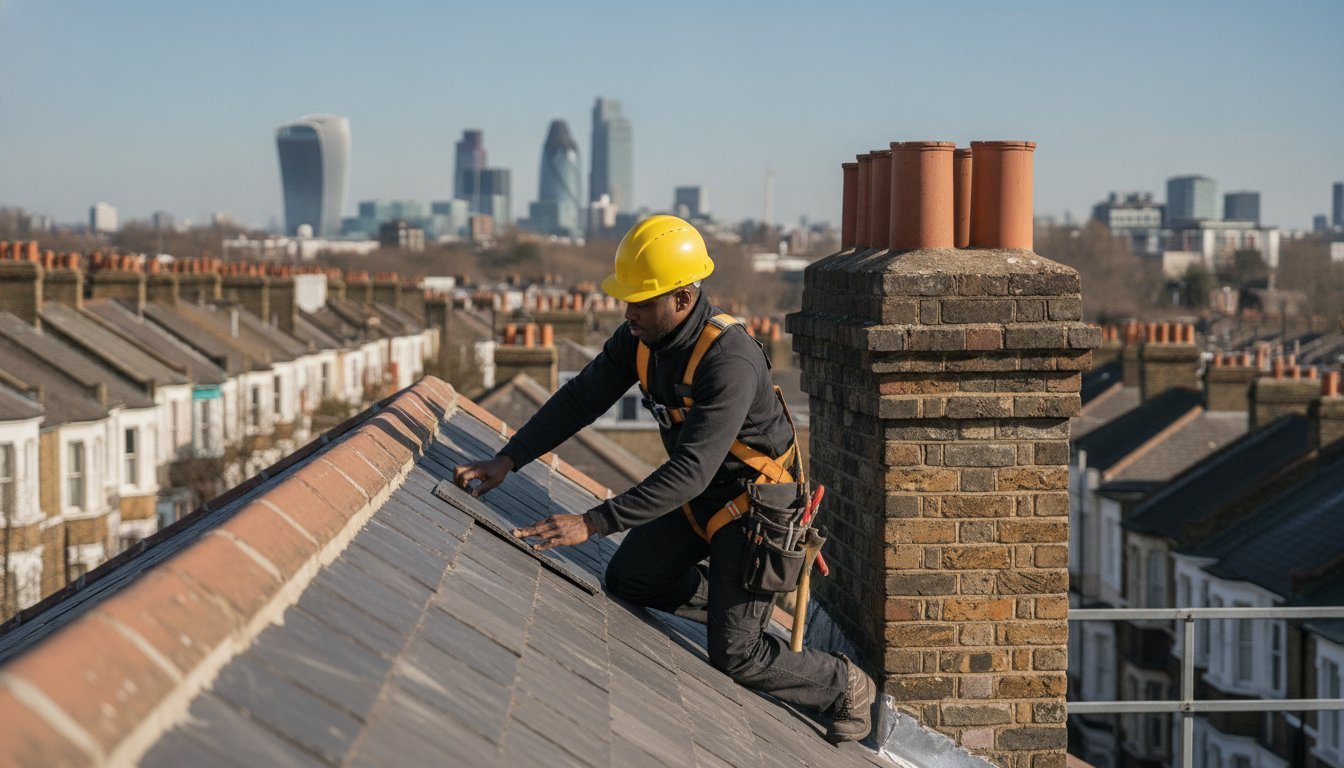
The survey continues with a dedicated examination of chimney stacks and parapet walls. We check chimney cowls and pots for stability, as loose fittings are a common entry point for water. We examine the mortar joints for “spalling”—where the brick face begins to crumble—and check parapet cappings for cracks that allow water to track down into the building’s main structure.
The final stage is the delivery of a comprehensive report. This document provides an itemised breakdown of our findings, distinguishing between urgent structural repairs and advisory maintenance. This transparency ensures you have a clear roadmap for restoring your property’s integrity. To secure a definitive diagnosis for your home, you can book a professional roof leak inspection with our specialist team.
From Inspection to Resolution: Fixing Your Hackney Roof
Once the professional roof leak inspection Hackney property owners receive is complete, the focus shifts to a structured repair plan. It’s essential to distinguish between urgent structural risks and advisory works. Urgent repairs, such as failed lead valleys or missing slates, require immediate action to prevent internal rot and protect your ceiling’s integrity. Advisory works might include minor repointing or gutter realignments that, whilst not causing a leak today, will likely fail within the next twelve to eighteen months if left unaddressed. This transparent prioritisation allows you to manage your maintenance budget effectively.
Specialist Repair Solutions
Permanent resolution relies on using materials that match the original construction of your property. For Hackney’s period homes, this means high-quality leadwork and traditional Welsh slate. Replacing a perished lead valley isn’t just about stopping a drip; it’s about ensuring the drainage system can handle modern East London downpours for another fifty years. Similarly, chimney stack repointing and restoring lead flashings are precision tasks that prevent water from tracking into the masonry. We prioritise preserving the heritage aesthetic whilst delivering modern performance standards.
During the resolution phase, we often identify that a “leak” is actually internal condensation caused by poor thermal management. Upgrading your roof’s thermal performance is a logical step when carrying out repairs. By improving airflow and heat retention, you eliminate the risk of interstitial condensation that mimics water ingress. You can find more detail in our thermal roof insulation upgrades guide, which explains how these improvements protect your roof’s long-term health.
Preventative Maintenance for Hackney Landlords
For property managers and landlords in the E5 and E8 postcode areas, a proactive approach is the most cost-effective strategy. Annual gutter clearing and basic visual checks prevent the debris build-up that leads to emergency call-outs during winter storms. A regular “roof health check” provides a documented history of maintenance, which is invaluable for commercial property valuations and insurance compliance. It’s a methodical way to ensure your investment remains watertight and structurally sound throughout the year.
If you’re ready to move from a suspected leak to a permanent solution, you can contact Roofing in Hackney for a professional inspection and a transparent repair quote.
Securing Your Hackney Home’s Future
Protecting a period property in East London requires more than a reactive approach to damp patches. A professional roof leak inspection Hackney survey allows homeowners to move from uncertainty to a clear, itemised roadmap for repair. We’ve explored how identifying failures in traditional slate and leadwork early prevents the silent spread of structural rot in Victorian floor joists. A specialist survey ensures that every chimney stack and parapet wall is assessed with the technical precision your home deserves.
As a trusted local Hackney independent contractor, we pride ourselves on technical proficiency in expert chimney and structural repairs. Our master craftsmen specialise in traditional Victorian slate and leadwork, providing permanent solutions that respect the heritage of your building whilst ensuring it remains completely watertight. Don’t let a minor drip become a major structural investment. Book Your Professional Roof Leak Inspection in Hackney Today. Taking action now provides the peace of mind that your property is protected for many years to come.
Frequently Asked Questions
How much does a professional roof leak inspection cost in Hackney?
A standard roof inspection in the UK typically costs approximately £250, whilst more advanced drone surveys often start around £200. If your property requires detailed thermal imaging to detect moisture beneath the surface, you should expect to pay between £300 and £500. These rates generally reflect a thorough assessment lasting one to three hours, providing the technical data needed for an accurate repair quote without relying on guesswork.
Can you find a roof leak when it is not raining?
Yes, a specialist can identify a roof leak during dry weather by looking for physical evidence of water ingress. We examine internal staining, measure moisture levels in timbers, and identify structural failures like “nail sickness” in Victorian slates. Advanced tools such as thermal imaging cameras can also detect trapped moisture beneath flat roof membranes that isn’t visible to the naked eye, allowing for a definitive diagnosis regardless of current weather conditions.
Is a roof leak covered by my home insurance in London?
Home insurance policies in London typically cover roof leaks caused by sudden, accidental damage, such as a storm or a fallen tree. However, most insurers will reject claims resulting from lack of maintenance or gradual wear and tear, which is common in older Hackney terraces. It’s advisable to review your policy details carefully and maintain a record of regular professional inspections to demonstrate that you’ve taken proactive steps to protect your property.
How long does a typical roof inspection take for a Hackney terrace?
A thorough roof leak inspection Hackney homeowners request usually takes between one and three hours to complete. This duration allows for a methodical internal assessment of the loft and ceilings, followed by a detailed external survey of the slates, leadwork, and chimney stacks. The complexity of Hackney’s Victorian architecture, particularly butterfly roofs and parapet walls, requires this deliberate pace to ensure every potential entry point is accurately identified and documented.
What are the signs of a leak on a flat roof?
Common signs include “ponding,” where water pools on the surface for more than forty-eight hours after rainfall. You should also look for “alligatoring,” which is a pattern of small cracks on the bitumen surface caused by UV exposure. Inside the property, damp patches on the ceiling or a persistent musty smell often indicate that the underlying deck is saturated. Modern GRP or EPDM systems rarely fail unless the original installation was compromised or physically damaged.
Why is my chimney leaking after heavy rain?
Leaks around chimneys are frequently caused by perished mortar joints or failed lead flashings. In many Hackney properties, the original lime mortar has eroded over time, allowing water to track through the masonry during heavy downpours. Additionally, if the lead soakers or flashings have thinned or cracked, they will no longer provide a watertight seal against the roof slates. Professional chimney maintenance and repointing are essential to resolve these “mysterious” damp issues permanently.
Do I need a full roof replacement if I have a small leak?
Not necessarily. Many small leaks can be resolved through targeted repairs, such as replacing slipped slates or restoring cracked leadwork. However, if a roof leak inspection Hackney specialists perform reveals that over twenty-five per cent of the roof area is compromised, a full replacement might be more cost-effective in the long term. We prioritise high-quality craftsmanship to extend the life of your existing roof whenever the structural integrity of the timbers allows.
Can thermal imaging really see through my roof tiles?
Thermal imaging doesn’t “see through” tiles like an X-ray; instead, it detects temperature variances on the surface. Moisture-saturated materials retain heat differently than dry ones, creating a “thermal signature” that our cameras can identify. This technology is particularly effective for flat roofs and lead valleys, as it highlights areas of trapped dampness that haven’t yet manifested as visible internal stains, allowing us to catch structural issues before they escalate.