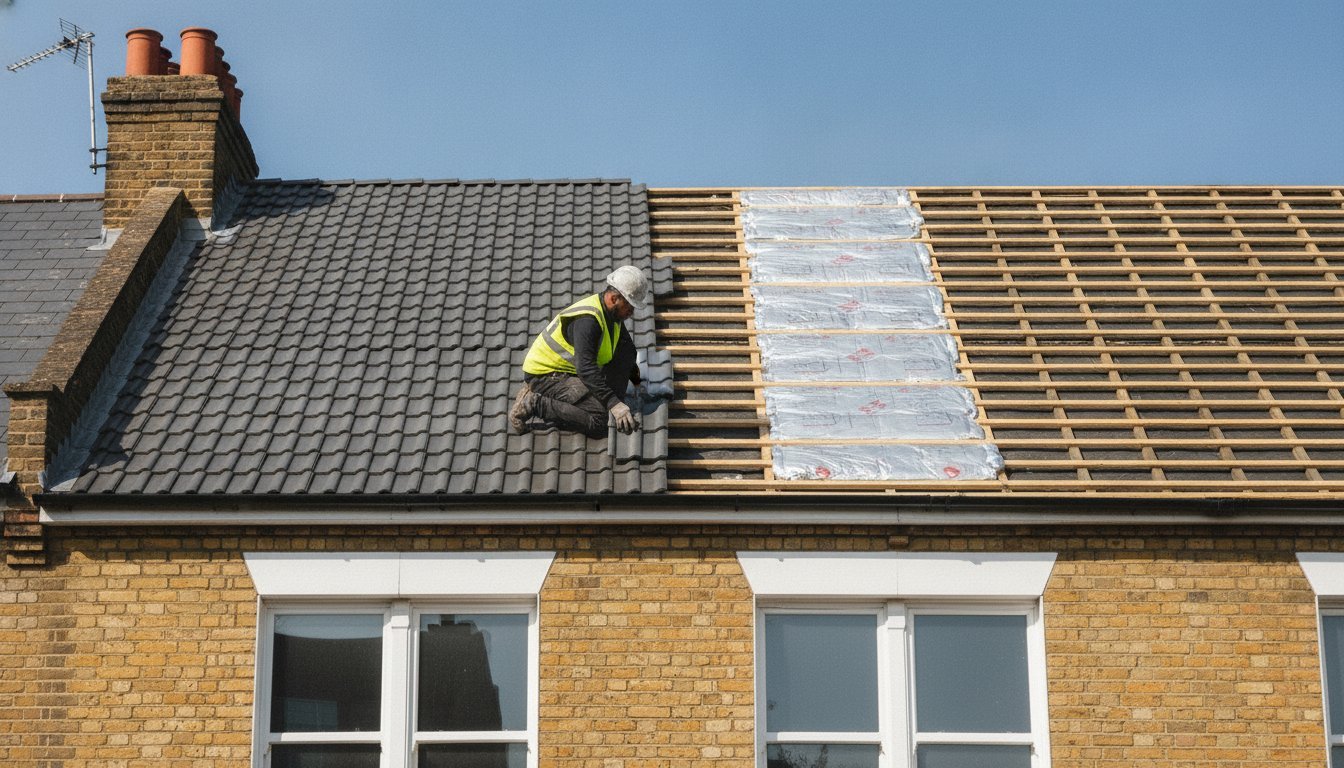
Did you know that over 60% of Hackney is now covered by Article 4 directions, meaning a concrete tile roof replacement Hackney homeowners undertake often requires full council approval before a single tile is moved? It’s a daunting prospect for any property owner in East London, especially when you’re trying to balance the need for a weather-tight home with the strict regulations of a local conservation area. You likely want a durable result that improves your kerb appeal without the stress of rogue traders or the logistical nightmare of scaffolding on a narrow Victorian street.
We understand that replacing your roof is a significant investment in your property’s structural integrity. This guide simplifies the entire process by covering everything from the latest 2026 planning guidance to modern thermal efficiency standards. We’ll preview the essential stages of a professional installation, from initial surveys to expert leadwork, ensuring your home stays warm and protected for decades to come. By the end of this article, you’ll have a clear roadmap for achieving a stress-free roof renewal that meets every local requirement whilst lowering your Hackney energy bills.
Key Takeaways
- Learn how to identify “tile rot” and why many post-war properties in the area are now reaching the natural 60-year lifespan of their original materials.
- Discover how to select modern tiles that provide superior frost resistance whilst complementing the aesthetic of traditional yellow London stock brick.
- Navigate the specific Hackney Council planning requirements and Building Regulations necessary for a compliant concrete tile roof replacement Hackney project.
- Understand the methodical workflow used by local specialists to assess structural rafters and ensure a weather-tight, durable installation.
- See why a full roof renewal is the most cost-effective time to upgrade your home’s insulation and meet current 2026 thermal efficiency standards.
Signs Your Hackney Home Needs a Concrete Tile Roof Replacement
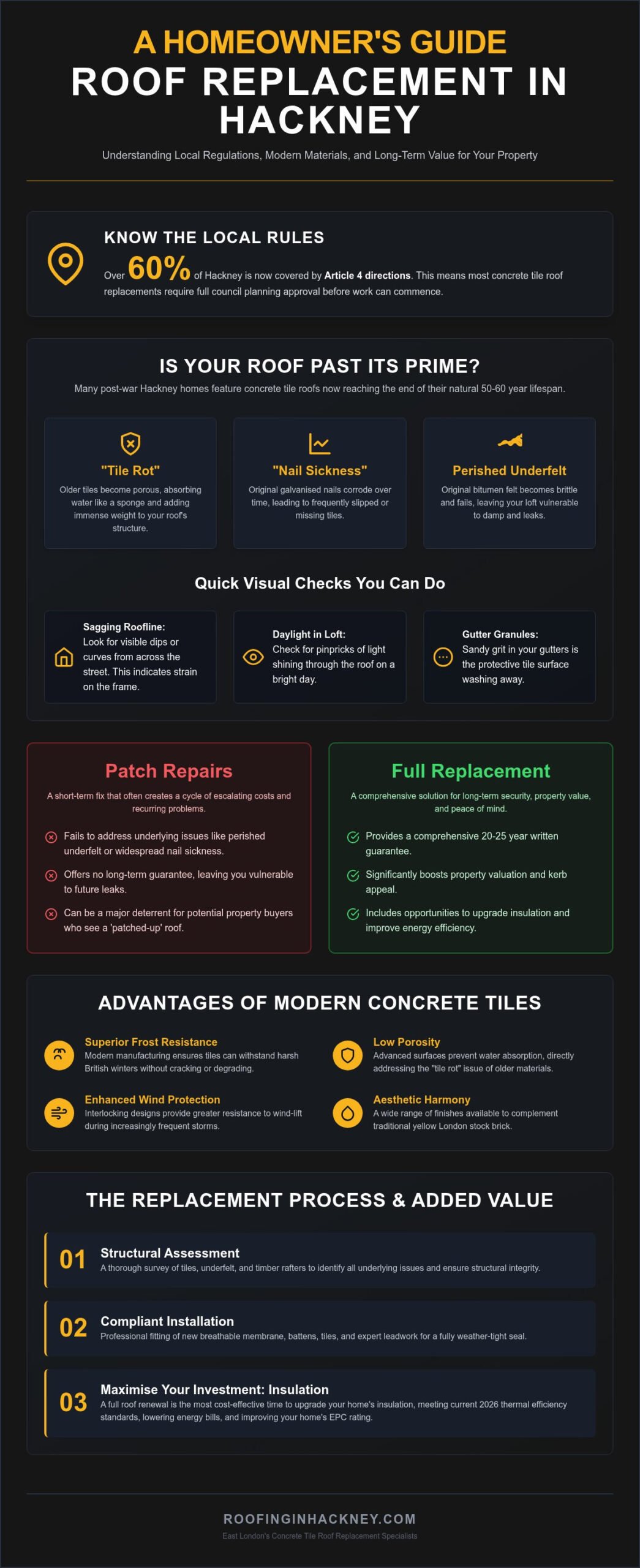
Many post-war properties in Hackney were constructed using mass-produced concrete tiles that have a projected lifespan of roughly 50 to 60 years. As we move through 2026, a significant portion of the borough’s housing stock is reaching this critical threshold. Unlike clay or slate, older concrete variants can suffer from “tile rot.” This occurs when the protective surface erodes, leaving the material porous. These tiles then absorb water like a sponge, significantly increasing the weight on your structural timber rafters. Understanding the history of concrete roof tiles helps explain why these mid-century materials are now failing simultaneously across East London.
Beyond the tiles themselves, the internal components of your roof are likely reaching the end of their functional life. In many older properties, the original bitumen underfelt has become brittle and perished, leaving your home vulnerable to internal damp. If you notice frequent slipped tiles, it’s often a sign of “nail sickness,” where the original galvanised nails have corroded. This makes a concrete tile roof replacement Hackney property owners can rely on a necessity rather than a luxury to prevent long-term structural damage.
Visual Cues from the Street and Loft
You don’t always need a ladder to spot trouble. Stand across the street and look for sagging rooflines amongst your terraced row; this often indicates that the heavy, waterlogged tiles are straining the building’s frame. Inside the loft, check for pinpricks of daylight through the rafters, which suggests the underfelt has failed. Another tell-tale sign is the presence of sandy, coloured granules in your gutters. This grit is the top layer of your tiles washing away, a clear indicator of advanced degradation that leaves the concrete core exposed to the elements.
The Economic Argument: Repair vs. Replacement
Whilst minor repairs might seem cost-effective, “patching up” an aged roof often becomes a cycle of escalating expenses. Continuous call-outs for individual leaks quickly add up to the cost of a full renewal. A comprehensive replacement provides a 20-25 year written guarantee, offering a level of security that piecemeal repairs cannot match. Additionally, a modern roof significantly boosts Hackney property valuations. In a competitive market, a certified, weather-tight installation is a major selling point for prospective buyers who want to avoid immediate maintenance costs. If you are concerned about the integrity of your current tiles, you can contact us for a professional assessment of your roof’s condition.
Choosing the Right Materials: Modern Concrete vs. Traditional Alternatives
Selecting the right material for a concrete tile roof replacement Hackney project involves more than just aesthetics. Modern concrete tiles have evolved significantly since the post-war era. Today’s manufacturing processes result in tiles with superior frost resistance and lower porosity, directly addressing the “tile rot” issues common in older East London stock. This ensures that a modern installation will outperform the mid-century originals by a significant margin, providing a durable barrier against the unpredictable British weather.
For homeowners across Dalston and Stoke Newington, colour matching is a primary concern. We frequently recommend specific sand-faced or smooth finishes in shades that complement the iconic yellow London stock brick, ensuring the new structure harmonises with the local streetscape. Modern interlocking designs also provide enhanced wind-lift protection, which is vital during increasingly frequent London storms. If you don’t account for these environmental pressures, even new tiles can suffer displacement during high winds. From a structural perspective, concrete remains a highly cost-effective alternative to natural slate. It offers the necessary mass for sound insulation whilst being easier and faster to install, which reduces labour costs.
Weight considerations are equally important when planning your renewal. Concrete tiles are heavier than slate, meaning the existing timber structure must be robust enough to support the load. However, because most Hackney properties were originally designed for these materials, they rarely require the extensive structural reinforcement that switching to lighter alternatives might necessitate. This inherent compatibility makes concrete a pragmatic choice to maintain the structural balance of Victorian and Edwardian terraces during a concrete tile roof replacement Hackney homeowners can trust.
Concrete vs. Clay Tiles
Whilst clay is a traditional choice, modern concrete tiles are the favourite for residential replacements in Hackney due to their versatility. Clay tiles often have a longer lifespan but come with a higher price point. High-quality concrete alternatives now mimic the appearance of weathered clay or slate, allowing property owners to achieve a premium look whilst benefiting from structural stability. Our team can provide expert guidance on which profile suits your specific terrace row.
The Role of High-Quality Underlay
The tiles are only the first line of defence. A professional replacement must include the transition from perished bitumen felt to high-performance breathable membranes. These modern underlays are essential for meeting current thermal standards, allowing moisture to escape whilst preventing water ingress. We also integrate ventilation systems at the eaves and ridge to prevent condensation and timber decay. This creates a roof system that is both energy-efficient and built to last.
Navigating Hackney Regulations and Logistical Challenges
Starting a concrete tile roof replacement Hackney project requires a methodical approach to local bureaucracy and urban logistics. Hackney Council maintains strict oversight, particularly through its 29 designated conservation areas. If your property falls under an Article 4 direction, which covers over 60% of the borough, you’ll likely need full planning permission even for like-for-like material changes. The statutory target for decisions is 8 weeks; however, in practice, property owners should allow 12 to 16 weeks for approval. It’s essential to check the council’s planning portal to confirm your property’s status before any work commences.
Beyond planning, you must comply with national Building Regulations. If you replace more than 25% of your roof, you’re legally required to upgrade the thermal insulation to meet a strict U-Value of 0.15 W/m²K. This falls under Part L of the regulations and requires a Building Notice submitted to the local authority at least 48 hours before work begins. This ensures the structural integrity and energy efficiency of the new installation meet 2026 standards, providing a clear path to a compliant and weather-tight home.
Conservation and Heritage Considerations
Maintaining the architectural integrity of Victorian terraces is a priority for Hackney planners. When working in areas like De Beauvoir or Stoke Newington, the council may mandate specific tile colours or profiles to ensure the streetscape remains cohesive. Our role as local roofing specialists Hackney involves liaising with these authorities to ensure your project respects heritage requirements whilst utilising modern, durable materials. This careful balance preserves the borough’s character whilst improving your property’s longevity.
Logistics in N16, E5, and E8
The density of N16, E5, and E8 presents unique challenges for any major construction project. On narrow streets near Kingsland Road or Mare Street, traditional skip hire is often impossible due to parking suspensions or lack of space. In these instances, we utilise “wait and load” services to remove old concrete tiles and debris efficiently. Scaffolding also requires a specific permit from Hackney Council if it encroaches on the public pavement, a process that must be organised well in advance. We prioritise clear communication with neighbours regarding noise and access to minimise disruption during the installation phase. Site safety remains our primary focus, with secure scaffolding and managed deliveries co-ordinated to avoid peak traffic times on major Hackney thoroughfares.
The Step-by-Step Concrete Tile Replacement Process
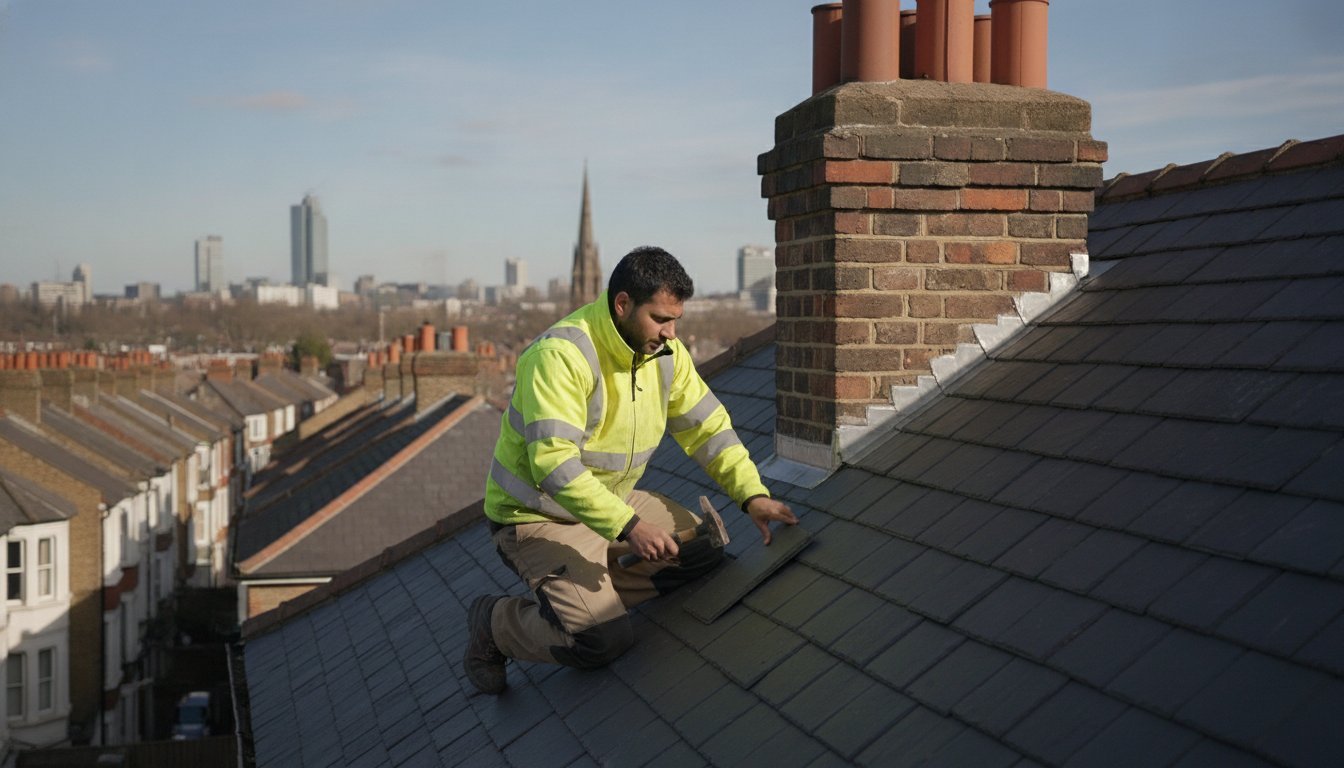
A professional concrete tile roof replacement Hackney installation follows a rigorous sequence designed to ensure both structural safety and long-term durability. Once the scaffolding is safely erected and permits are verified, the process begins with the careful removal of the existing tiles. Unlike some contractors who might rush this phase, we prioritise the safe disposal of old concrete and perished bitumen felt using managed waste services, ensuring the site remains clear and hazardous materials are handled responsibly.
With the timber structure exposed, our master craftsmen perform a comprehensive assessment of the roof’s skeleton. This involves checking the alignment of the rafters and identifying any historical water damage that may have compromised the timber’s integrity. We then install a high-performance breathable membrane. This modern layer is crucial for moisture control, allowing the house to “breathe” whilst providing a secondary line of defence against driving rain. This is followed by the installation of treated timber battens, which are precisely spaced to ensure the tiles sit perfectly flush.
Preparation and Structural Checks
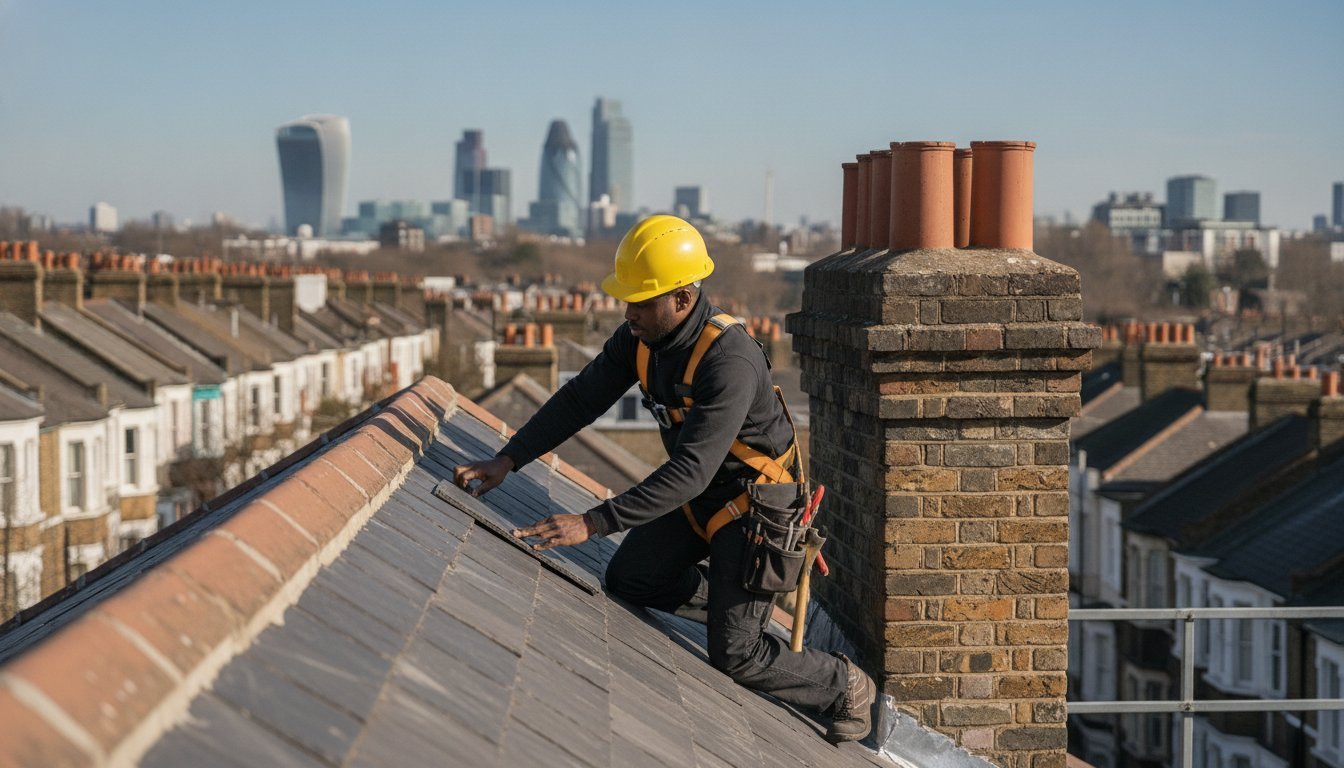
Before the new tiles are laid, we meticulously inspect the ridge boards and purlins for any signs of rot or infestation. Because modern concrete tiles can vary in weight compared to mid-century versions, we verify that the existing rafters can support the load without sagging. If necessary, we reinforce the structure to meet current building standards. We also establish fall protection systems and secure roof access, maintaining a safe working environment for our team and your property throughout the project.
Installation and Finishing Touches
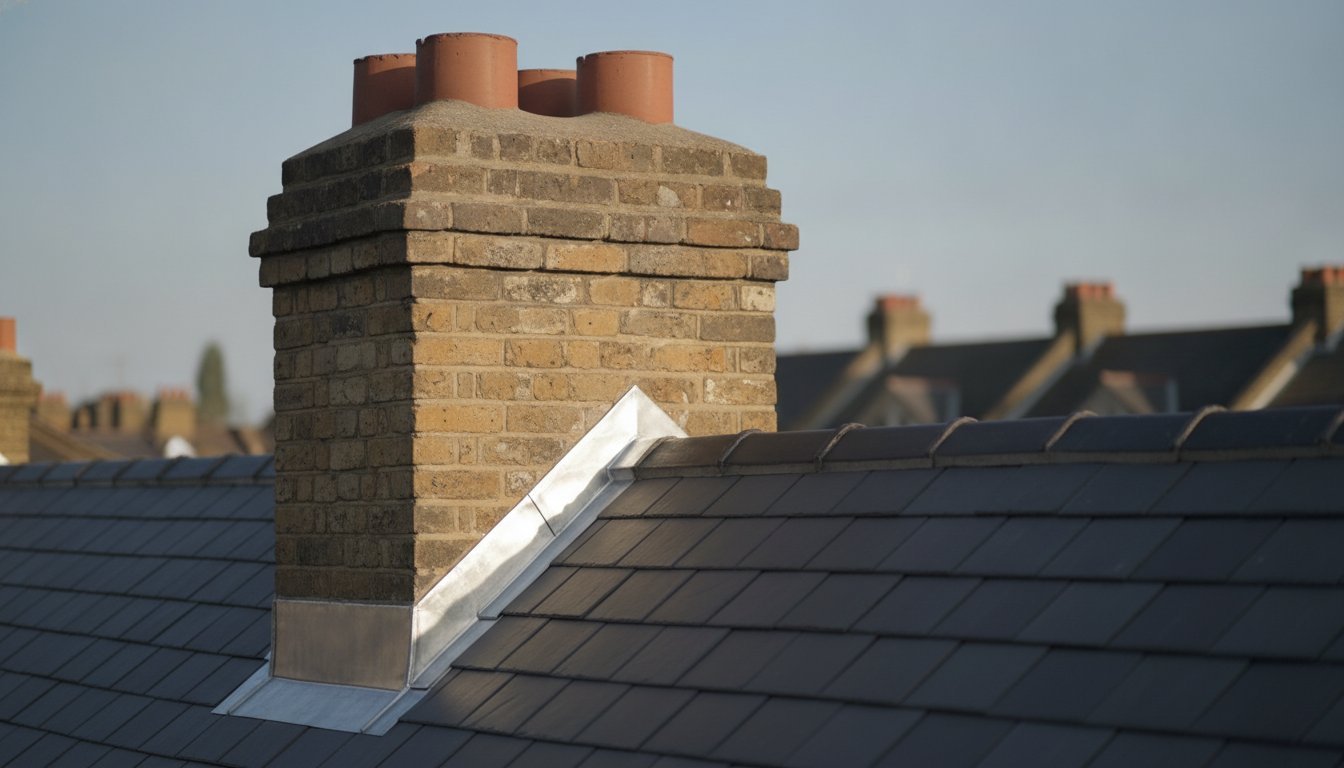
Precision is essential during the tiling phase. We set out the gauge to ensure perfect alignment, which is critical for efficient water runoff and wind resistance. We typically recommend modern dry-fix systems for ridges and hips. These mechanical fixings are superior to traditional mortar, as they don’t crack or erode over time, significantly extending the life of the roof. The final phase involves integrating specialist leadwork at the valleys and chimneys. Our expert leadwork and chimney repointing are included in full renewals, ensuring every junction is watertight and aesthetically consistent with Hackney’s architectural styles. This attention to detail defines a concrete tile roof replacement Hackney homeowners can rely on for decades.
If you are ready to secure your home’s future with a durable, weather-tight installation, contact our team for a detailed structural assessment.
Maximising Value: Insulation and Energy Efficiency Upgrades
A concrete tile roof replacement Hackney project is the single most effective time to address your property’s thermal performance. When the old tiles and battens are removed, the roof’s structural voids are fully accessible, allowing for a seamless installation of high-performance materials. This approach isn’t just about comfort; it’s a legal necessity. Under current UK Building Regulations, specifically Part L, replacing more than 25% of a roof area triggers a requirement to upgrade the thermal insulation to meet a strict U-Value of 0.15 W/m²K. By integrating these thermal roof insulation upgrades during the renewal, property owners avoid the future expense of retrofitting, which is often more invasive and costly.
Homeowners must choose between a “cold roof” or “warm roof” strategy. A cold roof involves placing insulation between and over the ceiling joists, keeping the loft space itself cool. In contrast, a warm roof places insulation between or above the rafters, maintaining the loft at a temperature closer to the rest of the house. This choice significantly impacts how you use your Hackney home’s upper floors and how much you’ll save on long-term heating costs. Professional installation ensures that these layers are fitted without gaps, preventing the thermal bridging that often occurs with DIY attempts.
Modern Insulation Materials
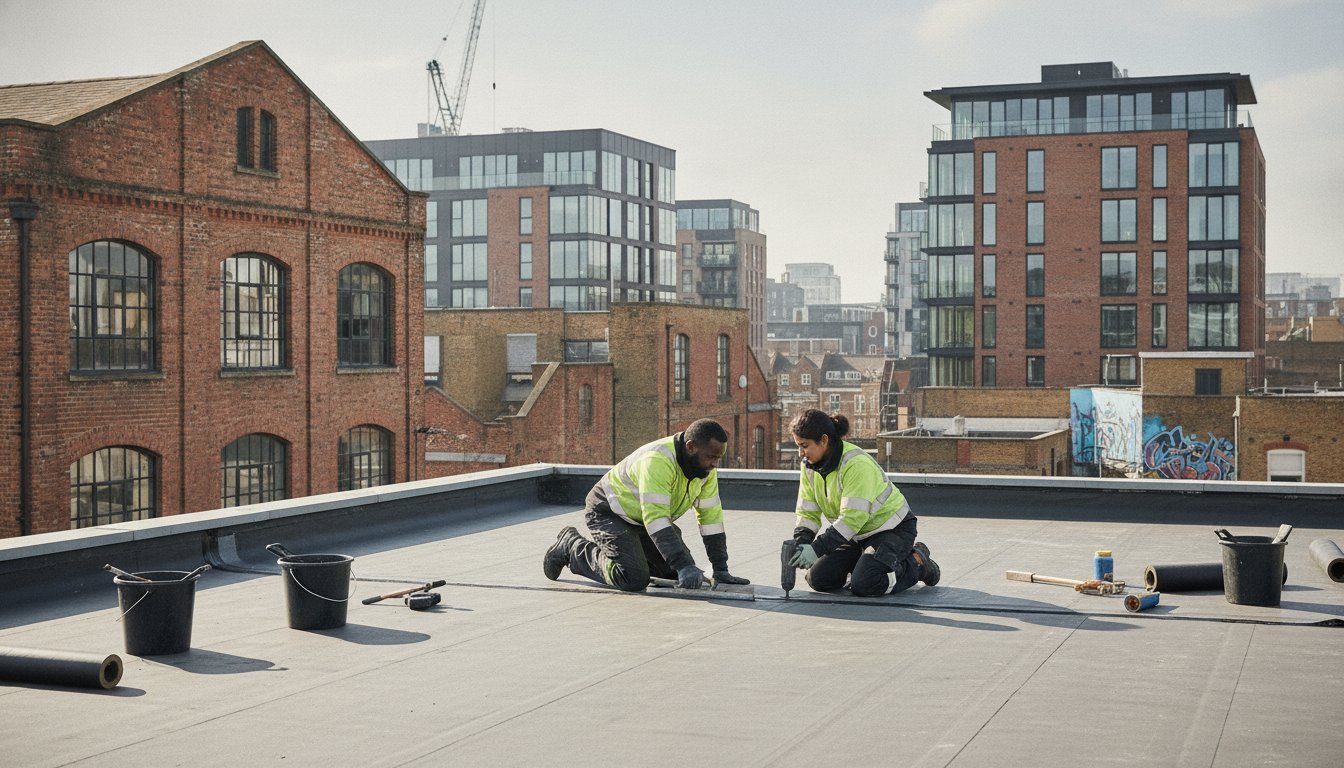
Achieving the 0.15 W/m²K standard requires high-specification materials like PIR rigid foam boards or high-density mineral wool. PIR boards offer excellent thermal resistance for their thickness, making them ideal for the tight spaces often found in East London Victorian terraces. We always ensure a 50mm air gap is maintained between the insulation and the roof tiles. This ventilation is critical to prevent interstitial condensation, which can lead to timber decay and structural failure over time. Whether you’re working on a traditional pitched roof or a modern flat roof extension, the goal remains the same: a balanced system that retains heat whilst allowing the building to breathe.
The Final Inspection and Guarantee
Our methodical workflow concludes with a rigorous quality control phase. We perform a thorough visual inspection of all leadwork, valleys, and ridge fixings to ensure every junction is weather-tight. This includes a water test on complex areas to verify that the drainage gauge is functioning exactly as intended. Once we are satisfied the installation meets our master craftsman standards, we issue the final certification along with a comprehensive workmanship guarantee. This provides the long-term security you need for such a significant investment. For your next steps, you can contact us for a professional Hackney roofing quote to begin your property’s transformation.
Securing Your Hackney Property for the Decades Ahead
Navigating a concrete tile roof replacement Hackney project requires a methodical approach to both technical craftsmanship and local council regulations. By selecting modern, frost-resistant materials and integrating high-performance insulation, you’re not just repairing a structure; you’re future-proofing your home against rising energy costs and the unpredictable British weather. Adhering to the latest 2026 building standards ensures long-term structural integrity whilst maintaining the aesthetic harmony of your local streetscape.
With over 25 years of local roofing expertise, we act as a trusted advisor for owners of both Victorian and modern Hackney properties. We are fully insured and Trading Standards approved, ensuring every installation meets the highest professional standards. Our master craftsmen handle everything from precision tiling to expert leadwork, providing a stress-free experience from the initial survey to the final inspection.
Take the first step towards a weather-tight, energy-efficient home today. Get Your Free, No-Obligation Hackney Roof Replacement Quote and gain the peace of mind that comes from working with local specialists. Your property deserves the highest standard of protection.
Frequently Asked Questions
How long does a concrete tile roof replacement take for a Hackney terrace?
A standard concrete tile roof replacement Hackney project for a typical mid-terrace property usually takes between 7 and 10 working days to complete. This timeline encompasses the initial scaffolding setup, the removal of aged materials, and the precision installation of the new tile system. Larger Victorian homes or projects requiring significant structural timber repairs may take slightly longer. We always provide a detailed schedule during your consultation to help you plan effectively.
Do I need planning permission to change my roof tiles in Hackney?
Planning permission is frequently necessary in Hackney, especially as over 60% of the borough is protected by Article 4 directions. Whilst minor, like-for-like repairs might fall under Permitted Development, significant alterations in designated conservation areas like De Beauvoir or Stoke Newington often require formal council approval. You should always consult the Hackney Council planning portal or speak with a local specialist to verify the specific restrictions affecting your street before any work begins.
Can I stay in my house whilst the roof replacement is being carried out?
You can remain in your property throughout the duration of the project. Since the installation is entirely external, your daily routine inside the home is rarely affected, although you should expect some noise during standard working hours. Our team maintains a clean and organised site, ensuring the building remains weather-tight at the end of each day. We prioritise clear communication so you’re always informed of the daily progress and any specific access requirements for deliveries.
Is a concrete tile roof more expensive than a slate roof?
Concrete tiles are almost always a more cost-effective solution than natural slate. Whilst slate offers a classic aesthetic and an exceptionally long lifespan, modern concrete provides a durable, high-performance alternative at a lower material and labour cost. For many Hackney property owners, concrete is the preferred choice because it offers excellent weather resistance and sound insulation whilst remaining within a more manageable budget for a full structural renewal of a family home.
Will a new concrete tile roof help reduce my energy bills?
A new roof is one of the most effective ways to lower your energy bills. Under current building regulations, any replacement of more than 25% of a roof area must include an insulation upgrade to meet 2026 thermal standards. By installing high-performance breathable membranes and PIR insulation boards, you significantly reduce heat loss through the rafters. This improvement in thermal efficiency helps maintain a consistent internal temperature and lowers your annual heating costs over time.
How much does scaffolding cost for a roof replacement in East London?
Scaffolding costs in East London are influenced by several factors, including the height of the building, the duration of the project, and whether a pavement licence is required from Hackney Council. For terraced properties on narrow streets, the complexity of the structure and the need for safety fans or loading bays can influence the final price. We manage the entire scaffolding process, including all necessary local permits, to ensure the site remains safe and compliant.
What is nail sickness and does it mean I need a new roof?
Nail sickness occurs when the galvanised nails securing the tiles to the timber battens begin to corrode and fail. As these nails perish, tiles start to slip or slide out of position, which leaves the underlying felt vulnerable to water ingress. Whilst isolated slipped tiles can be repaired, widespread nail sickness usually suggests that the entire roof has reached the end of its functional life and requires a full replacement to prevent serious structural damp.
Does Roofing in Hackney provide a guarantee for full replacements?
We provide a comprehensive workmanship guarantee for every full roof replacement project we complete. As a Trading Standards approved contractor with over 25 years of local experience, we take pride in our technical proficiency and the longevity of our work. Our guarantees are designed to offer you total peace of mind, ensuring that your structural investment is protected. We also provide all necessary certification upon completion, confirming that the work meets current UK Building Regulations.